

Just two weeks after the United States and Iran agreed to halt four months of fighting, renewed military exchanges are testing the fragile ceasefire. As tensions rise around the Strait of Hormuz, violence continues in Lebanon and Gaza, raising fresh questions about the prospects for lasting peace across the Middle East.
Listen to Australian and world news and follow trending topics with SBS News Podcasts.
TRANSCRIPT
Just this month, the US and Iran agreed to press pause on months fighting, but the fragile peace is facing yet another test as agreements intended to calm the Middle East come under increasing pressure.
Over the weekend, the United States accused Iran of attacking a commercial oil tanker near the Strait of Hormuz.
US Central Command says American forces responded with strikes on Iranian military infrastructure, including surveillance systems, air defence sites and drone facilities along Iran's southern coast.
Tehran says those attacks breached the recent ceasefire agreement and responded with missile and drone strikes on U-S military facilities in Kuwait and Bahrain.
Washington says Iran is attempting to impose its own conditions on an international shipping lane, as U-S Ambassador to the United Nations, Mike Waltz, warns Iran its leverage is slipping day by day.
“They (Iranian officials) need to understand their leverage is diminishing by the day. The Gulf Arabs are creating all kinds of alternatives to the Straits of Hormuz. The UAE is moving oil through its pipeline that it's expanding. Saudi Arabia is moving through its oil pipeline that is expanding. We will create alternatives to our basing posture there. We will harden some. Some may go underground. Others will move. So, this leverage that Iran thinks it has now is diminishing faster and faster, literally every week as we speak.”
In a statement, Iranian Foreign Minister, Abbas Araqchi, insists responsibility for restoring commercial traffic rests with Tehran alone.
“Under the memorandum of understanding, the Strait of Hormuz will return to its pre-war capacity within 30 days, under the management that Iran will put in place and after the Islamic Republic of Iran removes the obstacles. These arrangements are being adopted and implemented, and responsibility for them rests with the Islamic Republic of Iran. No other body or country bears any responsibility in this regard under the memorandum of understanding signed between Iran and the United States.”
Despite the latest tensions, commercial vessels continue passing through the Strait.
The ceasefire was also meant to ease recently heightened tensions - not just in Iran, but elsewhere in the Middle East.
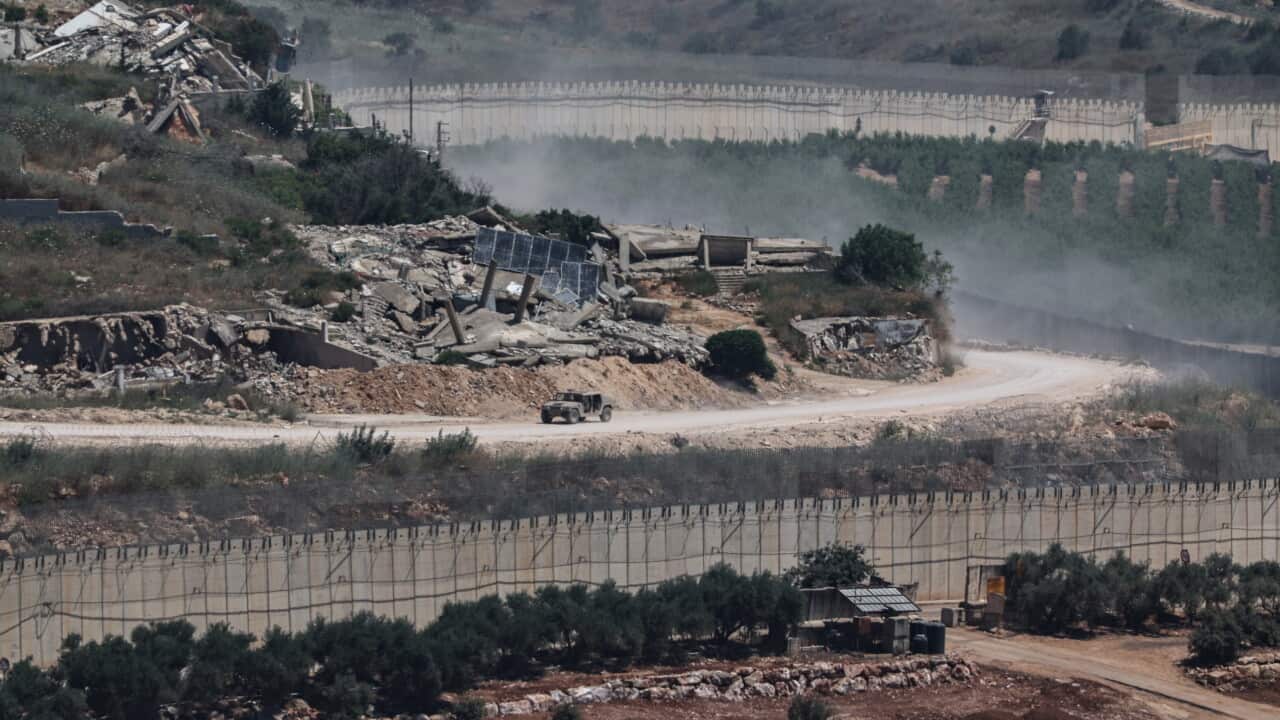
In Lebanon however, a US-backed framework agreement is already under pressure.
Hezbollah refuses to disarm, while Israeli troops remain in southern Lebanon.
Israel insists its operations will continue until the threat along its northern border has been removed.
Over the weekend, an Israeli drone strike killed one person and wounded two others in the southern Lebanese town of Nabatieh al-Fawqa.
Prime Minister Benjamin Netanyahu says Israel has been targeting Hezbollah militants.
“In the last two weeks alone, we eliminated over 200 terrorists, and since the beginning of the war, over 9,000 Hezbollah terrorists. ... We are eliminating their terrorist infrastructure throughout the entire area, in the entire Yellow Zone; we are simply wiping out the terrorist infrastructure. ... We are wiping them all out. ... There is a historic achievement here. This agreement strengthens Israel and Lebanon and weakens Iran and Hezbollah. And God willing, this is a sign of things to come.”
Meanwhile in Gaza, civilians are paying the price for ongoing war.
Palestinian hospital officials say an Israeli drone strike hit sheltering displaced families who were living in tents.
The attack in the Muwasi area near Khan Younis reportedly killed two siblings, 15-year-old Islam Moussa and her 30-year-old brother Abdullah Moussa.
At least seven others were wounded.
The Israeli military says it targeted a Hamas militant operating in the area but has not released further details.
Hours later, another strike wounded at least 12 people in western Gaza City, as humanitarian organisations say conditions in Gaza remain critical despite renewed efforts to secure a broader ceasefire.
The human cost of the conflict is also being felt in Israel.
At the funeral of her son, Captain David Hazut, who was killed while serving with the Israeli military in southern Lebanon, Galit Hazut made an emotional plea for an end to the fighting.
"I’m asking, I’m begging you if there’s anyone here who can do something, enough with this damn war. I’ve been through Gaza, I’ve been through the West Bank, I’ve been through Lebanon, and I lost in Lebanon.”
While the agreements reached in recent weeks are in place for now, another weekend of air strikes, missile attacks and drone strikes reveal it is tenuous.
As world powers back diplomacy to deliver a lasting peace in the region, the outcome is increasingly uncertain.