
The search for Malaysia Airlines flight MH370 is set to resume more than a decade after the aircraft vanished while travelling from Kuala Lumpur to Beijing with 239 people on board. A fresh search in the southern Indian Ocean is being conducted by private marine robotics company Ocean Infinity, using advanced technology in hopes of retrieving answers to one of the world's greatest aviation mysteries. But families of passengers on board say they need transparency on the terms of the search, and clarity on the prospects for recovery.
Listen to Australian and world news and follow trending topics with SBS News Podcasts.
TRANSCRIPT:
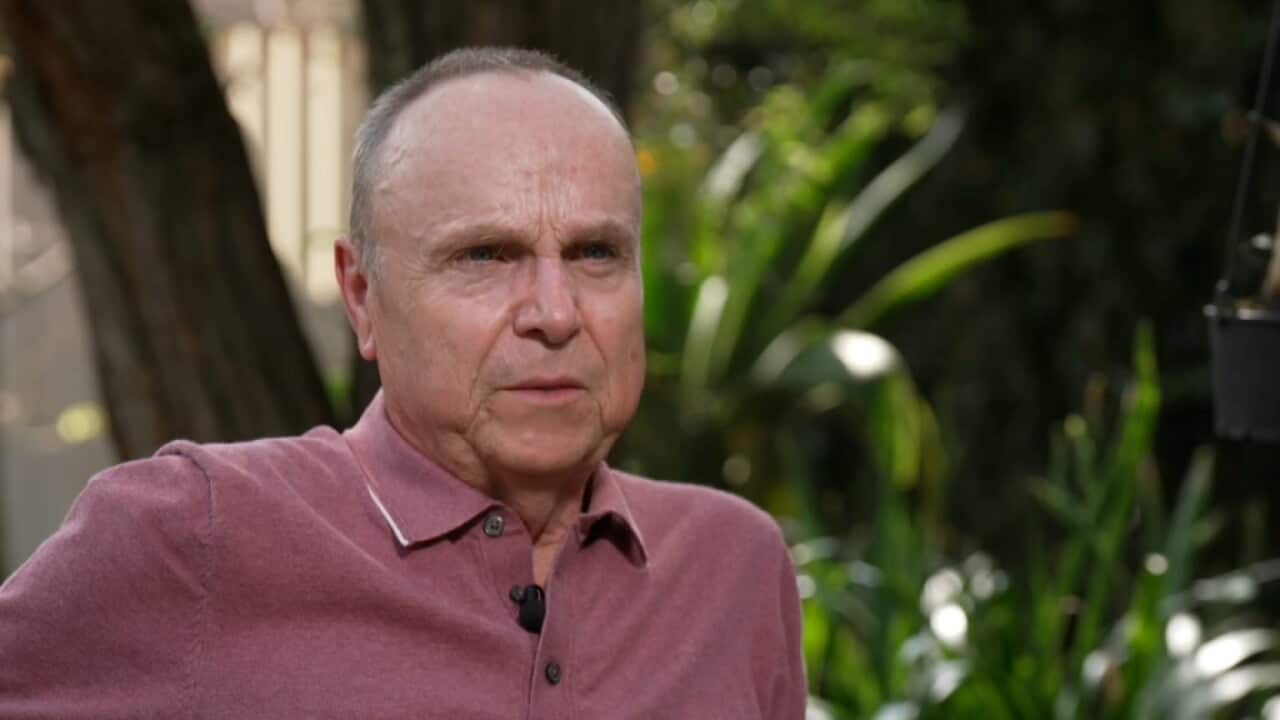
"The search is important personally, because I think it could point to knowing a little more, if not the totality of the answer, at least a little more about what may have happened. For many other families, it has a very deep personal significance because it's about saying goodbye with an air of finality. It's about the dignity of separation and of parting and many other things that remain suspended in some ways."
That's KS Narendran.
His wife, Chandrika Sharma, was on her way to Mongolia's capital, Ulaanbaatar, for a conference, and transiting through Kuala Lumpur and Beijing.
She's one of the 239 people on board Malaysia Airlines Boeing 777 - Flight MH370 - when it went missing.
The aircraft departed from Kuala Lumpur on the 8th of March in 2014, bound for Beijing.
There were 227 passengers and 12 crew members on board, mostly Chinese nationals, but also 50 Malaysians and seven Australian citizens.
Among others were citizens of France, Indonesia, India, the United States, Ukraine and Canada.
"There's bewilderment, there is perplexity. I mean, one is still quite incredulous when one thinks about it. So I suppose it's quite natural as human beings to kind of agonise, to think about questions that remain unanswered. And you're not at peace until you have a reasonably acceptable, reasonably clear answer to the questions because it has had a life-changing impact."
He looks back to the day everything changed.
"It was a very long day, that's what I remember, a long day where I essentially had to manage the communication with my mother, Chandrika's mother, my daughter who was at that time in Delhi, and to be very certain."
He says by lunchtime, the news was out on television and he wanted to ensure they heard it from him first.
"So it was emotionally difficult - it was physically punishing as well, it messed up my mind. It must have messed up my capacity to respond to even day-to-day challenges for quite a while. And so I had to reconfigure life all over again, afresh, in terms of what it means to live without a partner of close to 25 years."
He says he had to re-think the future, rather differently from what he had envisaged with his wife.
He says it took about five to six years, and now the emotional charge of the loss has eased somewhat.
"The tears have dried, but it doesn't mean that anger doesn't well up once in a while, just the fact that something like this happened and we're still struggling to know what happened. So like many other families, we have tried to reconstruct our lives, reconfigure what's important and what's immediate. And it's a different world today. It's a different life today. I think it significantly impacted both what I thought was important in life, who were important in life."
Military radar at the time showed the plane left its flight path to fly back over northern Malaysia, before going into the region of the Andaman Sea and then turning south.
After that, all contact was lost and the plane has never been found, save for some debris that washed up along the coast of Africa and on islands in the southwestern Indian Ocean.
Fuad Sharuji is the former crisis director of MH370 at Malaysia Airlines.
He says he was woken up abruptly, nearly 12 years ago.
"When I got a call at about two o'clock in the morning of 8th of March, 2014, from my operations control centre to report that MH370 was missing from our radar. So I knew there was something wrong. So immediately I asked my duty manager to try and locate what are the other aircraft (nearby) and try to communicate with MH370."
He says there were four flights over South Indian Ocean at that time.
"Unfortunately, all four failed, couldn't establish any contact with Flight 370. So after that, we declared an emergency."
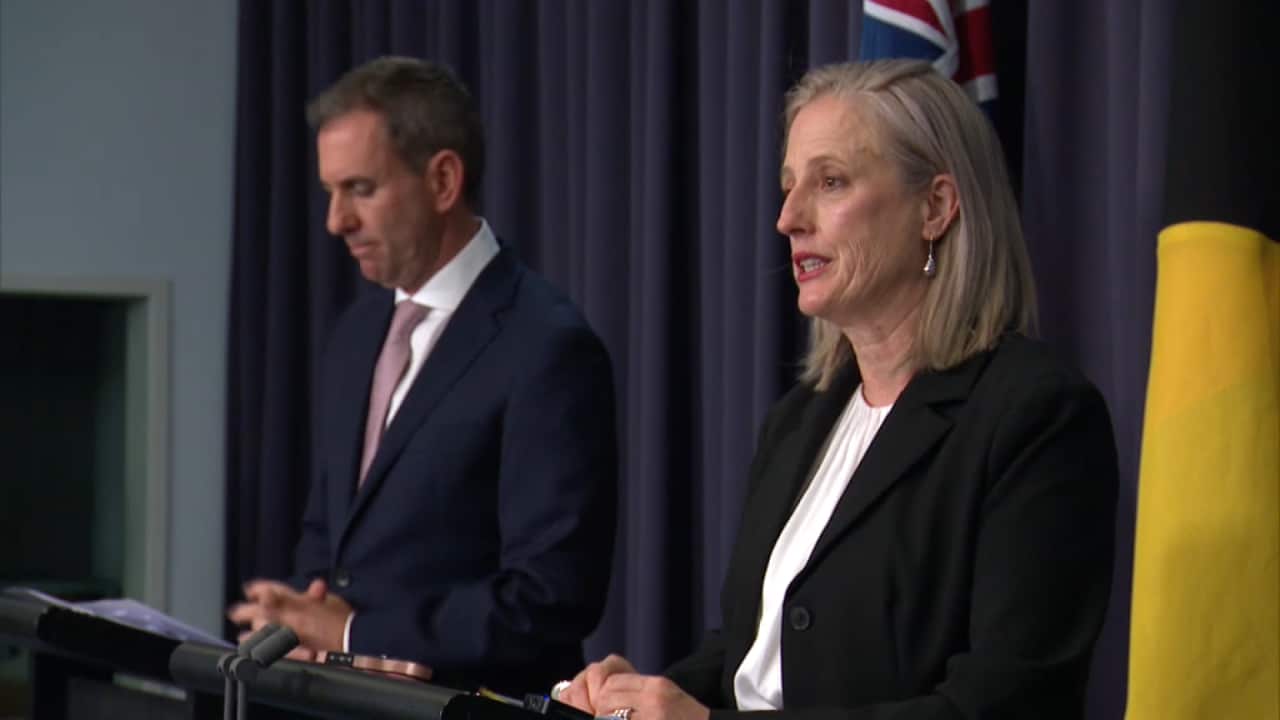
Malaysia's Transport Ministry announced a fresh search of 15,000 square kilometres in the southern Indian Ocean will be carried out by UK- and US-based marine robotics company Ocean Infinity, on a 'no find, no fee' basis.
Ocean Infinity has confirmed with the Ministry the new seabed search operations will last 55 days, to be conducted intermittently.
If they find the wreckage of the aircraft they'll receive a fee of AU$106 million.
A statement from Ocean Infinity says due to the sensitive nature of the search, formal communications will come through the Malaysian government.
The initial searches saw investigators from Malaysia, China and Australia scour 120,000 square kilometres of the ocean.
Mr Sharuji says the technology today is significantly more capable than it was in the 2014 and 2018 searches.
"But this time the technology has advanced over more than a decade that the technology has got a better understanding, the use of improved AUVs (autonomous underwater vehicles), better terrain mapping, and then we also have a better, more refined modelling based on satellite and drift data."
Ocean Infinity was involved in two other searches earlier this year, looking for the bulk of the missing plane.
Their last search in March-April looked for the plane in four so-called hotspots, 1,500 kilometres west of Perth.
That search was halted due to rough seas and poor weather conditions.
Mr Sharuji says the plane's black boxes will hold the answers, but he has reservations on what condition they're in, if retrieved.
"If the black boxes are found, then we have to send it for analysis. And whether the black boxes is readable or not is another question, but assuming, which we hope that it could still be read, that the data that's provided in the two black boxes, the CVR (cockpit voice recorder) and DFDR (Digital Flight Data Recorder) could give us some light on what actually happened towards the end of the flight."
He says it's important to know why the flight abandoned its filed path.
"Also why the flight diverted so many times, diverted over Igari, diverted over Penang, and then also diverted over Andaman. So there were three diversions and we want to know why."
Between October 2014 and January 2017, the Australian Transport Safety Bureau led the initial underwater search for the missing Boeing 777 aircraft, to support the Malaysian government.
Their active involvement in search efforts for the aircraft concluded with the publication of their 2017 report on the search.
A statement from the ATSB spokesperson says they welcome the new search and remain supportive of renewed efforts to find the aircraft by providing technical assistance.
At Malaysia’s request, ATSB representatives have joined a working group to review seafloor imagery if the search operator identifies potential debris from MH370.
Blaine Alan Gibson is an adventurer and has been on a quest to find the missing parts of the aircraft.
He has found debris of the plane that were brought to him by locals along Africa's east coast and islands in the southwestern Indian Ocean.
Mr Gibson says he was inspired to search for missing parts of the plane after attending MH370's one-year anniversary in Kuala Lumpur.
"I heard Grace (Nathan) speak about losing her mother on the plane. And I thought, well, how would it be if my mother had been on that plane or how would it be for my mother if I had been on that plane? And I realised that I could maybe make a difference because nobody was searching for debris on the beaches and shorelines."
He says the renewed search area is the right area - but points out it's a very large area.
"I have always believed with the UWA (University of Western Australia) drift analysis that the plane is at or near Broken Ridge between 32 and 33 degrees south. And I think if they search that whole area where they started around 36.5 degrees south and go all the way up to 33 and extend it up into the UWA area to 32 at Broken Ridge, I think they'll find it."
A 495-page report into the missing flight by the Malaysian government's Flight 370 Safety Investigation team has suggested the plane's controls were probably deliberately manipulated to go off course.
But investigators could not determine who was responsible, and Mr Gibson says that depends on finding the wreckage.
"We do not know what happened, and the accusations against Captain Zahari (Ahmad Shah), to me, are very unfair. I mean, I remember hearing Jacquita (Gonzales) telling me before she passed, ‘Innocent until proven guilty.’ There is no evidence, there is no proof. We need to find the plane to know."
He says it's important to know what happened.
"That's in the family's interest, in the flying public's interest, and it's in Malaysia's interest because it's important for Malaysia to be able to put this behind them and move on. They need to find the plane and the truth."
Mr Sharuji echoes the sentiment, saying it's the government's responsibility to continue the search.
"This renewed search is not about reopening old wounds, it is about responsibility: responsibility to the passengers, to the families, and also to the integrity of aviation safety. And we hope that this time the search mission would bear some positive results."
SBS News has contacted Malaysia's Transport Ministry for a comment, but is yet to receive a response.
For Mr Narendran the questions remain - why did an aircraft that was meant to be safe simply disappear, and what if the plane is never found?
The thought of that saddens and bothers him.
He says it doesn't feel right to stop looking.
When asked about his hopes for answers, he says it is not about celebrating if it's found.
"This hope doesn't have that same quality around it. It only can at best settle the unsettled parts of oneself that we have carried forward for the last close 12 years. And I think maybe that's precious too, and that's something to look forward to."