
One in four women in Australia faces mental health challenges. However, some are at risk when seeking help in mixed-gender hospital wards. An Australian psychiatrist is working to change that.
Listen to Australian and world news, and follow trending topics with SBS News Podcasts.
TRANSCRIPT
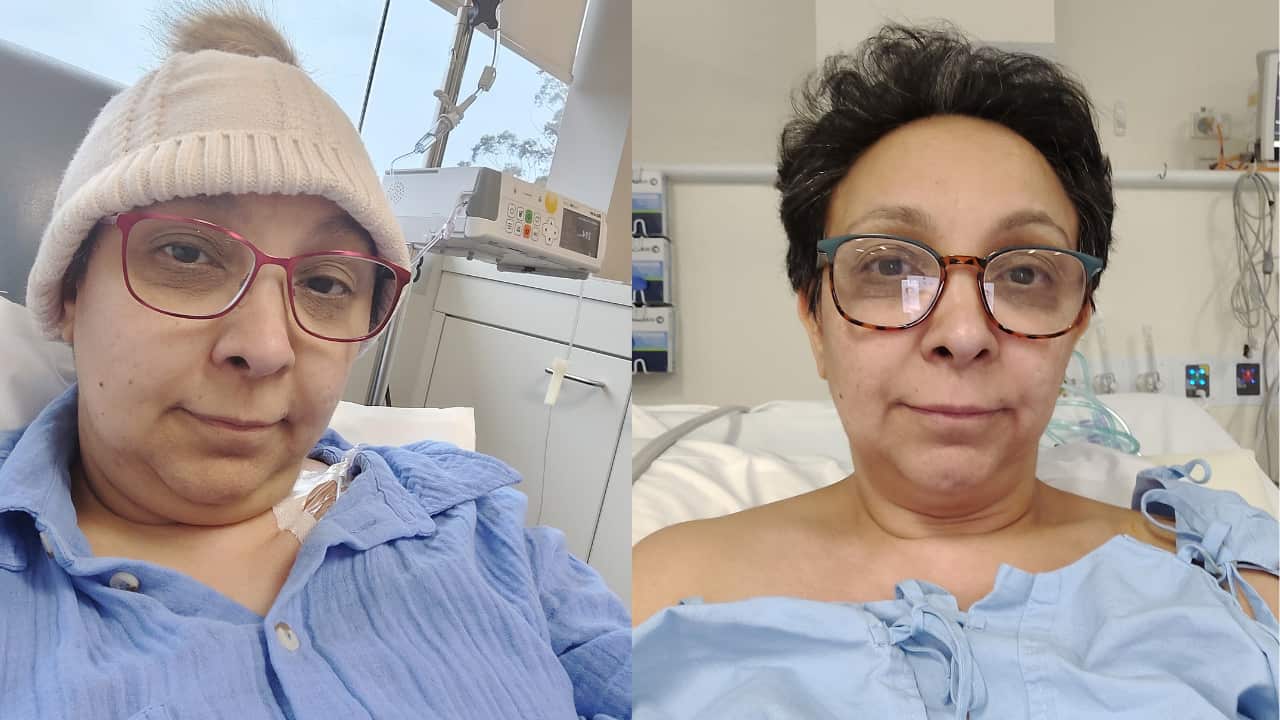
Tanya is adding crayon to a colourful artwork, in a small, well-lit room at a Melbourne women’s health hospital.
She says developing a passion for painting was life-changing.
"I've spent my life using words, words, words, words, words, and here I learned about non-word expression. It just felt really satisfying. It was soul soothing!"
Tanya’s art therapy is part of a women’s-only program treating debilitating mental health conditions.
Tanya sought help after struggling with basic tasks.
"I arrived here in a very diminished capacity. So, I had gone from being a full-time working mum with teenagers. And I just ended up barely able to go to the supermarket. I just was in a really bad way. I had to take time off work and then I just couldn't go back. I was very much struggling."
Tanya had no idea what was happening.
Doctors diagnosed conditions including complex post-traumatic stress disorder.
"I got CPTSD, ADHD, anxiety, depression. I had been raised to not acknowledge that mental health was a thing. It's so important to have a sense of your own mental wellbeing."
Tanya is among the one in four women in Australia facing mental health challenges.
For many, symptoms flare up when hormones change during menopause.
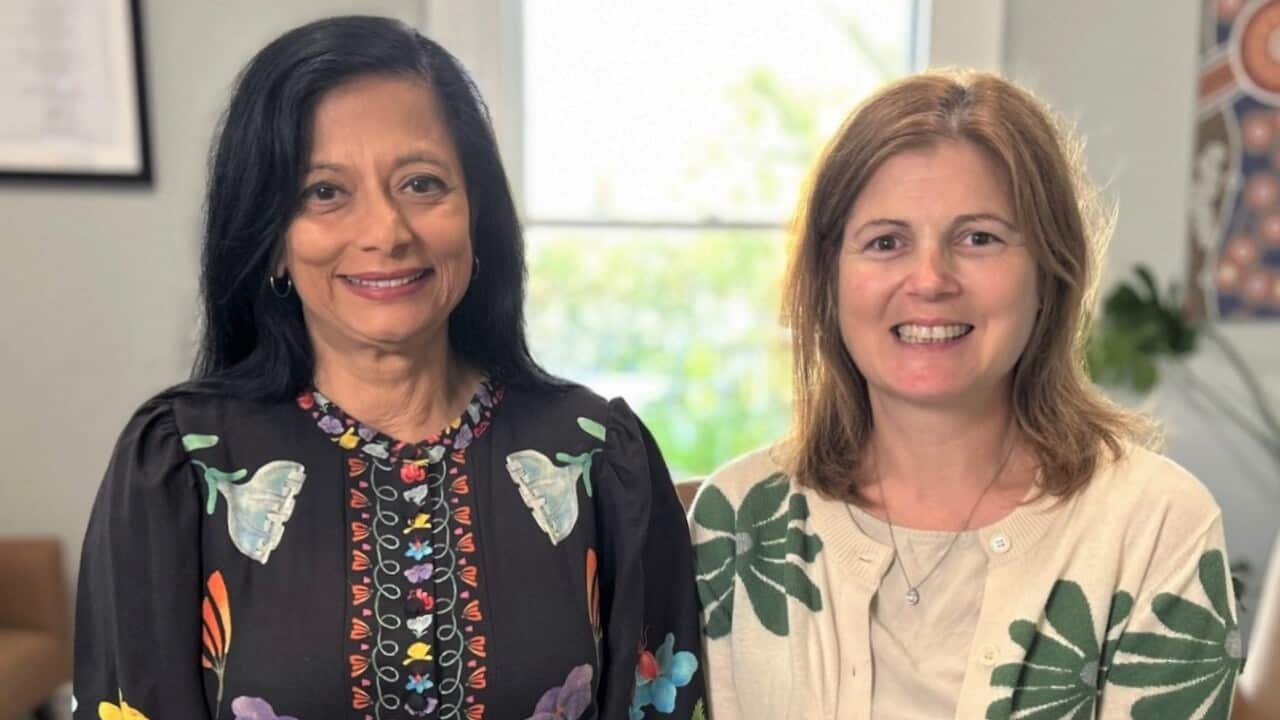
Jayashri Kulkarni is professor of psychiatry at The Alfred Hospital and Monash University and a world leader in hormone therapy.
"We have highly successfully treated, women who have presented with what actually is menopause depression but had been misdiagnosed. The depression's gone within a couple of weeks, this is a spectacular turnaround."
Professor Kulkarni fulfilled a dream to study medicine after migrating from India as a child. After working for decades in public and private hospitals, she helped found a female-only facility five years ago. Because, she says, mixed gender wards can be unsafe for women.
"There are many, many risk factors in a co-gendered ward. Very sadly, I have been involved with situations where women have been traumatised or abused, or even the worst cases, raped, by co-patients. And it's usually male patients who assault female patients. It's a real issue for so many women who have had a background of trauma and violence in their own lives that has led to mental illness, and now they want help for that. And in the process of getting help in the inpatient facility, they have been re-traumatised or sometimes people leave the hospital with more new trauma than what they came in with in the first place."
Professor Kulkarni’s concerns are shared by the Royal Australian and New Zealand College of Psychiatrists.
Dr Angelo Virgona is its president-elect.
"Having mixed inpatient units is a problem. The rates are really very high of sexual violence and harassment in inpatient units, due to the increasing acuity that we're seeing in people who are mentally ill and particularly those with associated substance use problems or drug-induced psychotic type disorders, that the atmosphere on inpatient units is very distressing, very harrowing, and frightening. It's a terrible indictment, I think, when we have women being admitted to hospital in distress and having potentially worsening of symptoms or development of new disorders as a result of their experiences in hospital."
So far, more than 1,000 patients have received treatment at the female-only facility in Melbourne. The hospital, in a grand Victorian building in the bayside suburb of Elsternwick, was refurbished to protect privacy, says Chief of Mental Health and Cabrini Outreach, Sharon Sherwood.
"We have 30 beds, so 30 women, and women transition from the inpatient into the community. So, we've currently got about 130 to 150 women participating in our programs at any given time."
It’s part of Cabrini’s global not-for-profit health network operated by a religious order, that was founded by Saint Frances Cabrini in 1880.
Ms Sherwood says it has a broader mission to tackle disadvantage.
"Our access fund is available to people who can't afford private health insurance, asylum seekers and refugees, Aboriginal and Torres Strait Islanders. And this is access to our 14-day length of stay in our inpatient unit and access to our community program."
However, Dr Virgona says more women’s-only mental health hospitals are needed.
"Psychiatrists across Australia and New Zealand have been concerned about this for a long time any new development of mental health services should have a single gender orientation and wherever possible there should be attempts made at retrofitting the existing facilities so that women can have safe spaces."
Professor Kulkarni hopes the way women’s mental health is treated will gradually change, in Australia and world-wide.
"This model is serving as the blueprint for future women's mental health care. It is about the compassionate way of providing mental health care, but also cutting-edge mental health care, such as with the hormone strategies that I've done the research with. But I'm really proud of the women. And every time we can just add a little bit more to the quality of life of somebody, I'm very proud that we've been on that journey with her."
For Tanya, it’s also about rebuilding confidence while studying for a new career in health and leisure at TAFE.
"It's hard for me to ever say that I'm proud of myself, but I've worked really hard with the support here. And I'm very grateful for the journey."