

Ukrainian President Volodymyr Zelenskyy says a US document on security guarantees is "100 per cent ready" to be signed. He also indicated some progress was made at tri-lateral talks on the weekend between Ukraine, the US and Russia. But he called on the U-S and Europe to keep up pressure on Russia, through sanctions.
Listen to Australian and world news and follow trending topics with SBS News Podcasts.
TRANSCRIPT
Touching down in Vilnius for talks with his Lithuanian and Polish counterparts, a warm welcome for Volodomyr Zelenskyy, before a joint press conference, where the Ukrainian leader had something to reveal.
"For us, security guarantees come first. These are bilateral security guarantees from the United States. The document is 100 per cent ready, and we are waiting for our partners to confirm the date and place when we will sign it."
The document, he says, will need to be ratified by the U-S Congress and Ukraine's parliament.
Over the weekend, Ukrainian, Russian and American representatives wrapped up two days of negotiations in Abu Dhabi without a deal on ending the war.
But US officials expect another round of talks next week, suggesting both Moscow and Kyiv were open to further dialogue.
While Mr Zelenskyy indicated some progress was made in the Abu Dhabi talks, he also stressed Ukraine's territorial integrity must be respected.
"I hope America will not reduce pressure on Russia over this war for the sake of diplomacy. Europe must be resolute as well. To continue pressure, sanctions pressure on Russia. Russian tankers transporting oil, including through the Baltic Sea, must be stopped."
Meanwhile, French authorities have detained the captain of an oil tanker, suspected to be part of Russia's 'shadow fleet', shipping oil under a false flag, in violation of sanctions.
The tanker has arrived in southern France, after being seized in the Mediterranean, by the French Navy.
It was heading to the Russian Arctic Port of Murmansk before being intercepted.
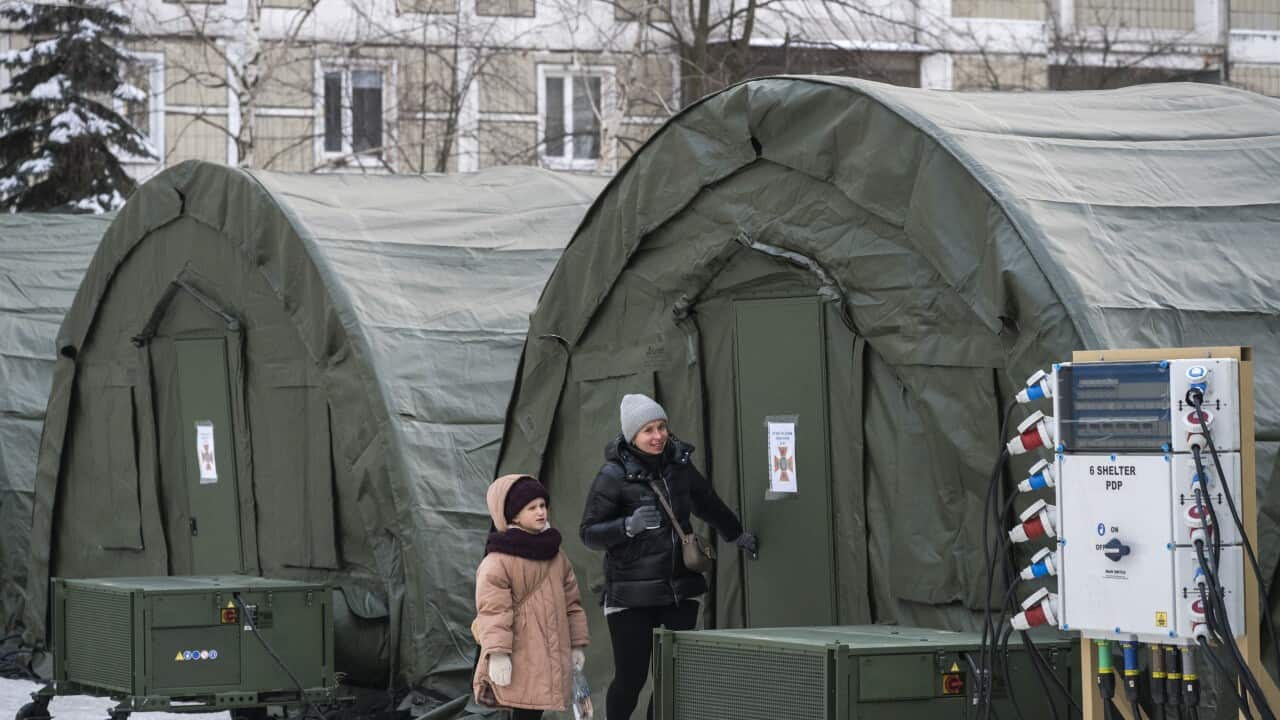
Volodymyr Zelensky is also seeking more air defence support from allies, as hundreds of buildings in Kyiv remain without heating in freezing temperatures, after recent Russian strikes.
This is 31-year-old mother, Yevheniia Klymenko.
"We have electricity more often off than on. I have a small child - you have to keep her warm. There's always a pile of laundry, and after shelling the water is often gone for a long time, which makes things hard. But we're already used to it."
As power was cut, residents of one apartment building gathered for an outdoor party, warming themselves by open fires and grills.
Others turned a volleyball court into a dance floor.
"It's very cold outside and at home. You can't even take a shower, wash fruit, or cook food. There is no water at home, no heat. But somehow we survive."
Waning hope for a breakthrough, as Ukraine endures its fourth war-time winter.









