
The Feed's latest debate brings together a panel of influencers, socialists and property investors to discuss capitalism. It can be streamed now on YouTube.
Gary Stevenson went from rags to riches by betting that life would get harder.
"I come from a poor background [in the UK] and I've made millions of pounds by betting that living standards in Western countries, including the UK, including Australia, will get worse and worse and worse," he tells The Feed.
While working as a rates trader in London after the GFC, he bet that interest rates would remain low because rising inequality would prevent spending, and the UK economy wouldn't recover.
"I figured out, if I could understand why the economy was weak ... I could make a ton of money."
News that makes sense
Your trusted source for staying up-to-date with the world around you. Get free daily news updates and analysis, straight to your inbox.
He later left his successful trading career to campaign against wealth inequality — and has now gained 1.5 million YouTube subscribers by explaining, among other things, how the rich get richer, and regular people can't get ahead.
The economist and multi-millionaire recently signed an open letter calling for higher taxes on people like him — the super-rich. He was joined by hundreds of other wealthy individuals, including three Australians: entrepreneur Dick Smith, tech executive Graham Marr and anaesthetist Richard Barnes.
"The gap between the super-rich and everyone else grows larger every day, stretching across neighbourhoods, nations and, perhaps most of all, generations," the statement reads.
"So tax us. Tax the super-rich."
The number of Australian billionaires has more than doubled over the past decade, rising from 74 in 2015 to 161 in 2025, according to Oxfam analysis.
Separate analysis by Oxfam found that 47 billionaires in Australia each earned an average of $67,000 an hour. The median Australian wage was about $74,100 as of August 2025 — that's around $40 per hour.
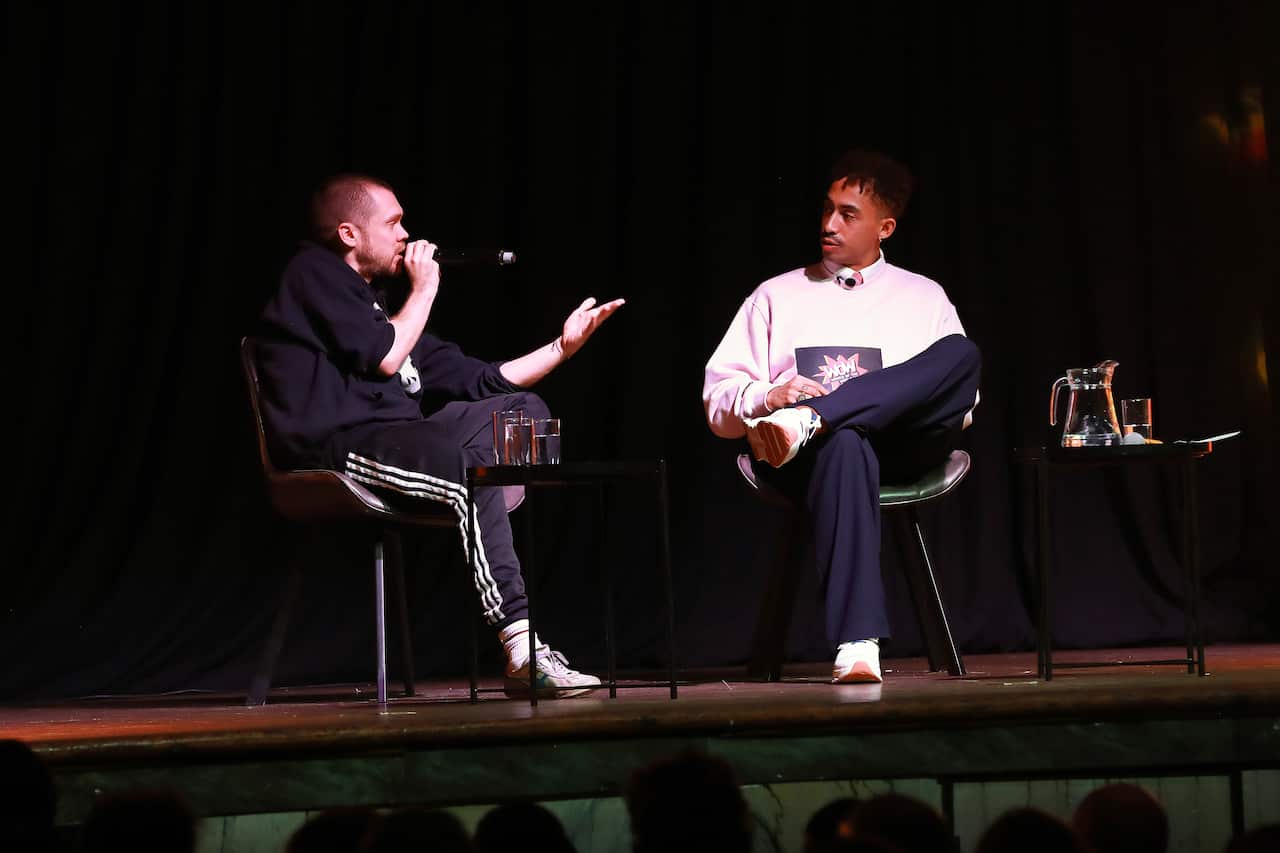
Wealth concentration around the world means the richest 10 per cent hold close to 75 per cent of all wealth, according to the latest World Inequality Report.
Capitalism has become a game of "winner takes all", says economist Professor John Quiggins from the University of Queensland, who believes the issue of extreme wealth is geopolitical.
"When you have people who are incredibly rich relative to the rest of the economy, and willing to use that wealth to promote their own political interests, you see democracy being eroded," Quiggins tells The Feed.
Wealth and political representation are closely linked; billionaires are far more likely to gain political office compared to ordinary citizens, according to Oxfam. It found 74 of 2,027 billionaires on the Forbes Billionaires list in 2023 also held executive or legislative positions.
How do you tax wealth?
Around the world, billionaires pay relatively low tax rates, according to a report prepared by the G20 in 2024. The report proposed an internationally coordinated tax equal to 2 per cent on people with more than US$1 billion ($1.4 billion) in wealth, which it says could raise US$200-US$250 billion ($285-$356 billion) each year from about 3,000 taxpayers.
G20 leaders agreed to the proposal in principle, and some countries attempted to establish a wealth tax.
But there has been pushback; in October last year, French politicians rejected a 2 per cent tax on wealth over 100 million euros ($164 million) built from the report.
Some countries already tax wealth. Norway introduced a net wealth tax in 1892, which is still in place. It charges 0.65 per cent based on the combined value of assets like property, shares and business capital totalling more than 1.9 million kroner ($279,000), or 0.75 per cent for a wealth of 21.5 million kroner ($3.2 million).
America has a tax on estate values higher than US$14 million ($20.1 million) and some states have their own inheritance taxes and estate taxes, which collected a combined US$9.4 billion ($13.5 billion) in revenue in 2021, according to the Tax Policy Center in the US.
Australia no longer has an inheritance tax. State and federal governments had estate duties until the late 1970s when they were rolled back, due to public pressure; wealthy individuals were seen to be avoiding them, and they were costly to administer.
While Australia doesn't have a wealth tax, it does impose taxes on capital gains, certain business activities through GST and payroll tax — and from 1 July, additional taxes will apply to earnings on superannuation balances above $3 million and $10 million.
Australia has a strong reliance on income tax — our highest income tax rate applies to people making more than $190,001; they pay $51,638 in tax plus 45 per cent of every dollar over $190,000.
But that doesn't mean everyone pays — 91 Australians who reported a total income or loss of more than $1 million in 2022-23 paid no tax.
A debate on capitalism
Opinions on billionaire wealth can vary. In a debate for SBS The Feed on capitalism, financial content creator Queenie Tan says she worries about how wealth compounding can contribute to rising inequality.
"Once you have investments, [it can become] an infinite money loop and you can assume that the billionaires that exist today will be billionaires forever, and their families as well," she says.

Simran Kaur, a business owner, author and financial influencer of Friends That Invest, which has almost 700,000 followers on Instagram, thinks that billionaire wealth could be taxed to benefit the public.
"I don't think we can get rid of [billionaires], so let's make them work for the everyday person," she says, pointing to America's inheritance tax.
Content creator Jack Toohey believes "there's no such thing as 'self-made' billionaires".
"[Billionaire status is] based on the workers that created the value of that business," he says.
But policy analyst Cian Hussey from The Institute of Public Affairs highlights that the business of wealthy individuals can create jobs, tax revenue and "contribute enormously to the economy".
Buyers agent Eddie Dilleen, who grew up in social housing and now owns 180 properties, thinks billionaires can provide innovation and employment opportunities, pointing to the achievements of Canva.
Canva is a digital design company started in Perth by Melanie Perkins, Cliff Obrecht and Cameron Adams now worth an estimated $65 billion, according to the AFR.
The company employed more than 4,000 people in 2023. That growth has meant all Canva founders are now billionaires — Perkins and Obrecht are worth $14.4 billion as a couple, and Adams is worth $6.98 billion.
'Billionaires shouldn't exist'
As the wealth of people like Elon Musk and Jeff Bezos continues to grow, the ultra-wealthy have become a point of contention.
In Australia, Gina Rinehart doubled her wealth in a year from $13.8 billion to $28.9 billion, according to the 2019 and 2020 AFR Rich List rankings. In 2025, she maintained her lead as Australia's wealthiest person from the previous year, with a fortune of $38.1 billion, despite a 6 per cent drop in her net worth.
At the same time, her company Hancock Prospecting paid $2.6 billion in total taxes for the 2025 financial year from a revenue of $11.5 billion, according to its annual report.
Sayings like "billionaires shouldn't exist" are popular on TikTok, while a 'Tax the Rich' rally drew 1,500 people to New York state last month.
The issue is also making statements in politics and pop culture. Zoran Mamdani won the 2025 New York City mayoral race, running on a platform that included raising taxes on those earning more than US$1 million ($1.4 million) a year.
Meanwhile, musician Billie Eilish called on billionaires to "give your money away" while accepting an award in October.
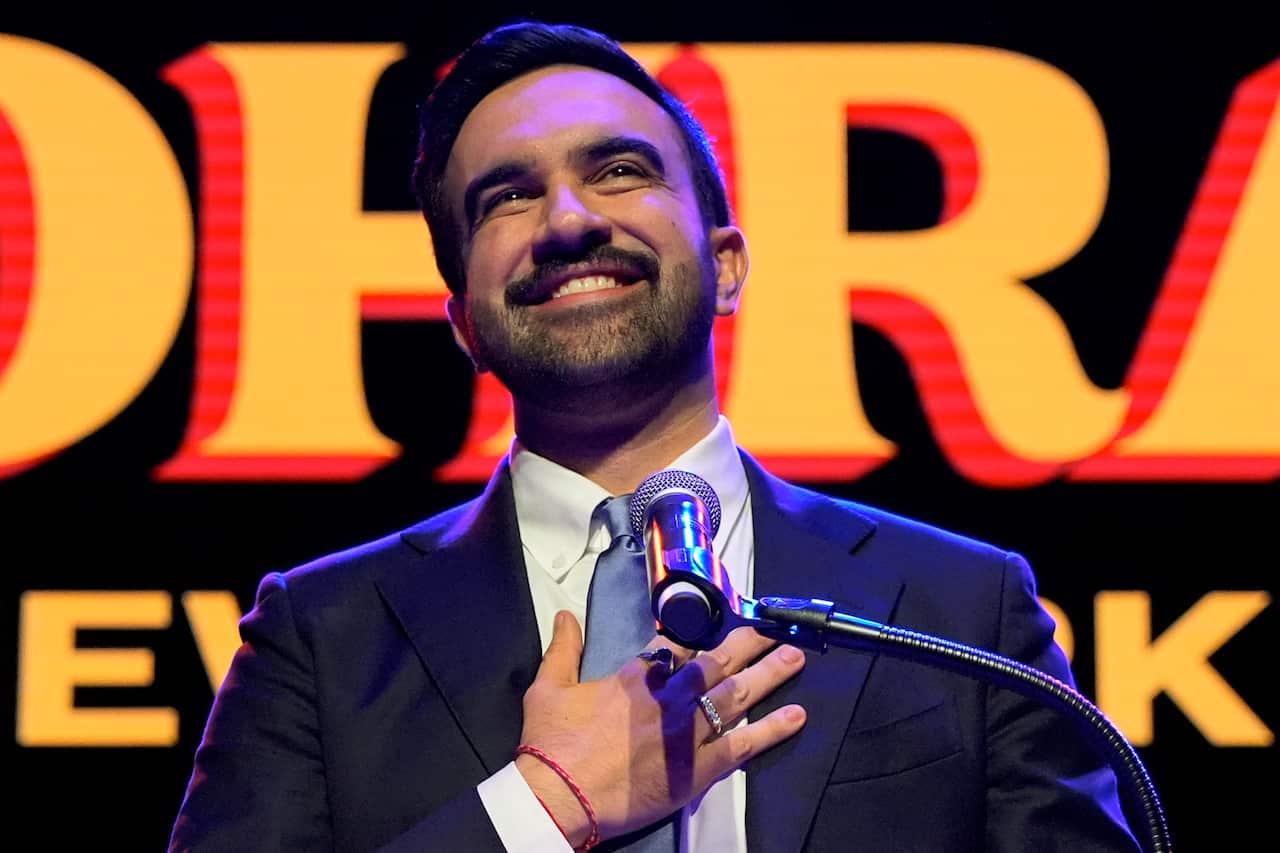
While each generation in Australia has generally earned more than the last, people born in the 1990s have experienced almost no wage growth compared to people born in the 1980s of the same age, according to the Productivity Commission's 2024 report on Economic Mobility in Australia.
People are also spending more on housing than they once were. In 1984, 16 per cent of homebuyers were spending more than 30 per cent of their income on housing. By 2024, this had risen to 44 per cent, according to the Australian Institute of Health and Welfare's 2025 reporting on housing affordability.
Is capitalism to blame? Professor John Quiggins says it hasn't always been a system of such extreme inequality.
"We've had a capitalist system for the last 200 years ... when it's modified appropriately, it doesn't produce huge concentrations of wealth," they say.
"In the 1950s and 1960s, we didn't have these gigantic wealth differentials. [But] if you add in financialisation and less progressive tax system, you end up — as we've seen — with very big concentrations of wealth."
Quiggins says the fortunes of "old styles of wealth" like real estate have also built up because "tax systems are much more favourable to the rich than they used to be".
A blueprint in the past
Wealth concentration could potentially be heading towards levels seen in Europe between 1800 and 1910, when the top 10 per cent owned around 80 to 90 per cent of the wealth, according to some experts like author and French economist Thomas Piketty.
Former trader Gary Stevenson says the UK brings a "message from the future" for Australia, "which is that things are not that bad [in Australia], but poverty is growing".
"The UK was obviously, not that long ago, the richest country in the world. And now half of the ordinary families struggle to simultaneously feed the kids and turn the heating on.
"We're a lot further down the line in the UK. And I think unless you do something about that top-end accumulation of wealth, that is the cause."
But he notes that the history of Europe and the UK also provides a blueprint to address inequality.
"The history of Europe is phenomenal inequality — a tiny, tiny, super-rich elite surrounded by desperate poverty," he says.
"In the 20th century, that changed ... And they did that by taxing the rich."
Following the second World War, UK estates were taxed at up to 80 per cent by 1949, and by the 1970s, the highest income taxes reached roughly the same rate.
"And I don't think it's a coincidence that at that time, people like my dad who worked for the Post Office for 35 years on 20 grand a year, could buy a house and have a pension and have a retirement and go on holidays.
"That generation of 20th century created the middle class, created good living standards," he says.
"And here we are 70 years later, letting it dissipate. It was done by our grandparents. Of course, we can do it again."

Through award winning storytelling, The Feed continues to break new ground with its compelling mix of current affairs, comedy, profiles and investigations. See Different. Know Better. Laugh Harder. Read more about The Feed

Have a story or comment? Contact Us







