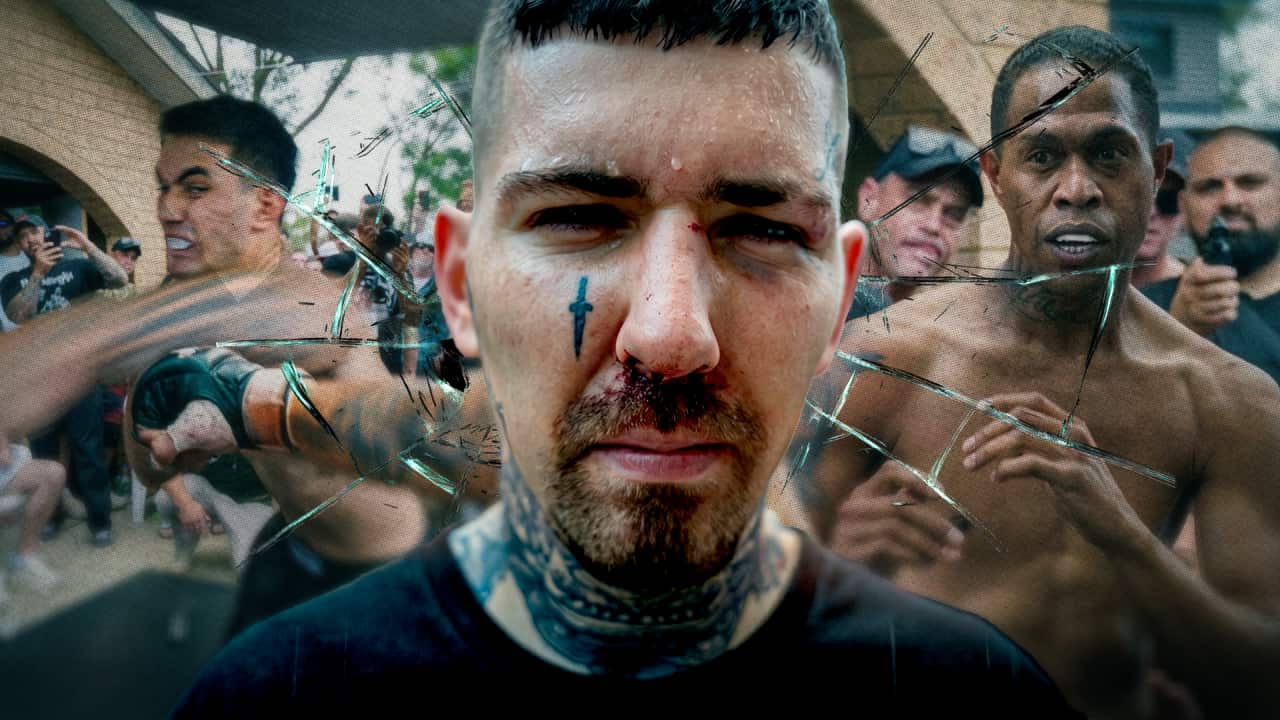
Watch The Feed's latest short doc on a Backyard Bare Knuckle Fight Club
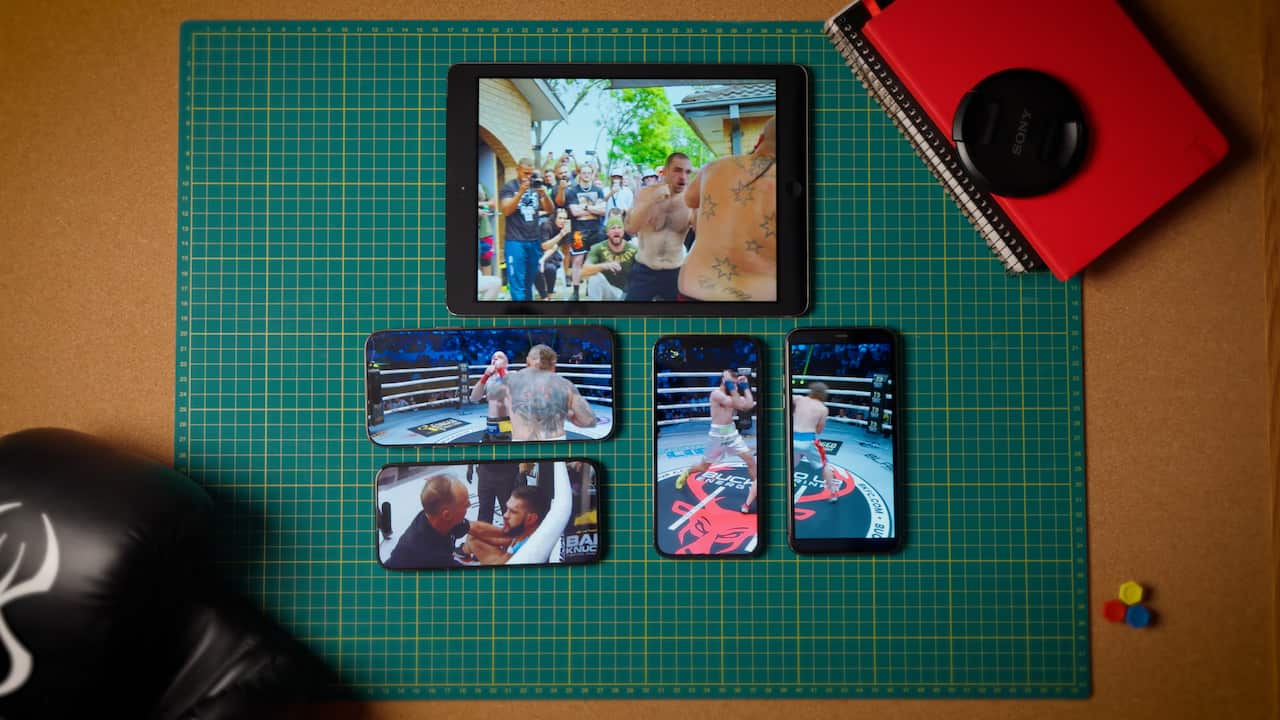
A jumping castle is inflated outside a red-brick house in Sydney. In the backyard, a barbecue fires meat for the men, women and children piling in for the event on Australia Day.
People stand around with drinks, laughing, mingling. For a moment, it could be a family get-together.
Then you notice the rubber mats and remember why everyone is here. They’ve come to watch men fight bare knuckle. Some fighters have driven interstate for a single three-minute round.
News that makes sense
Your trusted source for staying up-to-date with the world around you. Get free daily news updates and analysis, straight to your inbox.
The address is spread around just before the event. It is invite-only and not approved by the NSW Combat Sports Authority.
In a statement to The Feed, the NSW Combat Sports Authority said anyone who arranges, holds or takes part in a combat sport contest outside the Combat Sports Act may be committing a criminal offence, with serious penalties, including imprisonment.
Under NSW combat sport rules, gloves must be worn in boxing. The authority said it considered last year whether bare knuckle contests should be exempted, but determined they would not.
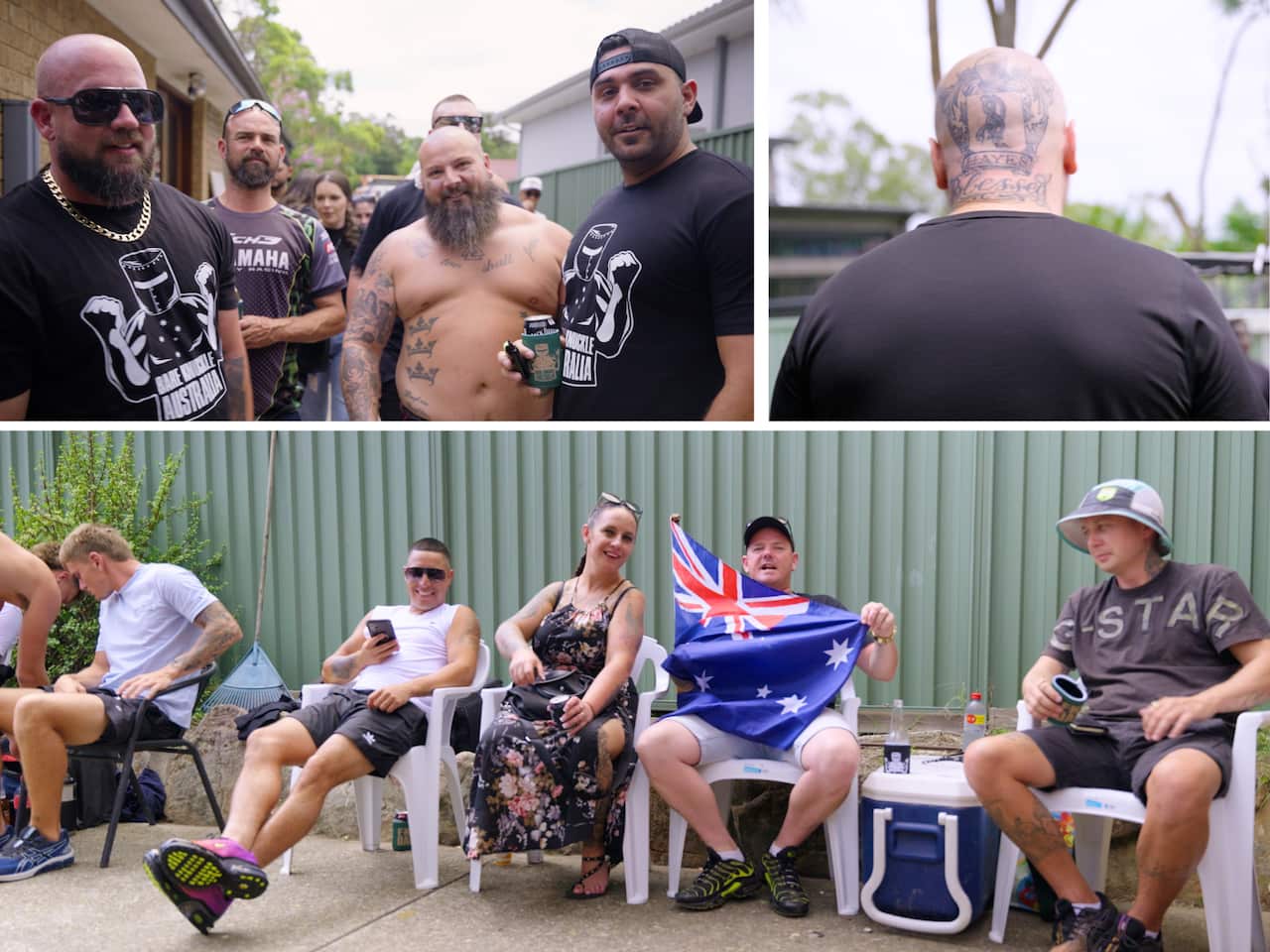
It’s why, organiser and former fighter Randall Rayment, 39, says they’ve had to congregate like this.
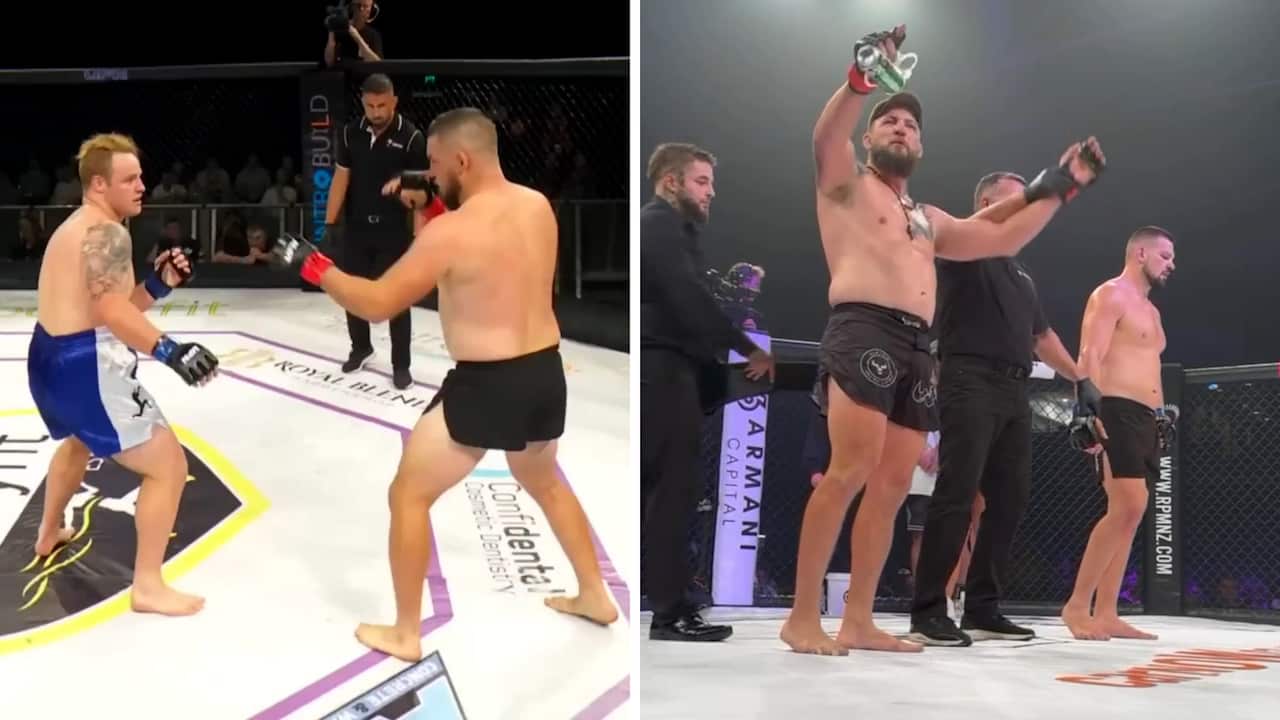
Known online as "The Limb Reaper", Randall is a retired MMA fighter, jiu-jitsu black belt and boxer. These days, he says bare knuckle is the fight style he cares about most.
"The rules are basically, you respect everyone," he tells The Feed. "If you're going to be a gronk, you're kicked out, the fight’s stopped."
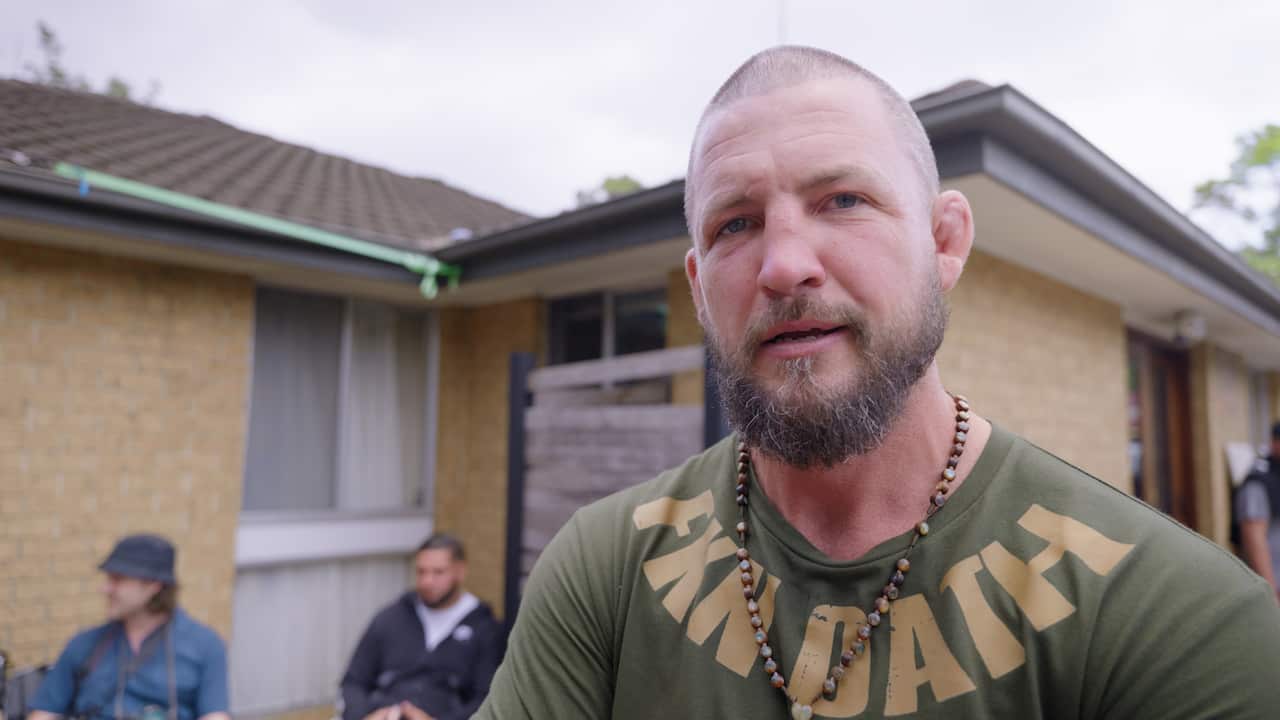
Though the group has gathered on Australia Day, he says they’re apolitical: "We just want to enjoy the day."
It is not a polished fight event. There is no prize money, no official winner and, at times, the weight classes appear loose.
"We couldn't really have scales and shit here," Randall says to the people about to fight. "We're going to try and weigh you up as close as we can."
The day begins with gloved rounds, before the gloves come off.
First aiders are floating around, Randall says.
There is no doctor, no referee, no judges, because he says the day is just "sparring" — not a contest.
But that distinction can feel blurry.
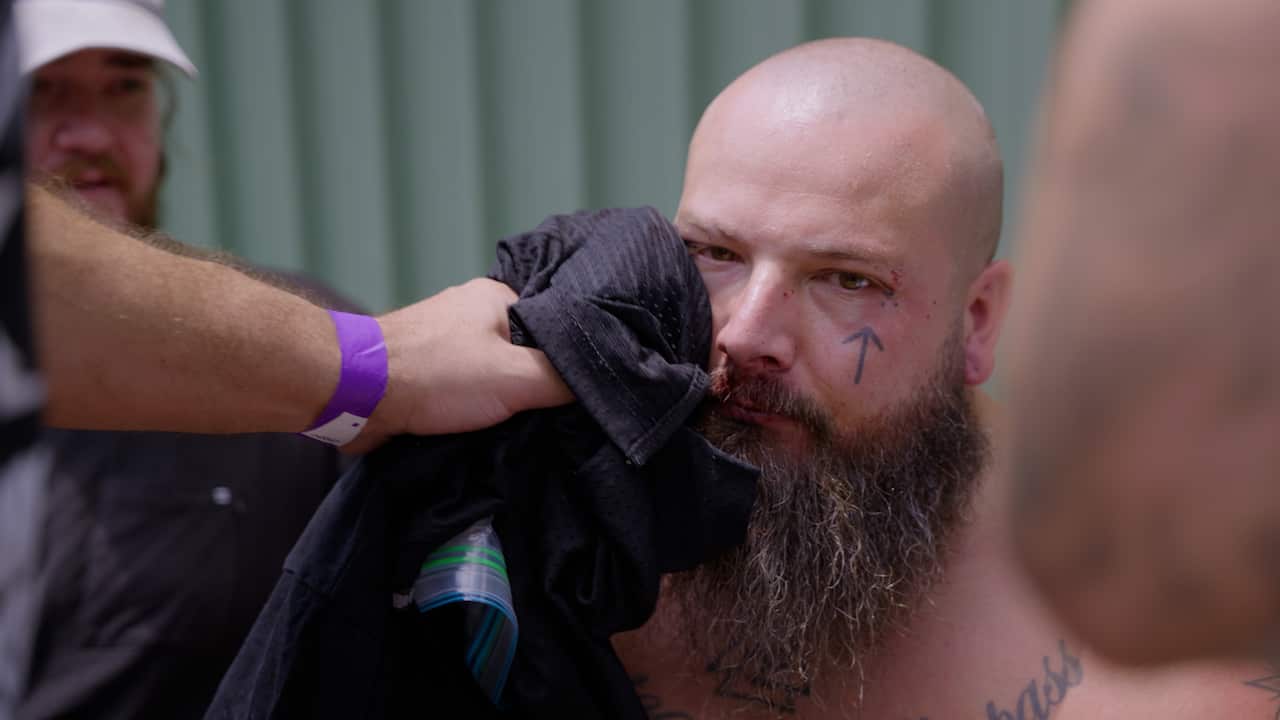
Two opponents are stepping forward to aim fists at each other’s heads. And around the mats, the crowd cheers them on, people are coaching, filming the event and picking a side.
'The purest form of fighting'
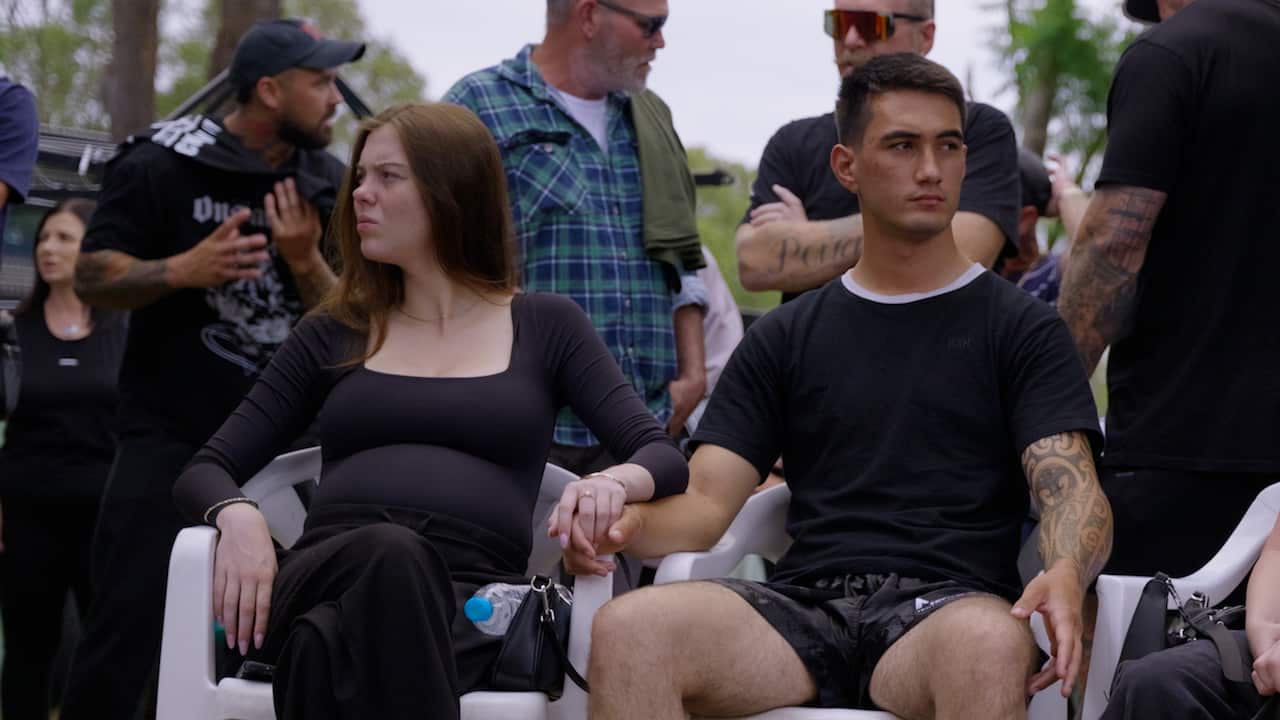
One of the fighters is Tui, who goes by "Tui Knuckles". The 20-year-old is trying to make a name for himself in the sport, and he’s driven nine hours from Queensland to Sydney for the event. He’s on the backyard "main card".
"I've been fighting pretty much most of my life, just only on the street because I grew up in Logan [an outer region of Brisbane]," he tells The Feed.
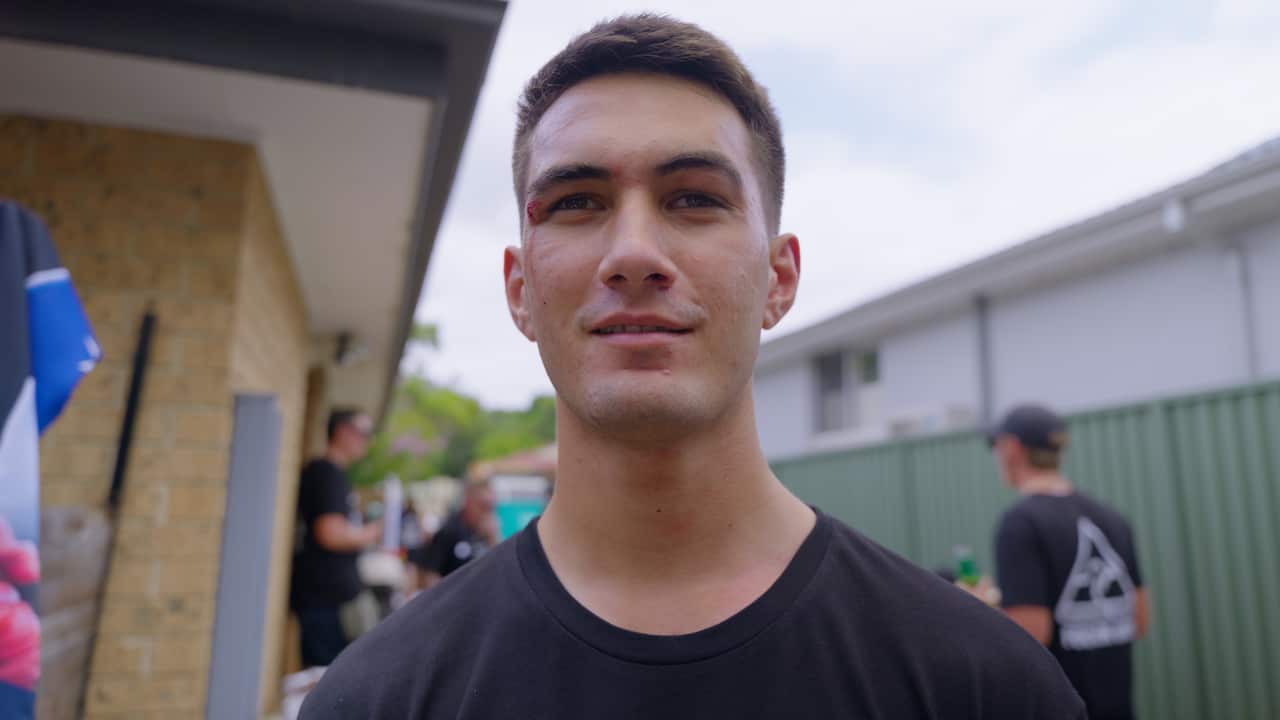
Above his right eye is a scar, about an inch long. Tui says it came from a Stanley knife attack when he was 14.
"They were trying to cut my eye out," he says.
For him, fighting was not just sport. It was survival — something he did so he would not get "walked over".
"Other boys that f---ing think they're tough, think they want to be f---ing gangsters."
Tui describes bare knuckle as the purest form of fighting. The closest you can get, he says, to a consensual street fight.
Asked what he wants from his fight, he says: "I'm just looking to hurt him."
"I would love to go until someone can't compete or the other one gets knocked out. I don't care if it's 20, 30, 40 minutes. I'll fight."
Tui has not come alone. His partner, 36 weeks pregnant, is watching from the side.
"I'm feeling incredibly nervous," she says. "This is his career. And this is what's going to really put him out there. I'm just trying to keep a really level head."
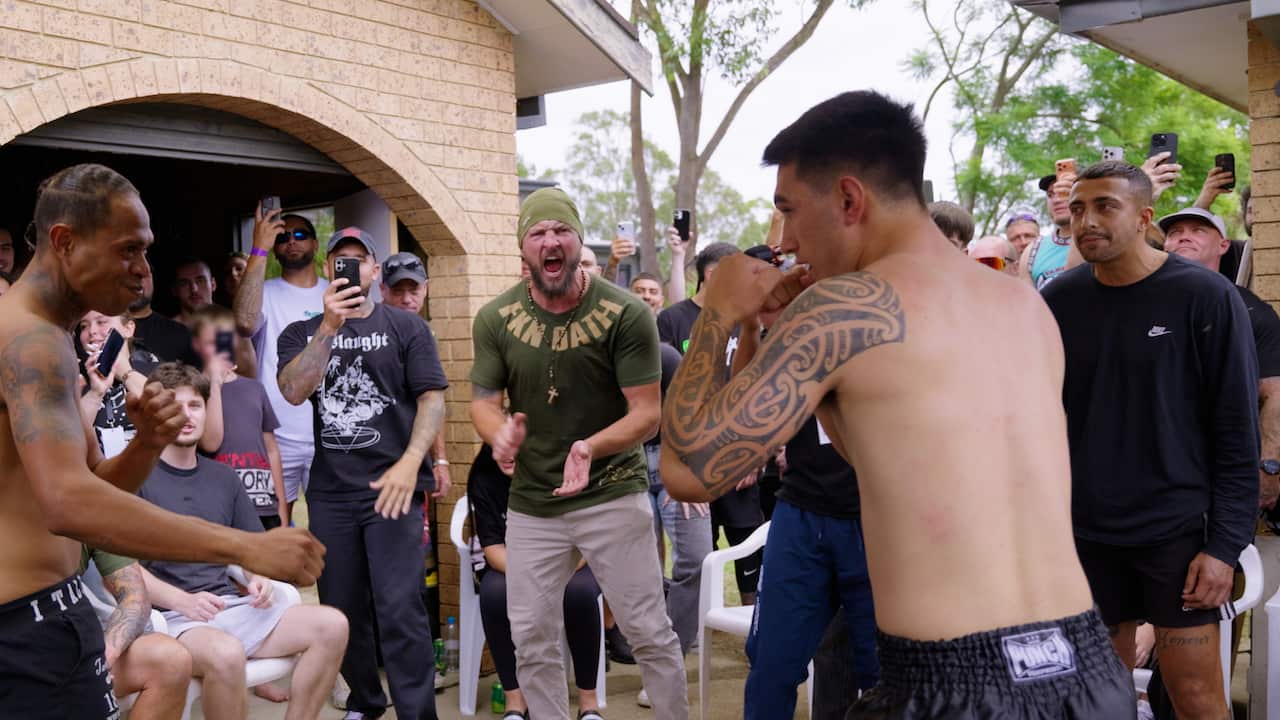
Around the mats, phones are raised as kids, adults and content creators press in close, shouting, filming and pushing the fighters back whenever they drift too close to the edge of the mats.
Halfway through, Tui spits out his mouthguard, which has been causing him trouble. The crowd doesn't know that, though, and they see it as a provocation to his opponent. The energy of the crowd lifts further.
By the end, after several heavy shots and with a black eye already forming, Tui raises his opponent’s hand. The two men embrace; there is respect there.
Tui is euphoric.
"Feels f---ing, sort of orgasmic. You know what I mean? It's beautiful. Nothing better than hitting someone. You see the life go out of their head and hit the ground. No better feeling."
The global bare knuckle boom comes to Australia
With no gloves to protect fighters’ hands and the bone-to-bone contact, bare knuckle boxing is often a bloody affair. And supporters say the brutality is, for some, part of its growing appeal.
In the United States, BKFC — Bare Knuckle Fighting Championship — now a global promotion part-owned by former UFC champion Conor McGregor, staged its first sanctioned event in 2018 and has continued to grow since.
In Australian states with combat sports regulators, bare knuckle boxing has continued to be knocked back. In Western Australia, the Combat Sports Commission rejected a BKFC event in June 2025, saying it was not satisfied the event met the required criteria.
Victoria’s professional boxing and combat sports board has also noted safety concerns around emerging and unregulated combat sports, including backyard boxing, and said it had been approached about BKFC.
But Queensland, with no overarching combat sports commission, has become the place where bare knuckle fighting has recently found a legal foothold in Australia.
Former professional boxer Anthony Mundine’s World Bare Knuckle Fighting amateur promotion held its first ticketed event in Logan in September 2025.
The BKFC made its Australian debut in Townsville in April 2026.
Randall says, authorised or not, the sport is still happening. Since the event attended by The Feed, more have been held, with some appearing even more brutal.
"Our government's super weak and we just want to be able to bare knuckle and do what we've been doing," he says.
"You want your doctors? You want all that? Sanction it."
Where was my welfare check as a kid? They never cared for me as a kid. They created this monster.Randall Rayment, organiser and former fighter
Randall says fighting isn’t just for the fun of it, although that is part of it. For him, combat sports offered discipline, structure and mentorship.
He believes institutions abandoned boys like him long before he stepped into a ring and the harm began much earlier, when he grew up around domestic violence.
"[Authorities are] saying they want to protect me. Where was my welfare check as a kid? They never cared for me as a kid. They created this monster," he says.
At 19, Randall was jailed for six weeks for abducting his father and forcing him to confess to abuse. In that period, he says nothing could have saved him but martial arts, saying he was drinking heavily and wanted to die.
Now a part-time martial arts coach, Randall says he has seen combat sports do the same for many of the men around him.
"You can't change the animal," he says. "You can only harness it."
Is bare knuckle boxing safer?
Spend enough time around bare knuckle fighters and one argument comes up again and again: that the sport is safer than gloved boxing.
The argument mainly revolves around protecting your hands, which can’t take as much force before they break without the protection of gloves, meaning punches are lighter.
Fighters often argue this means the head-injury risk is no worse than traditional boxing. Or, at the very least, that allowing gloved boxing while rejecting bare knuckle is hypocritical.
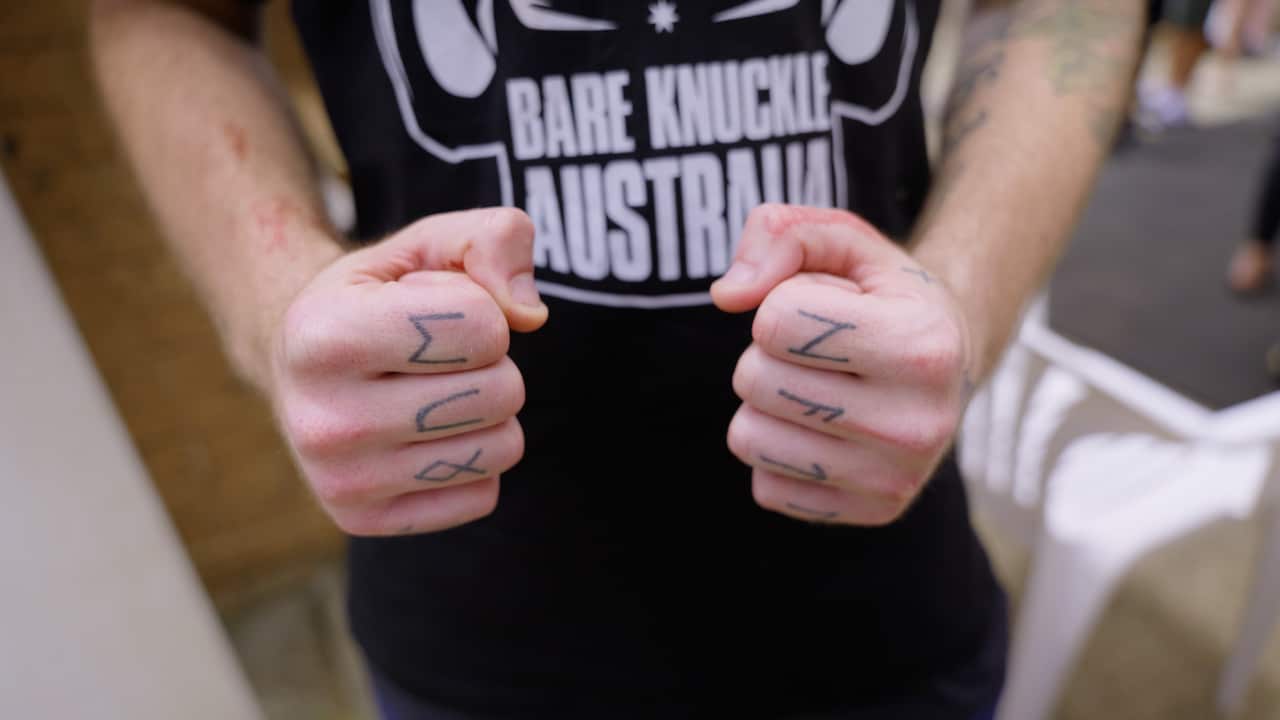
The NSW Combat Sports Authority said it had introduced "mandatory free online concussion and serious head injury training" for all registered NSW combatants and industry participants in June 2025. But that training only applies within the regulated system — not to illegal backyard events.
Professor Alan Pearce, a neuroscientist who studies concussion and chronic traumatic encephalopathy (CTE), says it’s not about comparison — both have a risk he thinks is too high.
"CTE is a progressive neurodegenerative disease. It means that the brain slowly dies essentially over time," he says.
Pearce says this risk isn’t unique to bare knuckle. In any combat sport involving repeated hits to the head, the effects may not become clear until 10 or 15 years later.
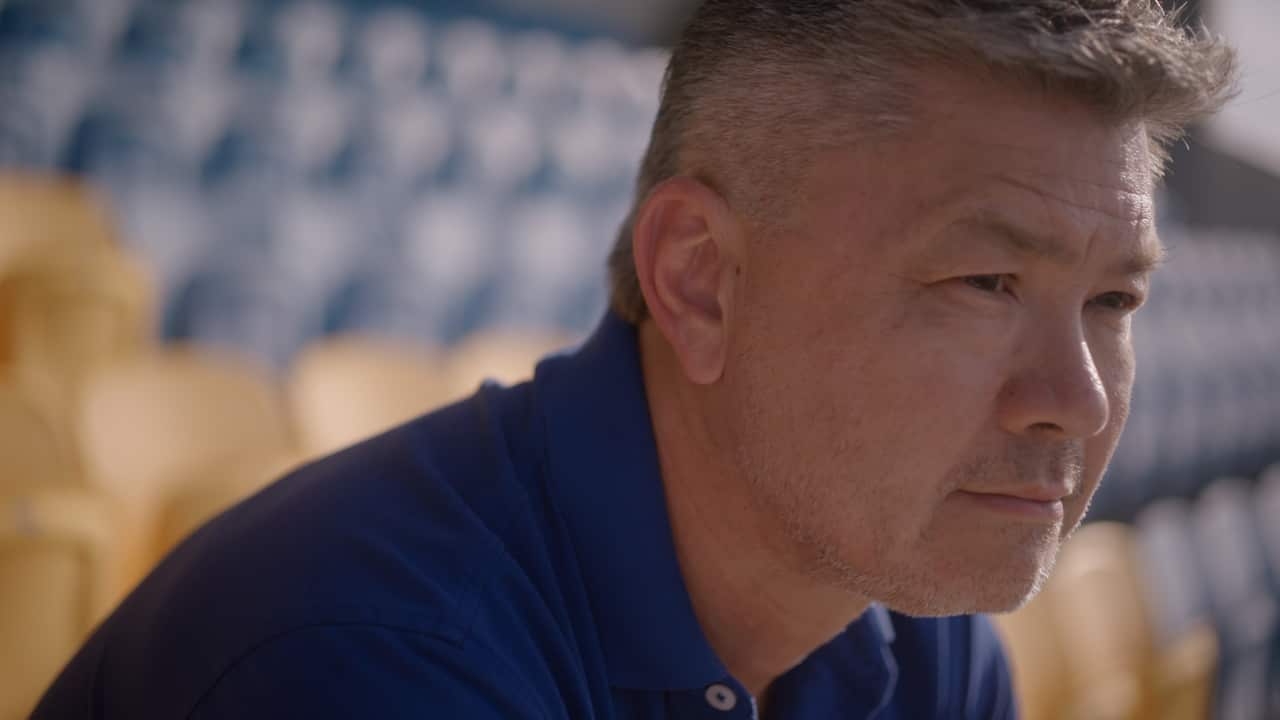
"You don't know what's happening until it gets to be too late. We basically call CTE a dementia."
He says there have been a couple of studies demonstrating there are fewer knockouts in bare knuckle compared to traditional boxing as people are trying to protect their hands.
"But less knockouts or less concussions doesn't necessarily make the sport safer. There are still these progressive impacts to the brain from the smaller hits."
Pearce says the discipline fighters’ credit with changing their lives can be found in other pursuits and that "self-control" fighters find can unravel when the effects of CTE kick in years later.
"[When CTE develops] in younger people, we find that there are behavioural issues," he says. "So it could be things like impulsivity, aggression, inability to make logical thoughts. In older people, it does look very much dementia-like."
Dr Michael Bonning, chair of public health at the Australian Medical Association, does not see bare knuckle as the only problem. The AMA has opposed combat sports for years.
For Bonning, the issue is not just risk. It is the purpose of the sport.
"There's a very visceral nature to boxing and any combat sport. The only purpose of that sport is to hurt one another."
And the AMA wants to see bare knuckle boxing stay banned.
Fighting as harm reduction
For decades, Anglican priest Father Dave used gloved boxing to reach young men in trouble while running a youth drop-in centre in Sydney’s inner west.
Years ago, he says, someone from the AMA told him he could be taking "10 years off the life of these young people".
To him, he said this: "Yeah, but I think you look at some of the young people I'm working with, we could be adding about 30 or 40 years to the front," he says. "We're dealing with guys with very low life expectancy all of the time."
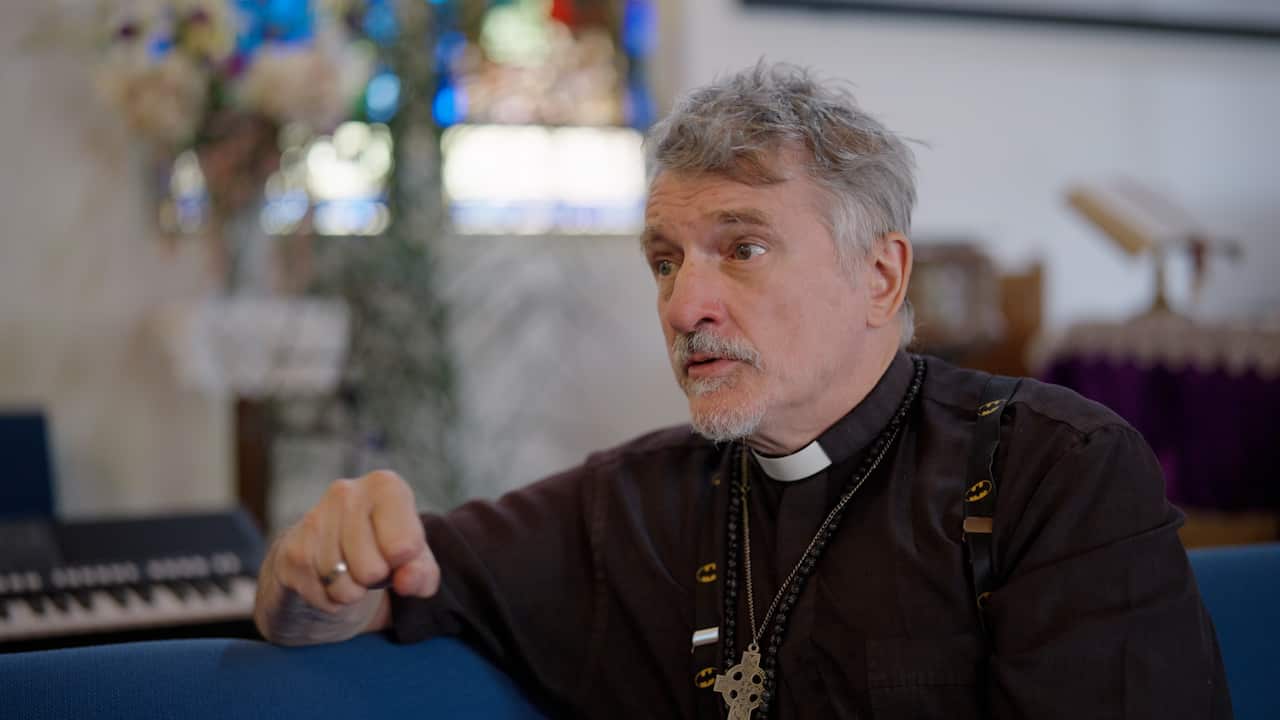
At the centre, Father Dave says, there were overdoses, gangs and violence.
"It was a war zone back in the early '90s," he says. "We'd have a new group of kids come in through our youth drop-in and by the end of the year, some would've died, some would be in jail and others would make it through. And those who were training with us were generally making it through."
For the young people who stuck with boxing long enough to take an amateur fight, he says, the change could be stark.
"The kids who stuck with it to the point where they had an amateur fight were no longer doing drugs and no longer in trouble with the law," he says. "It was that simple."
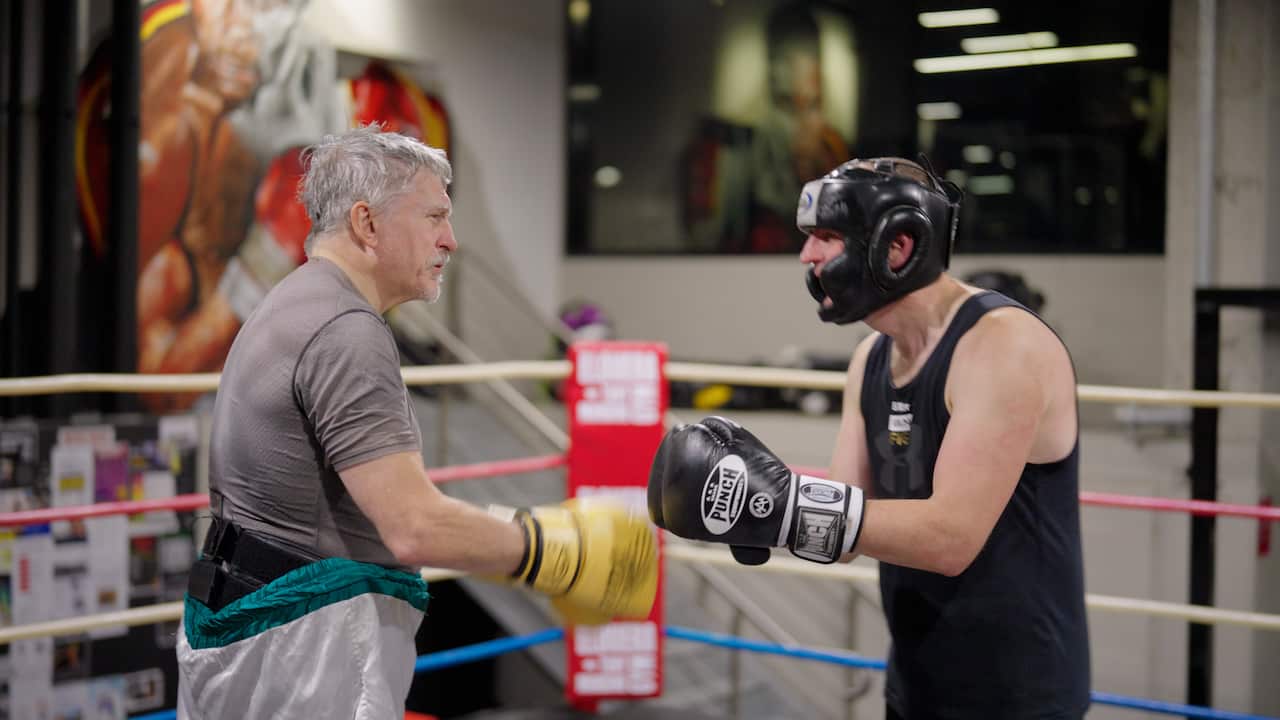
"It's an option that works really well for young men who are angry," Father Dave says.
But his defence ends when the gloves come off.
"Boxing is a deliberately artificial form of fighting," he says. "I always say to the kids, 'We're trying to get you out of the street and not trying to get you more effective in the street.’ The less rules there are, the less I'm in favour of it. Once you take the gloves off, I'm just so not there."
The kids who stuck with it to the point where they had an amateur fight were no longer doing drugs and no longer in trouble with the law.Father Dave Smith, Anglican priest
Randall says fighters know of the dangers but it’s their choice to make.
"At the end of the day, no one got hurt, and that's the main thing," he says. "One punch at the right spot could really hurt someone."
He knows that from experience. Rayment says he almost lost sight in one eye after a bare knuckle fight. The injuries were enough for him to step back from fighting.
"It's not for everyone," he says. "They don't understand. It does so much more. It does so much more. It does so much more."
But Dr Alan Pearce wonders if fighters really know what they’re getting into.
"I speak to a lot of ex-athletes ... with tears thinking, 'What have I done? Why have I done this? I didn't know at the time'".
"It can absolutely destroy families," he says.
"You only have to talk to some of the people who, their brother or their father committed suicide from CTE because their brains are so damaged that they have no longer an ability to logically think."
Readers seeking crisis support can ring Lifeline on 13 11 14 or text 0477 13 11 14, the Suicide Call Back Service on 1300 659 467 and Kids Helpline on 1800 55 1800 (for young people aged up to 25). More information and support with mental health is available at beyondblue.org.au and on 1300 22 4636.

Through award winning storytelling, The Feed continues to break new ground with its compelling mix of current affairs, comedy, profiles and investigations. See Different. Know Better. Laugh Harder. Read more about The Feed

Have a story or comment? Contact Us







