The New South Wales Aboriginal Land Council (NSWALC) says the state government's Crown Land Management Amendment (Statutory Review) Bill 2026 still poses a serious threat to Aboriginal land rights, despite months of advocacy that forced some changes to the legislation.
NSWALC chairperson and Dhangatti/Gumbaynggirr man Raymond Kelly said the Bill, in its current form, retains powers that would let the Minister for Lands and Property retrospectively validate Crown land dealings that were previously unlawful — a provision the Land Rights Network has fought against since the legislation was introduced.
"The bill as it stands is still causing great concern for us as New South Wales Aboriginal Land Council and the network," Kelly said. "The retrospective powers of the minister is still contained within the bill."
The Bill was introduced into the NSW Legislative Council in mid-March without notice to the Land Rights Network, prompting immediate backlash from NSWALC and Local Aboriginal Land Councils (LALCs) across the state.
"What we have continuously done is raise with the minister our concerns about the manner in which the bill was raised," Kelly said. "In March this year, it entered the upper house late at night. We got wind of it the next day. We've continuously now had direct contact with the minister, saying this is not the way to do business."
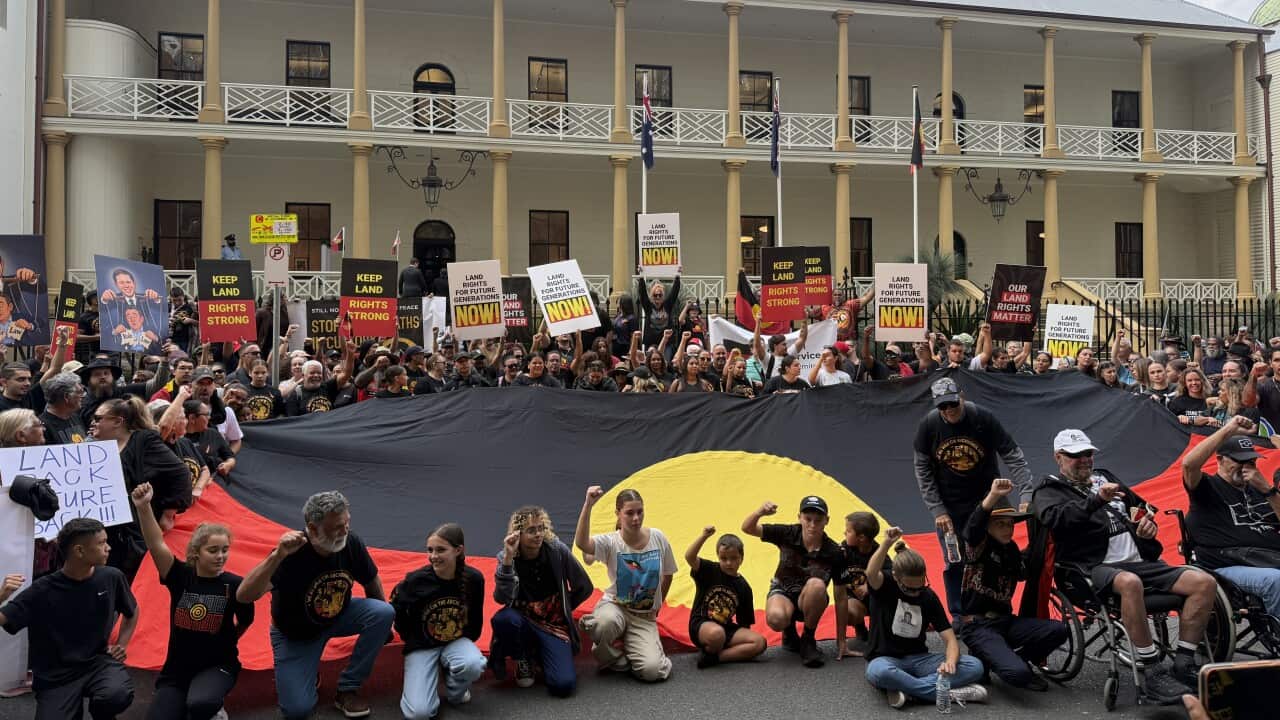
Following sustained pressure, including rallies at NSW Parliament House and an extraordinary council meeting in June where NSWALC paused its participation in Closing the Gap forums, the government proposed a series of amendments.
These included dropping a clause that would have treated the mere granting of a Crown land lease as "lawful use" of land, even without any real activity happening on it, and adding a minimum 28-day consultation period for LALCs where an undetermined Aboriginal land claim could be affected.
But NSWALC maintains its core objection has not been resolved: the Bill would still allow Crown land tenures to be validated or varied after the fact, including over land that is the subject of an undetermined Aboriginal land claim.
A claimant LALC and the Minister for Aboriginal Affairs must be consulted before such a decision is made, but their agreement is not required.
Kelly said this lack of independent oversight was the network's central concern.
"That a decision could be made around a land claim without oversight, without the ability of our network to be properly informed about that decision, and then to be able to challenge that.
"What this might do is allow the minister to make decisions that would forbid us to litigate, and that is a major concern," he said.
"What we require is the ability to have a third party oversee the decision, particularly if we disagree, to ensure that it's proper and it's fair."
Kelly said statewide protests earlier this year had at least forced the government to the table, but he was not convinced the concerns raised through that consultation had genuinely been heard.
"Through the protests, we were able to gather together the network right across the state," he said.
"Overwhelmingly, people said this is not the proper way to do business. You could have had conversations with us, and we would have gladly told you things that we thought were working and things that weren't."
Asked whether the government had actively engaged with the network's concerns, Kelly said: "I don't know that they have... We're looking for transparency. We're looking for accountability, so that when a decision is made, we can go 'That's a decision we may not always agree with, but it's a decision that's fair and proper.'"
He added that, if the Bill proceeds largely unchanged, "this is a very sad day for Aboriginal land rights in New South Wales."
The dispute over the Bill has also driven NSWALC's decision to step back from the state's Closing the Gap framework, a move confirmed this month.
Kelly said the two issues were connected, reflecting a wider breakdown in trust with the government over shared decision-making, but stressed the organisation remained committed to its people.
"What we're hoping to do now is to centre and drive our attention towards activation of our community assets and our community land councils, to get on with the business of looking after their people," he said.
Kelly, who has led NSWALC for two and a half years and was among the protesters when the Aboriginal Land Rights Act 1983 (ALRA) was first being fought for, said the current fight was part of a much longer struggle.
"This is a continual undermining of the Aboriginal Land Rights Act, and the government brought this into play in 1983, and here they are today: they're the ones who are undermining it, they're the ones who are watering it down," he said.
"We talk about our warriors, our land rights warriors, and we hold them in great esteem. We just hope today that we are doing the right thing by the network and continuing that charge."
Kelly said what the network wanted from government was straightforward reciprocity, describing a Walpiri concept he called napaji.
"It means I give you something, you give me something. That is the notion of what these conversations should be about with government," he said.
"We need to reset with government. We need to hold government to account. They need to hold us to account. That's fine, but let's set the ground again, and let's move on and let's get active in our communities."
Approached for comment on NSWALC's concerns, a NSW Government spokesperson did not directly address the Bill's retrospective validation powers or the network's calls for independent oversight of ministerial decisions on Aboriginal land claims.
Instead, the response focused on protecting existing community infrastructure on Crown land.
"Community and sporting facilities should remain available to the communities that rely on them," the spokesperson said.
"That is why the NSW Government is progressing important legislation this sitting week to ensure well-utilised community and sporting facilities on Crown land remain in public hands."
The spokesperson said the government was "amending the Crown Land Management Act to give certainty to tenure holders and modernise the Crown land management system," adding that "the legislation will ensure that established community and sport facilities on Crown land can continue to be used for their intended purpose."
The Bill remains before the NSW Parliament. NSWALC has urged the Land Rights Network to stay informed and continue raising concerns with local MPs as the legislation progresses.