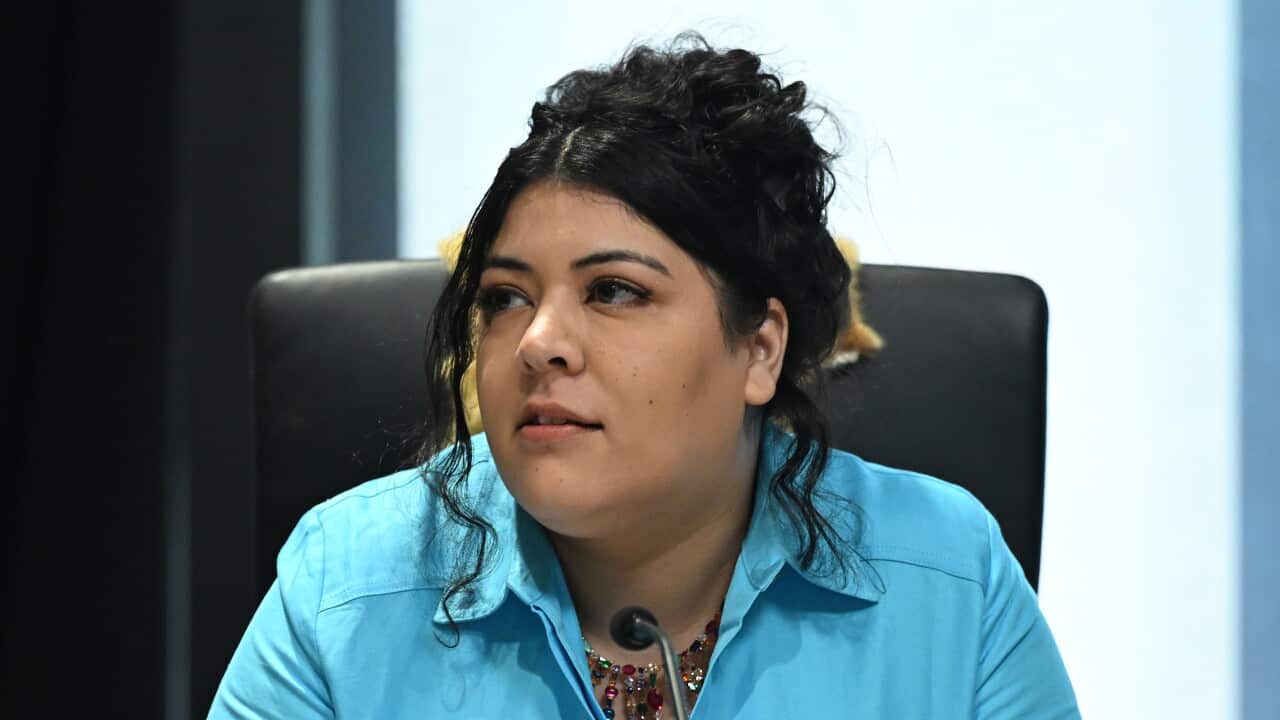
The nation’s peak Indigenous legal body has accused the federal government of failing First Nations people, after it did not allocate any new funding to Aboriginal legal services in the 2026 budget, despite rising incarceration rates.
Nerita Waight, the chair of the National Aboriginal and Torres Strait Islander Legal Services (NATSILS), said inadequate funding for the overstretched sector undermined Closing the Gap commitments.
“This Budget tells us that this government is not serious about Aboriginal and Torres Strait Islander communities,” the Yorta Yorta and Narrandjeri woman said.
“Our government is failing to provide the services and supports they need to prevent them from entering the so-called justice system in the first place. They have failed to act to put an end to punitive policies that are driving the mass incarceration of our people.
Aboriginal people are being failed at every stepNerita Waight, NATSILS.
Under the National Agreement on Closing the Gap, all jurisdictions have agreed to reduce the rate of incarcerated Indigenous adults by 15 per cent by 2031.
But the latest data from the Productivity Commission has shown incarceration rates are worsening.
A spokesperson for Attorney-General Michelle Rowland said while states and territories have primary responsibility for justice systems, the Federal Government was committed to improving justice outcomes.
“That’s why the Government invested a record $3.9 billion through the National Access to Justice Partnership (2025-2030), providing ongoing certainty for legal services over a five-year period,” the spokesperson said.
“The NAJP includes more than $800 million for the legal assistance sector to provide frontline legal assistance for First Nations peoples, representing a 64 per cent increase on formal funding.”
New partnership, but no new funding
The new partnership was launched last year, but Ms Waight argued prior funding was rebadged as new investment, and there has been no increase since then, despite rising Aboriginal incarceration rates across the country.
The NAJP replaced an earlier framework – called the National Legal Assistance Partnership – after an independent review by former productivity commissioner Warren Mundy.
NATSILS said the review identified chronic underfunding, unsafe workloads for staff, and structural barriers to providing staff pay parity.
In the aftermath of last week’s budget, Mr Mundy told NITV that the NAJP did not fully implement his recommendations about Aboriginal controlled legal services.
“The indexation arrangement does not properly reflect how the input prices of these services actually grow and provides for no demand growth resulting from population or the inevitable increased demand for services arising from the sentencing policies of state and territory governments that disproportionately impact Aboriginal people,” he said.
It will fail to close the Gap in those targets related to legal assistanceWarren Mundy.
Tough on crime laws adding to workload
The ongoing funding concerns come after several state and territory governments implemented ‘tough on crime’ policies and harsher bail laws, including Queensland, Victoria, and the NT.
The NT’s largest Aboriginal community controlled legal group, the North Australia Justice Agency (NAAJA), said the lack of additional funding was making its work unsustainable.
“Country Liberal Party legislative and policy changes have directly resulted in a 25-30 per cent increase in workload across criminal and civil matters, yet there has not been a single additional dollar of funding to account for this increased need,” NAAJA’s CEO Ben Grimes said.
He said without an increase to current funding levels, there was a real risk NAAJA would be forced to limit service delivery, and in some cases turn clients away – echoing Dr Mundy’s calls that funding should be tied to demand.
“When a government changes the law or policy to bring more people into contact with the criminal justice system, that government must also accept the responsibility to resource the system properly,” said Mr Grimes.
Another major legal service provider, Legal Aid NT, has been unable to provide new grants of legal aid in criminal matters for people who are not in custody since September.
After last week’s budget, National Legal Aid said there could be more cuts to come in the Territory.
Meanwhile, Legal Aid NSW is preparing to withdraw some family law services from July, including parenting and property matters, limiting assistance to victim-survivors of domestic and family violence and Aboriginal and Torres Strait Islander people.
“We will see more generational trauma, poverty, disadvantage in our First Nations people,” warned National Legal Aid Executive Director Yvett D’Ath.
University of Melbourne Professor Eddie Cubillo, a Larrakia, Wadjigan, and Central Arrernte man, recently resigned from a government and Indigenous legal sector partnership aimed at reducing incarceration rates over Closing the Gap failures.
He was a member of the Justice Policy Partnership, which is co-chaired by the Attorney-General’s Department and NATSILS, and aims to reduce representation of First Nations people in the criminal justice system.
In an email to colleagues, seen by NITV, he said he believes the justice elements of the Closing the Gap framework have failed.
“Despite the rhetoric, they have not led to meaningful change or improved outcomes for our communities. Instead, the process continues to occupy and exhaust Indigenous voices while governments – as signatories to the agreement – show little genuine intention to fulfil their commitments,” he wrote.
A spokesperson for Michelle Rowland said the Federal Government had made an investment to help break incarceration cycles in the budget.
“The Government is also investing $81.5 million for Justice Reinvestment as part of a wider First Nations justice package to improve justice outcomes and address the drivers of contact with the criminal justice system,” they said.