"The story of the pictures on these pages is as pitiful and heart-warming as any you could find."
Those were the words used in a 1949 magazine article about artwork created by Aboriginal children in Western Australia’s Great Southern, and 77 years later, they still resonate.
The story of these child artists taken from their families to Carrolup Native School, is one that is close to Menang and Wajarri woman, Patricia Ryder's heart.
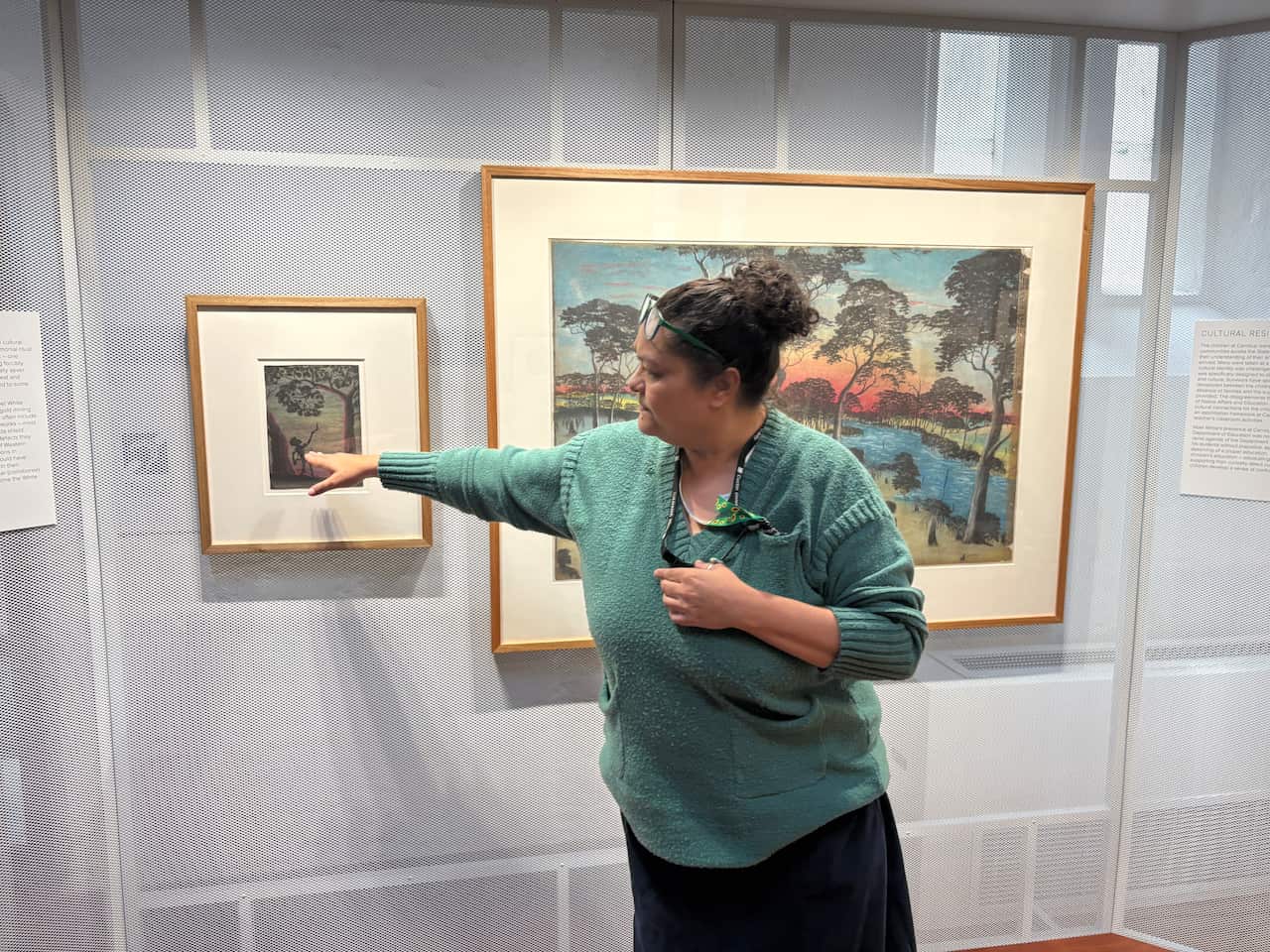
The community engagement facilitator at Curtin University's John Curtin Gallery shared the stories of their artwork as part of Reconciliation Week and the Once Known exhibition.
Ryder had heard of Carrolup Native School as a child.
Her mum referred to it as "cattle yards", a place Aboriginal children who were taken from their families would be sent for 'formal education', and from where those with lighter skin might be moved on to another institution or setting.
Throughout the past two decades Ryder has researched the artists from Carrolup, whose work once drew international acclaim and was displayed in galleries where masters such as Henri Matisse have also hung.
As well as uncovering a family connection, Ryder has learnt about the experiences of the children and gained an understanding of their works, which she believes needs to be shared.
"They’re not just pretty pictures, it’s history, it’s living history," she told NITV.
Growing up in an institution
Carrolup Native School was established in 1940 at the site of the Carrolup Mission, with a goal of assimilating Aboriginal children into white society.
The earlier teachers at Carrolup had struggled to engage the children in the formal western education system.
"No wonder why, they were removed from family, they were struggling to understand this at such a young age," Ryder said.
However in 1946 a new teacher, Noel White, arrived bringing with him his wife and children.
Ryder said White's decision to bring his family into the institution was different to the segregated nature of colonial Australia.
"That’s the difference, Noel and Lily went - okay, we’re just going to immerse ourselves completely in this space," she said.
"He brought a simple soft skills toolkit of empathy and understanding."
White was not an artist and initially connected with the children through his music, as he played the flute.
However Ryder said it was when he saw one of the students, Parnell Dempster, drawing with charcoal, that he thought art might be a way to engage them.
She said this inspired White to provide the children with art supplies and encourage them to draw and paint and in turn their art provided them pride and self confidence.
Ryder said while it was no replacement for the children's families, the Whites' approach was different to the cold, unwelcoming approach in many other similar facilities.
The couple reinforced the children's positive behaviour with a movie reward once a week and as seen in photographs of the school, celebrated the children's artwork by proudly hanging it on the school's wall and sewed them into football jumpers.
International acclaim
The description of the story behind the Carrolup artworks as "pitiful yet heart-warming" was published in Milady Magazine after some of the students' work had made its way to Perth as part of an exhibition.
It was that article that caught the attention of an elderly English woman who Ryder described as a "conduit" for bringing the children's work, much of it done in coloured paste crayon, to prominence.
Florence Rutter travelled to the school to purchase artworks which she shared through exhibitions throughout Australia and New Zealand.
This exposure led to some of the children's artworks being exhibited in the Pastel Society in London, including those of Parnell Dempster.
"People like Henri Matisse and Edgar Degas had their artwork there, so at 14 years old his work was being displayed among masters," Ryder said.
Rutter also set up a fund called the Native Children’s Trust from the sale of artworks, which funded art supplies for the students.
"When one of them stayed in Perth, that trust was also used to provide them with accommodation, so that trust really did provide support to those children," Ryder said.
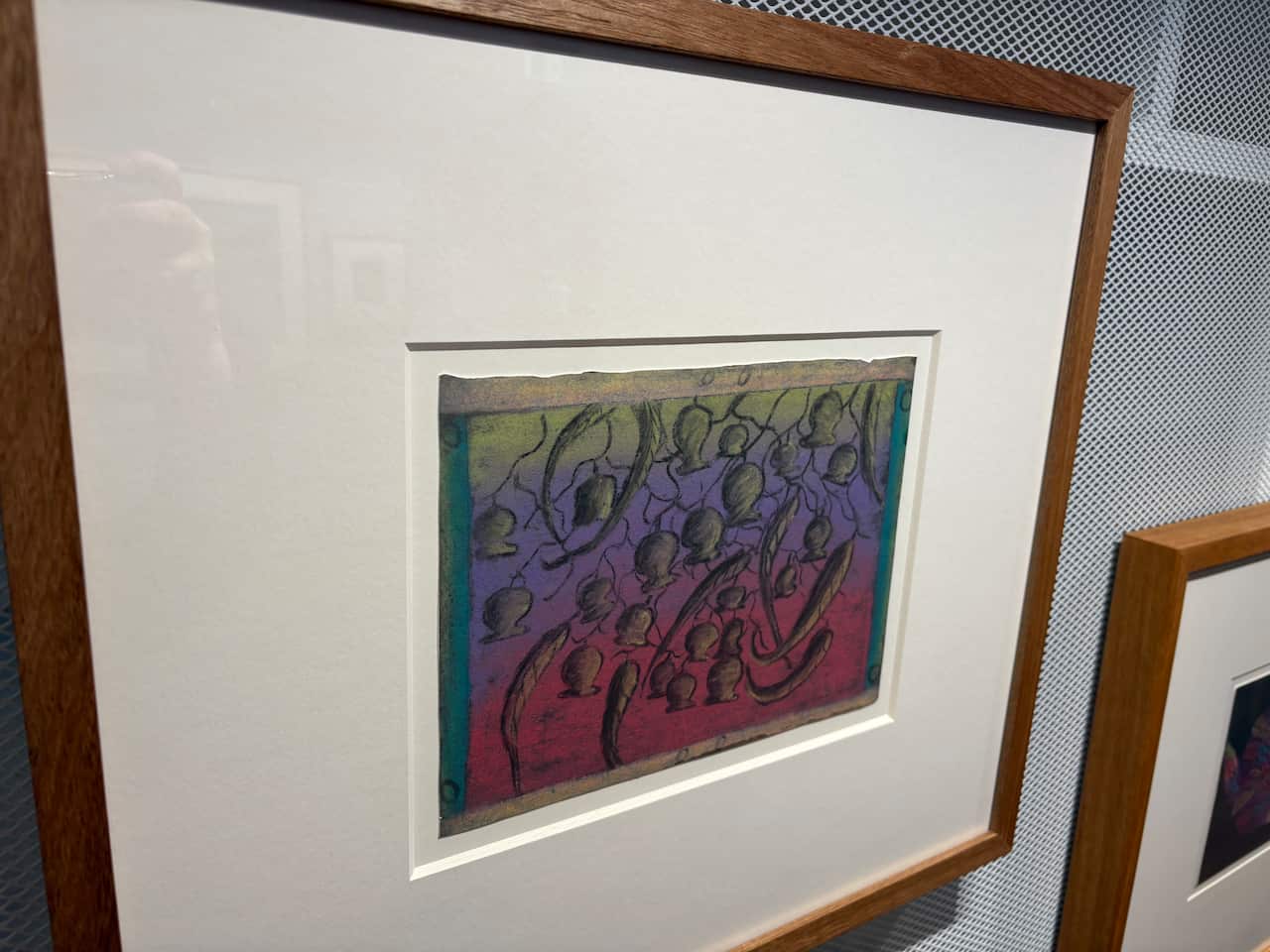
At the time young Aboriginal girls in such institutions were being trained to carry out domestic duties, however Ryder said Rutter had wanted to provide them with opportunities through art if possible.
"She reached out to manufacturing companies in the UK, Wedgewood was one of them, asking how they would perceive Aboriginal designs on homewares," Ryder said.
While this idea never came to fruition, the girls' designs on display as part of Once Known, depict designs that would not look out of place on plates and coffee mugs in a kitchen today.
What the works might tell us
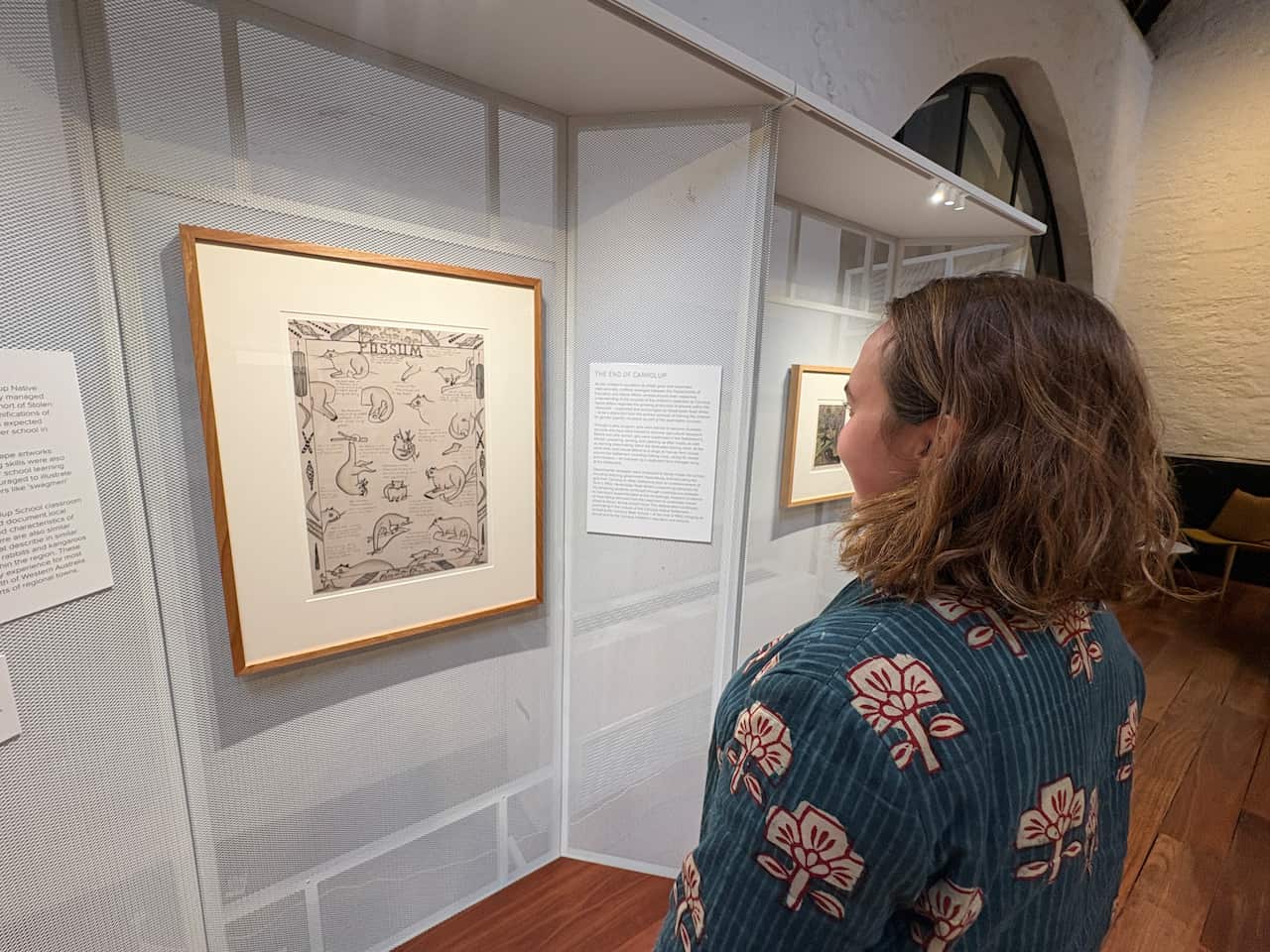
Ryder said the pieces, like any art, provided subtle prompts for the audience that tell stories of the society in which these children grew up.
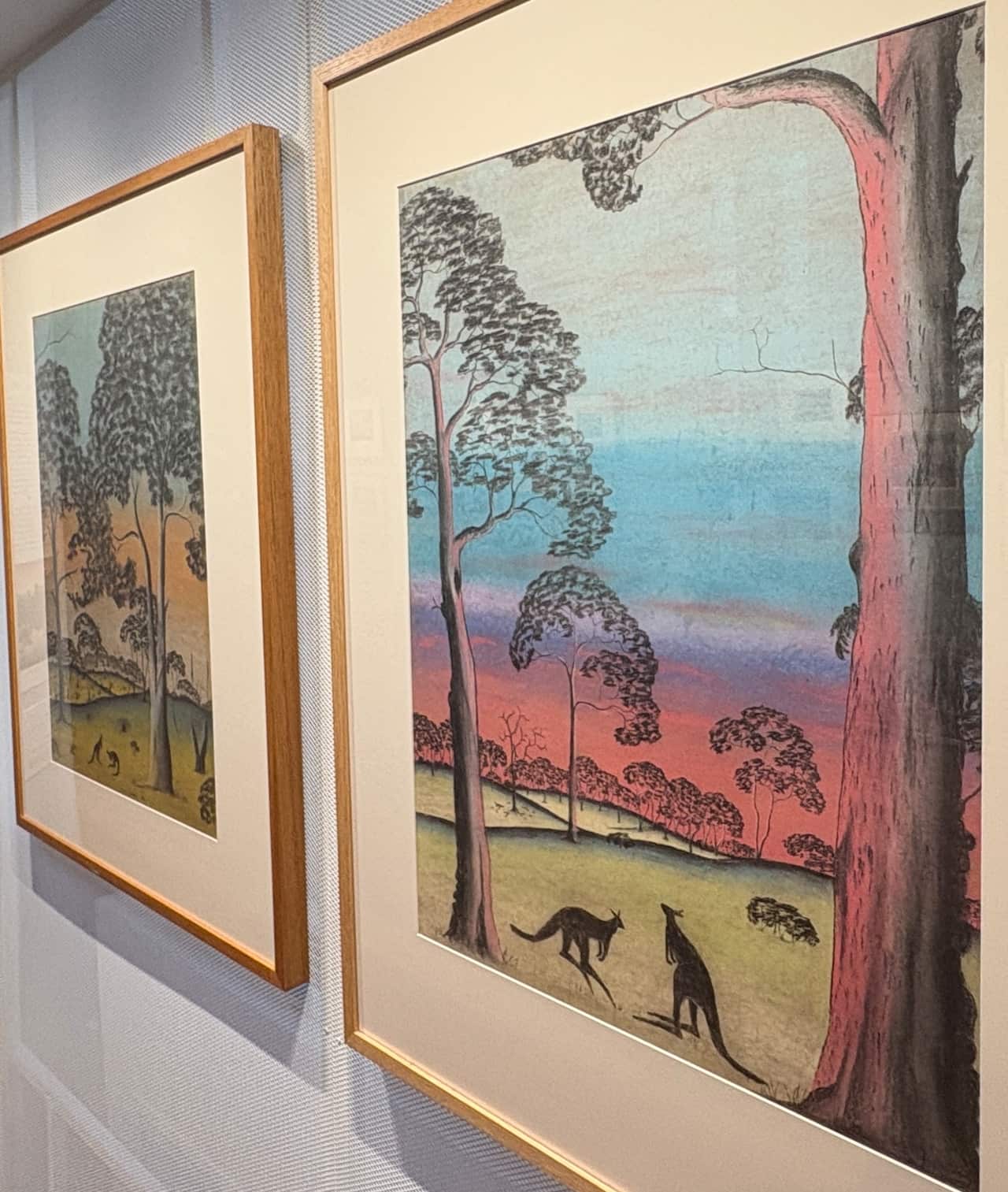
White would take the children on what he called "ramblings" walking through the country at dusk, a time many of the artworks depict.
Ryder said the art reflected not only cultural knowledge but social history and the psychological impacts of being part of the stolen generation.
'On with the dance' is the title of a piece showing two young Aboriginal children dancing around a fire.
"I can imagine the scene, kick that dust up, move your leg, right, go back, start again, do it all again the sequence is not quite right, I can see our elders teaching there," she said.
While interpretations of art can differ, Ryder points out the difference between the representation of the Elders watching on in the foreground of the piece, to the children dancing.
"It looks to me to be caricatures of elders, the 1940s and 50s comics depicted Aboriginal people in a derogatory way, could this have been these children internalising those elements within culture and the society that they found themselves in?"
She pointed to the built infrastructure of winding roads and fences that were repeated in many of the bush landscapes done by the children.
"They travelled this long road to get to the institution, they were removed from family and put into institutions."
"In the early history of Carrolup, that fence may represent their family on the other side, these children had psychological impacts, and I'd argue they are in these artworks, it’s not just beautiful art."
Ryder pointed out that many of the artworks show bush landscapes with cleared land.
"We recognise a time and history of land clearing, these is no undergrowth, these children may have even spent time on land clearing parties with family before being placed in that institution," she said.
In a piece that shows two hunting scenes Ryder is taken by the detail depicted in the spears taking down kangaroos and the bodies interacting with the animals.
"You can tell from the movements shown, it’s not drawn from imagination, it's drawn from witnessing this themselves … this child has seen a hunt."
Many of these pieces have titles that were given to them when created - one is called 'A Native Corroboree.'
"I almost shudder at the thought of that because Noongar don’t call them corroboree, not only did colonisation impact, but we were actually impacted by eastern states terms," Ryder said.
She also finds the title of another artwork 'Dingo danger' an interesting reflection of what would have been a changing world around these children.
"That dingo was part of your family, you went out on the hunt, it gave you a feed for the night, it kept you warm, it was not dangerous, but when the south west was colonised, fences were placed up, bounties put on the dingo’s head.
"You can see that process of colonisation.”
School closure
The acclaim that the paintings of the Carrolup students began to receive was obvious in the size of the artworks, those done in the latter half of 1949 were on larger pieces of paper as funds from sales became available to provide dedicated art supplies.
However, soon after this attention, the school was closed and by 1951 the younger students had been moved on with older ones provided instruction to work on the land at the Marribank Farm Training School.
Some commentators have said the attention drawn to the children's artwork had also brought international attention to the plight of Aboriginal people, which may have not sat well with the government at the time.
Ryder speaks of White and what she saw as a commitment to Indigenous people.
"When the institution was closed, he found himself teaching at Fremantle Prison and in 1961, he was reunited with some of those child artists as prisoners."
Disappearance of artworks
While Rutter had been championing the children and their artwork, Ryder said she eventually had financial struggles and sold her collection to a New York art collector.
The collector died soon after and for many decades it was not known what had become of it.
Ryder said it was only in 2004 that an anthropologist working within the area of Australian history stumbled upon the collection.
It was discovered that it had been bequeathed to the Colgate University in upstate New York and had sat untouched for decades.
"He was one of a just five academics who had knowledge of these artworks and had been scouring databases and archives to try to find them," she said.
That began a process of bringing the artworks back to Australia and a wider search for further works not part of this collection.
Ryder is passionate about connecting the works to the child artists who created them, researching their lives and connecting with the family members around today.
"Each of those individual stories provides descendants with healing of that knowledge," she said.
This includes her Uncle Cliff Ryder, a relative, she came across as one of the Carrolup artists.
While she was glad to have knowledge of that connection for herself and her family, she said there are still many more unanswered questions.
Many of the artists behind the 127 artworks in the collection that was repatriated to Australia remain unknown.
A portion of the pieces have been attributed to 17 artists.
Ryder said sadly, at least 10 of those artists died before they turned 50.
She said the exhibition title 'Once Known' paid tribute to the child artists.
"These children were once known and once loved," she said.
The Once Known exhibition which features reproductions of the works, is on display at the Old Perth Boy's School in the Perth CBD until December 15.
A permanent home for the original works is expected to open in 2027.
The Carrolup Centre for Truth Telling being built at Perth's Curtin University will be used as a base for truth telling, healing and reconciliation.
Ryder said all her work was guided by Aboriginal elders on the reference group who provide lived experience and valuable input.