A collaborative performance bringing together Yolngu and Indigenous Taiwanese artists has highlighted shared cultural traditions, kinship and friendship at this year's Garma Festival on Yolngu Country in northeast Arnhem Land.
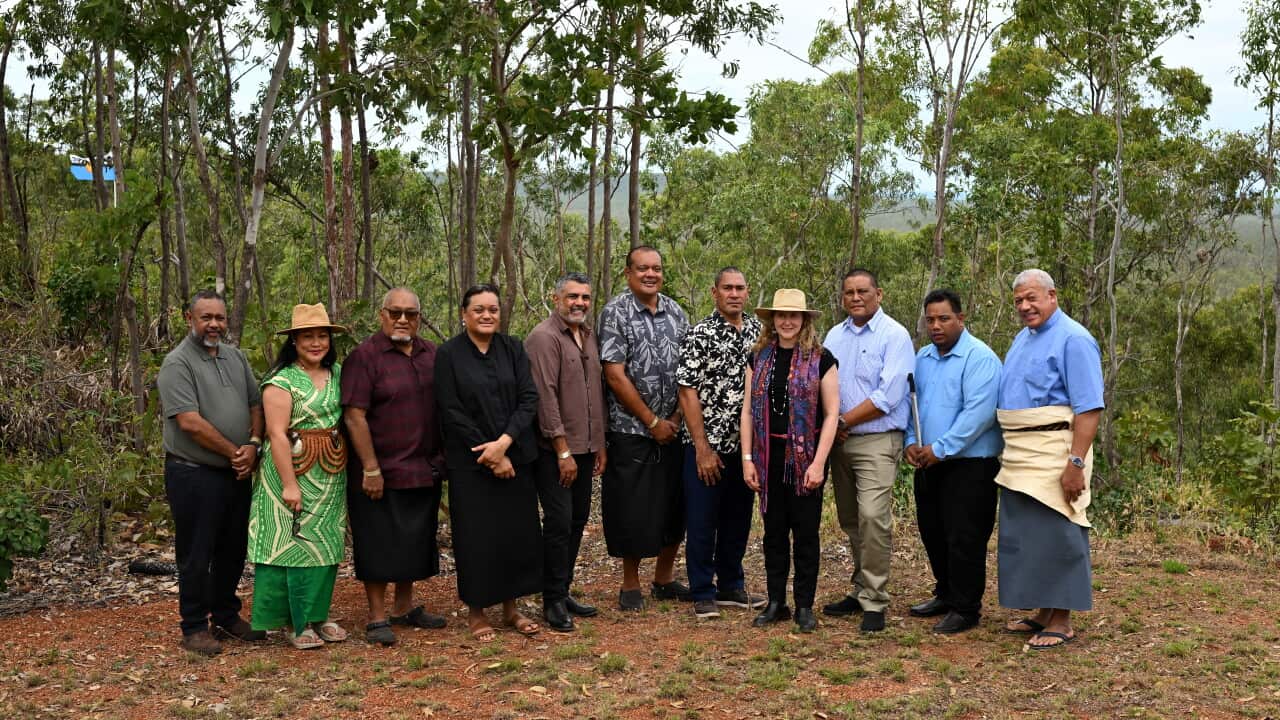
Gapu Ngupan — meaning "Chasing the Rainbow" — was performed at Gulkula as part of the annual festival, combining traditional song, dance, ritual and ceremonial costume developed through a six-year partnership between Yolngu performers and members of Taiwan's Paiwan people.
The performance reflected this year's Garma theme, Bukmak, a Yolngu Matha word meaning "everybody".
The theme celebrates inclusivity, shared responsibility and the coming together of people from different communities and cultures. It was evident throughout the festival, which drew a strong international contingent of First Nations leaders, artists, academics and delegates from across the Indo-Pacific and beyond.
The production explores cultural connections between the two Indigenous groups, with performers drawing on shared understandings of ceremony, ancestry and relationship to Country.
Rirratjingu man and cultural consultant Banula Marika said presenting the work on his own Country made the performance especially meaningful.
"Manyamak (good), on my Country with these beautiful people," he told NITV at Gulkula.
Reflecting on the collaboration, Mr Marika said the relationship between the Yolngu and Paiwan communities had developed through recognising common cultural foundations.
"It's very special to me, the other Yolngu people from that way. Working with them was great, and sharing our feelings and our ancestors, same like mine and theirs," he said.
Paiwan producer Dremedreman Curimudjuq, from the Tjuvecekadan Community, said the title Gapu Ngupan reflected the connection that had grown between the two cultures.
"Gapu Ngupan means 'Chasing the Rainbow', which means to be connected," she told NITV.
The Paiwan are one of Taiwan's 16 officially recognised Indigenous peoples and are the country's second-largest Indigenous nation.
Their communities are primarily located across Taiwan's southern and eastern regions.
Ms Curimudjuq said the collaboration had revealed striking similarities between Yolngu and Paiwan ceremonial traditions.
"Between Yolngu and Paiwan, deep inside, the rituals are very similar, so I think we feel very connected in our point of view, seeing the world," she said.
This year's Garma performance also coincided with Taiwan Indigenous Peoples Day, adding further significance for the visiting delegation.
"We feel really honoured, especially today, because today is Taiwan Indigenous Peoples Day.
"We've worked together for more than six years, and we feel very honoured to show our culture and our friendship here," Ms Curimudjuq said.
She said the partnership had grown beyond artistic collaboration into lasting relationships between the two communities.
"We are like a family now because of the six years that we've visited each other. We hope our next generations can keep this relationship, generation to generation.
"Our Taiwan team all have Yolngu names, so I think we will continue."
Ms Curimudjuq said the message of the performance was ultimately one of unity.
"Love. Love. We want to share our friendship, and stand for each other, together, stronger."
First Nations diplomacy 'a source of strategic national advantage': Wong
The festival's message of connection extended well beyond the Gulkula ceremonial grounds, with Garma this year welcoming one of its largest international contingents of Indigenous and Pacific leaders.
Representatives from the Marshall Islands, Kiribati, the Solomon Islands, Fiji, Papua New Guinea, Palau and Tonga gathered at the festival, where gifts were exchanged during a Pacific Islands Forum, underscoring growing relationships between Yolngu leaders and neighbouring nations across the region.
Gumatj man and Yothu Yindi Foundation board director Timmy Burarrwanga welcomed the Pacific delegation, describing them as the third international delegation to visit Garma.
"You are our brothers," he said.
"In a white man's world they call it strangers. In an Aboriginal and Torres Strait Islander world, we don't call it strangers. White man taught us what stranger means. We see people.
"This is your home, even though you're from overseas. You're part of us."
The growing international engagement at Garma was echoed on Saturday by Foreign Minister Penny Wong, who said First Nations diplomacy had become an increasingly important part of Australia's engagement with the region.
"Centuries before Europeans arrived, First Nations people connected Australia with the world," Senator Wong said.
"As Australia's Foreign Minister, I am proud that this history — once underutilised — is now part of Australia's foreign policy, and formally set out through the release of Australia's first ever First Nations International Engagement Strategy.
"At a time of global contest and uncertainty, we have seen that First Nations diplomacy is a source of strategic national advantage. It cannot be replicated or emulated and we have seen through our work that including First Nations culture and knowledge and connections in our diplomacy benefits all Australians."
Those connections were highlighted through Australia's recently signed Ocean of Peace Alliance with Fiji — a landmark defence agreement and the first such partnership for the Pacific nation, and only Australia's fourth.
Elizabeth Peak, head of the Office of the Pacific and deputy secretary at the Department of Foreign Affairs and Trade, said a Yolngu delegation that travelled with Prime Minister Anthony Albanese to Fiji ahead of the agreement had left a lasting impression on Fijian leaders.
"The First Nations connections were not incidental, they were foundational," Ms Peak said.
She singled out Yolngu Elder Djapirri Mununggirritj, whose ceremonial gift of a yidaki to Fijian hosts was a defining moment of the visit.
"She took our hosts' breath away," Ms Peak said.
Regional connection was further reinforced by the presence of Timor-Leste Prime Minister Xanana Gusmão, who addressed delegates at Garma, drawing parallels between Arnhem Land and his own nation across the Timor Sea.
"Thank you for welcoming me to Gulkula and the generosity and friendship that have been shown to my delegation. From the moment we arrived, we have felt at home," Mr Gusmão said.
"We have felt a strong sense of place and culture, in a community where solidarity has meaning and history has weight.
"Timor-Leste and Arnhem Land face one another across the sea. That sea forms part of the world of both our peoples.
"Coming here to Garma, I feel a closeness between our peoples."
His address reflected the festival's broader emphasis on Indigenous diplomacy and the deep cultural ties that continue to shape relationships across the region.
Senator Wong said Australia's growing partnership with Timor-Leste demonstrated how relationships built on mutual respect, including First Nations connections, were strengthening Australia's engagement with its neighbours.
"It's why we have been proud to inaugurate a new era in our partnership with Timor-Leste," she said.
"The Parseria Foun Ba Era Foun is founded on mutual respect and a shared vision for the future.
"Backing Timor-Leste's successful bid to join Southeast Asian nations as a member of ASEAN.
"Amplifying Timor-Leste's voice in regional and global decision making.
"And partnering with Timor-Leste in support of its autonomy and economic development."