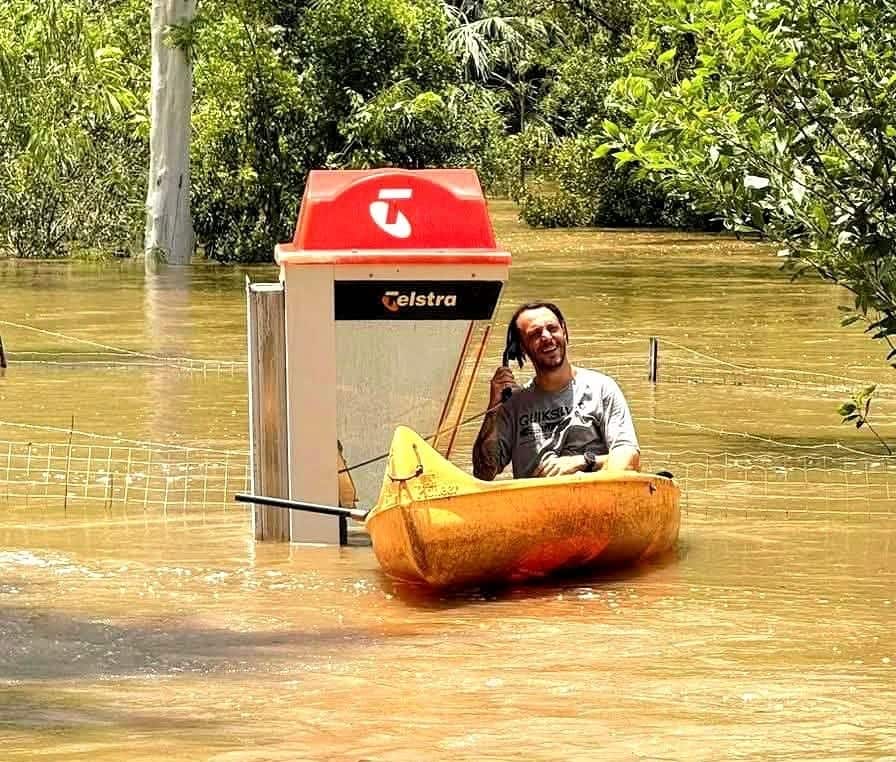
Disaster assistance funding is now available for residents across flood-affected areas in the Northern Territory and Queensland.
It follows a week of historic floods which have prompted mass evacuations, multiple rescues and severe weather warnings.
In the Northern Territory, affected residents can access immediate relief payments of up to $611 per adult and $309 per child, temporary accommodation assistance of up to $1,160 per family, and re-establishment grants of up to $8,843 per household.
Federal Minister for Emergency Management Kristy McBain visited Katherine on Thursday to meet with community members.
The town, around 300 kilometres southeast of Darwin, saw the Katherine River peak at a 28-year high earlier this week.
Even though floodwaters there are receding, the minister said levels remain high across the region and many residents are still displaced.
“We are working closely with the Northern Territory government to ensure that the right support gets to the communities that need it,” she said.
“Recovery is a long process, but the Albanese government is standing alongside the Northern Territory to support affected communities to help them rebuild as quickly as possible.”
In Queensland, Emergency Hardship Assistance provides $180 per person and up to $900 for families of 5 or more for essential items, with additional grants for structural repairs or household contents.
What documents are needed to access support?
In the NT, to access the immediate assistance payments you need a photo ID, proof of residence, and proof of family status such as a medicare card or Centrelink statements.
For temporary accommodation assistance you also need a tax receipt for out-of-pocket accommodation expenses and proof of annual income.
Re-establishment assistance will be available once damage assessments are done and eligibility criteria is finalised.
In Queensland you need photo ID, bank details and a valid email address to make an application through the online portal.
Concerns for those homeless or without documents
North Australian Aboriginal Justice Agency Deputy Chair Matthew Connop says he's concerned vulnerable First Nations people will go without support unless greater flexibility is provided for those eligible.
"People may not have ID or proof of residence at the evacuation centre readily available, which is a massive administrative burden," the Dagoman man told NITV.
In Katherine, the rate of homelessness is 31 times higher than the national average, with First Nations people disproportionately affected.
"What the government needs to do is look at some of the flexible arrangements they can make in terms of identifying individuals," he said.
NAAJA are also calling for a pause on mutual obligations and debt repayments for social security recipients, as well as a freeze on rent for social housing tenants in flood affected areas.
"People in those communities are already disproportionately affected and are living in poverty," Mr Connop said.
"These small measures will alleviate some financial pressure."
Staggered roll-out with some waiting a week
The NT Department of Children and Families says residents in Katherine remain a priority, following reports people have spent hours waiting to apply for the payments only to be turned away.
The department's Chief Executive Officer Brent Warren said staff are dealing with "unprecedented demand".
“Our teams are working incredibly hard to process payments as quickly as possible so residents can access the financial support they need during this very stressful time," Mr Warren said.
Planning is now underway to roll out payments to additional affected communities.
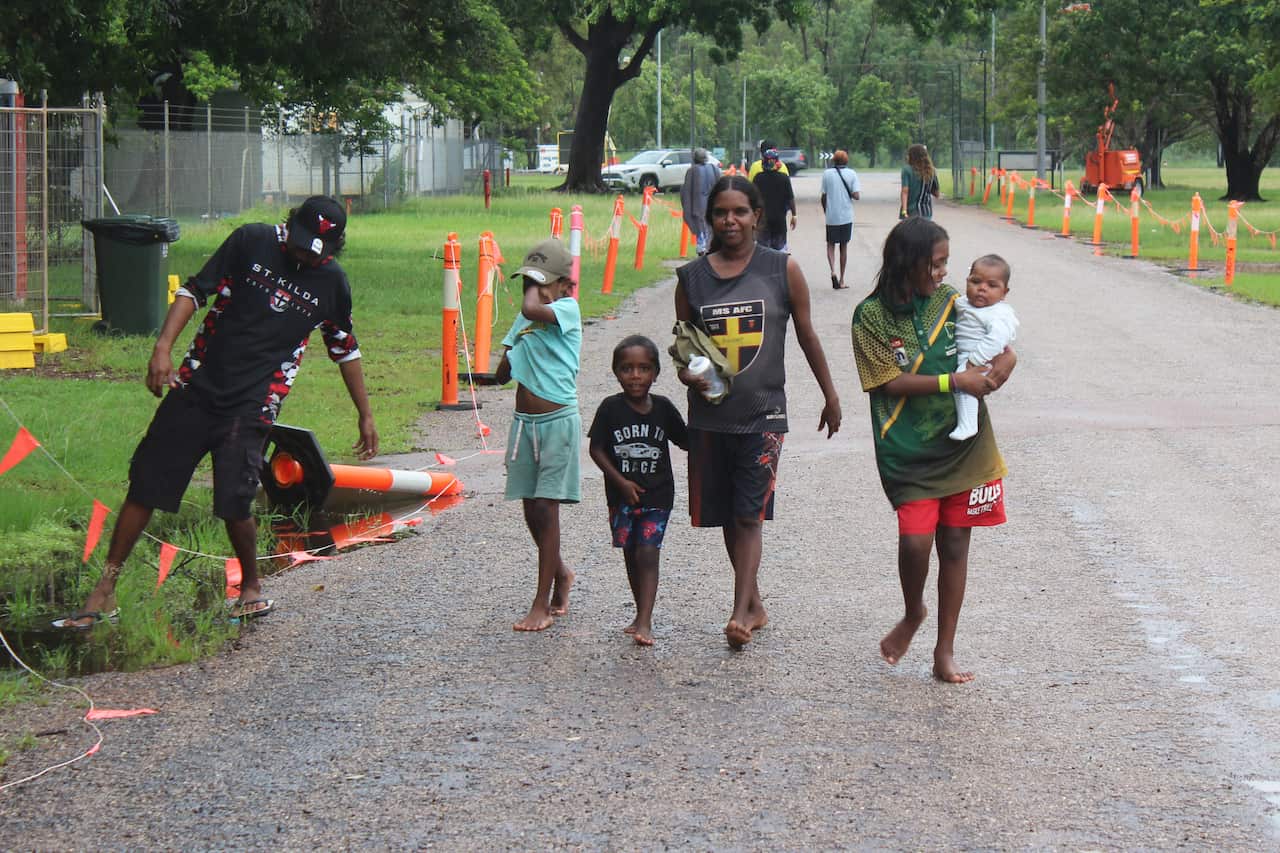
Families and community members from Jilkminggan will begin receiving Immediate Relief Payments from Tuesday 17 March at the Mataranka Evacuation Centres.
Families from Palumpa — who are staying in Darwin after being evacuated last weekend — will begin receiving payments from Thursday 19 March.
Families and community members from Nauiyu Daly River — who are also staying in a Darwin evacuation centre — will begin receiving Immediate Relief Payments from Friday 20 March.
Residents from both of those communities will only receive 25 per cent of the payment while they remain in Darwin and the remaining 75 per cent once they return home.