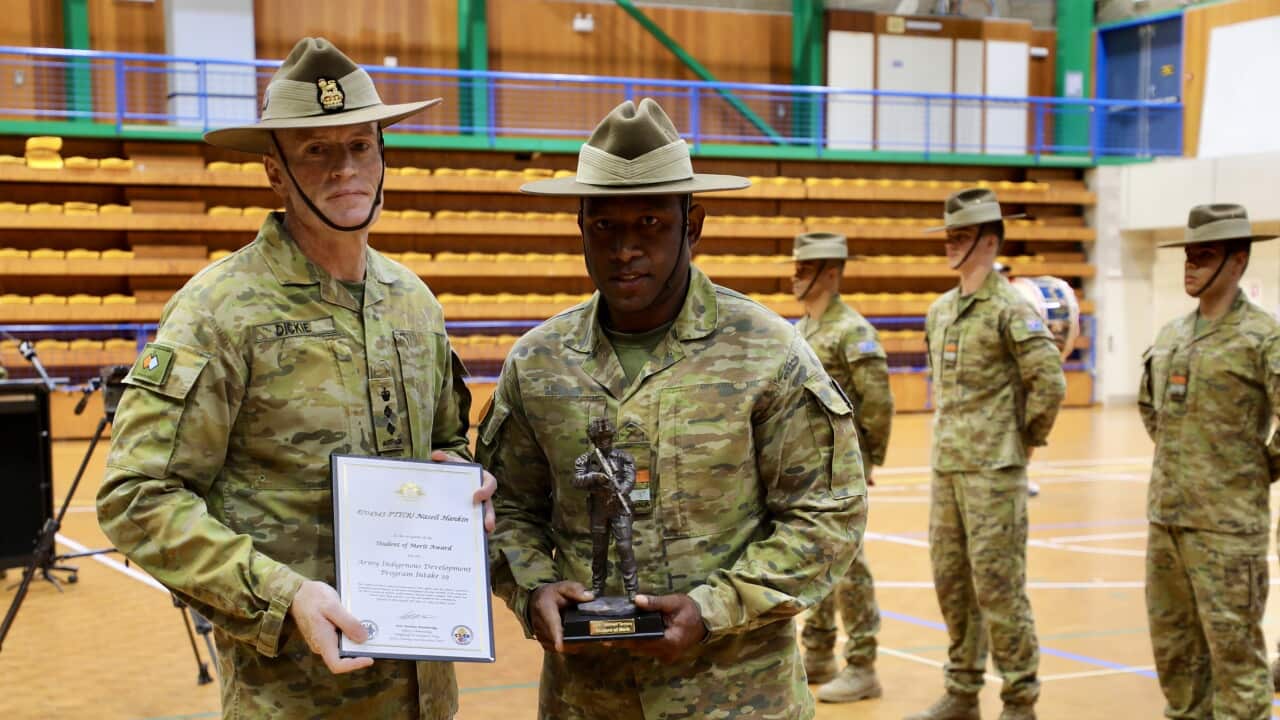
Memories of growing up on Thursday Island in the Torres Strait are what drives Naseli Hankin's hopes of working on the water.
"I want to be a marine specialist," the Torres Strait Islander man said.
"It's always been a dream of mine to be out on boats doing cool operations and stuff."
That dream is now one step closer to becoming a reality.
Naseli is one of 21 recruits to graduate from this year's class of the Army Indigenous Development Program.
It follows a gruelling 17-week training camp designed to build skills, confidence, and resilience while boosting Indigenous recruitment numbers.
"Getting up, getting ready, getting fit, I love it," Naseli said.
"It's a good routine to stick to, it's changed me a lot."
Naseli's next stop is the Blamey Barracks in Kapooka, the Australian Army's Recruit Training Centre, located around 10 kilometres south-west of Wagga Wagga in New South Wales.
For Naseli, it's the start of a journey he is doing for his future and his family .
"Eventually work up the ranks, make my family proud, that's the main thing," he said.
The long running Army Indigenous Development Program (AIDP) is designed to give Indigenous men and women an opportunity for different employment pathways.
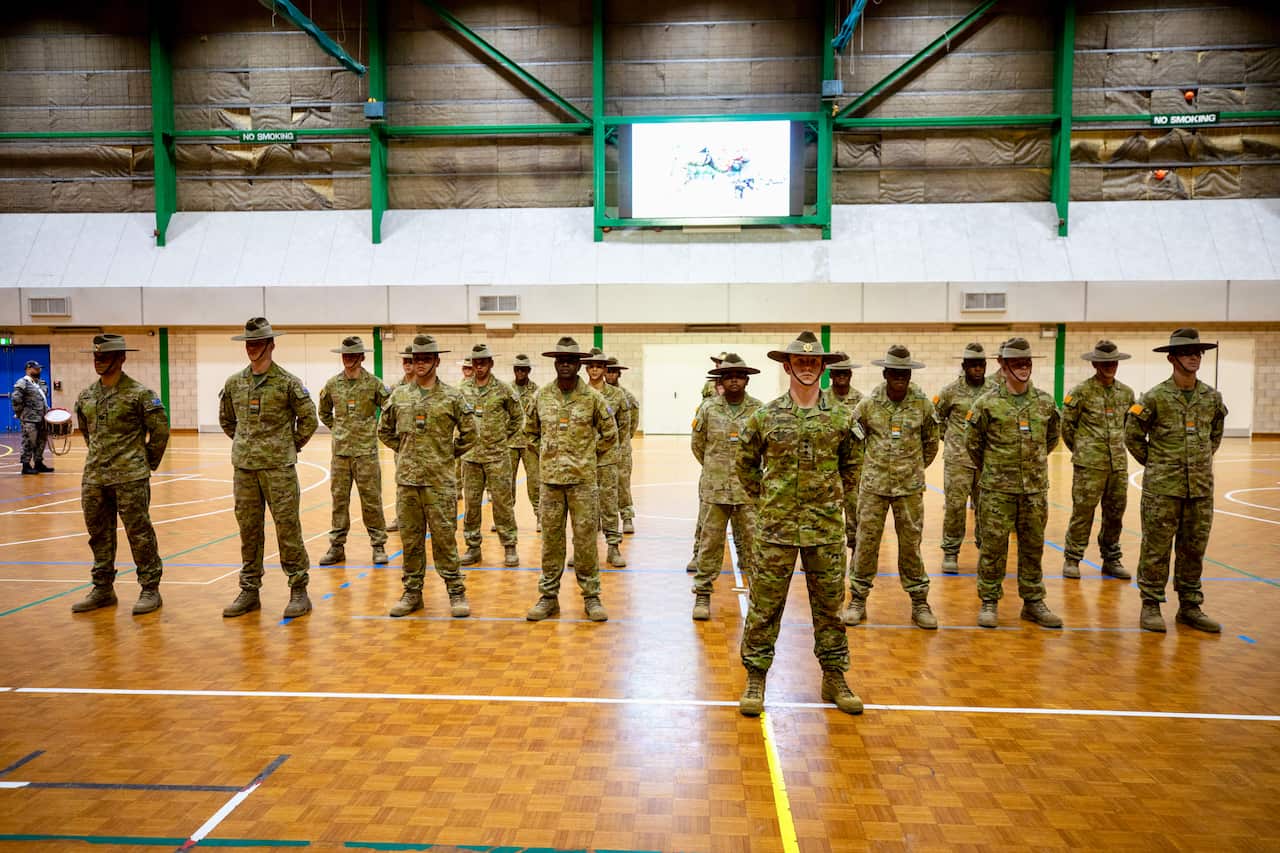
Major Matthew Breckenridge, the senior AIDP instructor, says while the program is designed as a pre-recruit preparation course, not all graduates choose to continue with a military career.
"They've come up to Darwin to better themselves physically, mentally, and academically to prepare them for a career in the army or just other options as a good citizen in society," Major Breckenridge said.
“They still leave here with a Certificate II Year 10 equivalent, a workplace health and safety white card, a first-aid certification and a driver's licence.”
In many ways, the AIDP is very similar to conventional recruit training: days start early with physical training followed by a morning routine, then carry on with periods of instruction and drill.
But where the program is unique lies in its delivery of both military and civilian vocational training combined with a specialised cultural component.
Sergeant Joseph Scully says it's clear the model of training builds confidence in recruits, leaving them well equipped for whatever path they choose to take.
"You really see them start to believe in themselves which translates into standing a bit taller, yelling a bit louder and moving a bit faster," Sergeant Scully said.
Training is based at Robertson Barracks in Darwin but recruits come from all over Australia, with many hailing from remote locations.
For 18-year-old Markus Mogridge, graduation day was a chance to reunite with his mother Michelle, who travelled two days by bus from their hometown of Newman in the remote Pilbara region of Western Australia.
"It took me two days to get here but it was worth it," 60-year-old Michelle Mogridge said.
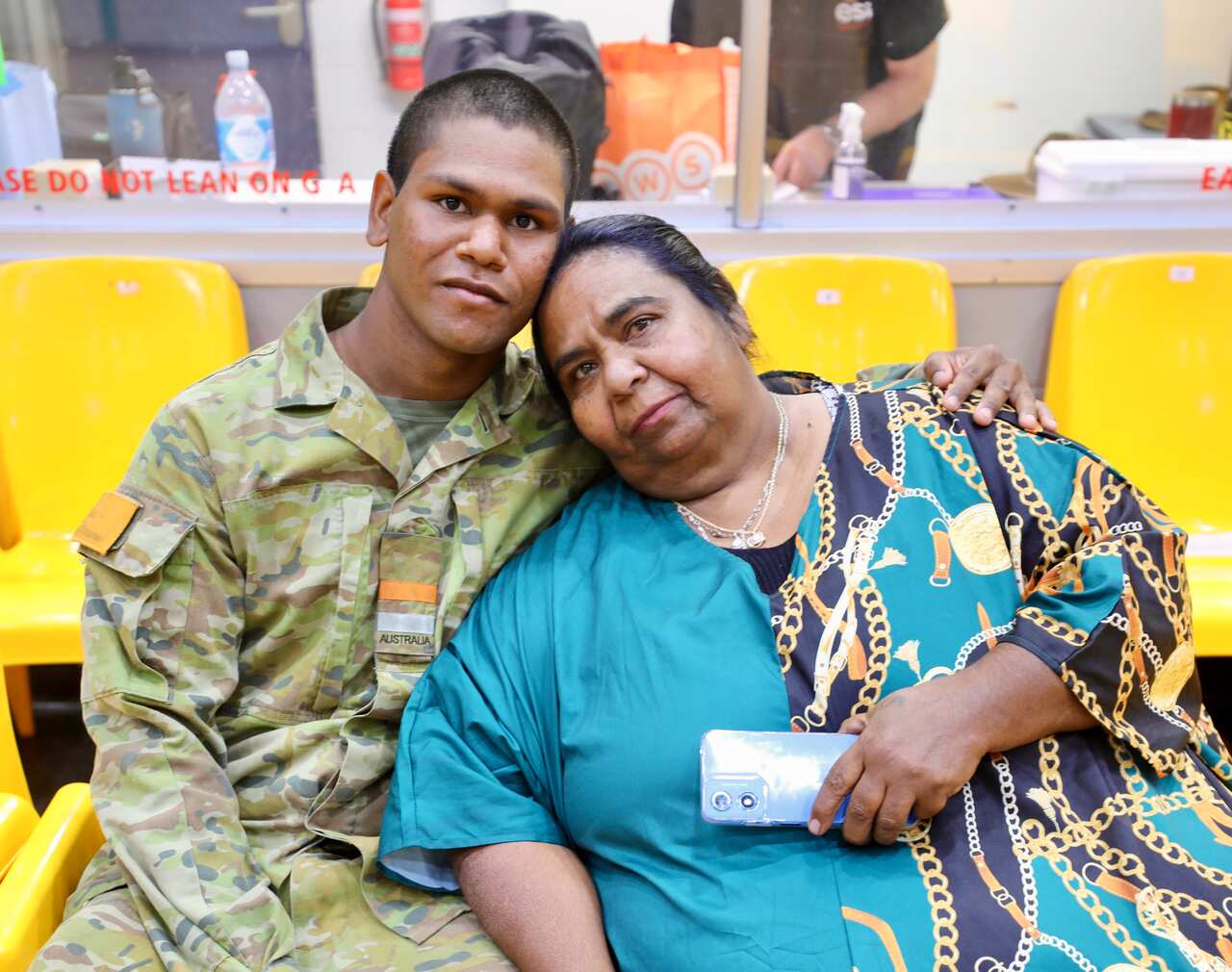
Through tears, Michelle watched as Markus graduated from the program at a ceremony held at the Marrara Indoor Stadium in Darwin's northern suburbs.
"I had to hold my crying, I'm so proud," she said.
Markus will join Naseli and several other recruits at Kappoka for their next round of training starting Monday 29 June.
"It's really special honestly, I always wanted to join," the 18-year-old said.
"I'm pretty nervous just meeting new people ... but I got the hang of it when we first started this program so hopefully it will be somewhat the same."