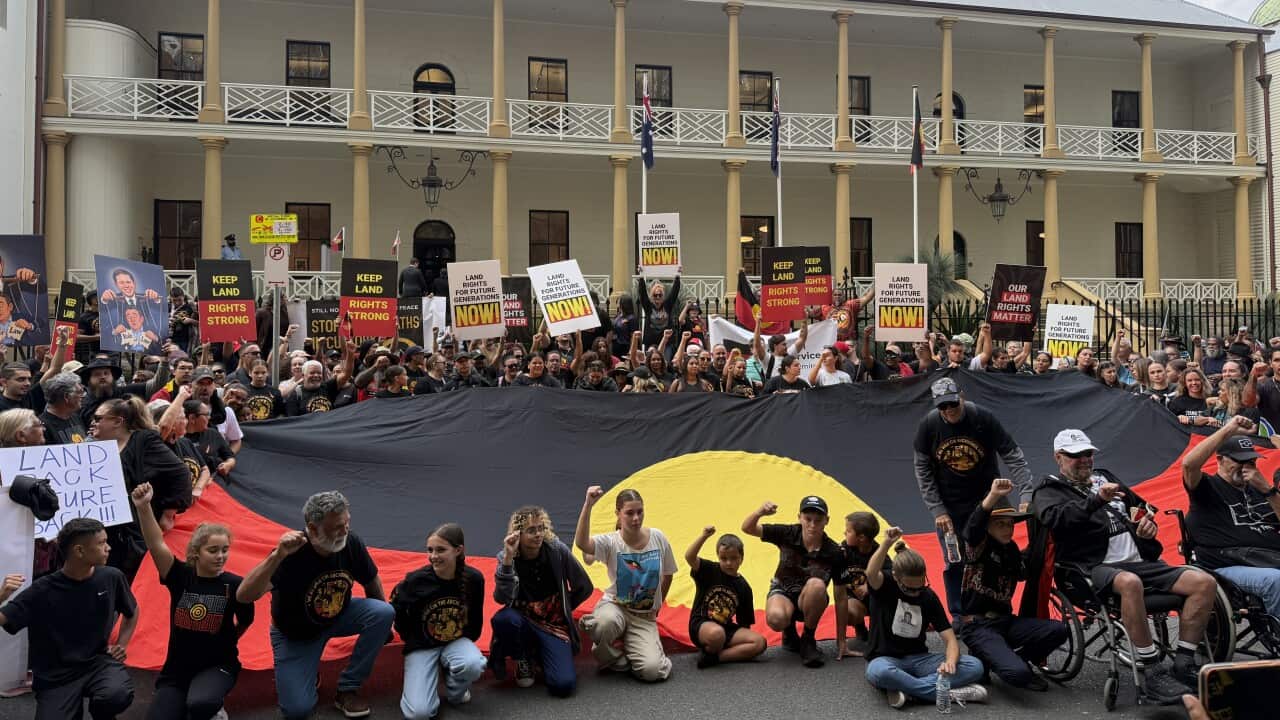
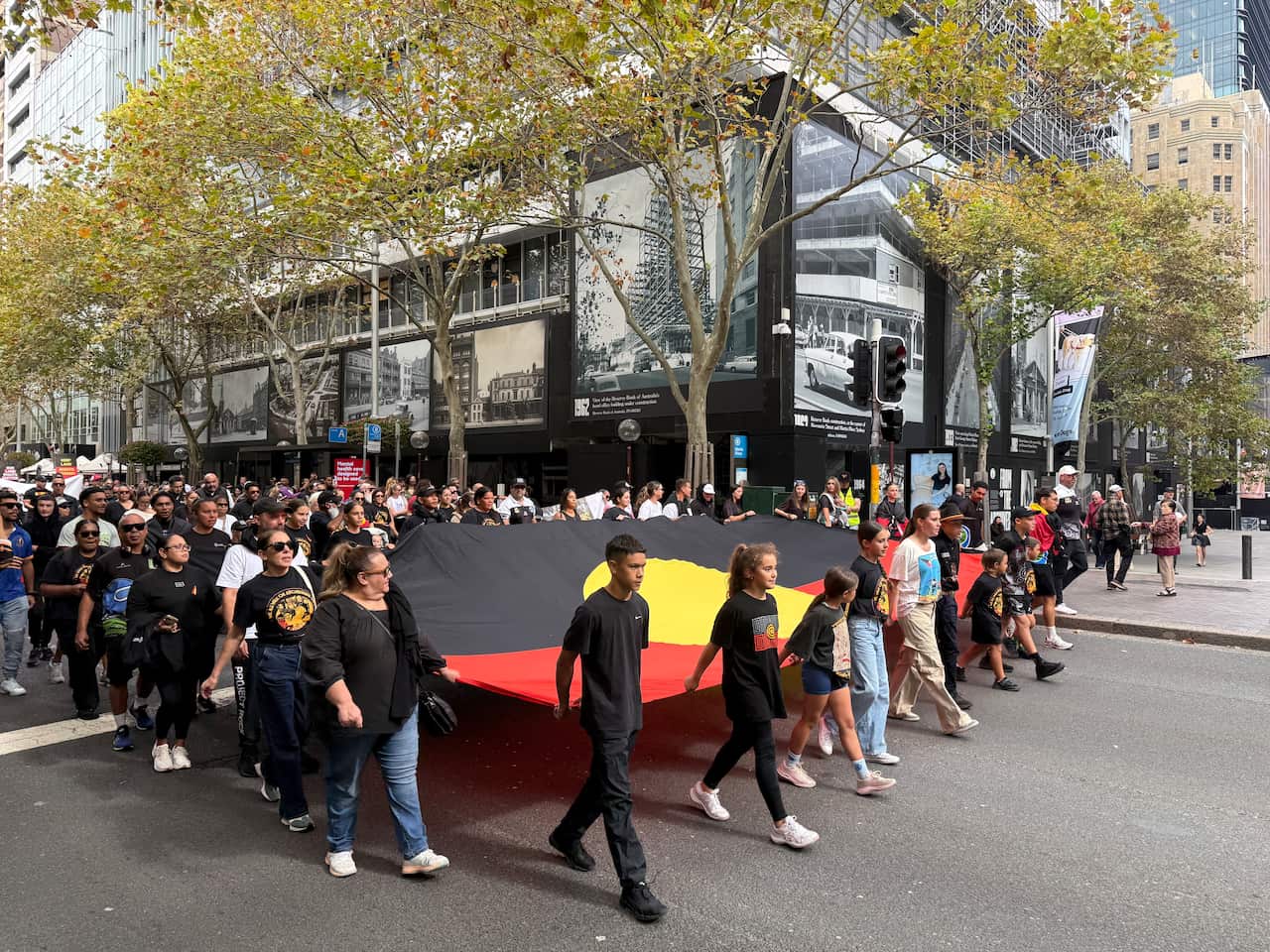
Hundreds of people have marched from Sydney's Hyde Park to state parliament to oppose legislation Aboriginal land councils argue will erode the state's land rights.
The proposed amendments to crown lands legislation were originally introduced to parliament in March, but were shelved after significant community backlash.
“They’re changing the Crown Lands Act, but in fact the big loser is going to be Aboriginal land rights in New South Wales,” said Dr Raymond Kelly, the chair of the NSW Aboriginal Land Council (NSWALC) and a Dhangatti/Gumbayngirr man.
“One of the major updates is that 92 per cent of our network have written to the minister or the premier saying that this piece of legislation is garbage and should be thrown out.”
Under current legislation, Aboriginal communities can lodge a land rights claim on Crown land if it’s unused or has been improperly leased.
But one of the amendments put forward in March would allow any lease, including those for unused land, to be deemed legal.
The NSWALC argued this could substantially reduce the amount of land on the Crown Lands register, including retrospectively, and that the changes have the potential to impact some of the state’s tens of thousands of unresolved land claims.
“This bill was described as 'minor' or 'procedural', but it has serious implications for Aboriginal land rights in New South Wales,” said NSWALC Deputy Chair Leeanne Hampton, a Wiradjuri/Ngiyampaa woman.
The President of the Law Society of NSW, Ronan MacSweeney agreed that the Bill tabled in March could significantly affect land rights claims.
He said it “fundamentally alters what has been long understood to be claimable land,” and flies in the face of a High Court ruling handed down last year.
Nineteen-year-old Worimi woman Maddie Lilley said the proposal felt like a repeat of the past.
“We have been having this fight for generations and generations. Like I've got Elders who are here today, who are in their eighties, who have had to come into this fight 43 years ago," she said.
“I want to see the government working together with us. I want mob to be heard, I want mob to be at the foremost of every single decision that relates to our people.”
A spokesperson for the Lands and Property Minister Steve Kemper said the government wants “a system that works for everyone” and “will continue to engage in constructive discussions”.
“The proposed changes aim to address edge cases that may become claimable due to technical non-compliance, such as an invalid sub-lease, on Crown Land sites that are well utilised by the local community,” the spokesperson said.
Gamilaraay woman and NSWALC Councillor for the North Western Region, Anne Dennis, said the proposed changes would give Minister Kemper too much power.
“For one politician to be able to grant leases by himself, and not only that, but then to be able reach further back, respectively, and grant those leases as well. This is a tick a box approach,” she said, calling for better consultation.
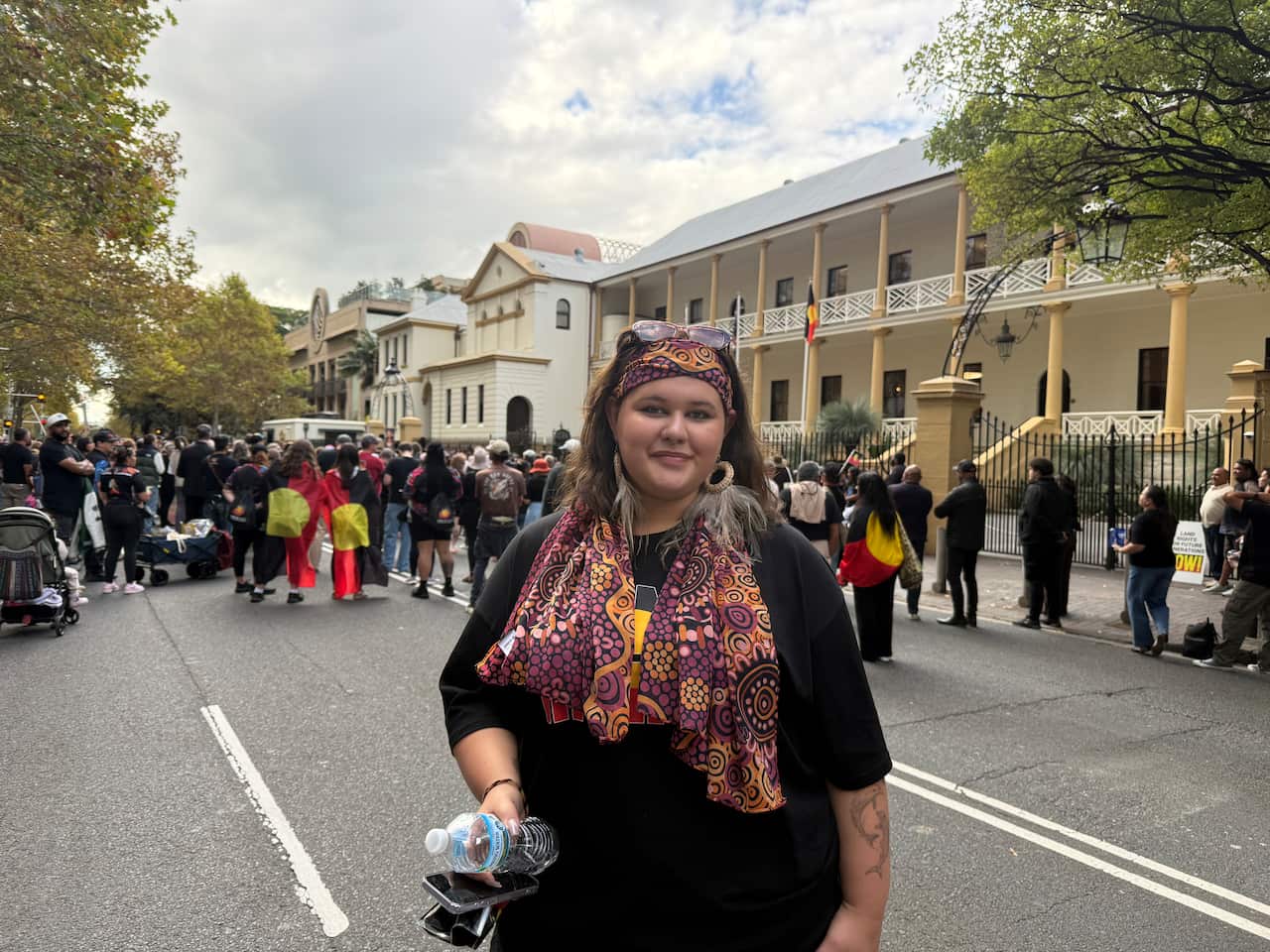
Wiradjuri woman Tara Stanley is the CEO of Wellington LALC, and she travelled five hours with her daughter Maliyah to attend the protest.
“Land rights mean everything to us. My grandfather protested 40 years ago, and I feel very honoured to be here, to stand with my people today,” she said.
NSWALC Youth Advisory Committee member for the North Coast Region, Illarah Roberts, and a proud Bundjalung, Gomeroi, and Euahlayi woman said Wednesday’s protest was about more than just legislation.
“This about our future,” she said.
“Across New South Wales, young Aboriginal people are watching closely. We stand with our Elders, our Local Aboriginal Land Councils and our communities. We are united in opposing this Bill in its current form, because we understand what is at stake.
“Land is not just an asset. It is identity, culture, connection and opportunity. It is the foundation for housing, for economic independence and for strong communities.
“When you weaken land rights, you weaken our future.”