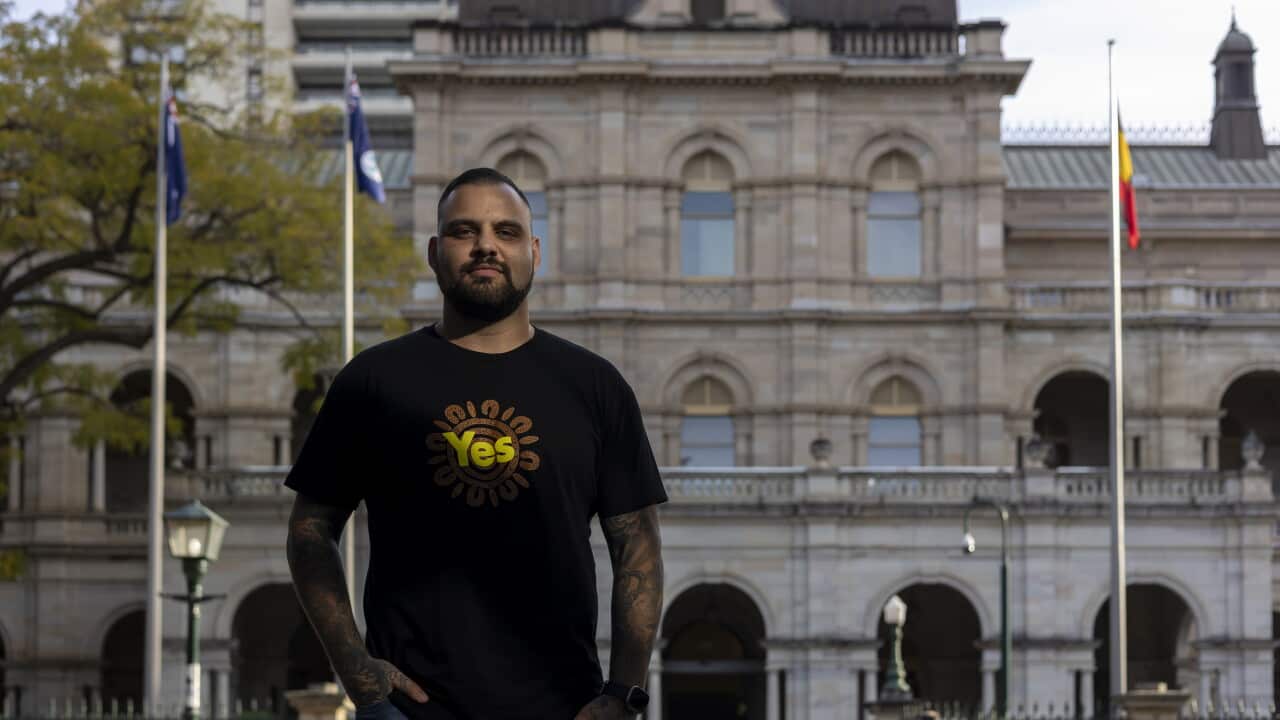
Three years after his mother was told to turn her T-shirt inside out before she could vote, Murray Benton says the outcome was never just about his family. It was about making sure no one else had to go through the same experience.
On the day of the 2023 Voice referendum, Benton's mother and younger brother arrived at a polling booth in Brisbane's north wearing "Yes23" shirts. His brother, who had recently turned 18 and has physical and intellectual disabilities, was voting for the first time.
Election staff directed them to remove or cover the shirts before entering. Benton says they were escorted to school toilets, where they turned the shirts inside out before being allowed to cast their ballots.
What followed — an attempted complaint at the polling booth, police being threatened over an electoral information booklet and, eventually, a years-long legal battle — culminated this week in a significant victory over the Australian Electoral Commission (AEC).
Rather than proceeding to a full Federal Court hearing, the matter was resolved with the AEC agreeing to sweeping nationwide reforms, including mandatory Aboriginal and Torres Strait Islander cultural competency training for more than 100,000 temporary election workers and more than 1,000 permanent staff, along with a dedicated telephone support line for First Nations voters during federal elections.
For Benton, a Barkindji Koori man and deputy chief executive of Queensland's Aboriginal and Torres Strait Islander Child Protection Peak Body, the reforms matter more than any personal vindication.
"I think the fact that we've been able to land a resolution prior to actually going before a court is really positive," he said.
"We've got a few really practical reform pieces that will be felt across Australia, particularly for Aboriginal and Torres Strait Islander people."
He hopes the changes will benefit everyone who interacts with public institutions.
"Many of us know that if we get things right for Aboriginal and Torres Strait Islander people, we'll get it right for other communities," he said.
The legal action stemmed from events Benton says unfolded at a polling booth in Aspley on 14 October 2023.
His mother had challenged staff after being instructed to remove the Yes23 shirts, arguing they should be able to vote while wearing clothing that reflected what was, for their family, a deeply significant moment.
"The 2023 Voice referendum was only the second referendum in our country's history that directly related to Aboriginal and Torres Strait Islander people," Benton said.
"For a lot of us, our grandparents — and for some, even our parents — were the first Aboriginal and Torres Strait Islander people who were actually allowed to vote."
He said the referendum carried profound emotional weight regardless of whether Australians supported or opposed the proposal.
"Separate from whatever people's position was, it was really significant and quite an emotional day for many Aboriginal and Torres Strait Islander people."
According to Benton, the situation escalated after his mother attempted to lodge a complaint. She says she was handed an electoral information booklet rather than a complaint form, before later being stopped from taking the booklet home and warned police would be called if it was not returned.
Benton, who arrived after receiving a distressed phone call from his mother, said he was publicly told to leave despite trying to support her through the complaints process.
"In my assessment, we were the only visibly Aboriginal and Torres Strait Islander people in that environment," he said.
"I was really concerned that the way electoral staff were treating us publicly was actually influencing voters' ability to stay neutral when making their decision around what was in the best interest of Aboriginal and Torres Strait Islander people."
The family initially complained to the Australian Electoral Commission before taking the matter to the Australian Human Rights Commission. After conciliation failed to resolve the dispute, they commenced Federal Court proceedings with the support of the National Justice Project.
Benton said the legal process itself revealed how difficult it can be for people pursuing racial discrimination claims.
"We became aware of just the challenges and limitations when it comes to putting in race discrimination claims," he said.
"You might have an experience that you feel deeply harmed by, but the legal system may or may not actually see the value that you believe through the way our legal system is structured."
He credits the legal team with helping the family persevere through a process he described as emotionally exhausting.
"If it wasn't for our legal team and the National Justice Project, we wouldn't have actually made it to this point."
Although the settlement marks the end of the legal proceedings, Benton says the emotional impact remains.
"Our family still feels quite humiliated and singled out," he said.
"We felt incredibly let down, unsupported, like we didn't belong here in Australia."
His mother, he says, now feels apprehensive about voting despite understanding the significance of that right.
"For her, she's really troubled by the prospect of actually wanting to vote in the future."
Yet Benton believes the reforms make the years of litigation worthwhile.
"The outcome we've been able to achieve will see benefit across the country for Australians," he said.
"It gives us hope and reaffirms that this was worth the many conversations, the mental strain and the harm we've stood up with."
He also hopes others who experience racism will feel encouraged to report it.
"It's really important to consider reporting racism if you've experienced it," he said.
"If we didn't have the support that we had, the impact would have been detrimental on our family."
A spokesperson for the AEC said implementation of some of the changes were already underway, while others, specific to conduct during elections, would by necessity have to wait until the next poll.
"Every Australian has the right to participate in our democracy with confidence, dignity and respect," the spokesperson told NITV.
"When people share experiences that indicate we have fallen short of that standard, we listen carefully and take those experiences seriously.
"The AEC welcomes opportunities to strengthen our cultural capability and competency.
"Over many years, the AEC has worked in partnership with First Nations communities and organisations to improve electoral participation and enfranchisement ... These efforts have contributed to significant improvements in our service offering to First Nations Australians."