WARNING: This article contains the name and image of an Aboriginal person who has passed away.
Emeritus Professor MaryAnn Bin-Sallik AO has died peacefully in Darwin, surrounded by her loving family.
The Djaru Elder from the East Kimberly was aged 85.
Professor Bin-Sallik has been remembered as a trailblazer and changemaker across health, medicine, and education – who challenged systems and structures, and paved a pathway for generations of Aboriginal and Torres Strait Islander people.
Her daughters Rokiah Lacey and Lisa Fereday said they were “blessed to be raised by such a strong, independent woman, who was loyal, loving, and with the quickest of wit".
Early Life
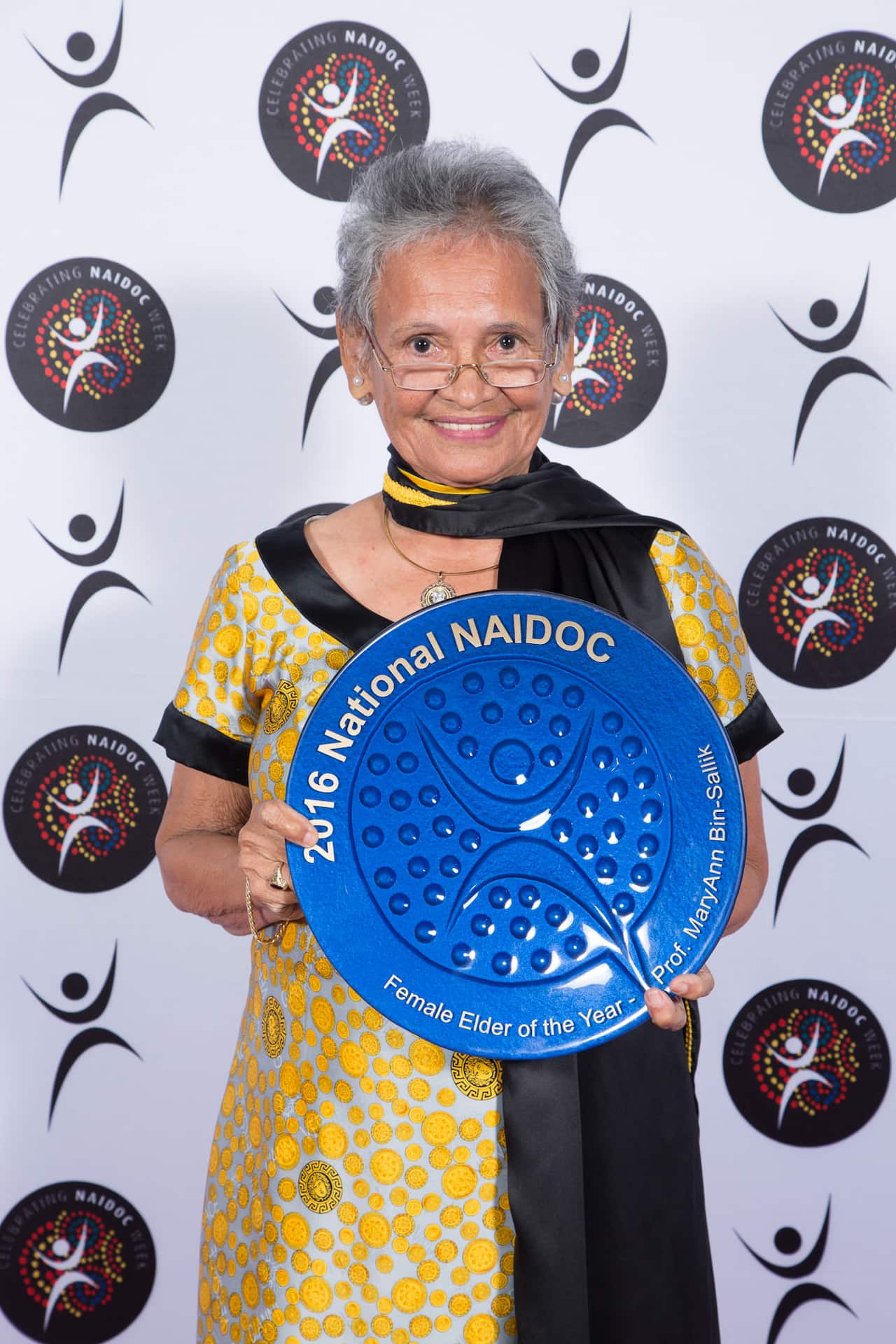
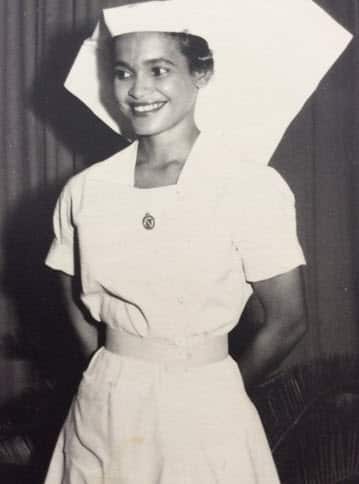
The 2016 NAIDOC Female Elder of the Year became a nurse at 17, beginning her impressive list of firsts, as the first Indigenous person to graduate as a trained nurse from Darwin Hospital. She would spend 17 years in the healthcare sector.
In her mid-thirties, Prof Bin-Sallik turned her attention to academia, beginning an extraordinary new career pathway and becoming the first Indigenous person to be employed as a full-time academic in the higher education sector in Australia. She also became the first Aboriginal person to undertake a review of Indigenous education.
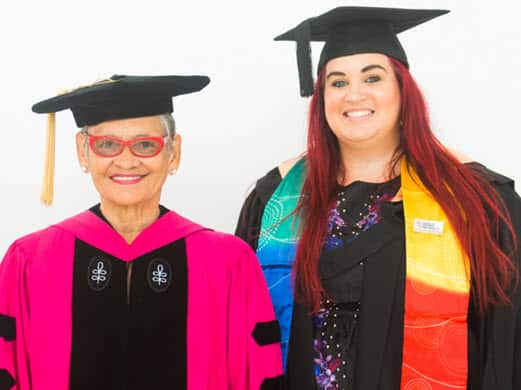
With encouragement from poet, writer and land rights campaigner Roberta Sykes, and funds from the Aboriginal Overseas Study Award, Prof Bin-Sallik went to Harvard to do a Masters Degree in Educational Administration. Sykes, through her Black Women's Action in Education Foundation, raised the money for Prof Bin-Sallik to continue to study for a PhD in Teaching and Learning.
She became the first Indigenous woman to receive a Harvard doctorate in 1989. Education was her passion, and she used the degree to encourage others to become leaders in the movement and to break down racial barriers.
An advocate for her people
There are countless young Aboriginal and Torres Strait Islander people who have similar stories to share of how Prof Bin-Sallik, Auntie MaryAnn to many, would drum in to them the power and importance of education, life-long learning, and its transformational ability. Prof Bin-Sallik would go on to mentor countless young people.
On her retirement in 2008, Prof Bin-Sallik was made an Emeritus Professor of Charles Darwin University, an acknowledgement of her extraordinary contribution of academic service and to the advancement of Indigenous education over successive decades.
In addition to sitting on numerous governance boards, advisory committees and review groups, Prof Bin-Sallik served as a member of the National Indigenous Council, the National Indigenous Youth Leadership Program, the National Accelerated Literacy program, the Indigenous Higher Education Advisory Council, the Regional Women’s Advisory Council, the Australian Vice Chancellor’s Committee’s Indigenous Advisory Committee and the Women’s Advisory Network for the National Breast Cancer Centre.
Prof Bin-Sallik was a member of the National Population Council, the Council of the Institute of Aboriginal Studies, now the Australian Institute of Aboriginal and Torres Strait Islander Studies, and was a Co-Commissioner for the Human Rights Commissions' Enquiry into the Forced Removal of Aboriginal and Torres Strait Islander Children.
Prof Bin-Sallik also played a key role in a number of other government committees of inquiry into Aboriginal employment; and discrimination in employment.
The respected academic was a visiting lecturer at a number of overseas universities, and delivered major lectures at international conferences in the USA, Germany, Norway, Mexico, England, and Brazil.
Prof Bin-Sallik was named Female Elder of the Year in the 2016 NAIDOC Awards.
In 2017, Prof Bin-Sallik was honoured with one of the nation’s top awards, an Officer of the Order of Australia, for ‘distinguished service to tertiary education as an academic, author and administrator, particularly in the area of Indigenous studies, and as a role model and mentor’.
A life-long passion for education
While receiving an honorary doctorate from the University of South Australia in 2017, Prof Bin-Sallik spoke of the extraordinary power of education.
“Education opens up the world for people, it brings understanding, innovation and empowerment,” she said.
“That is something we should want for all children and it is certainly something for which I will continue to strive for Aboriginal and Torres Strait Islander children.
If my career proves anything, it is that the opportunity to pursue education is one of the greatest gifts.
The trailblazer is survived by daughters Rokiah Lacey and Lisa Fereday, their families, grand-children and great grant-children.
Emeritus Professor MaryAnn Bin-Sallik AO will be farewelled with a funeral at Darwin Cathedral, at 9.30am on Monday 2 March.
In lieu of flowers, please consider donating to the Indigenous Literacy Foundation.