For Brenda Garstone, boab trees have long been a significant presence.
"You know, we had so many old people telling us 'You mob for the Bottle Tree Dreaming. This is Ngarrangarnie.'"
A coolamon owned by her Aunt also had illustrations of boab trees. But for decades Ms Garstone didn't know the full significance of her connection to the distinctive plants.
Thanks to her own family research, Ms Garstone discovered just how deep that connection really is.
"That's all making sense now... the significance of the boab trees."
The iconic trees are native to the Kimberly area and the northwest of the Northern Territory. Their distinctive shape, bulging at the bottom before tapering to spindly branches at the top, makes them instantly recognisable.
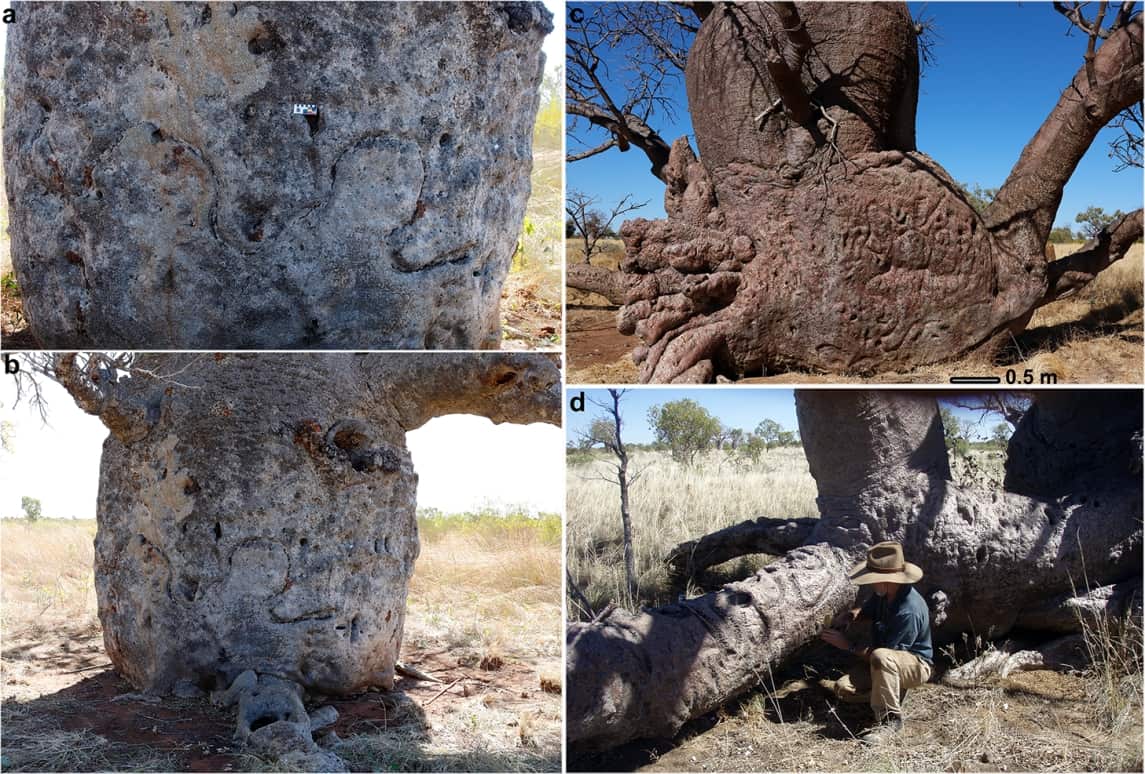
They also provided a canvas for the artworks of the area's First Peoples, with ancient carvings still present on boab trees across the area, reflecting the more well-known examples of Aboriginal rock art.
However, the trees have a limited lifespan.
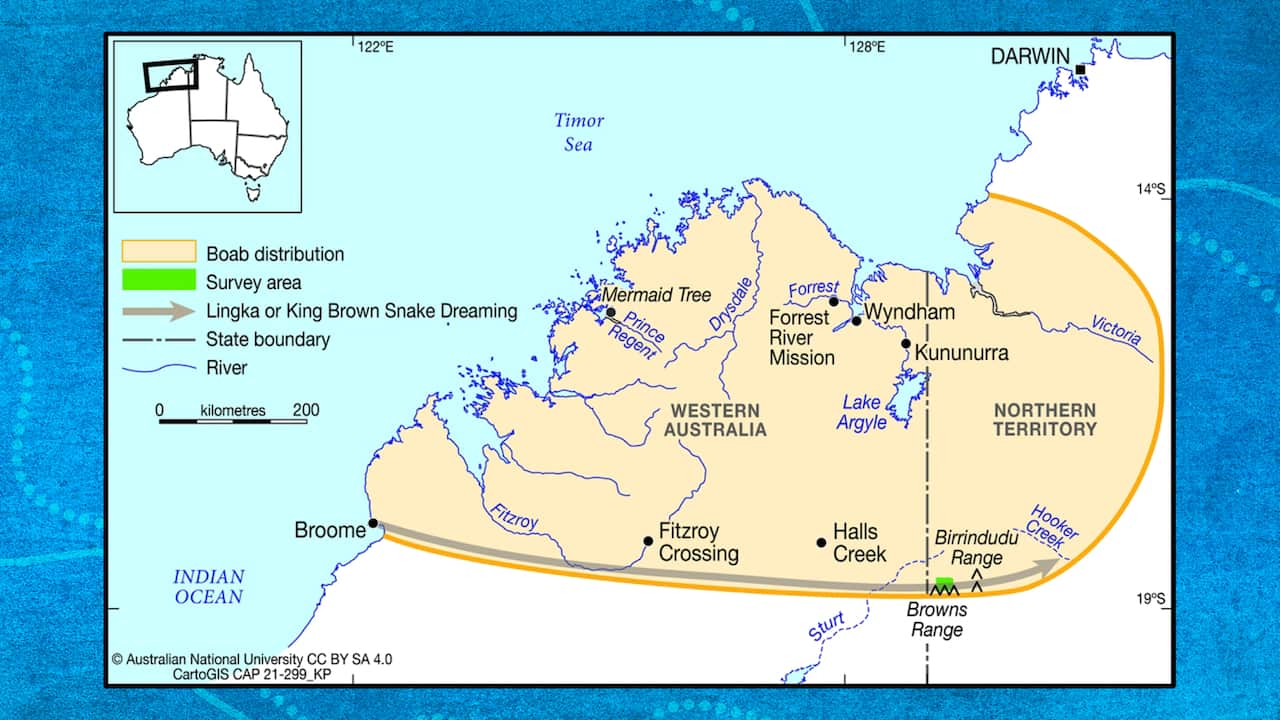
Ms Garstone and a team of academics from the Australian National University recently surveyed a section of the Tanami Desert on Jaru Country to discover just how widespread these items of cultural heritage are before they disappear.
Boab trees document King Brown Dreaming
While delving into her family history, Ms Garstone came across the work of historian Darrel Lewis, who was researching the boab trees in colonial records. As a Traditional Owner of Jaru Country, she asked to be involved in the Tanami survey.
Going on to Country to be in the presence of the boab trees was a "very healing" experience, said Ms Garstone.
"My mother and her sister [and] two brothers were part of the Stolen Generation. No one sat them down and told them exactly who they are and where they're from."
"Discovering this particular part of this journey, it was like another puzzle being put together to create the bigger picture for our family's connection to Country and our cultural foundation."
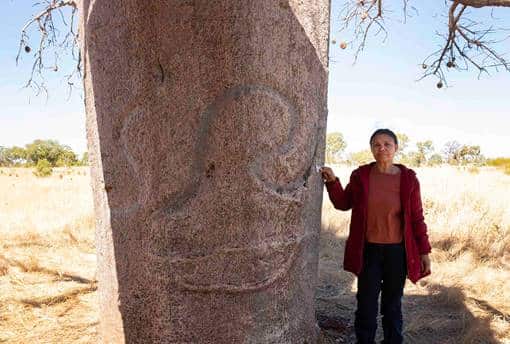
Many of the carvings represent the Lingka Dreaming, of the King Brown snake, an enormous songline that stretches from Broome past the state border.
The connection to the songlines of her family was a special experience for Ms Garstone.
"It was very calming, and... it was peaceful. It was a time to reminisce about what it was like when my grandmother was walking that Country with her family in a traditional setting. "
"My maternal grandmother was a traditional Indigenous woman who lived... and practiced her law and culture on Country. So this Dreaming guided her whole livelihood."
Carvings to be digitally preserved
Sue O'Connor is a professor in the School of Culture, History and Languages at ANU.
She says that despite a lack of public recognition, the boab tree carvings are "enormously significant".
"Out in the flat areas like the Tanami, you don't have any rock shelters. So these sites are like the living occupation sites," she told NITV News.
"Not only are they art sites with these carvings, which are equivalent to the rock paintings, but they're also really enormously significant as occupation sites. So all around the base of the sites, you get broken grinding stones and stone artefacts from where people have been living."
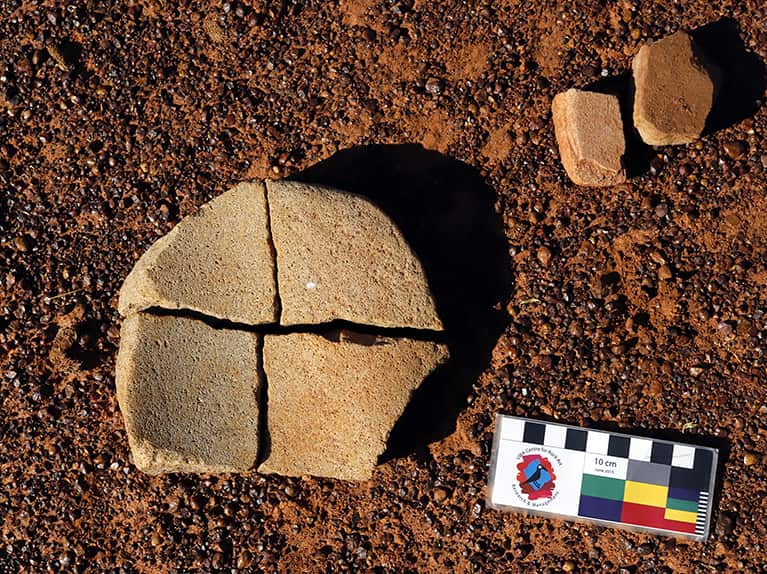
Now Ms Garstone, Professor O'Connor and her team are hurrying to document the trees before it's too late.
"Many of them are hundreds, if not thousands of years old already. So they're likely to die from natural causes, or bushfires, lightning strikes... and droughts."
"There's a diminishing number of them, because as they die, the ones with the carvings will disappear. So there's sort of a race against time to try and record the carvings."
3D photogrammatry is being used to create a digital copy of the engravings for posterity, using thousands of images for every tree.
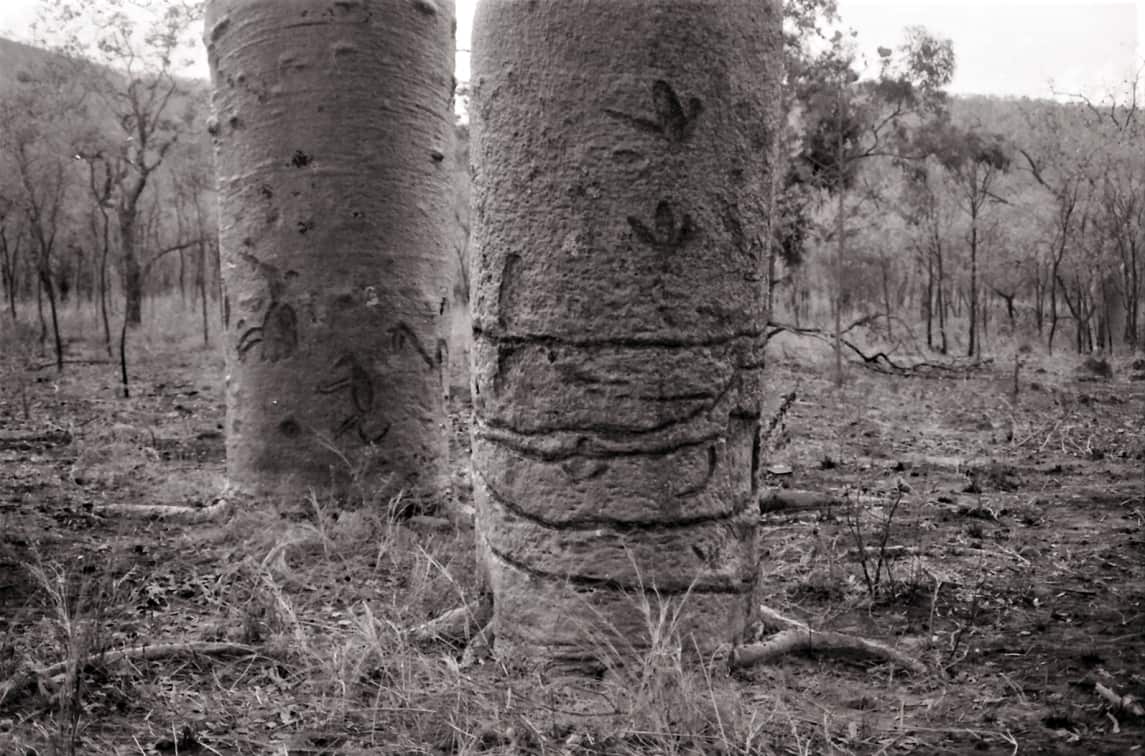
Ms Garstone said she is very pleased that the carvings will be preserved in this way for future generations, and in reverence for the past.
"This means so much to us to ensure the preservation of the trees and of our ancestral story, which ties us to that land. And we want it to be there for generations to come.
"It was at the brink. As it came close to becoming extinct. And so it's so important that we revive it and preserve it."