Changes have been made to Uluṟu-Kata Tjuṯa National Park's 99-year lease to support the livelihood of Aṉangu peoples living and working on Country.
Aṉangu Traditional Owners and the federal government came to an agreement to alter the terms of the lease to enable more on-Country jobs for Aṉangu peoples, improved financial terms for Traditional Owners, increased financial support for the remote cost of living crisis and investment in community-controlled development projects.
The increased support will take the pressure off the Central Land Council, who have for two decades, supported Traditional Owners and their communities use revenue from the park to fund education programs, recreational facilities, homeland infrastructure and other needs.
Since 2006, almost $21million has been spent on running 102 projects including the Muṯitjulu pool which is patrolled by Aṉangu lifeguards, men's cultural events on Country and supporting Aṉangu boarding school students.
Kathleen Luckey, CLC delegate and Uluṟu community development working group member said the additional support will be funnelled into important projects.
“We’ve been spending our money wisely for many years and want to keep using it to make our communities stronger," she said.
"For example, we’d like to put a roof over the basketball court in Imanpa so we can play, meet and celebrate there even when it’s hot."
Uluṟu working group and park board of management member, Alison Carroll said while the projects have been successful, there's now more opportunity.
“We want more of them to happen now," she said.
"We have been speaking up strongly for our young people and we need them to become leaders like us and get jobs.”
Employment requirements have also been printed into the updated lease.
By 2030, at least 50 per cent of the Uluṟu-Kata Tjuṯa National Park's full-time workforce must be Aṉangu people, and Aṉangu businesses must be prioritised in contract tenders.
According to CLC chief executive Les Turner, the new agreement also "delivers stronger protection for sacred sites and songlines".
Mr Turner said tougher consequences for damage will be enforced and "more robust joint management principles informed by tjukurpa".
"That may mean accepting guidance from Aṉangu about where and when to undertake traditional burning or when to close the park for cultural reasons," he said.
Parks Australia also agreed to recognise Aṉangu Traditional Owners' cultural and intellectual property and seek explicit consent and permission prior to use.
The lease was originally signed at the Uluṟu-Kata Tjuṯa National Park Handback on October 26, 1985.
Upon receiving the title deeds to the park, Aṉangu Traditional Owners leased the land back to Parks Australia for 99-years.
While the lease establishment joint management of the park, the Board of Management required a majority of Aṉangu representatives.
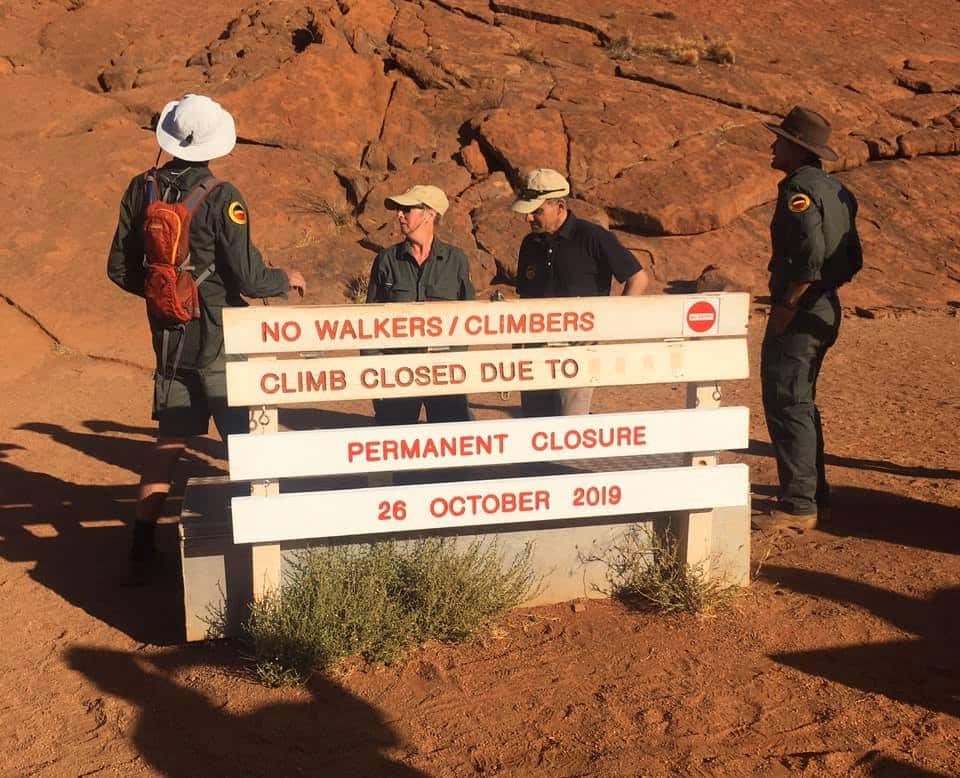
The lease was altered in 2019, to prohibit the climbing of Uluṟu.
This will be the second alteration to the lease agreement, and is the result of a 13 year negotiation between the CLC and Parks Australia.