For over a decade, the Papunya Literature Production Centre was a thriving hub where Elders and community would gather to practice and preserve culture.
Standing proudly in the remote Aboriginal community of Papunya in the Northern Territory's Western Desert, the centre produced hundreds of Pintupi-Luritja bilingual books.
The books were designed as a way to pass cultural knowledge, language and history to young ones, and were filled with vibrant and beautiful illustrations - all created by community.
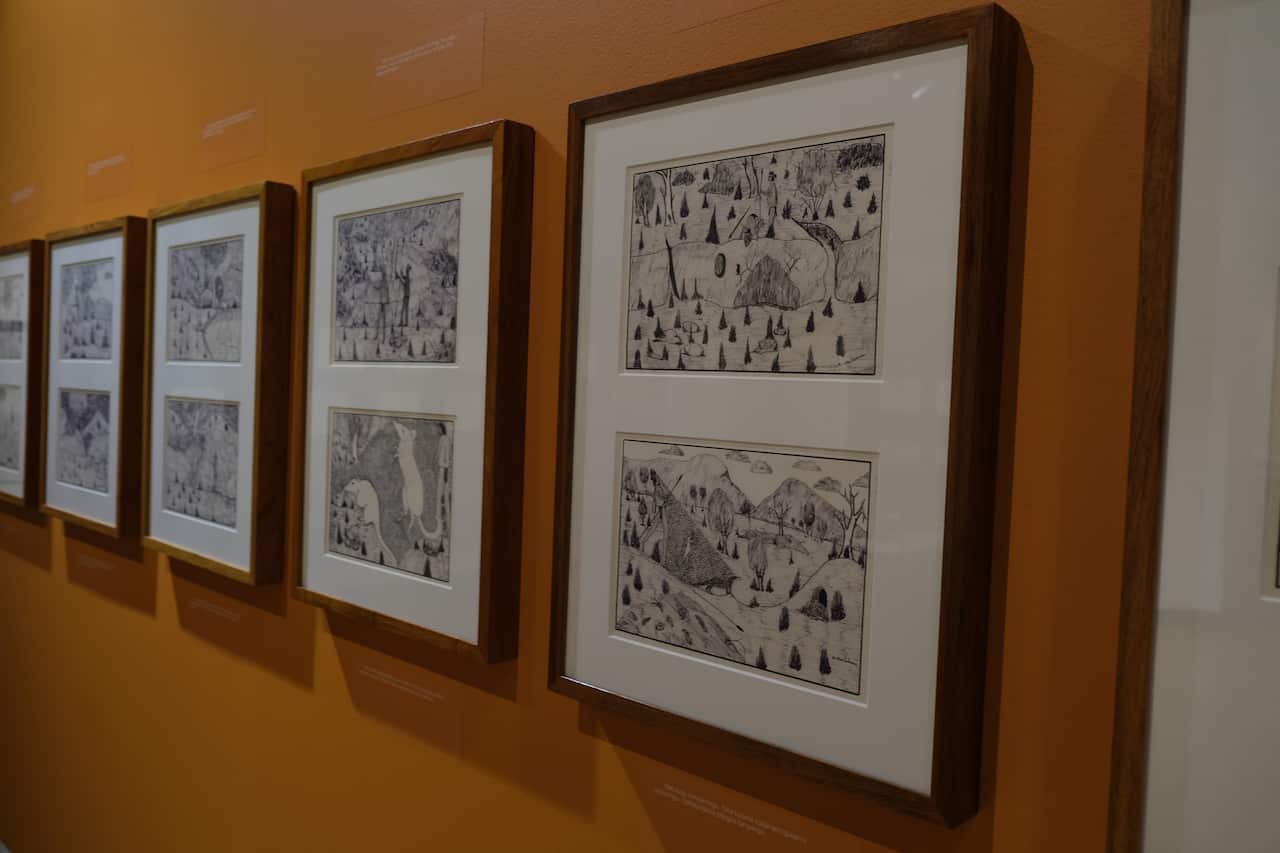
They shared everything from information of plants and animals, to stories of daily life in community, first contact and Dreaming.
Operating between 1979 and 1990, the Papunya Literature Production Centre was a pioneer for community-controlled cultural preservation and education.
Now, it's been celebrated through a new exhibition at the National Library of Australia.
Wangka Wakanutja: The Story of the Papunya Literature Production Centre hosts photos, artworks and documents from the centre, showcasing the mammoth production and power of the grassroots project.
Papunya resident and artist, Roslyn Dixon has spent the last three years co-curating the exhibition.
On Wednesday, she stood in the halls of the National Library and saw her work finished.
"When we first came in, when we saw all the pictures and stories, I nearly cried!" Ms Dixon told NITV.
"I had tears!"
Ms Dixon is a storyteller, something that drew her to curating the exhibition.
"I'm so proud to be here and see the exhibition, it is special," she said.
"It's special to me because I love stories and drawings."
Seeing the final exhibition, Ms Dixon thought of her 12-year-old daughter back in Papunya and the importance of the centre for her. But she also thought of those who built and contributed to the centre, and would see their legacy.
"I'm so proud to be here and see the exhibition, it is special," she said.
"It's a big day, and it's sad, seeing these pictures and drawings by people who have passed away . . . we are thinking of them."
Priscilla Brown co-curated the exhibition, travelling with Ms Dixon from Papunya for the opening.
The centre has been crucial to her family, she has spent hours reading the books to her children and grandchildren.
"I feel proud when I read it stories to them, and they say 'oh that's really good! I love that story. Read it again, read it again! I love it'," said Ms Brown.
For Ms Brown, the exhibition is the next piece of the centre's legacy - building a cultural library for generations to come.
"It is important for the young ones to know, especially when we get older, the children can take it on," she said.
"I have two grandsons, one granddaughters, so they can take it on from me. They can continue it."
Alongside the physical exhibition, a publication, also titled Wangka Wakanutja: The Story of the Papunya Literature Production Centre has been released.
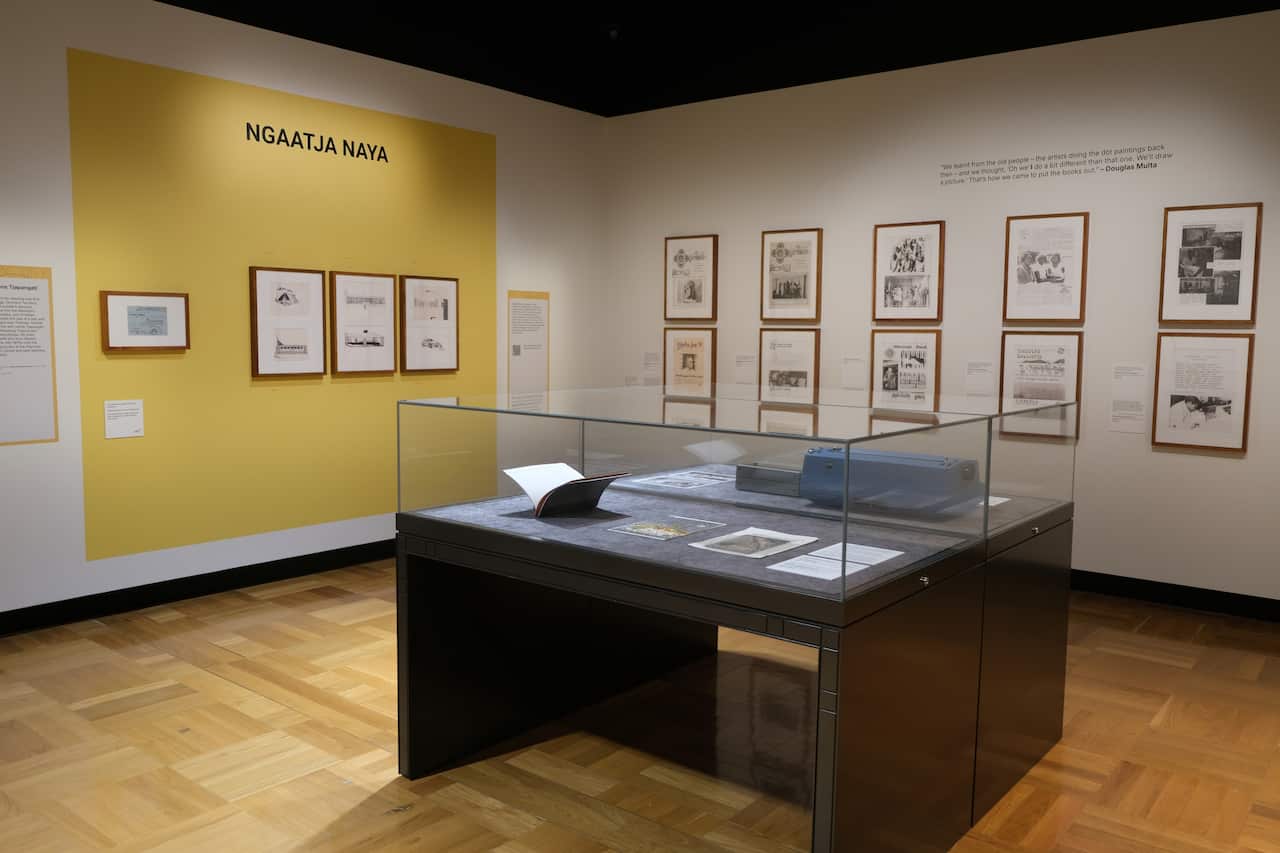
Written by Papunya woman Charlotte Phillipus, exhibition advisor and sociologist Dr Vivien Johnson and lecturer in endangered languages Dr Samantha Disbray, the book recounts the pre-history and history of the centre, its daily operations and its significance for the Papunya community.
For Dr Johnson, the exhibition is just one part of a larger story.
"The Papunya Literature Production Centre was a relatively small group of people beavering away year after year to produce these hundreds of extraordinary books," she explained.
"What is here is the tip of the iceburg."
She said the preservation of the books and resources produced by the centre is a testament to community's awareness of their value.
"These things survived . . . because there was a sense in the community that they were something really special."
Wangka Wakanutja: The Story of the Papunya Literature Production Centre will open to the public on April 4.
Director-General of the National Library of Australia, Dr Marie-Louise Ayres said the process had been "wonderful" and expressed deep thanks to the Papunya community.
"[These are] books that were made for their children in the 1970s and 1980s, and that were really about ensuring that children in their community could experience their stories, in their language," she said.
"We are so grateful for the generosity in sharing this with the people of Australia."
Dr Johnson hopes the exhibition can be a "window into a world" many don't see.
"It's a window into a world that people from the mainstream don't encounter or perhaps they imagine in negative terms. But it's presented in a really positive way, she said.
"More broadly, the volume of work, the quality, the inspiration behind it and the creativity is another example to us all to what Indigenous people can do if they are given control over some aspect of their lives, and their resources to make something of it."
For Ms Dixon, it's an opportunity to show the world who her people really are.
"I hope they think about Papunya and our stories, our work, who we are."