Warning: this article discusses self-harm.
Anthony says learning to make music changed his life.
“It was a way for me to reconnect with myself,” he explains to Living Black.
“Before the music I was just a good kid just getting caught up doing bad stuff. [I] thought it was cool, a way to fit in.”
The Noongar teenager is now 17 and has spent many formative years in and out of juvenile detention.
At his lowest point, he was sent to Unit 18, a facility reserved for the state’s most difficult detainees.
It’s a controversial last resort, with a history of inhumane lockdowns, abusive mistreatment, riots and suicides, due to be replaced in 2028.
It was there he first accessed a community-led program in Western Australia, that is changing lives through hip hop.
Banksia Beats sees rappers teach young people caught up in the justice system the art of storytelling, rhyme and beat making.
The program runs every week at Banksia Hill Detention Centre, and the notorious Unit 18 of Casuarina, a maximum security prison previously reserved for adults.
It was developed by Hip Hop 101, an organisation created by producers using music production as a tool of therapeutic rehabilitation.
Giving back control
Anthony credits the rappers with throwing him a lifeline.
“It meant a lot really, because in places like that you don’t have a lot. So it was good for me, but not only me," he told Living Black.
“They are the ones who taught me how to do my own music, how to produce it, how to edit. Without them, I probably wouldn’t be talking to you about music."
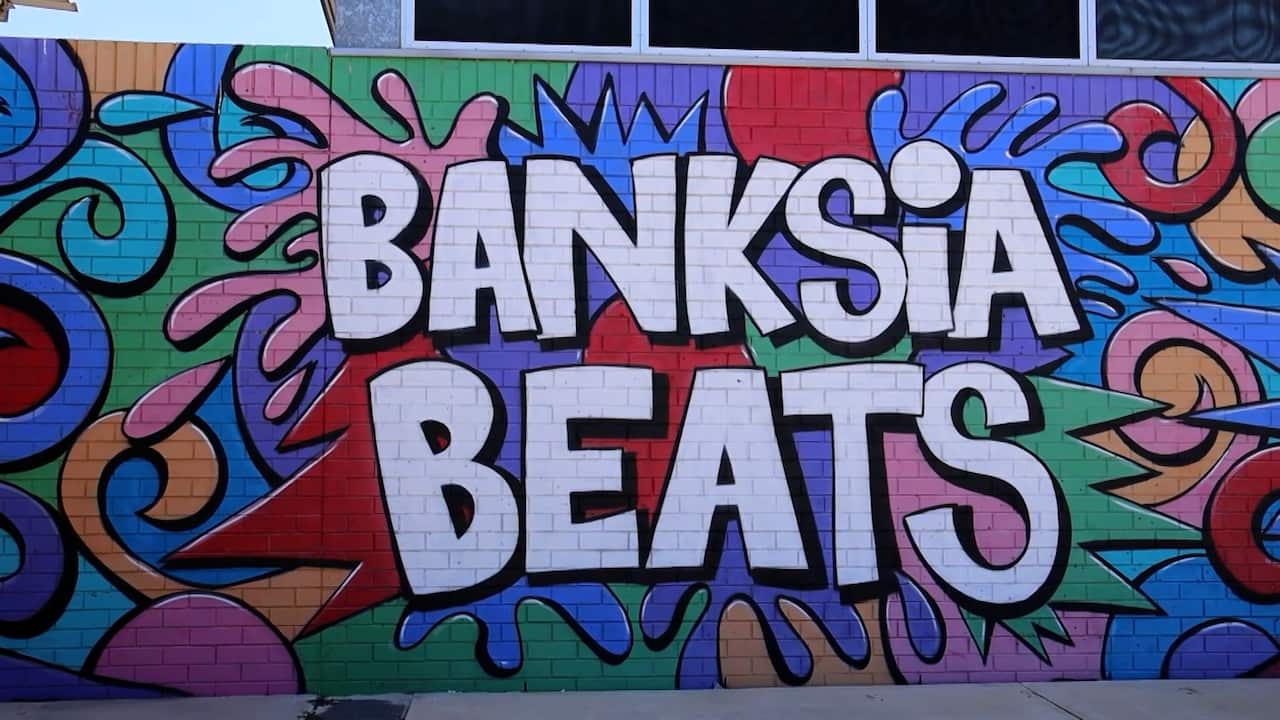
The inmates' lyrics often discuss some of the harder realities of their lives, including addiction, experiences of violence or homelessness, and getting locked up.
Proud Noongar Wongai man Josh Eggington, aka award-winning rapper Flewnt MC, says the program gives the young people some agency over their pasts.
“A big part of what we're doing with young people at the moment is [giving them] ownership over something,” says Eggington, one of the mentor rappers.
“They have control over a part of their life that's an artistic outlet, in a place where they don't have a lot of control.”
Pathways for change
Banksia Beats is intended to create an atmosphere of support and empowerment so detainees can start thinking about a life without reoffending.
The program was founded by Downsyde rapper Scott Griffiths, aka Optamus. His initiative has seen him host visiting academics from abroad, and deliver workshops in New York.
“I think having a career in hip hop, I saw how powerful hip hop culture is and how healing it can be,” Griffiths explains to Living Black.
He says Banksia Beats was an instant hit from the start, not just with detainees, but among prison staff who saw immediate changes in behaviour.
“It was like bees to the honey. I think our program is able to give that one session, that one half-day, that three hours a week that gives a person hope.
“And we know that hope provides a whole bunch of pathways and opportunities for change.”
Push for therapeutic programs
The Western Australian Department of Justice declined an interview but stated that since 2023, more than 300 boys and 100 girls have taken up rap sessions.
According to statistics, Western Australia locked up 746 children convicted or accused of a crime in 2023-24. About two-thirds of those were Aboriginal.
Human rights expert Dr Hannah McGlade is working to hold Australia’s governments accountable over the treatment of incarcerated children, and the age at which they are detained.
“WA has not got a good track record. We know that children are being incarcerated still, from the age of 10, which is well below the standard of international human rights law,” the Kurin Minang woman tells Living Black.
It’s a fight she’s taken all the way to the United Nations, where she highlighted the abusive treatment of children by various state and territory governments around Australia.
“Children under 14 should not be dealt with in the criminal justice system, but rather in a therapeutic holistic manner outside of that system," she said.
“I love the rap program ... that’s exactly the kind of program where you need to meet kids where their interests are.”
Extending support into the community
The producers say that former detainees are also responding well to continuing support programs that guide them once released.
Maori rapper and counsellor Te Hiiritanga Wepiha, aka Rush, developed a program in Western Australia providing the same service he offers inside detention with recording studios in the community.
It has proved so popular that the number of studios is growing to meet demand because, as Wepiha says, young people are often hiding significant trauma beneath tough exteriors.
“Music is a really good way of breaking through that with them,” Wepiha explains.
“We could make a song in there and they could be telling me everything in the song that they would never tell a counsellor ... they had no idea they're being counselled.”
He says the community-based program offers a space to record music for free, while also providing services to help young people not to reoffend, known as 'throughcare'.
“Throughcare is the flashy word for it but I think it's definitely more than that," says Wepiha.
"Trying to stop kids from getting locked up and getting caught up in the system.”
Anthony wants to follow in the producers' footsteps and run rap sessions at community-based recording studios.
“If I do get it up and running, it would be good. I know lot of boys around my area who are genuinely keen on making music,” he says.
“It is a big responsibility but I think that is what I have to take if I want to step up and mature.”
Living Black airs on NITV Mondays at 8.30pm. You can watch this episode now on SBS On Demand.
Australia's premier Indigenous current affairs program, Living Black provides timely, intelligent and comprehensive coverage of the issues affecting Aboriginal and Torres Strait Islander Australians. Read more about NITV

Have a story or comment? Contact Us