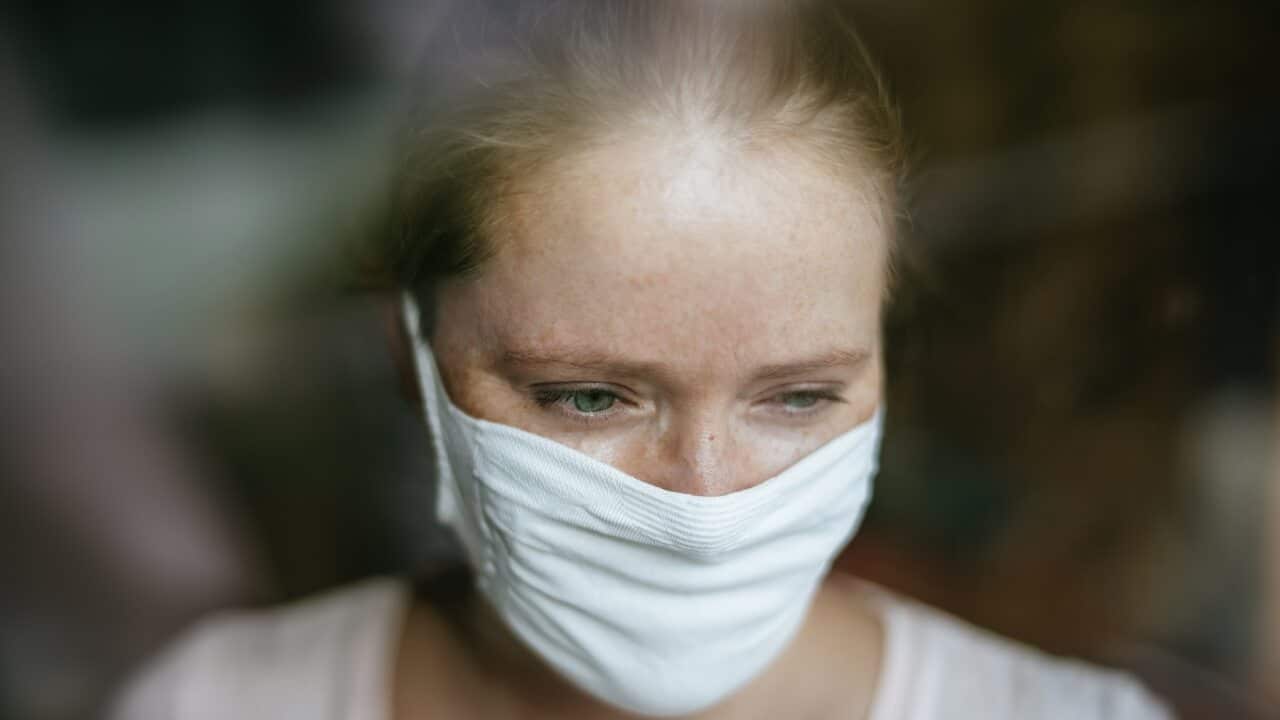

The World Health Organisation says around ten per cent of people infected with the coronavirus will go on to experience ongoing health issues. Symptoms can last for months, and the condition is now referred to as 'long COVID'. Several health experts are warning the long-term impacts of the disease could become an extra burden on the country's health system.
In February last year, the World Health Organisation said people with mild cases of COVID-19 usually recover within two weeks.
Now, over a year later, data shows one in ten continues to experience poor health for months after they first become infected.
It's a phenomenon health experts are calling 'long COVID', and it's being reported in harder-hit countries such as the United Kingdom and the United States, as more evidence emerges.
Dr Stuart Tan, a Sydney physician specialising in trauma and rehabilitation, is among those Australians attempting to better understand the long-term impacts of coronavirus. He says 'long COVID' is more prevalent than expected.
There's emerging evidence from overseas that a large number of individuals who had COVID-19 are still experiencing symptoms months after the acute infection. In fact, there was a systematic literature review that was published a few months ago that put the number at 72.5 per cent. It's an overseas study. There have been studies as high was 87.9 per cent. So it's pretty much more prevalent than one would expect I guess.
Click on the player at the top of the page to listen to the news bulletin in Punjabi.
People in Australia must stay at least 1.5 meters away from others. Check your state’s restrictions on gathering limits.
If you are experiencing cold or flu symptoms, stay home and arrange a test by calling your doctor or contact the Coronavirus Health Information Hotline on 1800 020 080. News and information is available in 63 languages at sbs.com.au/coronavirus
Listen to SBS Punjabi Monday to Friday at 9 pm. Follow us on Facebook and Twitter.