in brief
- The International Monetary Fund has published its latest World Economic Outlook.
- Treasurer Jim Chalmers said the world is entering a "dangerous time" due to the war in the Middle East.
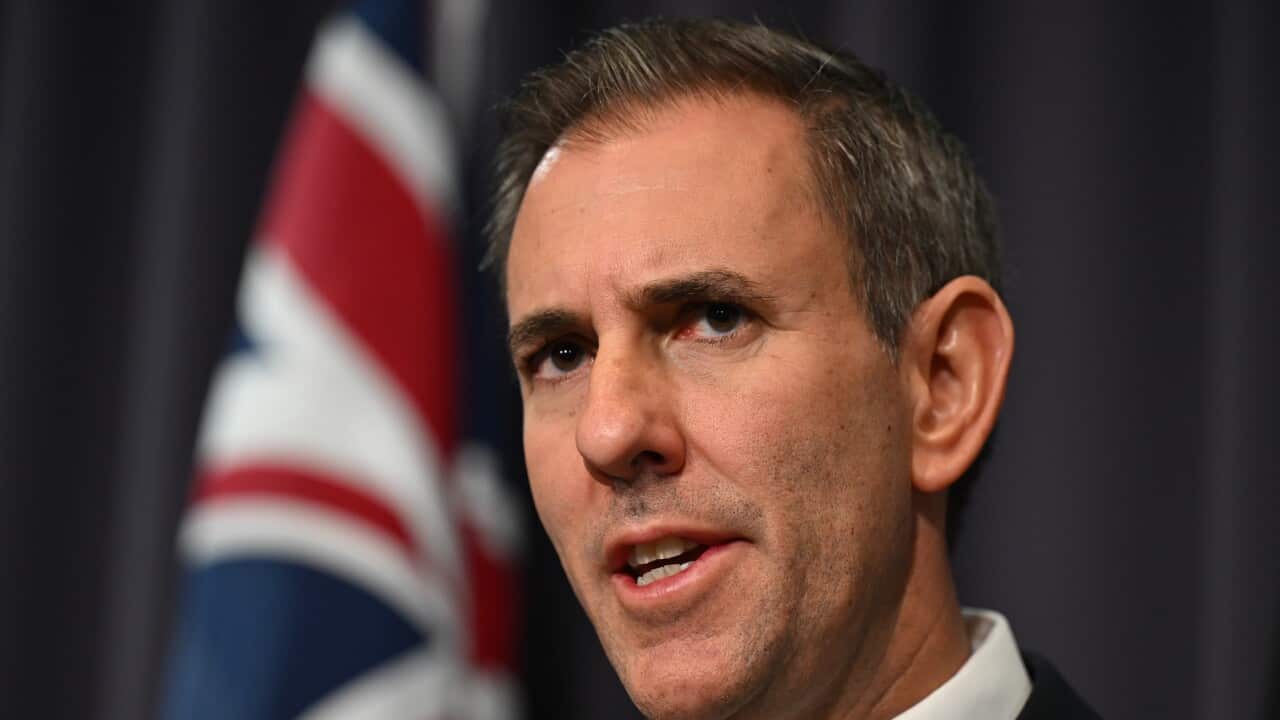
Treasurer Jim Chalmers says the world is entering a "dangerous time" after the International Monetary Fund (IMF) issued a dire warning that the energy crisis caused by the war in the Middle East could trigger a global recession.
In the latest update to its World Economic Outlook, published overnight, the IMF modelled three scenarios which predicted worsening economic growth the longer the energy crisis caused by the closure of the Strait of Hormuz dragged on.
In the worst-case scenario, the global lender of last resort predicted global economic growth would plunge to just 2 per cent in 2026, while inflation would average 5.8 per cent.
Speaking at Brisbane Airport on Wednesday morning before he flew to the United States for meetings with international counterparts, Chalmers said the IMF was "sounding the alarm on some pretty severe scenarios".
"This is a very serious, very dangerous time for the world," he said.
News that makes sense
Your trusted source for staying up-to-date with the world around you. Get free daily news updates and analysis, straight to your inbox.
"From an economic point of view, the end of the war can't come soon enough, but even when the strait is properly reopened, and even when the hostilities formally end in an enduring way, we still expect the consequences of this war in the Middle East to be felt for some time."
Chalmers said Australia was "better placed and better prepared" than many other countries, but it would not be spared from the fallout of the economic shock.
"We are expecting in our own economy, in our own forecast for our economy to slow, and we are expecting inflation to be higher as a consequence of this war," he said.
He said next month's federal budget would focus on "resilience and economic reform" and would be "fairer in inter-generational terms".
The treasurer will travel to the US to attend the G20 Finance Ministers and Central Governors Meeting and the IMF-World Bank meetings.
IMF predicts higher inflation for Australia
In its outlook, the IMF projected that Australia would have one of the highest inflation rates in the developed world as the Middle East conflict dragged on.
The IMF revised its economic growth projections for Australia slightly downward from January.
The national GDP growth rate is expected to come in at 2 per cent in 2026, down from 2.1 per cent, and 1.7 per cent for 2027, from 2.2 per cent.
But Australia's inflation outlook was revised significantly higher, with consumer price growth of 4 per cent in 2026, exceeding most advanced economies, including the US, the United Kingdom and New Zealand.
The IMF had been preparing to revise its growth forecasts upwards before the war.
But the closure of the Strait of Hormuz and attacks on oil and gas facilities halted the positive momentum and raised the prospect of a major energy crisis should hostilities continue, IMF chief economist Pierre-Olivier Gourinchas said.
Under a severe scenario, in which an extended conflict results in more damage to energy infrastructure, global growth would fall to 2 per cent in 2026 and perilously close to a global recession.
— With additional reporting by the Australian Associated Press.
For the latest from SBS News, download our app and subscribe to our newsletter.







