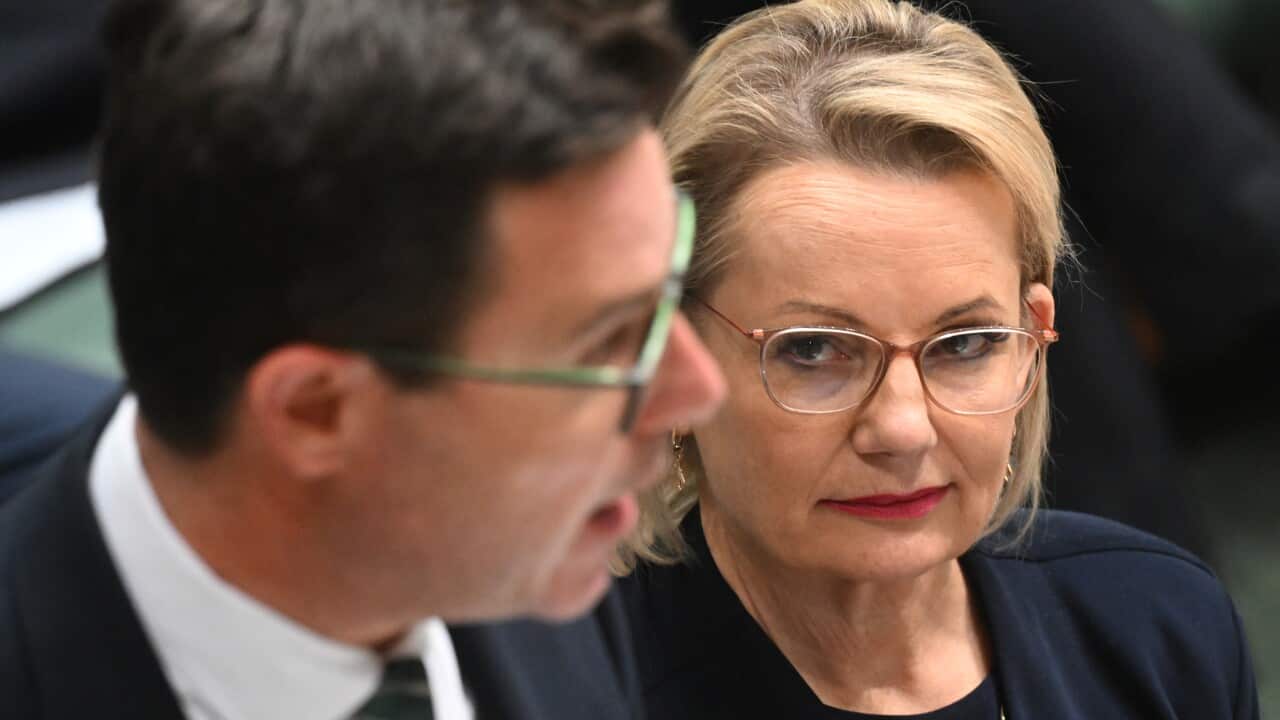
The Opposition has fractured over Labor's anti-hate laws after Liberal amendments created a pathway to pass the legislation, despite criticism that it could stifle free speech.
The suite of reforms, introduced in response to the Bondi terror attack, is likely to pass the Senate late on Tuesday evening after securing Liberal support, but it will have to return to the lower house on Wednesday morning to have the changes rubber-stamped.
It's unclear how National Party senators will vote after most party members chose to abstain from voting in the lower house, except for MPs Llew O'Brien and Colin Boyce, who voted against the bill.
Nationals leader David Littleproud said he would put forward the party's changes to prevent "unintended consequences".
Opposition leader Sussan Ley claims the Liberals have "fixed" the legislation, with changes that "close loopholes and restore clarity and accountability".
News that makes sense
Your trusted source for staying up-to-date with the world around you. Get free daily news updates and analysis, straight to your inbox.
The Liberal proposal is understood to include a stronger crackdown on extremist preachers and dangerous hate groups.

The Greens have said they would not back the hate speech legislation due to the effect it could have on political commentary, including protests.
"What we've now seen in the last 24 hours is a dangerous bill being made even more dangerous," party leader Larissa Waters said.
Home Affairs Minister Tony Burke has defended the laws, saying they would damage "racist bigotry", not free speech.
"I don't accept that racist bigotry is within the free speech domain, I just don't," he told ABC News.
"I will go through my whole life in Australia without receiving racist bigotry, but that's not true for a lot of Australians. Some of those in the free speech brigade are people that will never have a racist word said against them."
However, he also acknowledged that the reforms were "not as strong as the government wanted them to be".
Labor was forced to split the hate crimes laws from the gun reforms to secure support from the Liberals and Greens for the separate pieces of legislation.
The government also dropped racial vilification provisions from the anti-hate laws on the weekend. Those provisions would have criminalised the incitement of hatred towards another person or group on the grounds of race, colour, or national or ethnic origin.
What are the Coalition's proposed amendments?
SBS News understands the Liberals are seeking several changes, including expanding a new aggravated offence for extremist preachers and leaders to include visiting speakers who spread hatred or violent extremist views.
Under the government's proposal, a religious official or spiritual leader found advocating or threatening violence against groups, in their preaching or religious instruction capacity, will face up to 12 years imprisonment.
The hate speech laws introduce a framework that will allow the home affairs minister to prohibit groups found to be engaging in or advocating hate crimes based on race, nationality or ethnic origin.
The provisions have a high bar — requiring the director-general of the Australian Security Intelligence Organisation to write to the home affairs minister to prohibit a group. A listing will also require the attorney-general's consent.
Once a group is prohibited, it will be a criminal offence to be a member of the group, participate in its activities, engage in recruitment or training, or provide support or financial assistance to it.
The Opposition is seeking an amendment that would require the Coalition leader to be consulted over the listing and delisting of extremist organisations, saying it was necessary to have a bipartisan approach to such national security issues.

The Liberals want new powers reviewed every two years by the Parliamentary Joint Committee on Intelligence and Security, tightened hate crime definitions and for new migration changes to be used decisively to remove extremists in the community.
Littleproud confirmed he "sees merit" in changes to the Migration Act, which will expand the power of the home affairs minister to refuse or cancel visas on several grounds, including if individuals have previously spread hatred or extremism publicly.
"We also are sympathetic and want to lean into the intent of the banning of hate groups, but we've got to make sure there's no unintended consequences in terms of the legislation, and how that interacts and how far-reaching that goes," he told ABC's 7:30 on Monday night.
Nationals Senator Matt Canavan intends to vote against the package of reforms, claiming the framework to ban radical groups like Islamist organisation Hizb ut-Tahrir and the neo-Nazi National Socialist Network would give the home affairs minister and the Australian Federal Police (AFP) undue powers.
"I've got serious concerns that the provisions here to ban entire organisations, make them persona non grata, are far too broad and give particularly the minister, the AFP minister in this case, way too much power to ban groups that go far and beyond organisations that would be encouraging or supporting violent acts in our country," he told ABC radio on Tuesday morning.
Gun reforms to pass with Greens support
Burke introduced the government's gun reforms to parliament, which will limit the number of firearms during a two-year buy-back period, review licensing requirements and create stricter security checks.
Burke explained how the implementation of the laws would have prevented licences for the two gunmen who opened fire near a Hannukah event in Bondi, killing 15 people.
"The father would have been ineligible because he was not a citizen. The firearms that they were using would not have been available to them. And the son who didn't have a firearms licence in any event, had he tried any intelligence holdings with respect to him would have formed part of the licensing decisions," he said.
"No-one is pretending that dealing with guns deals with everything that happened at Bondi, but it does deal with the method, and we must deal with the method."
The gun reforms have the support of the Greens in the upper house and are expected to pass on Tuesday.
For the latest from SBS News, download our app and subscribe to our newsletter.







