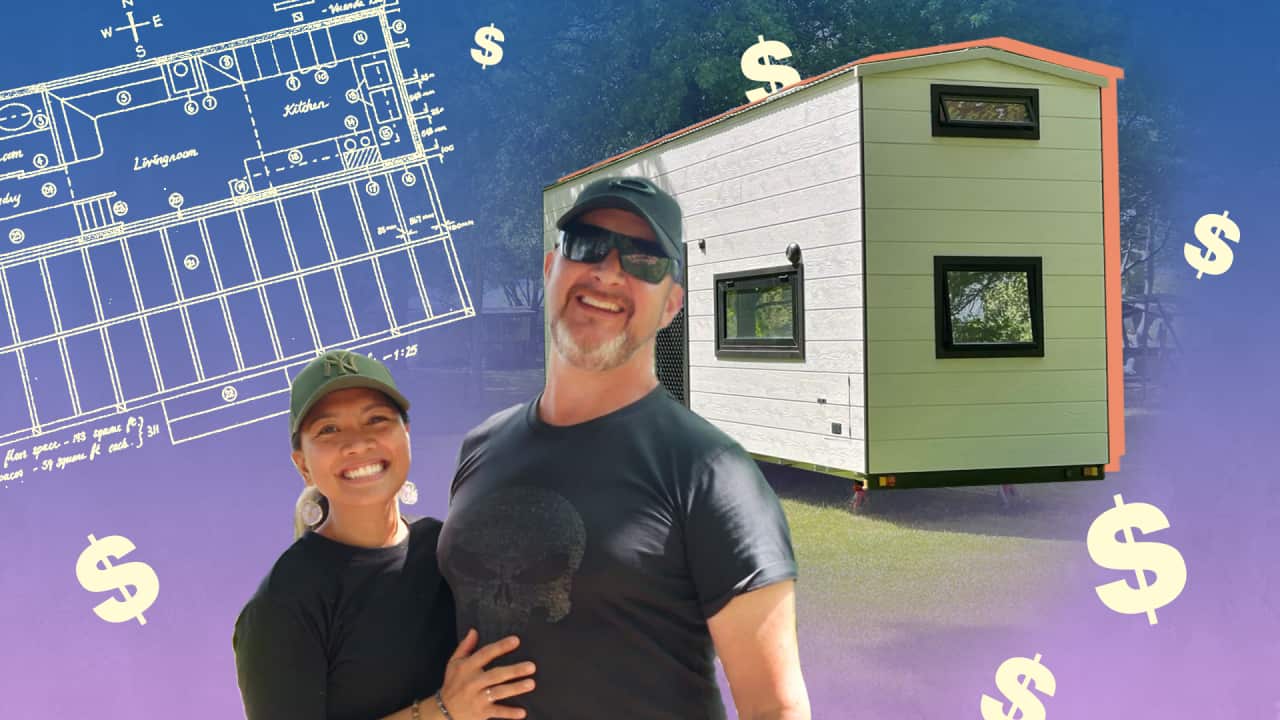
A sprawling property with a white picket fence was once a symbol of success, but for Lizzie Villestas this version of home ownership is a trap, not a triumph.
"For many, success is measured by the square footage of your property and for us, we began to see large homes as a different kind of trap; one that comes with massive debt and endless maintenance," Villestas told SBS Chinese.
For more than three years, she has lived in a tiny house measuring just eight metres long and 2.5 metres wide, or 20 square metres. The average floor area of a new house in Australia was 232.3 square metres in 2021/22, according to the Australian Bureau of Statistics.
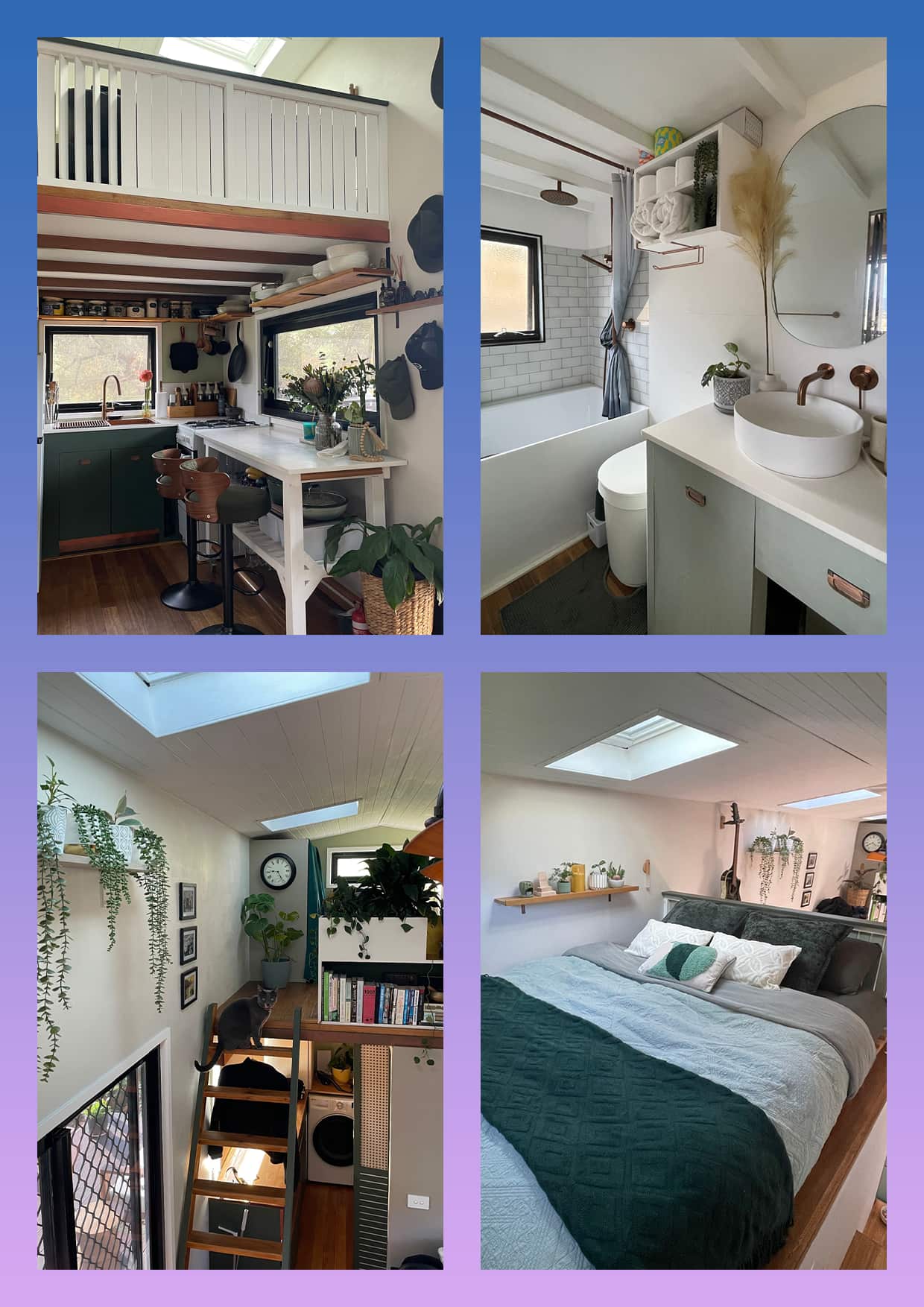
Villestas' space may be small, but it's been thoughtfully designed, featuring a deep green and timber colour palette, akin to the surrounding bushland. It's even fitted with a study loft, bathtub and an indoor fireplace.
A labour of love, the property was constructed by Villestas and David Menhennett over 18 months and cost about $130,000. The couple now live in north-east Victoria and can relocate their tiny house on wheels across Australia, as desired.
News that makes sense
Your trusted source for staying up-to-date with the world around you. Get free daily news updates and analysis, straight to your inbox.
"It was a virtual no-brainer ... most Australians are looking down the barrel of now ... a 30-year mortgage of up to a million dollars to own an average home," said Menhennett, who previously lived in Hong Kong for around 20 years.
Compounded by Australia's housing crisis, experts believe demand for tiny houses is surging. But while these properties promise big savings, they're often associated with regulatory red tape and financing complexities.
A dwelling, a vehicle or both?
Driven by a desire to achieve financial freedom, Danielle Lester decided to adopt tiny house living two years ago.
She now serves as president of the volunteer-run Australian Tiny Homes Association (ATHA) but admits it's difficult to gather robust data about the number of tiny homes in Australia.
"Our membership base doesn't fully represent the amount of people who are living in tiny homes around Australia, and we find because of the regulatory complexity, a lot of people are choosing to do it under the radar, at their own risk," Lester told SBS News.
"Obviously, people have got no other option at the moment but to find a roof to put over their heads."
In part, that's because there's no official national definition for what constitutes a tiny house in Australia. Instead, they are regulated by federal, state and local government authorities — whose planning policies can often overlap and contradict each other.
Griffith University emeritus professor Paul Burton said tiny homes are also classified differently depending on their design.
That includes tiny houses fixed to the ground, which is "like a conventional house only smaller".
Burton told SBS News the image that usually comes to mind when people think of these properties is a tiny house on wheels:
"So, that's something that can be hitched to a truck or car and moved a bit like a caravan. They are treated under a lot of legislation or local laws passed by councils ... like a caravan, even though they're not really the same."
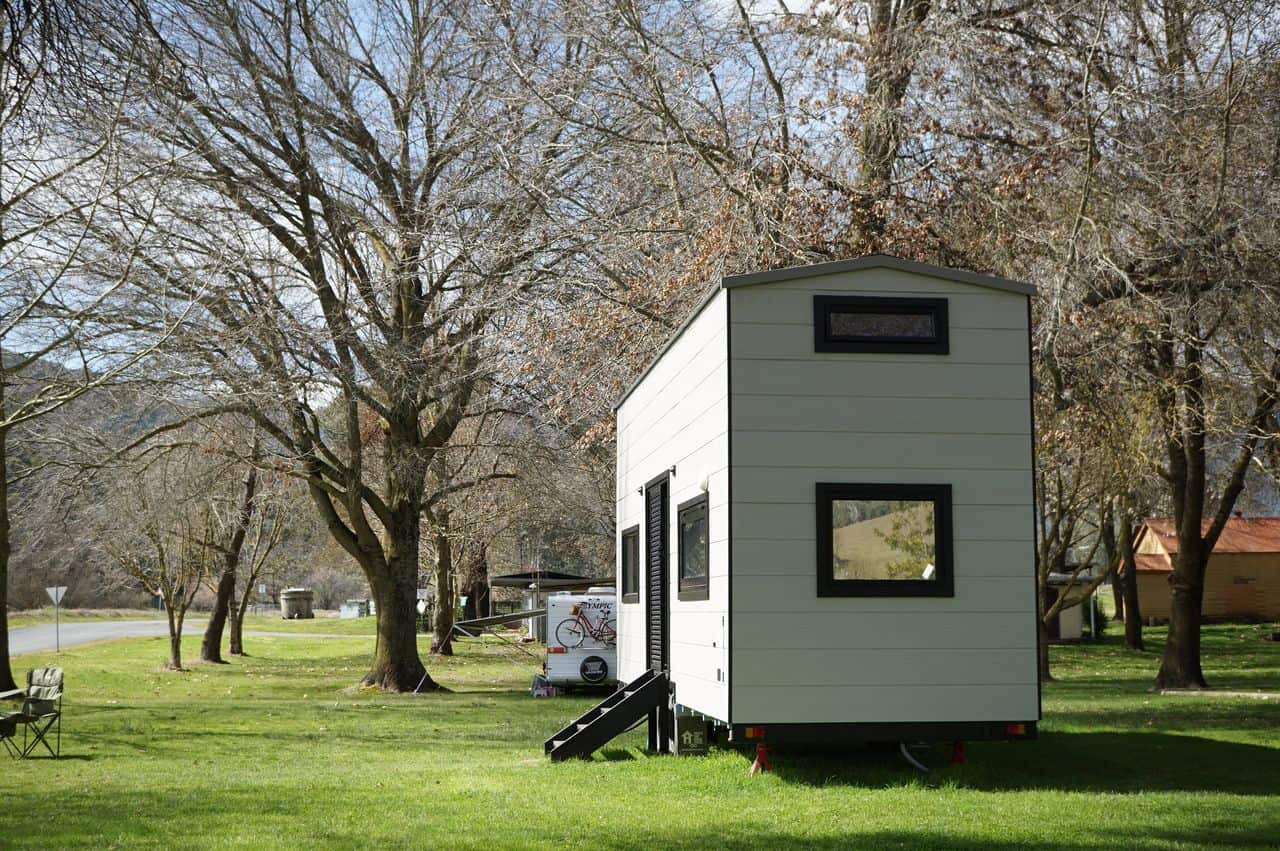
In NSW, one caravan can legally be installed on a property without council approval if it is connected with and occupied by members of the owner's household.
If a person is staying longer-term on land they do not own, they typically need council approval. In NSW, this usually involves submitting a development application and, in some cases, engineering certificates about the structural safety of a tiny home on wheels.
In June, Shellharbour City Council on the south coast of NSW announced it would take a different approach. It has adopted a two-year trial program which removes the need for a development application for tiny houses used as rental accommodation.
In 2025, Bega Valley Shire Council — also in NSW — issued a compliance order asking that a tiny house on wheels it deemed unauthorised be demolished. Owners of the tiny house have since lodged an appeal through the NSW Land and Environment Court.
Burton believes local council approaches are "inconsistent" and said ATHA is working on a national advocacy strategy to "help unpack the complexity of the tiny house world".
Financing for tiny houses
Jamie Mitchell is a senior broker at Great Escape Finance and told SBS News that because tiny houses on wheels are not classified as dwellings, they are not eligible for home loans.
He said another "hurdle" is that not all tiny houses follow the same construction codes, so for a long time lenders wouldn't take security over the property.
"There's no guarantee that the person who built the tiny home has done a good job. So, there are definitely builders that have been around and now have a good reputation. But from a lender's point of view, they're still quite risk-averse."
Mitchell said his company now works with several personal and commercial loan lenders to enable financing for tiny houses. Generally, the maximum loan term for a personal loan is up to seven years.
Last year, Commonwealth Bank also announced it would become the first major bank to offer a construction loan for prefabricated houses.
When asked whether demand for tiny house financing has grown in recent years, Mitchell laughed and admitted, "I'm just so swamped at the moment, it's just ridiculous."
"To give you an idea, our record for the amount of turnover that we did in a month historically, in March this year we more than doubled that ... and every month since has been pretty close to what that original record was."
Mitchell's clients were typically single women "that might have been divorced and were heading towards retirement". Now, the demographic has shifted to include more young families and single professionals planning to live permanently in tiny houses.
A risky investment?
According to the ATHA, a professionally built tiny house on wheels can cost between $80,000 and more than $170,000 depending on the size, design and customisation of the property.
But unlike traditional houses, which tend to increase in value after purchase, Burton cautioned that tiny houses on wheels can depreciate over time.
"When we talk about increasing house prices, what's typically increasing is the land value, not the structure itself ... so, a tiny house on wheels unless it's very special ... it's probably going to diminish or at best hold its value."
Lester believes the amount she is paying to rent land for her tiny house is significantly cheaper than rental accommodation she has experienced in the past.
"Not only that, I've got full control over my environment, my living situations, my surroundings," she said.
"This cost of living crisis affects everybody, landlords included, which can have knock-on effects on their ability to maintain your property in an adequate way. So, I think savings to be had from living in a tiny house and renting land are significant."
For Villestas, who previously lived in Hong Kong in a small apartment, tiny living is not just a cost-saving measure, but a lifestyle choice.
"There is a growing community that is going towards this alternative living because of the pressures that the housing crisis is causing at the moment. It just gives the future generations a little bit of hope, to be able to own ... buy and own a property.
"You've just got to have an open mind if you want to live the way that we live, but it is certainly possible."
For the latest from SBS News, download our app and subscribe to our newsletter.







