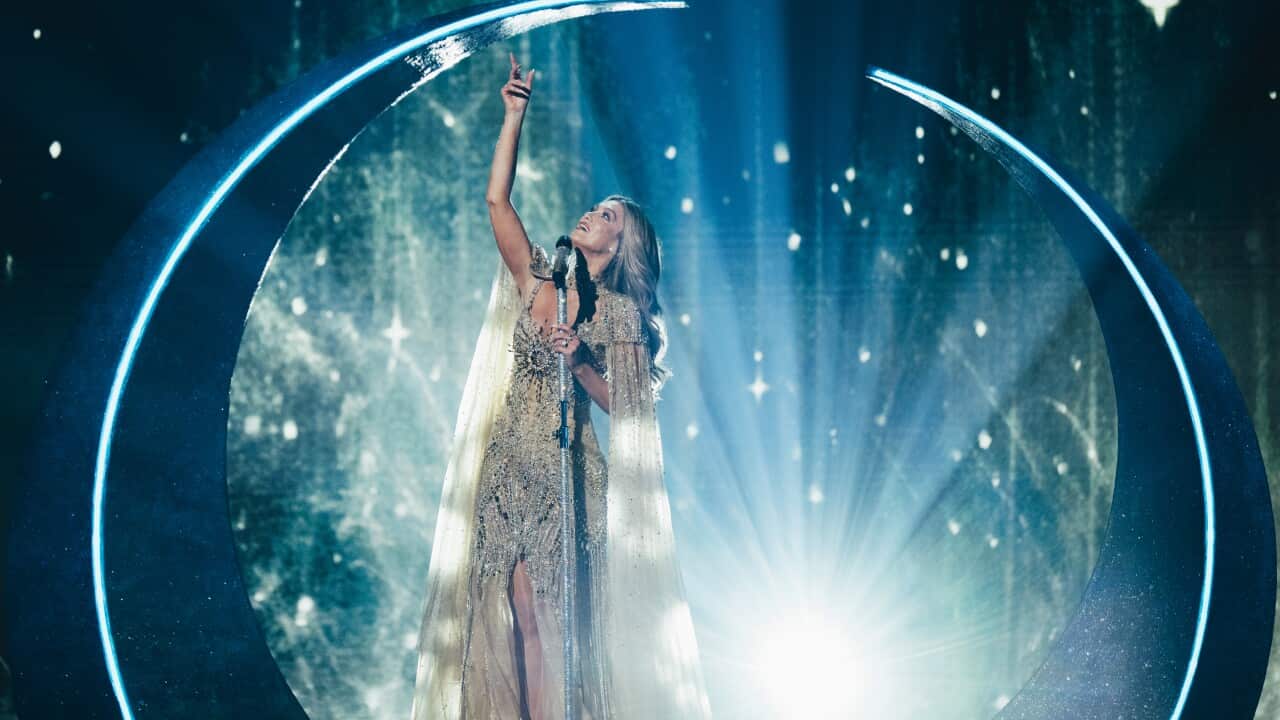
On the eve of the Eurovision grand final, Delta Goodrem has deflected questions about boycotts over Israel’s participation, saying her role is to believe in the "healing power" of music — not politics.
Goodrem progressed to the song contest’s grand final after impressing judges during Friday morning’s semi-final performance for her song, Eclipse.
She is among the favourites to win Sunday’s grand final.
In an interview with SBS before her semi-final performance, Goodrem addressed the boycott of this year's contest, the pressure to represent Australia, and called for Australia to host the song contest should she win.
News that makes sense
Your trusted source for staying up-to-date with the world around you. Get free daily news updates and analysis, straight to your inbox.
'We're singing the same song'
This year’s contest is smaller than usual, with Iceland, Ireland, the Netherlands, Slovenia and Spain — the latter of which typically has a guaranteed place in the grand final as one of the contest's largest financial contributors — all withdrawing in protest at Israel’s continued inclusion amid the ongoing conflict in Gaza.
An assault by Hamas on 7 October 2023 killed 1,200 people, according to Israeli tallies. More than 72,500 Palestinians have been killed in Israel's retaliatory action in Gaza since, according to local health authorities.
Asked directly about the boycott, Goodrem declined to take a position, instead pointing to her long-held belief in music as a unifying force.
"When you come to my shows, I tell you to leave everything outside the door — come in here and we're singing the same song," she said before her semi-final performance.
"From the day I got into music, I have always believed in the power of music and its healing qualities.
"That's really my focus and that's really what I have wholeheartedly believed in from day one — that's kind of where I stay true on my north star."
SBS — an associate member of the European Broadcasting Union (EBU) and Australia's official Eurovision broadcaster — has continued its participation in and coverage of the contest this year, arguing that withdrawing would compromise its editorial independence and impartiality.
"SBS recognises and respects the deeply held views and concerns about the war in the Middle East and its impact," an SBS spokesperson previously said.
"Our responsibility is to provide comprehensive, trusted and impartial coverage for Australians across our network, and we will continue to do so."
The Eurovision Song Contest maintains that it is "strictly non-political" and not intended to be used as a platform for "political expression, activism, controversy or the promotion of external causes or agendas".
Russia was excluded from the contest after its full-scale invasion of Ukraine in 2022.
A favourite to win
Australia hasn’t made it to a Eurovision grand final since 2023, when it was represented by Perth-based synth-metal band Voyagyer, but optimism is high.
Before her semi-final performance, Eurovision World — which aggregates betting odds from multiple sites — placed Goodrem as the fourth most likely to win the competition, behind Denmark, Greece and frontrunner Finland.
After her performance, she has skyrocketed to second most likely to win, with Finland still in front.
The pressure isn’t lost on Goodrem, but she says she’s focused on representing Australia as well as she can.
"I could never have imagined if you asked me two years ago that I would be on this journey right now," she said.
"You can’t predict anything that goes around this amazing world. But all I know is I’m here in full force and with my country, and I’m representing Australia.
"That’s what I’m here for. I’m here to fly the flag really proud and really loud today. That’s my job."
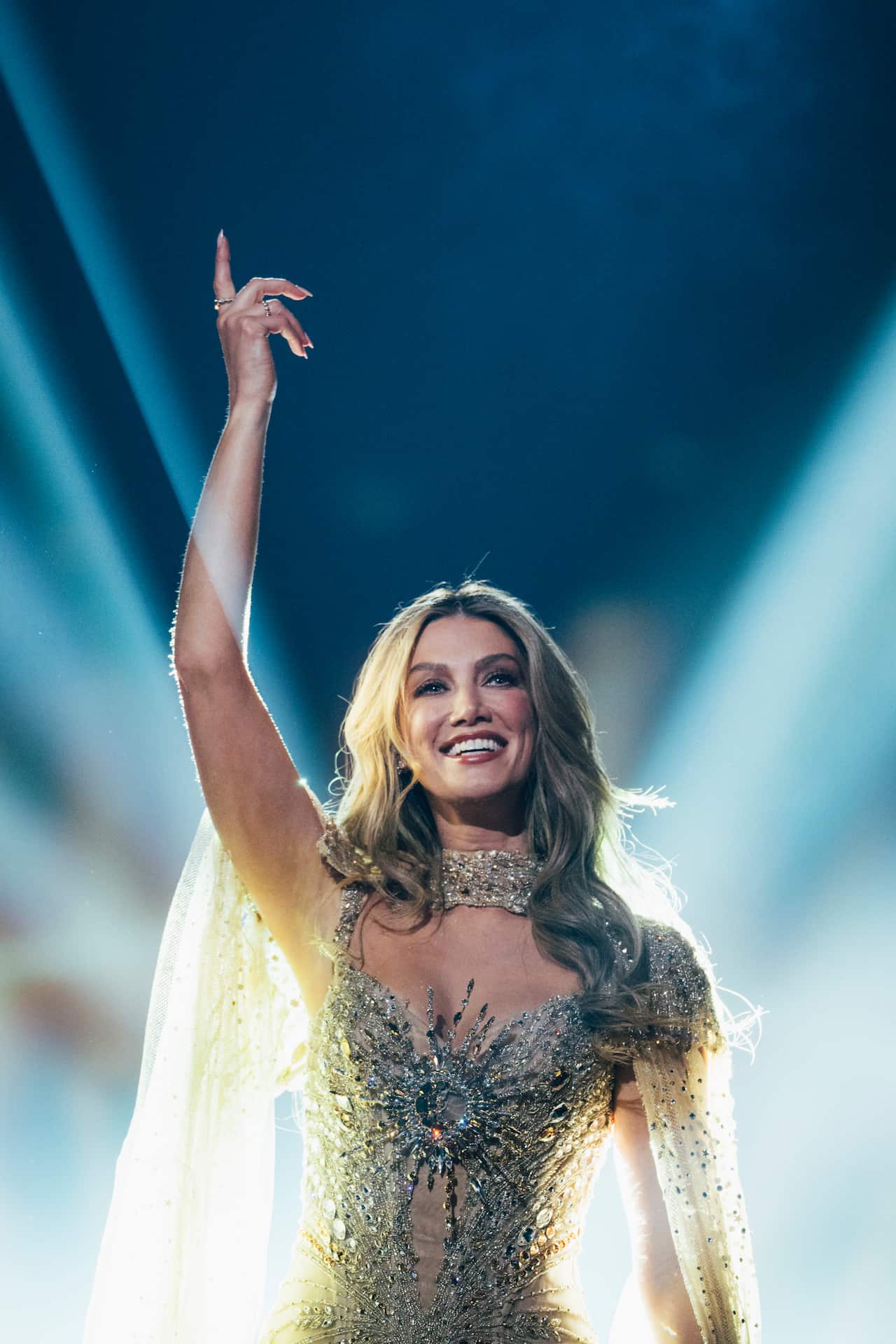
Part of that job, it turns out, involves standing on a platform that launched her to a considerable height in a showstopping finale to her performance — and one that initially had her rattled.
"When we were first testing it, I was definitely like, 'Woah, it’s a bit higher than I realised'," she said with a laugh. "But when you’re singing, you’re not remotely aware of it."
"Then all of a sudden you’re like, ‘Oh, I am quite high now!'"
Goodrem says she has also felt the presence of her late mentor Olivia Newton-John throughout the campaign. Newton-John also competed in Eurovision in 1974, representing the United Kingdom.
"It was a very interesting journey to even be here. Last year, I kept getting drawn over to the UK and I kept thinking, 'Why?'" Goodrem said.
"I feel like she might've had something to do with it. I hope she's watching over us and is proud of what we’re doing."
Australia should host Eurovision, Goodrem says
Australia has been part of the competition for 11 years, originally invited via a wildcard before being formally welcomed into the Eurovision family.
Typically, the winning country hosts the following year’s contest — though whether that would apply to Australia remains up in the air.
Goodrem, for her part, has no doubt.
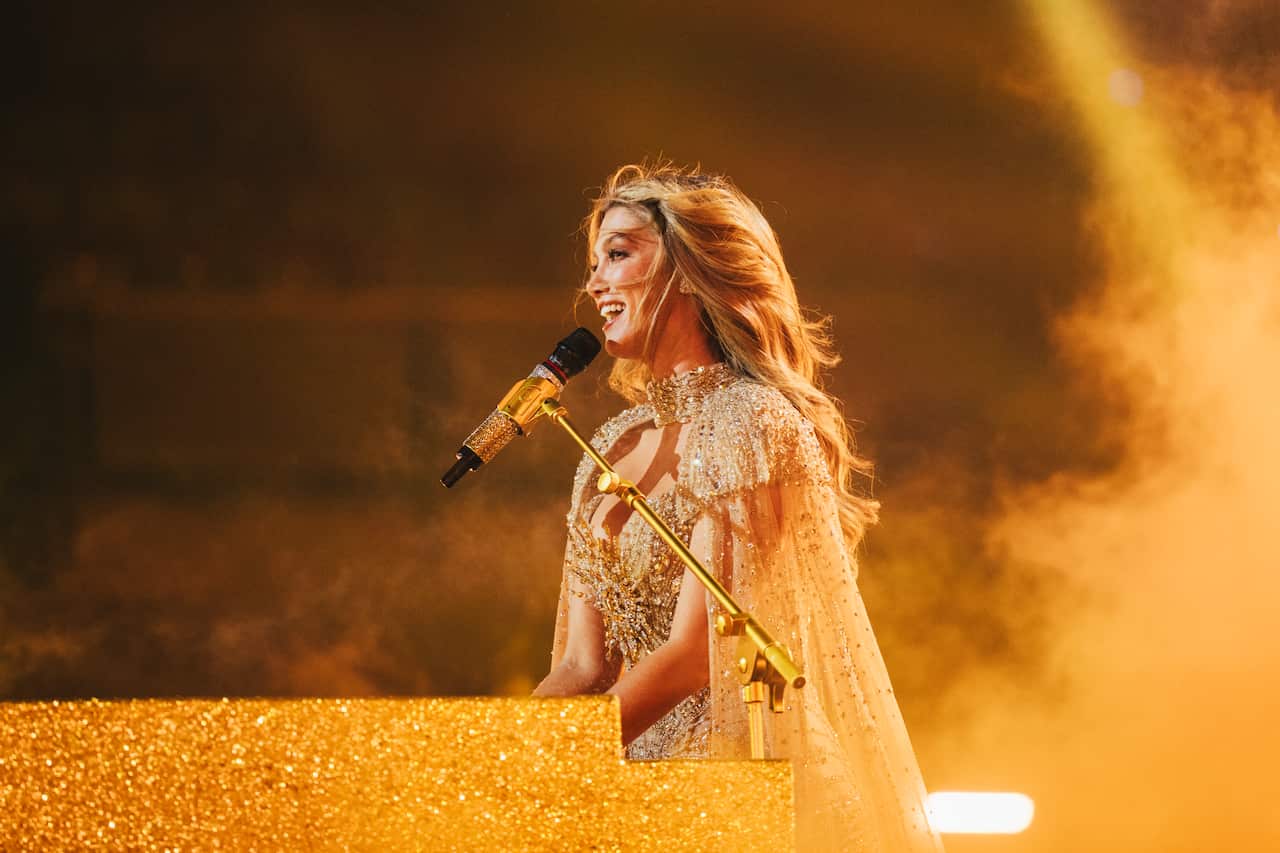
"Australia!" she said, when asked where the contest should be hosted if she were to take home the top prize.
"We had to get up [at four in the morning] and we’re very passionate about Eurovision," she said. "I’m not into the logistics just yet. I have no idea of the operational side."
"But I do know we would be a great host ... We’d have everyone over for barbecues.
"I would be so excited to be able to show Australia — but if that moment should come, I’ll let you know what the protocol is."
For the latest from SBS News, download our app and subscribe to our newsletter.







