in brief
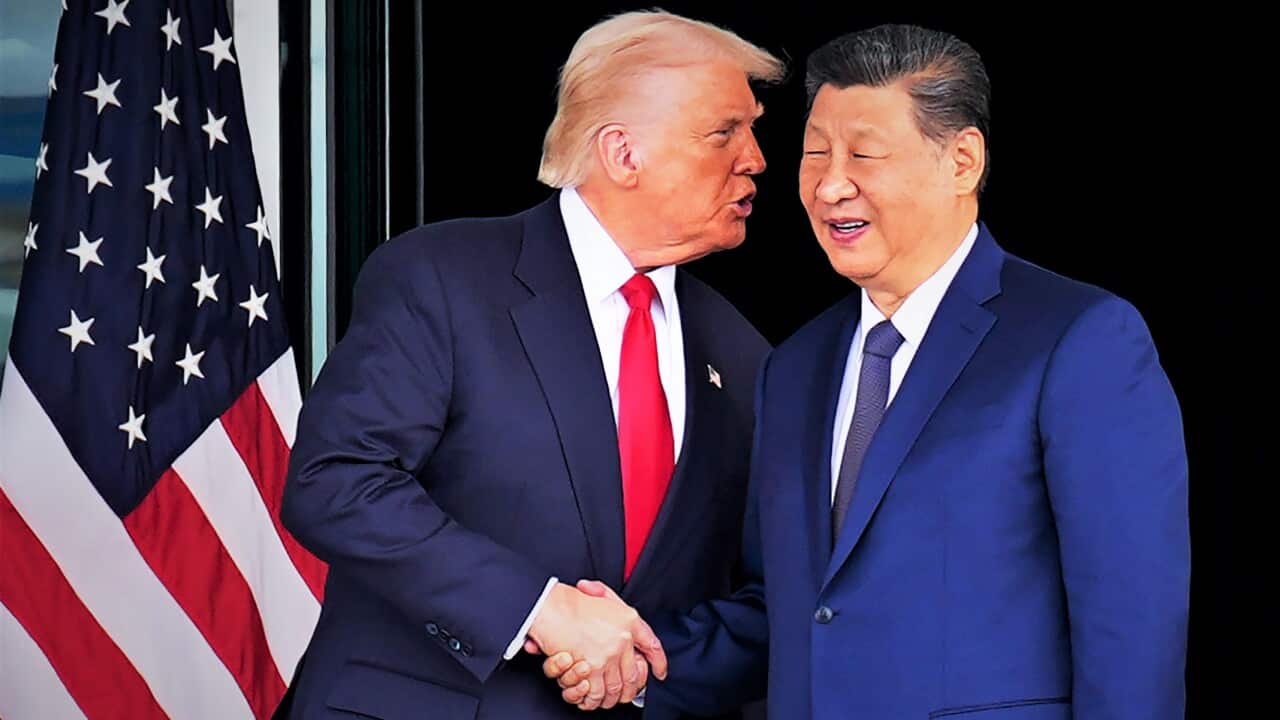
- Donald Trump will meet with Xi Jinping to discuss Iran, Taiwan, technology, and arms sales during a two-day visit.
- The US entourage will include tech leaders as the "bromance" between Trump and Elon Musk resumes.
United States President Donald Trump is set to visit Beijing on Thursday for a historic meeting between the world leaders, the first on Chinese soil in nearly a decade.
The 14 to 15 May meeting had originally been scheduled for March. However, US-Israeli strikes on Iran, which sparked the war in the Middle East, caused a delay in proceedings.
On the agenda is a normalisation of trade relations following a tariff war Trump announced last year, which saw import taxes rise to as high as 145 per cent. The fate of Taiwan is also likely to be discussed, as is the possible regulation of artificial intelligence.
China claims Taiwan as its own territory, which should be taken by force if necessary. Taiwan says it is an independent country and will defend its freedoms and democracy
The war in the Middle East is, however, likely to dominate. China is reportedly very concerned about the prospect of a global recession as the conflict continues to drag on, impacting energy supplies and trade.
News that makes sense
Your trusted source for staying up-to-date with the world around you. Get free daily news updates and analysis, straight to your inbox.
The US is likely to request assistance from China — as the major buyer of Iranian oil — in pressuring the Middle Eastern nation to open the blockaded Strait of Hormuz.
Analysts have suggested that the meeting is unlikely to result in any major breakthroughs, although a pause in tariff escalations could be extended beyond the current October deadline.
Trump "kind of needs China more than China needs him," Alejandro Reyes, a professor specialising in Chinese foreign policy at the University of Hong Kong told the Reuters news agency.
"He needs a kind of foreign policy victory: a victory that shows that he is looking to ensure stability in the world and that he's not just disrupting global politics."
The tech entourage
A White House official has confirmed to US broadcaster Bloomberg that Tesla boss Elon Musk and outgoing Apple CEO Tim Cook have been invited to accompany Trump during his visit to Beijing.
The invitation has been extended to other leaders in technology and finance, with representatives from asset manager BlackRock, investment bank Goldman Sachs, semi conductor coporation Qualcomm, Boeing, Meta Platforms, Mastercard, and Visa among the more than a dozen business officials requested.
The executives from some of the US' most powerful business groups could be there to encourage trade normalisation and potentially make deals with Chinese producers.
Exports of rare earth minerals to the US were temporarily halted during the trade war last year, materials that are essential for the output of US technology firms.
On again, off again
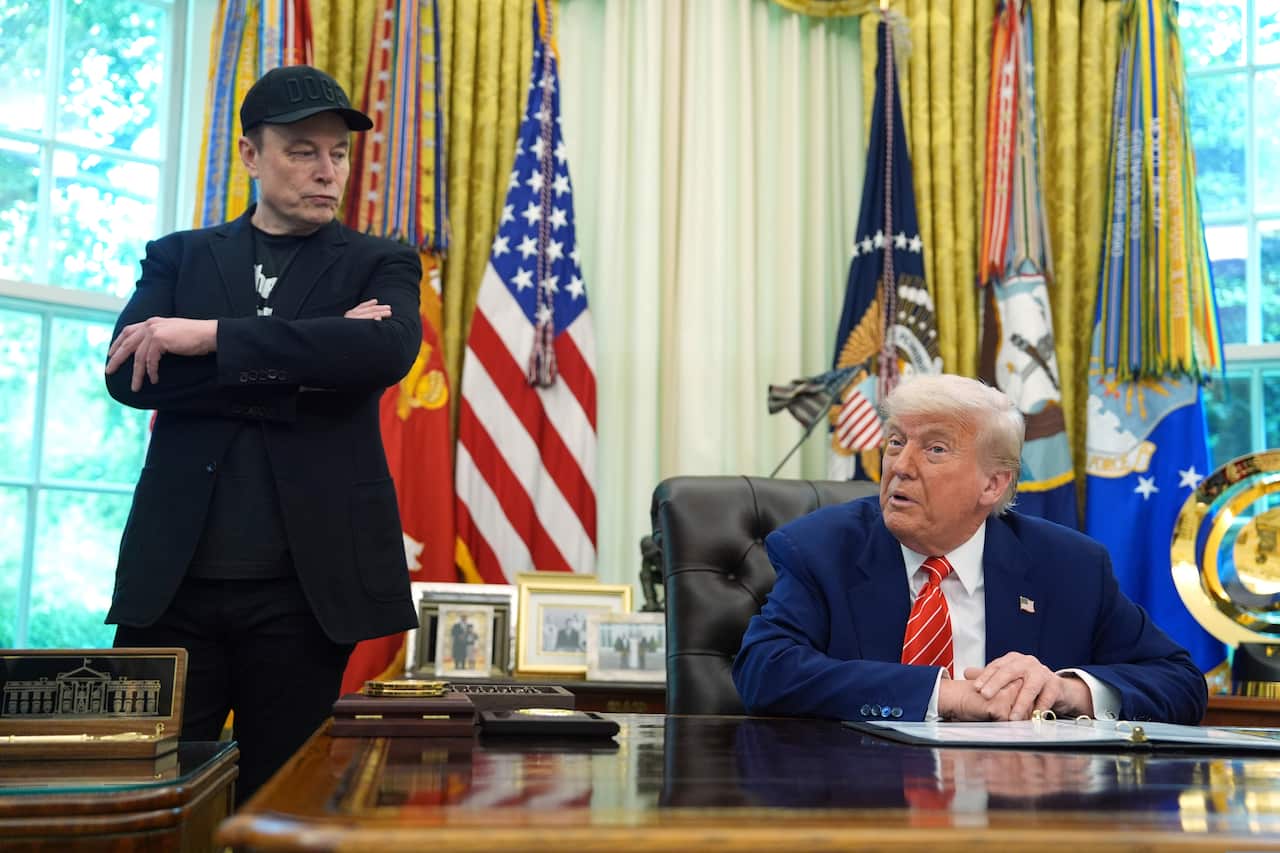
Musk, the outspoken billionaire who once headed Trump's so-called Department of Government Efficiency, has yet to confirm whether or not he will be attending.
Still, the invitation suggests another shift in the thawing relationship between Trump and the world's richest man who departed the White House in May last year.
After 130 days as a special government employee, the pair fell out in a highly public war of words.
Musk expressed fury over Trump's signature "one big beautiful bill" funding package passed last year, describing it as a "disgusting abomination".
Trump stated that Musk was a "trainwreck" and suggested he had an issue with drug use, later telling a rally that Musk ought to return to his native South Africa.
Musk then posted online, without evidence, that Trump was "in the Epstein files". The message was since deleted.
Following the spat, Musk briefly floated the idea of forming his own political entity, the America Party, to challenge incumbent Republicans. Since then, however, their relationship appears to be on the mend.
In September, Musk and Trump were seen together at the memorial service for the slain right-wing podcaster Charlie Kirk. Two months later, Musk attended a dinner at the White House for the Saudi Crown Prince.
He attended a further dinner at the US leader's private Mar-a-Lago residence at the start of this year, posting a photo of the event with the first lady captioned "2026 is going to be amazing".
Since the fallout, Musk has resumed his funding for Republican candidates. The world's richest man spent at least US$250 million ($345 million) boosting Trump during the 2024 election and has so far this year spent at least US$30 million ($41.47 million) in support of right-wing groups ahead of the November midterm elections, according to US political publication, The Hill.
"America is toast if the radical left wins," Musk wrote on his social media platform, X, in January in response to a message about him going "all-in" on funding Republicans during the midterms.
"They will open the floodgates to illegal immigration and fraud. Won’t be America anymore."
Action on Iran
Trump's war on Iran is expected to weigh heavily on the upcoming elections, as US voters are now paying up to 52 per cent more for petrol than before the conflict.
A Reuters/Ipsos survey last month found that more than 60 per cent of Americans disapprove of the war with Iran.
Reopening the Strait of Hormuz and normalising global trade within the next few months is critical to avoid serious economic consequences, as the Reserve Bank of Australia has recently made clear.
However, China's decreasing reliance on oil — through the expansion of solar power generation and electric vehicles — as well as its vast reserves, has made it less vulnerable to disruptions.
Musk has long been a fan of China's electrification approach and encouraged other countries to follow suit.
In return for assistance in the Middle East, China is likely to want America to soften its stance on Taiwan.
Currently, US policy is not to support the independence of the island territory that China claims ownership over, but Xi is reportedly keen for the US to shift the wording toward opposing the concept.
While some fear a bargain that could embolden China to take Taiwan by force, even a nuanced change in Washington's wording would raise anxiety about the commitment of Taiwan's most important backer, which would reverberate across other US allies in Asia, including Australia.
Wu Xinbo, a professor at Fudan University in Shanghai who serves on the policy advisory board of China's foreign ministry, told Reuters that Trump should make clear that he "won't support independence or take actions that encourage a separatist political agenda".
— With additional reporting by Reuters.
For the latest from SBS News, download our app and subscribe to our newsletter.







