In Brief
- Iran said it had received US peace proposals via intermediaries.
- Trump has threatened to attack Iran's energy and desalination plants, along with Kharg Island.
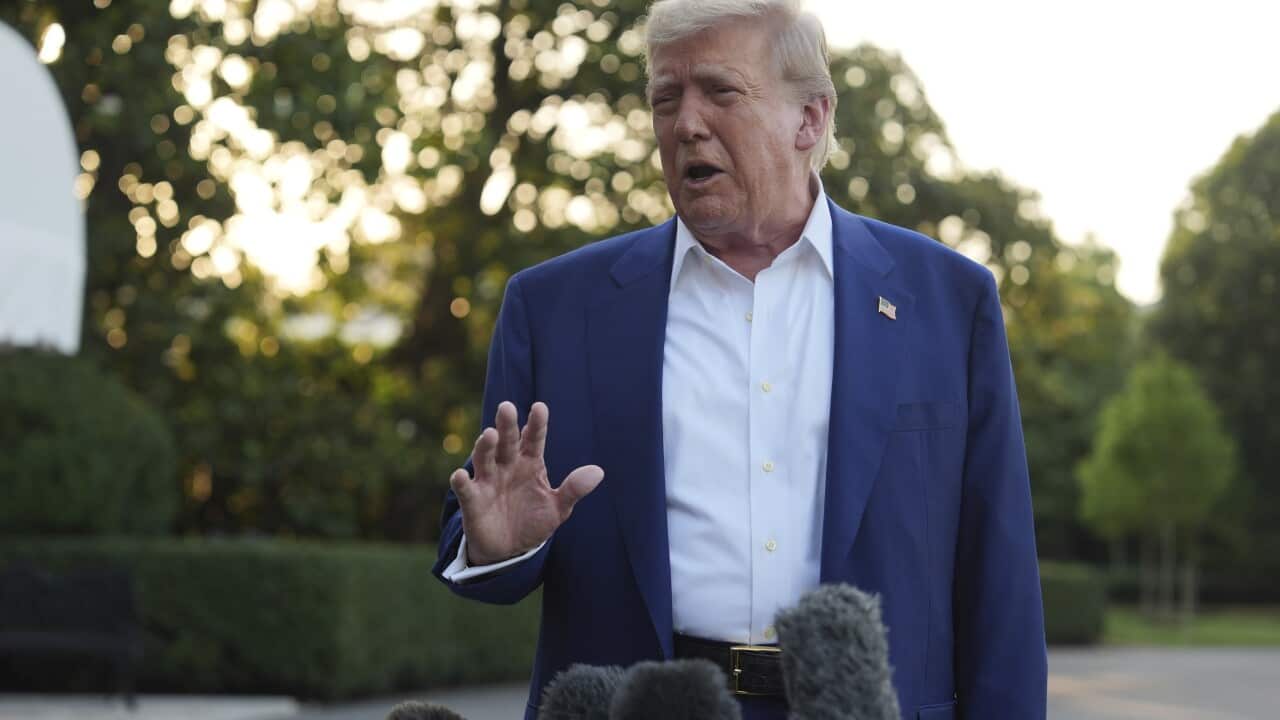
United States President Donald Trump has warned that Iran's energy plants and oil wells would be obliterated if it did not open the Strait of Hormuz, after Iran described US peace proposals as "unrealistic" and fired waves of missiles at Israel.
Israel's military said two drones from Yemen had also been intercepted on Tuesday (AEDT), two days after the Iran-aligned Houthis entered the war by firing missiles at Israel, and that Lebanon's Hezbollah had fired rockets at Israel.
Israeli forces carried out missile strikes on what they called military infrastructure in Tehran and infrastructure used by Iran-backed Hezbollah in Beirut, leaving black smoke hanging over the Lebanese capital.
Türkiye's defence ministry said a ballistic missile launched from Iran entered Turkish airspace before being shot down by NATO air and missile defences deployed in the eastern Mediterranean, the fourth such incident since the start of the war.
News that makes sense
Your trusted source for staying up-to-date with the world around you. Get free daily news updates and analysis, straight to your inbox.
US troops arrive in region
Thousands of soldiers from the US Army's 82nd Airborne Division have started arriving in the Middle East, two US officials told Reuters news agency on Monday, part of a reinforcement that would expand Trump's options to include the deployment of forces inside Iranian territory.
Tehran remained defiant in the month-old war, which began with US-Israeli attacks on Iran on 28 February and has spread across the region, killing thousands, disrupting energy supplies and hitting the global economy.
The majority of those reported killed were in Iran and Lebanon, and many were civilians.
Iran confirmed on Monday the death of Revolutionary Guards Navy commander Alireza Tangsiri, the latest of its leaders killed including Supreme Leader Ayatollah Ali Khamenei, who has been replaced by his son Mojtaba Khamenei.
The Iranians have effectively blocked the Strait of Hormuz, a narrow waterway which normally carries about a fifth of global oil and liquefied natural gas supplies.
Iran said on Monday it had received US peace proposals via intermediaries, following talks on Sunday between the foreign ministers of Pakistan, Egypt, Saudi Arabia and Türkiye.
But Iranian foreign ministry spokesperson Esmaeil Baghaei said the proposals were "unrealistic, illogical and excessive".
"Our position is clear. We are under military aggression. Therefore, all our efforts and strength are focused on defending ourselves," he told a press conference.
Soon after Baghaei's remarks, Trump said in a social media post that the US was in talks with a "more reasonable regime" to end the war in Iran, but he also issued a new warning over the Strait of Hormuz.
"Great progress has been made but, if for any reason a deal is not shortly reached, which it probably will be, and if the Hormuz Strait is not immediately 'Open for Business,' we will conclude our lovely 'stay' in Iran by blowing up and completely obliterating all of their Electric Generating Plants, Oil Wells and Kharg Island," Trump said in a post on his Truth Social platform on Tuesday.
Trump also threatened to attack the desalination plants that supply clean water in Iran. He said last week he would pause attacks on Iran's energy plants for 10 days, which would be until 6 April.
A Pakistani security official, whose country is trying to mediate in the war, said that at this stage it appeared unlikely there would be direct US-Iran talks this week.
Baghaei also said Iran's parliament was reviewing a possible exit from the Nuclear Non-Proliferation Treaty, which recognises the right to develop, research, produce and use nuclear energy as long as nuclear weapons are not pursued.
Trump has cited preventing Iran from obtaining nuclear weapons as one of the reasons for attacking Iran on 28 February.
Iran denies it is seeking a nuclear arsenal.
On Sunday, Trump said the US and Iran had been meeting "directly and indirectly". But he has also been sending more US troops to the region and Iran has remained defiant, maintaining its blockade of the Strait of Hormuz.
For the latest from SBS News, download our app and subscribe to our newsletter.







