In Brief
- Israel has agreed to a temporary truce with Lebanon but troops will remain in an expanded security zone in southern Lebanon.
- Donald Trump has said a potential deal with Iran may not be far away.
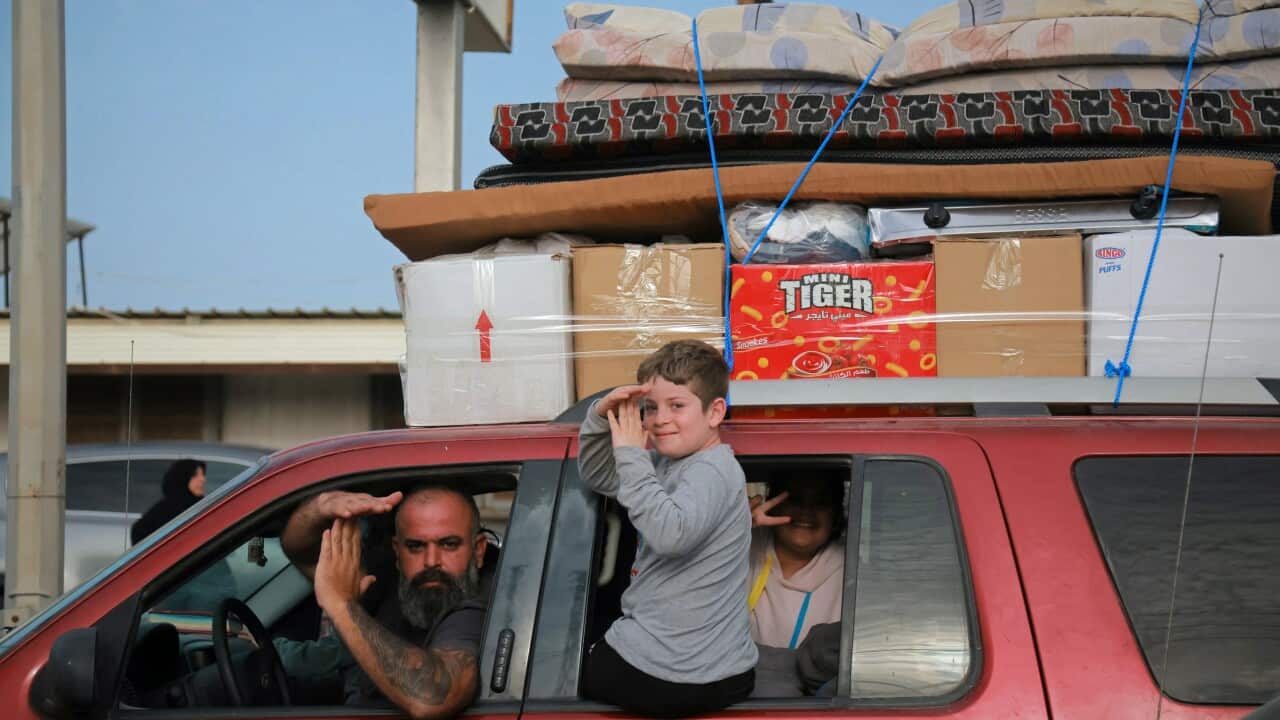
Alongside hundreds of others forced to flee south Lebanon, Amani Atrash and her family waited eagerly on Friday morning for bulldozers to reopen the Qasmiyeh bridge, which Israel bombed just hours before a ceasefire began.
Her family was among the tens of thousands of people hoping to go home after being displaced by the Israel-Hezbollah conflict — despite warnings against returning to the south from the Iran-backed militant group, Lebanese officials and the Israeli army, which continues to occupy parts of the area.
"We set off an hour before the ceasefire took effect so we could reach the bridge once it opens, allowing us to return to our town," said Atrash, 37, who fled north at the start of the war.
"The wait is very difficult because we want to get there as quickly as possible," she told the Agence France-Presse (AFP) news agency as she sat in her car in a line stretching for kilometres northeast of the coastal city of Tyre.
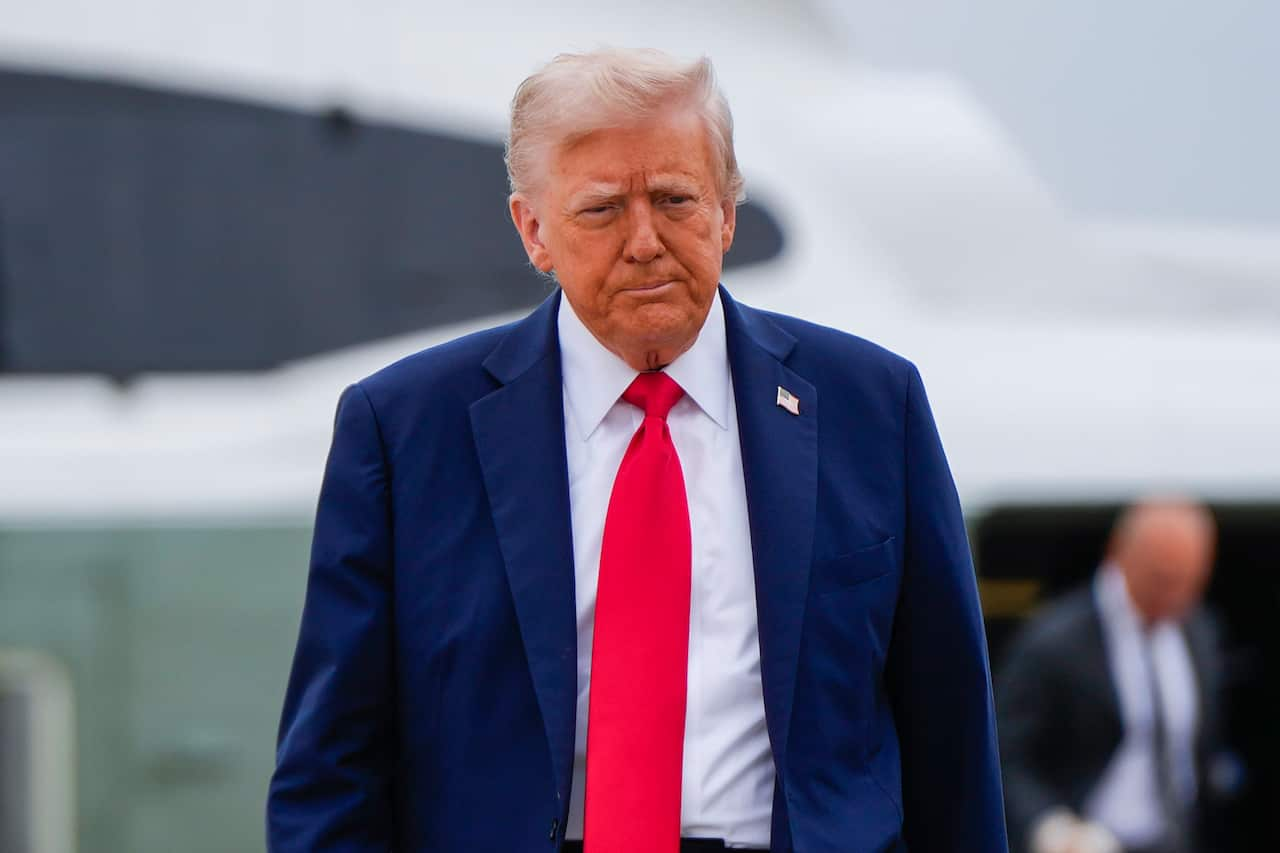
The 10-day ceasefire between Lebanon and Israel went into force at midnight, hours after it was announced by US President Donald Trump.
News that makes sense
Your trusted source for staying up-to-date with the world around you. Get free daily news updates and analysis, straight to your inbox.
The truce brought an end to a war that began on 2 March after Hezbollah launched rockets towards Israel in retaliation for the killing of Iran's supreme leader at the outset of the war in the Middle East.
Israel responded with massive air strikes and a ground invasion in the south.
"Our feelings are indescribable, pride and victory," said Atrash, her face beaming, adding she hoped the truce would be extended.
"No Israeli soldier can remain on our land, they must withdraw so we can live in peace," she added, predicting a return to war if Israel kept its troops in the area, where Israeli Prime Minister Benjamin Netanyahu has vowed to maintain a 10-kilometre "security zone".
Highway traffic jams as thousands head south
Hours before the ceasefire was announced, the Israeli bombardment of the Qasmiyeh bridge — a key crossing over the Litani River, which runs across most of the width of Lebanon — effectively cut off the area to the south from the rest of the country.
Three bulldozers, under the supervision of the Lebanese army, worked from dawn to fill the crater left by the bombing.
As soon as it was passable, motorcycles and then cars began crossing in single file, some honking their horns in celebration and waving yellow Hezbollah flags.
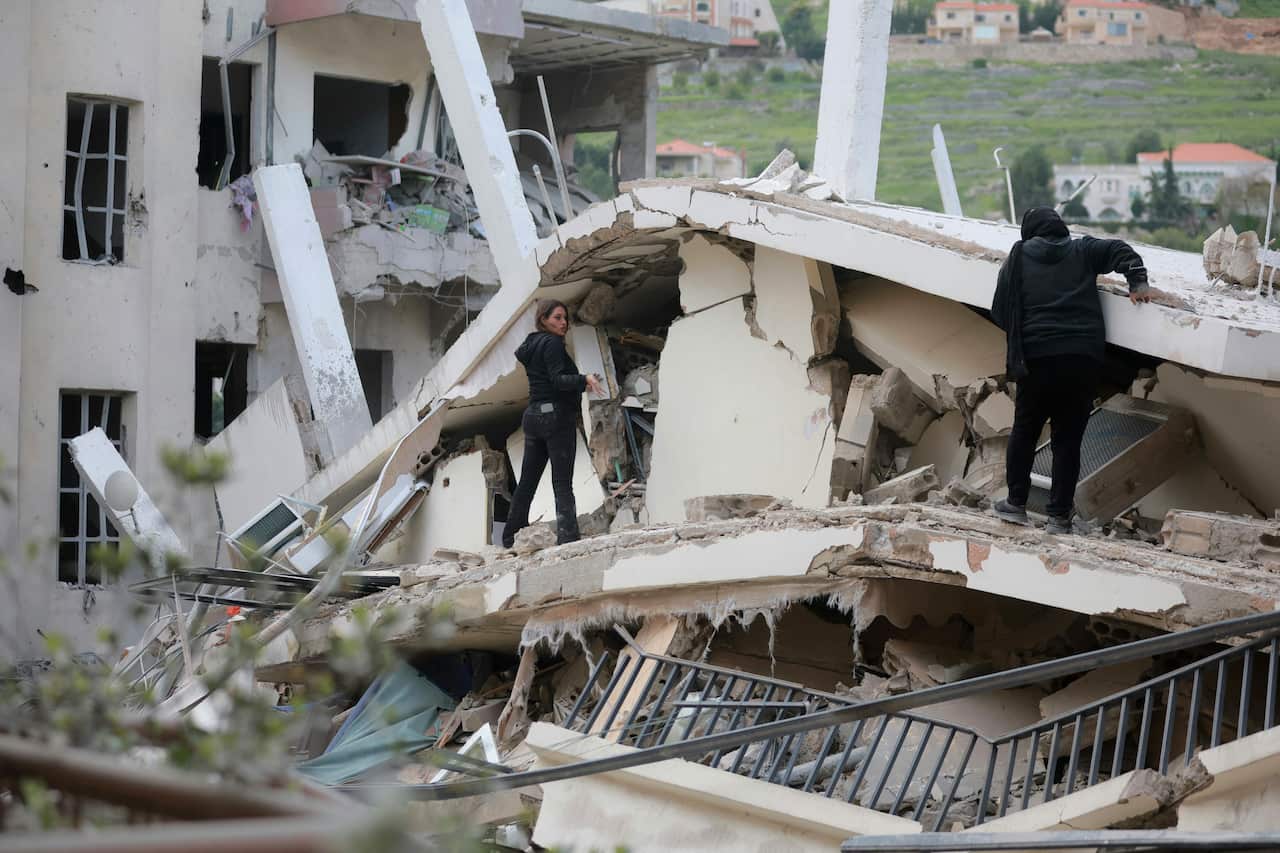
By 9am, the highway linking the southern cities of Sidon and Tyre was jammed for kilometres, with tens of thousands of cars heading south, many packed with mattresses, kitchenware and blankets.
Many of the displaced people AFP spoke to had no idea what had happened to their homes — which they hastily fled amid Israeli strikes — over the last six weeks of war.
The war in the Middle East, which began on 28 February with a US-Israeli attack, on Iran, has killed at least 3,000 people in Iran, more than 2,100 in Lebanon, 23 in Israel and more than a dozen in Gulf Arab states. Thirteen US service members have also been killed.
Lebanese authorities say the war has displaced more than one million people.
Celebratory gunfire rang out across parts of Beirut early on Friday as the clock struck midnight, the time the ceasefire was set to go into effect. For about half an hour, the booms of rockets fired in celebration could also be heard, witnesses said.
However, the pause in hostilities remains fragile.
The Israeli military said earlier that its forces remained deployed in its "security zone" in southern Lebanon.
In a post on X, Israel's Arabic-language military spokesperson Avichay Adraee said the deployment was in response to what he described as continued Hezbollah militant activity.
Hezbollah released a lengthy statement detailing what it described as its military operations against Israel throughout Thursday, which showed that its last attack came at 11.50pm local time, 10 minutes before the ceasefire took effect.
Trump later issued a social media post urging Hezbollah to respect the ceasefire.
"I hope Hezbollah acts nicely and well during this important period of time. It will be [a] GREAT moment for them if they do. No more killing. Must finally have PEACE!" he said.
Further Israel-Lebanon talks planned
Trump said in his earlier remarks to reporters that he thought the US had a chance of a deal with Iran.
"And if that happens, oil goes way down, prices go way down, inflation goes way down, and ... much more importantly than even that, you won't have a nuclear holocaust," he said.
The president said he was not sure a two-week ceasefire agreed with Iran last week would need to be extended beyond next week, adding that Iran wanted to make a deal.
"We have a very good relationship with Iran right now, as hard as it is to believe. And I think it's a combination of about four weeks of bombing, and a very powerful blockade."
At last weekend's talks, the US proposed a 20-year suspension of all nuclear activity by Iran — an apparent concession from longstanding demands for a permanent ban. Iran suggested a halt of three to five years, according to people familiar with the proposals.
The US has pressed for any highly enriched uranium (HEU) to be removed from Iran, while Iran has demanded that international sanctions against it be lifted.
Two Iranian sources said there were signs of a compromise emerging on the HEU stockpile, with Iran considering shipping part, but not all, of it out of the country, something it had previously ruled out.
'Historic agreement'
The Lebanon ceasefire was aimed at halting a conflict between Israel and the Iran-aligned Lebanese group Hezbollah that was reignited by the US-Israeli war against Iran.
Israeli Prime Minister Benjamin Netanyahu said he agreed to the ceasefire "to advance" peace efforts with Lebanon. "We have an opportunity to make a historic peace agreement with Lebanon," he said in a video message.
Hezbollah said in a statement that any truce must apply "across all Lebanese territory and must not allow the Israeli enemy any freedom of movement".
Trump said he had held "excellent conversations" with Netanyahu and Lebanese President Joseph Aoun and planned to invite them both to the White House for "meaningful talks".
He said later that the White House meeting could take place over the next week or two, and that if an Iran deal was reached and signed in Islamabad, he might attend.
Trump said he had directed US vice president JD Vance, secretary of state Marco Rubio and chairman of the joint chiefs of staff Dan Caine to work with Israel and Lebanon to achieve lasting peace.
Iran welcomed the ceasefire in Lebanon, saying it was part of an understanding reached with the US and mediated by Pakistan, Iranian media reported, citing a statement by a foreign ministry spokesperson.
The war spilled into Lebanon on 2 March, when Hezbollah opened fire in support of Iran, prompting an Israeli offensive in Lebanon 15 months after the last major conflict.
United Nations secretary-general António Guterres has commended the role of the US in facilitating the ceasefire between Israel and Lebanon and has urged all sides to respect the agreement and comply with international law.
Sticky issues
Closure of the Strait of Hormuz, through which a fifth of the world's oil and gas supply flows, has caused the worst oil price shock in history and forced the International Monetary Fund to downgrade its outlook for the global economy, warning prolonged conflict could push the world to the brink of recession.
A diplomatic source said the key Pakistani mediator, army chief Asim Munir, arrived in Tehran on Wednesday and had made a breakthrough on "sticky issues", although Iran said the fate of its nuclear program had not been resolved. Trump has said the accord would open the Strait of Hormuz.
A senior Iranian official told Reuters that Munir's trip had led to greater hopes for a second round of talks and an extension of the ceasefire, but said fundamental differences remain over the nuclear program.
US defence secretary Pete Hegseth said troops were poised to restart combat operations if a deal was not reached.
A Pakistani security source told Reuters the US was offering to lift sanctions and unfreeze billions of dollars' worth of Iranian assets to secure a deal.
However, the source added that Iran would open the strait only if a permanent ceasefire is reached and there are UN guarantees that the US and Israel will not attack again in future.
"We hope that the field marshal will have a draft in his hand when he flies out of Tehran," the source said.
For the latest from SBS News, download our app and subscribe to our newsletter.







