
This audio is voiced by AI and may occasionally mispronounce words.
Share your feedback and help us improve this feature. Read more about how we use AI at SBS here.
This article contains references to gun violence.
Justin Noble remembers the terror, the sound of gunfire and the moment a crowd of strangers clung to him, desperate to survive.
The former NSW Police officer still lives with what he witnessed at Port Arthur 30 years ago — a day that left deep scars on survivors and responders, and reshaped Australia's approach to public safety, policing and gun regulation.
He was on holiday with his wife at the popular tourist spot in Tasmania's south-east on 28 April 1996 when a lone gunman opened fire, killing 35 people and injuring dozens more in one of Australia's deadliest mass shootings.
"What sticks in my mind is the absolute terror of the people on the site," Noble tells SBS News.
News that makes sense
Your trusted source for staying up-to-date with the world around you. Get free daily news updates and analysis, straight to your inbox.
He knew something was wrong soon after he heard the first gunshots, moving quickly to help people get to safety as panic spread.
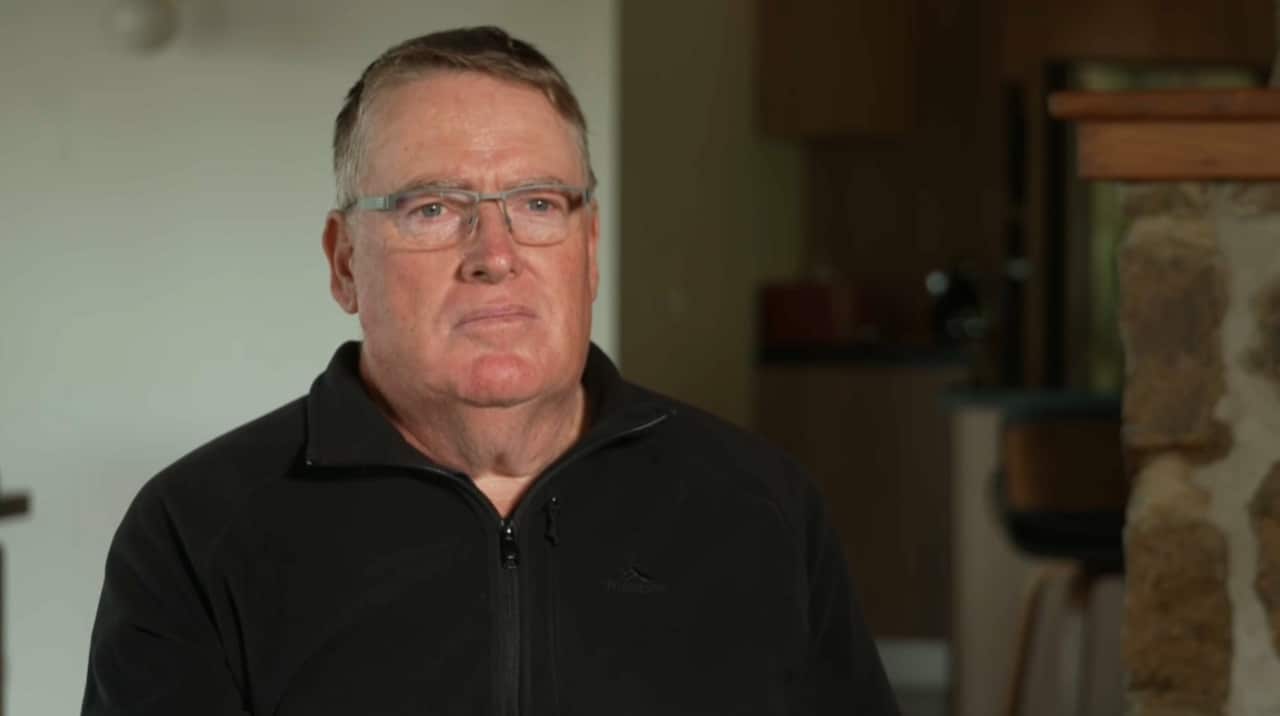
"People were so, so scared that one person, a lady, actually saw my police warrant card with my police badge, and she hung onto my belt and then a conga line of people started all hanging on to me as I was trying to walk around the site," Noble recalls.
Three decades later, he says the experience continues to shape his views on firearm ownership in Australia. While he believes most gun owners act responsibly, he says the overall increase in gun numbers in Australia is concerning.
First and foremost, people need to understand that it's not a right to possess a firearm and have a firearms licence. It's a privilege.
Noble's experience is part of a national story that began with the Port Arthur tragedy, a turning point that led to sweeping gun law reforms under the Howard government, including stricter licensing rules, prohibitions on some weapons and a national buyback scheme that reshaped firearm ownership across the country.
But Australia now has more firearms than it did before the tragedy, prompting renewed debate over what those rising numbers mean for public safety, how they should be measured and whether current laws are keeping pace.
'Like going to war for a day'
For those who treated the wounded that day, the scale of what unfolded was unlike anything they had seen — and a sign of what needed to change.
Dr Bryan Walpole says the Port Arthur shooting was on a scale he had not seen before in the emergency department at Royal Hobart Hospital.
"We described it as like going to war for a day," he tells SBS News.
"Normally, we might see one, maybe two, shot people in a week or a month and deal with them as part of your ordinary work, but never that intensity."

Walpole says the impact of the gun law reforms that followed was immediate.
"It was like night and day: prior to Port Arthur, there had been at least one gun massacre every year for the previous 15 years," he says.
Researchers say mass shootings declined after the 1996 reforms, though there is ongoing debate about how much of that change can be directly linked to the laws.
Rising numbers, different interpretations
Last January, think tank The Australia Institute released a report compiling, for the first time, a national estimate of gun ownership.
The analysis found total firearm numbers are around 25 per cent higher than in 1996, before the Port Arthur shooting.
Explaining the significance of the data, Alice Grundy, research manager at The Australia Institute, says the scale had not previously been captured.
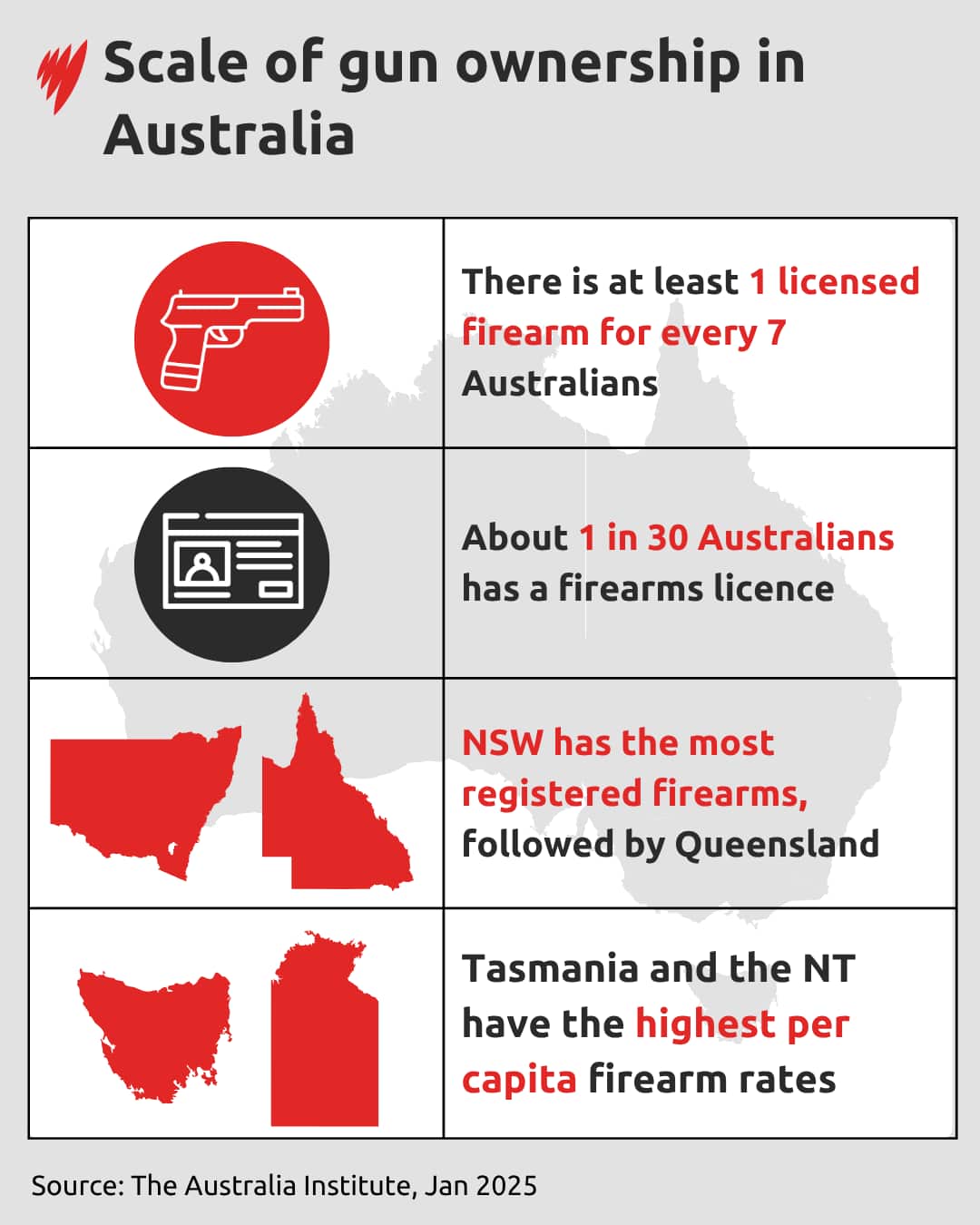
"What we found is that there are over four million licensed firearms in Australia, and this was a number that nobody else had," she tells SBS News.
Before Port Arthur, there were an estimated 3.2 million guns in Australia.

The buyback scheme introduced by the Howard government led to more than 650,000 firearms being destroyed. By 2001, registered firearms had dropped to around 2.2 million.
Now 30 years on, that number has climbed to 4.1 million.
But there's been a decrease per capita from approximately 0.18 licensed guns per person before the shooting to 0.15 today.
Tom Kenyon, CEO of the Sporting Shooters' Association of Australia (SSAA), argues those figures need to be understood in context.
"The population of Australia increased by about 50 per cent in that time — I think it's just under 50 per cent — the number of firearms has increased by about 20 per cent," Kenyon says. Australia's population was just over 18 million in 1996 and is around 28 million today.
Kenyon stresses that every legal firearm purchase since 1996 has been subject to strict regulation.
"You can't just walk into a shop and buy a firearm; you have to apply beforehand for approval to purchase that firearm, you have to explain what you need that firearm for," he says.
So are there too many guns, or just more people?
That question sits at the centre of the debate that continues to shape political responses across states and territories.
Following Sydney's Bondi Beach shooting in December, the Department of Home Affairs released its own figures on gun ownership.
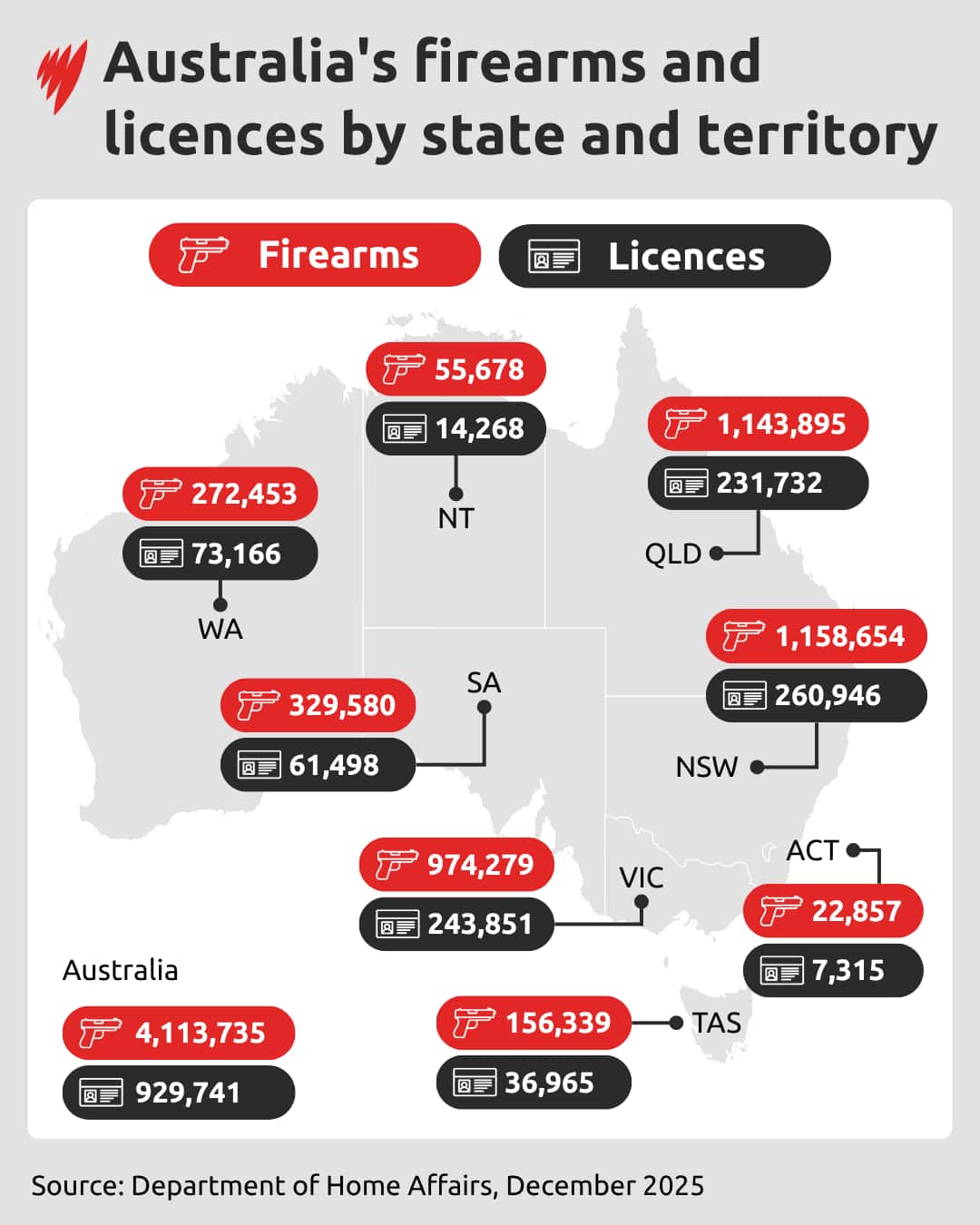
While the headline total — of around 4.1 million — is broadly consistent with The Australia Institute estimates, some of the underlying data points differ.
The number of guns rose from 4,078,746 to 4,113,735 between January, when the Australia Institute released its report, and December — a difference of 34,989.
Numbers have gone up in some states, and down in others.
One big difference is in the ACT, where there was a reported drop of nearly 50,000 guns, from 69,868 to 22,857 — almost 70 per cent.
In its original report, the Australia Institute said the figure for the ACT was an estimate based on ownership rates in line with the national average.
"It turns out that in the ACT, the number is lower than the national average,” Grundy says.
There is also a discrepancy in the data reported for the Northern Territory, where gun numbers have dropped by nearly a quarter, from 73,752 to 55,678.
A spokesperson for the Department of Home Affairs told SBS News: "NTPFES [Northern Territory Police, Fire and Emergency Services] reported the number of firearms is decreasing due to checks occurring as part of the implementation of the National Firearms Register."
More guns, more theft — or a storage problem?
The Australia Institute identifies firearm theft as a growing concern linked to higher gun numbers.
"Since 2020, 9,000 firearms have been stolen. We don't have good data on how many of those have been recovered," Grundy says.
"From the data that is available in Queensland and Western Australia, it's about 25 per cent of those stolen firearms that have been recovered.
The greatest single source of new firearms onto the black market is stolen licensed firearms.
Grundy says proposed caps on the number of firearms per owner — now being considered in some states in response to the Bondi massacre — could help reduce risks.
"One of the potential benefits for a cap on the number of firearms a person can own is that it makes it more straightforward for them to keep track of them," she says.
"Storage is more straightforward, and that can help with preventing against theft."
But SSAA's Kenyon rejects that approach, arguing caps are "random numbers".
"It's not actually determined with any science behind it, and there's no evidence that I'm aware of that suggests that capping numbers improves public safety," he says.
"There's no public safety research that shows 10 is a magic number.
Instead, Kenyon says enforcement of existing storage laws should be the priority.
"Almost certainly the problem is the way those are being stored, so the logical, rational response to that is to look at the enforcement of storage requirements, making sure people are storing their firearms correctly, and as they're legally required to," Kenyon says.
"That's where you have the biggest public safety benefit, rather than capping something."
He also argues that practical use cases can quickly push owners beyond proposed limits.
"If you compete in a number of events in competition shooting, some of those events might require you to own three firearms just for one event.
"You might then do some hunting: different animals require different calibres, different types of hunting require different types of rifles, day and night shooting requires different types of sights, and you generally don't move sights between firearms very easily, you have to then re-sight it and everything else, it's very complicated."
A new buyback, but no national consensus
Prime Minister Anthony Albanese announced a renewed gun buyback in December in response to the Bondi massacre, but not all states and territories are on board.
"So far, we've seen that South Australia, the Northern Territory and Queensland have not agreed to participate in the buyback," Grundy says.
"It remains to be seen what kind of approach Victoria takes, but since Australia has porous borders, it's really important for there to be cross-state collaboration on this issue to make sure that Australians can be safe."
Kenyon says any scheme should pay fair market value to owners and include compensation for items like ammunition and sights.
Gun data and public access
The Australia Institute's report found that gun ownership in Australia varies significantly across states.
Western Australia is the only state that currently caps the number of firearms a licence holder can own, while NSW is the only jurisdiction to publish comprehensive firearm ownership data. That data shows two individuals in inner Sydney each own more than 300 firearms.
Kenyon says releasing such information raises safety concerns.
"Anything that makes that more likely, that highlights suburbs with high densities of firearm ownership, or anything else, we think actually decreases public safety, that it makes it easier for criminals to target certain areas," he says.
Grundy disputes that view, saying the data is not the "treasure map" as some gun lobby groups suggest.
"Post codes are based on population, so it's not that you have the same area covered by a post code in rural or regional Western Australia as you do in Sydney, for example."
A national system still pending
A National Firearms Register, which would track weapons across the country in real time, was first proposed after Port Arthur to improve coordination between states and territories, but it has yet to be implemented despite having bipartisan support.
They've been promising a National Firearms Register for a long time; it's well and truly overdue.Justin Noble
Currently, each state and territory has its own separate registry of registered firearms and gun owners' licences — a national registry would combine this information into a single place.
In December 2025, the federal government announced a significant acceleration in the delivery of the system, which is slated for completion in 2028.
In a statement to SBS News, the Department of Home Affairs said the delivery of Commonwealth components has been accelerated and is on track to be complete by the end of this year, and states and territories will be able to integrate at any time following that.
"Once established, the National Firearms Register will provide near-real time information on the number of firearms and licence holders across Australia," a departmental spokesperson said.
For policymakers, the debate is now less about whether reform occurred after Port Arthur and more about whether today's fragmented system remains fit for purpose.
And for the former officer who stood amid the chaos that day, it comes back to something more immediate — the fear of people grabbing onto him to survive and the responsibility he feels still sits behind every discussion about guns in Australia.
For the latest from SBS News, download our app and subscribe to our newsletter.







