This audio is voiced by AI and may occasionally mispronounce words.
Share your feedback and help us improve this feature. Read more about how we use AI at SBS here.
Australians know almost nothing about the one million trusts in the country except for the details that have emerged via messy family legal disputes over million-dollar assets.
Even the beneficiaries of these trusts can be left in the dark about their operations and don't always get the money that is distributed to them 'on paper'.
The details of trusts — particularly discretionary trusts — are shrouded in secrecy, and power lies with the trustee who manages the assets.
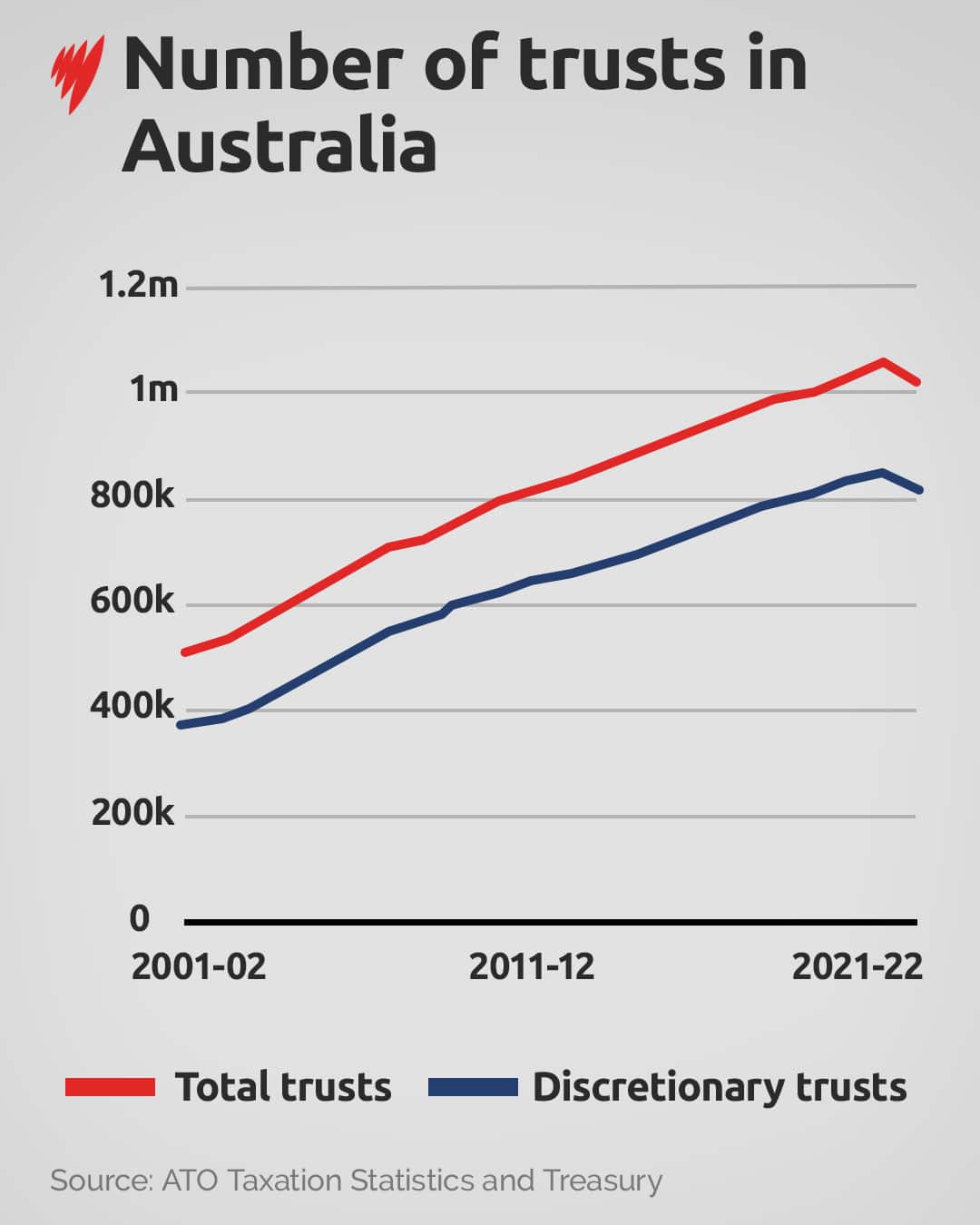
But the popularity of trusts in Australia has skyrocketed. They have doubled in number in less than 20 years, from 501,860 in 2003/04 to more than one million in 2022/23.
For decades, groups like the Australian Council of Social Service (ACOSS) have been calling for more transparency around trusts, which have been used for money laundering and to hide assets in family court matters.
News that makes sense
Your trusted source for staying up-to-date with the world around you. Get free daily news updates and analysis, straight to your inbox.
Australia does not have a public registry that provides details about trusts, and the Australian Taxation Office (ATO) doesn't maintain a register of trust deeds with beneficiaries' details.
ACOSS says trusts have also been "used and abused by well-off taxpayers for many years" for tax minimisation.
"It beggars belief that so many people use these for any other reason than to avoid tax," ACOSS CEO Cassandra Goldie says.
Employees who receive a salary or wage generally can't direct their income into trusts because of rules that prevent them from avoiding tax.
They are generally used only by those who own businesses or have income-producing assets, such as rental properties or share portfolios.
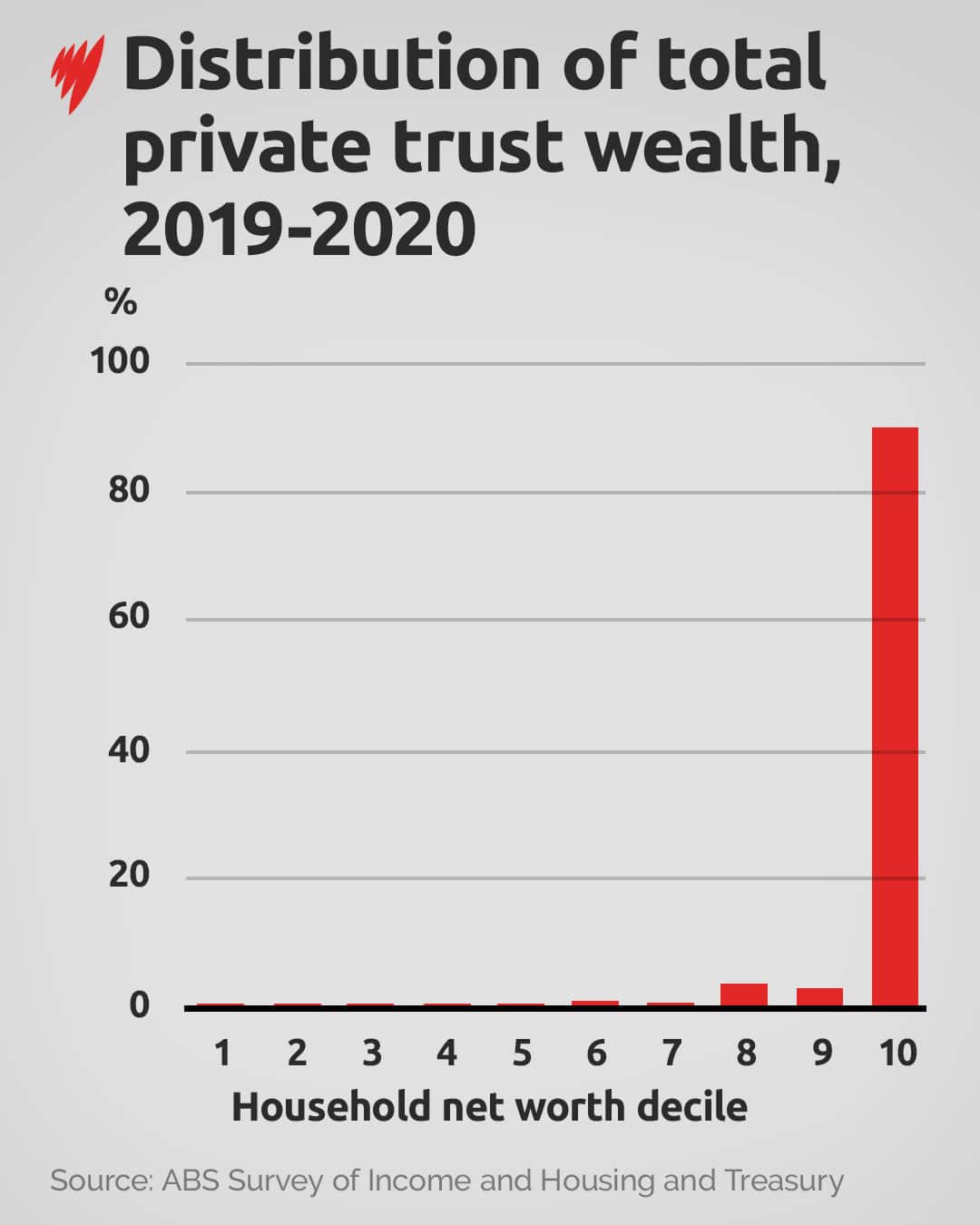
According to data from 2019-20, the wealthiest 10 per cent of households hold more than 90 per cent of private trust wealth.
The government is now cracking down on trusts, announcing changes in this year's budget on how they will be taxed.
The debate has renewed scrutiny on how trusts operate, and why a system controlling vast amounts of wealth remains largely hidden from public view.
Why are trusts so popular?
At their core, a trust consists of one person — the trustee — who holds the legal title to its assets but must manage these for the benefit of others — the beneficiaries.
There are many types of trusts. One common example is a "fixed trust", which allows people to invest money in a project, and to receive a fixed percentage of income. Before modern corporations became widespread, these trusts were often used as an early form of collective investment structure.
Trusts developed in medieval England and were often used as a way for people to provide for widows and children. Today, they are used for a much broader range of purposes, including estate planning, charitable giving, business succession, and managing assets for minors or vulnerable family members.
Peter Radan, an honorary professor in law at Macquarie University, says trusts were used by wealthy aristocrats in the 19th century to preserve assets within a family and to maintain vast estates that would otherwise be broken up when the head of the family died.
"[When] he dies, who does it go to? You would normally want to benefit all your children and that would necessarily mean breaking up the property," he tells SBS News.
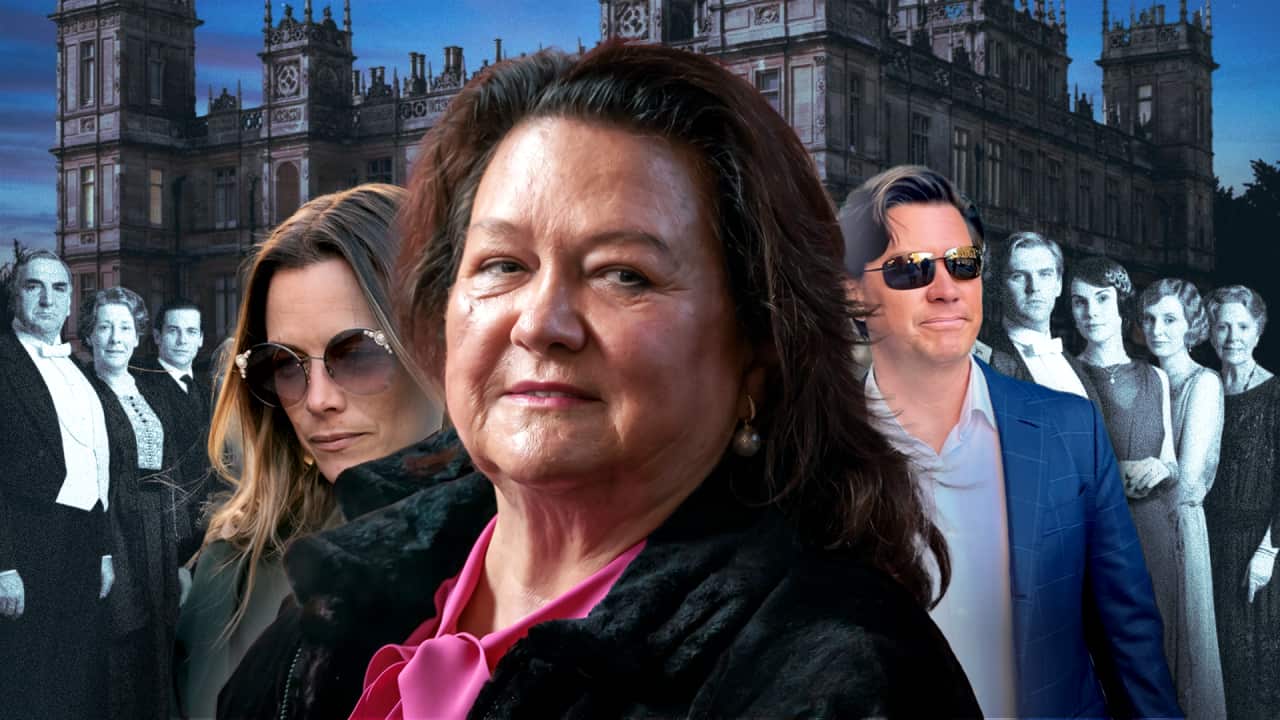
Radan points to the TV show Downton Abbey as an illustration of the challenges of keeping a large estate intact across generations.
A more modern example would be the Hope Margaret Hancock Trust, which helps preserve the wealth of Australia's richest person Gina Rinehart and her family.
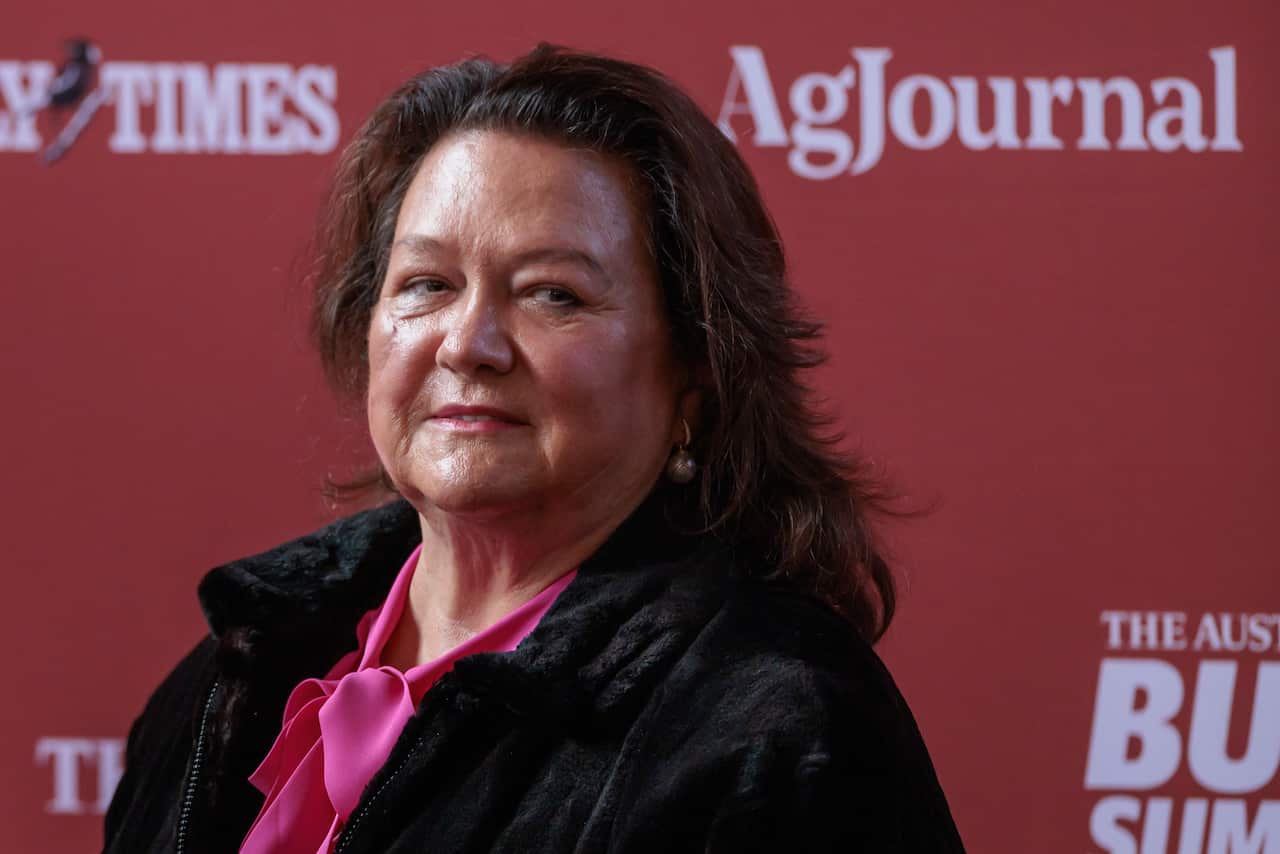
In recent years, this trust has been the subject of wide-ranging litigation that resulted in Rinehart being removed as trustee after she tried to extend the trust's operation, and in complaints from her children that they were denied important information.
This trust was a discretionary trust — often called a family trust — and gave Rinehart significant power to decide how the assets passed down from her father, Lang Hancock, were managed and how much income her children received.
How trusts are used to minimise tax
Discretionary trusts have been criticised for their role in allowing people to reduce their tax burden.
Unlike fixed trusts, the trustee of a discretionary trust does not have to allocate income to a set formula. Instead, they can choose how to split money across beneficiaries.
This allows them to allocate income in the most advantageous way each year, often by directing distributions to family members on lower marginal tax rates.
Dale Boccabella, associate professor of taxation law at the University of NSW, says the ideal beneficiary is generally an adult who doesn't earn much (such as someone studying at university).
This is because trust income has historically been allocated to individuals and taxed at normal rates.
If the person has no other income, they benefit from the tax-free threshold of $18,200 and can receive up to $22,575 tax-free due to the low-income offset. The top tax rate of 45 cents only kicks in once income reaches $190,001.
Someone on a high income can therefore reduce the amount of tax they pay if they set up a trust and then spread this income around to lower-earning family members in a practice known as income-splitting.
Any tax that does need to be paid at a higher rate can also be limited by setting up what is known as a "bucket company". Income allocated to the company is subject to a corporate tax rate of around 30 per cent, rather than the top individual tax rate of 45 per cent. Additional tax may still apply later if profits are paid out to individuals as dividends.
Experts say there are legitimate reasons to use trusts, such as for succession planning and asset protection, but critics argue most of these aims can be achieved using alternative structures such as creating a company which can also minimise the risk that personal assets will be seized to pay off business debts.
Last year the ATO clarified that trusts should not be used by someone earning personal services income — such as a tradesperson or doctor running their own businesses — and warned they could be at risk of contravening tax avoidance laws.
If one person is being paid for their services but splits the income with a spouse who is not involved in the business, for example, this could be seen as a contravention, according to new practical compliance guidelines.
Families being 'used' to reduce tax bills
Boccabella says a trust that generates around $100,000 in income can avoid paying tax if it allocates money to five beneficiaries (such as a couple and three non-working adult children). Other family members, such as aunts, cousins, nieces, and nephews, can also be used for this purpose.
"The game they're playing is that you're identifying a person among the beneficiaries that have a good tax profile [which] normally means they don't have much other income," he says.
He says the trustee has some obligations to let people know if they are beneficiaries of a trust, but this is not always done and they sometimes don't even get the money.
"The reality is that beneficiaries are being used as mere convenience," he says.
If the child's not actually getting that money it becomes [even] more of a joke.
A spokesperson for the ATO tells SBS News that generally trust income does not have to be physically paid to the beneficiary for it to be effective for tax purposes.
But if those amounts are not paid, the beneficiary remains entitled to receive the income and may call upon the trustee to make payment at a later date.
Trusts are not readily available to ordinary workers
Groups such as the Family First Party say families need the tax relief gained through income splitting, which reduces the amount households pay and allows parents the flexibility to stay home and care for young children.
But in its budget papers, the government notes that trust arrangements are not available to most workers.
It says that structures like discretionary trusts enable higher-income earners and wealthy individuals to achieve lower tax rates than ordinary workers.
The tax concessions offered through trusts, alongside the capital gains tax discount and negative gearing, are primarily available to people who have substantial assets, the budget papers note.
On Tuesday, the government announced it will introduce a 30 per cent minimum tax on the income of discretionary trusts from 1 July 2028.
It expects to collect $4.5 billion over five years due to the change.
The government says the reforms will "more closely align tax rates on income from discretionary trusts with rates paid by workers and families who earn a living from wages".
Professional accounting organisation CPA Australia says trusts are a long-standing structure used by small businesses, farmers, tradies, professionals and investors.
CPA's tax lead Jenny Wong says some people could face significant transaction costs when restructuring out of discretionary trusts because of the changes.
While the budget includes relief to help people move out of trusts, Wong says its effectiveness will depend on whether state and territory governments also provide stamp-duty relief.
Changes 'level the playing field'
David Richardson, a senior research fellow at the Australia Institute, says the changes appear to be a good attempt to address the abuses involving trusts.
"It is a shame it will not generate revenue until 2029-30. But otherwise, we look forward to seeing the detail in the legislation that is introduced into parliament."
ACOSS has also welcomed the changes, saying they will introduce an element of fairness into the tax treatment of private trusts.
Boccabella says the policy has a lot going for it and the 30 per cent tax would keep the system as simple as possible.
"Is it perfect? No, it's very hard to achieve a perfect outcome here … but it levels the playing field a little bit."
However, he notes that testamentary trusts already in existence are not subject to the 30 per cent minimum tax.
Trusts can remain in place for 80 years or longer
Testamentary trusts, which are created when someone dies, provide even more favourable tax rates due to exceptions around income for children.
People aged under 18 face high tax rates in Australia unless they are earning money through a job, their own business or certain other exempt categories. These measures were introduced to prevent parents from avoiding tax through income splitting.
If children get money from investment income, they are taxed 45c in the dollar over $1,307.
But money distributed through a testamentary trust is exempt and can instead be taxed at normal adult rates with an effective tax-free threshold of $22,575.
Boccabella says testamentary trusts allow income to be allocated to grandchildren — even if they are just a few days old — who can then claim the tax-free threshold.
"This concession can apply across potentially three or four generations because trusts can go on generally for 80 years," he says.
"So you can give a baby … a [tax] concession because their great, great grandparent died.
The baby wouldn't have even known the person. This is [why] it's in the laughable category.
The assets of a trust generally must vest after 80 years (unless an earlier date is set), meaning ownership of the assets is transferred to specific people, and any capital gains tax or other duties are paid.
However, trusts in Queensland are allowed to continue for 125 years, while those in South Australia can remain in place indefinitely.
Testamentary trusts already in existence won't be impacted by the Albanese government's tax changes, but Boccabella says ensuring future funds pay a fair share of tax is important given the historic intergenerational wealth transfer taking place in Australia.
"It's not uncommon for people [to have] three, four, five million dollars [in property].
"There's a lot of wealth being passed on."
For the latest from SBS News, download our app and subscribe to our newsletter







