
US-based Courtney Andelman fell in love with New Zealand in the 90s when she first visited the country as a tourist.
"There's some places in the world where your heart just sings and your soul feels completely full. And for me, that's New Zealand," she said.
"You step off the plane and you're like, 'this is a really special place'."
Three decades later in 2025, she and her husband Jim made that love affair with the country more permanent. They hold an 'investor visa', sometimes known as a "golden visa".
Golden visas allow wealthy foreigners to get permanent residency through investing in the local economy.
News that makes sense
Your trusted source for staying up-to-date with the world around you. Get free daily news updates and analysis, straight to your inbox.

California-based venture capitalists for more than 25 years, the Andelmans and their university-aged twin daughters jumped at the opportunity and recently became the 100th family to be given the visa.
"I just felt just some sort of real connection to the country, loved the people," she told SBS Dateline.
"This is one of those things that fell into the value bucket for us of 'what are the life experiences that do we want to have and do our kids want to have?' And so it's a worthy investment from our perspective."
How New Zealand’s golden visa became so popular
Increasing numbers of New Zealanders have left their home country in recent years, with many moving to Australia. In the 12 months to September 2025, nearly 73,000 Kiwis left the country, an increase of 8 per cent from the previous year. Many have cited the economy and lack of employment opportunities.
But one group is showing a surge of interest in New Zealand: wealthy Americans.
In a time of geopolitical instability, New Zealand regularly ranks as one of the safest countries in the world.
New Zealand's system, the 'Active Investor Plus Visa', was first introduced in 2022 by then prime minister Jacinda Ardern's government — specifically by Stuart Nash, who was minister of economic development at the time. He now runs a consultancy specialising in golden visa applicants.
Nash told SBS Dateline his clients are primarily European and American. Many of his US clients are chiefly concerned with safety, in particular, gun safety — regardless of their political affiliation.
After Donald Trump won the US presidential elections in 2024, there was a spike in searches for New Zealand property from US users. Realestate.com.nz reported a 180 per cent increase in searches in the days after the election. A similar surge was reported after his January inauguration.
But Nash says his clients are not "political refugees" looking to leave the country because of the Trump administration. Instead, they're people who view New Zealand as being more secure and safe in general.
"The majority of clients we have are those who are seeking a sort of 'plan b'," he said.
"Once you've got permanent residency, you've got it for life. And it's not just the prime investor, it's his or her partner or spouse, and their children under the age of 24."
New Zealand's golden visa changes
New Zealand's government changed the visa requirements in early 2025, reducing how much someone needs to invest — which used to be NZ$15 million — and how long they must spend in the country.
You can apply for two types of visas, the growth category, which requires an investment of NZ$5 million ($4.1 million) and the balanced category, which requires NZ$10 million ($8.2 million).
The growth category allows for direct business investments and managed funds, while those on the balanced category can invest in things like philanthropy, equities, government bonds and property development.
Since the changes, hundreds of applications have been received and around NZ$4 billion ($3.2 billion) is set to be invested into the local economy
Data from March 2026 shows most visa applications have come from the US, followed by China and Hong Kong. Germany also has a high proportion of investor visa applicants.
Why Courtney’s family pursued a golden visa
Unlike some of Stuart Nash's clients, Courtney said her family's concern isn't safety — their decision to pursue the visa comes out of a love for New Zealand, and the chance to be "global residents".
They consider their home base of California a "pretty darn good place" to live.
Courtney said New Zealand is "just an absolutely heartwarming place to spend time and energy and frankly, to be involved in the entrepreneurial ecosystem," she said.
While it's not her chief concern, she has met families considering the move because they value New Zealand’s perceived safety.
"There are certainly people who are concerned and for all the right reasons. Everyone's lived experience is their own."
Other Americans looking to New Zealand
Outside of investor visa applications, US interest in New Zealand has generally increased in recent years. Provisional data from Statistics NZ shows that as of March 2026, there were around 4,400 US migrants to New Zealand, up from 1,400 in 2021.
The 2026 data is provisional because to be considered a migrant, someone must spend 12 of the next 16 months in the country – the numbers can't be confirmed until that period has ended.
Interest in New Zealand also spiked in 2023, when there were 4,400 migrant arrivals.
Among that group are David Burnett and his family, who came to New Zealand on a skilled migrant pathway two years ago.
He launched a venture capital company in Auckland and says the country has a "world class … depth of talent".
He credits his wife with the decision to move, which he calls "the best decision our family's made".
"She's the one who really saw New Zealand as an opportunity. She saw what's available for us as a family," he said.
Initially, David had pushed to keep their house in San Diego.
"My wife looked at me and said, we're not doing plan B. And she was right," he said.
Various things drew the family to New Zealand, including its culture, education system and safety. Political tension and gun issues in the US played into the decision too.
"But really, the draw was much more of a pull into New Zealand, and all that New Zealand has to offer as opposed to getting away from the US," he said.
Citizenship controversies
Beyond investors and migrants, New Zealand has also been seen as a potential option for billionaires, most notably Peter Thiel, the German American tech entrepreneur, who co-founded PayPal and heads up data firm Palantir. He was embroiled in a long-running dispute over his plans to build a lodge in Wānaka near Queenstown on New Zealand's South Island, which were rejected.
Thiel was granted citizenship in 2011 after spending only 12 days New Zealand.
This wasn't revealed until 2017, when New Zealand's Department of Internal Affairs published information around Thiel's citizenship.

The documents showed Thiel was granted citizenship despite not meeting the usual requirements, including spending a certain number of days in the country — something that sparked widespread controversy in New Zealand.
The application argued citizenship would allow him to "represent the country on the international stage".
Nathan Guy, who was internal affairs minister when Thiel was granted citizenship, said in 2017 that he "is a great ambassador for New Zealand."
"New Zealand is seen as sort of a global bunker compared to what's happening around the world," said former NZ MP now consultant Stuart Nash.
"So people aren't literally digging huge big storage areas underground for them to live in five years and cases of nuclear war, but they are seeing New Zealand as a safe haven in these troubled times."
In general, New Zealand is perceived as being safe because of its distance from points of global conflict. That isolation, "which was once a barrier to people coming to New Zealand is now one of our core strengths", he told SBS Dateline.
Golden visa complications
While Thiel's citizenship sparked debate across New Zealand, investor visas haven't received the same backlash.
Dr Jesse Whitehead, a senior research fellow at the University of Waikato's Te Ngira Institute for Population Research, said these visas aren't likely to have a significant impact on the country's population in general because the number of applicants are "just too small".
However, there has been some controversy over the 2025 reforms, where an English language requirement for golden visa applicants — which is standard across other visa types — was removed.
Whitehead also highlights that those on investor and golden visas only have to spend a certain number of days in New Zealand.
"I think that's what the government are really aiming for, is to bring people into New Zealand to help local businesses to leverage off those skills," he said.
"The risk is that if you only have to spend three weeks in the country over a three-year period, when does that actually happen?"
Why some aren't making a permanent move to NZ
For the golden visa holders themselves, there can be complications too.
In 2018, Ardern banned foreigners from owning property in the country after concerns about house prices.
As of March 2026, that rule has now been relaxed for golden visa applicants — but they can only buy or build a property valued at $5 million or more.
It's a caveat designed to prevent valuable housing stock being bought up from locals.
Whitehead said because of the $5 million cap, golden visa migrants are unlikely to impact housing affordability generally in New Zealand.
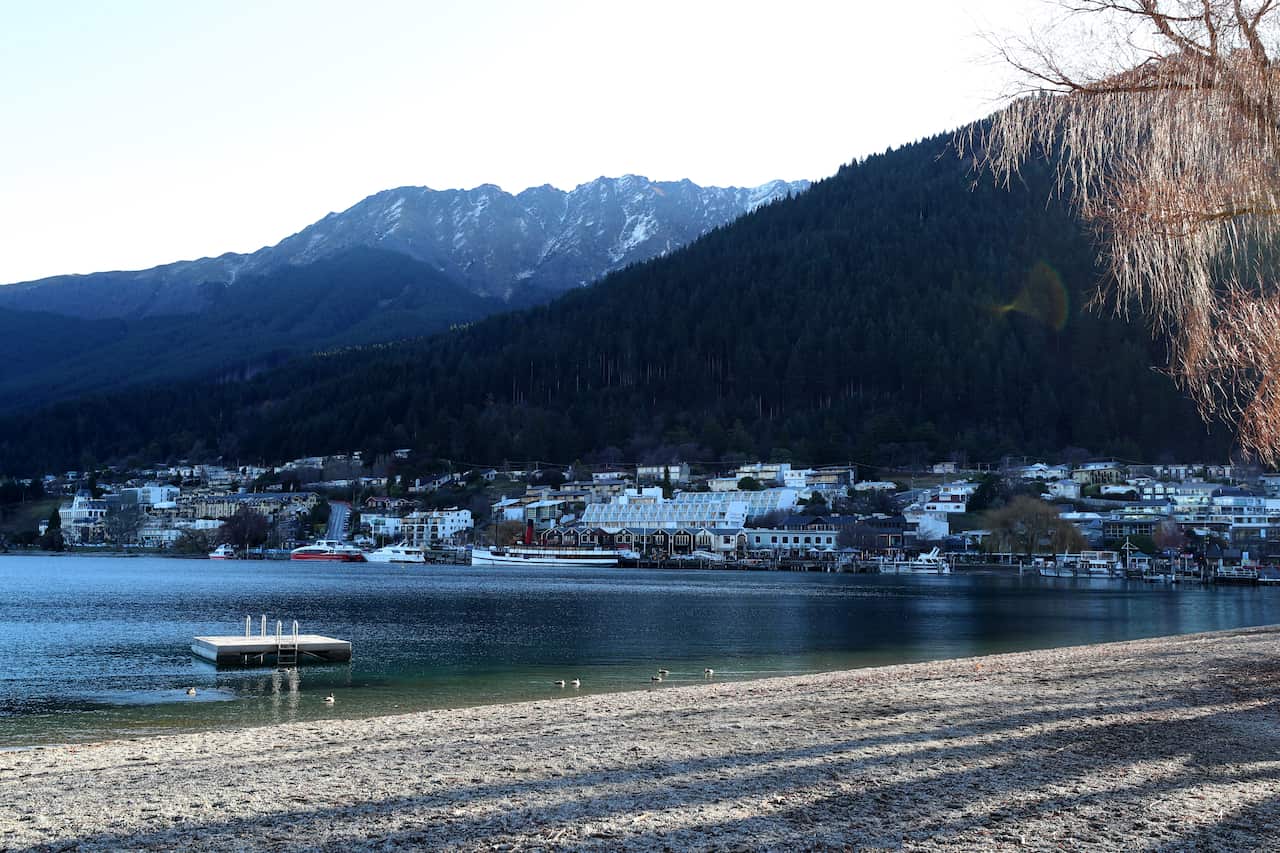
But golden visa migrants buying property could lead to "localised and nuanced issues", for example in Queenstown, a popular tourist destination, already grappling with high house prices and rates of unoccupancy.
He said an influx of investor visa migrants could possibly add to that.
"Maybe they're buying up more property that sits vacant, or they're using that short-term accommodation that then can't go to meeting local demand," he said.
"Those challenges could be exacerbated. But I guess at the moment it's a kind of wait and see."
Courtney says that New Zealand's tax laws have made it difficult for her and her family.
"The way the tax laws [and] policies are currently in effect, we will never be able to move to New Zealand full time".
In New Zealand, you can be taxed on shares you hold overseas, depending on the cost of those investments. You are also taxed based on your global income, not just that earned in New Zealand.
This has meant the family hasn't spent as much time in New Zealand as they initially expected to. You are considered a resident for tax purposes if you stay in the country for more than 183 days in a year, or if you have a 'permanent place of abode'.
Courtney said their decision to choose New Zealand as their investor visa location was not done "with a lens towards tax efficiency". Taxation laws in countries that offer golden visas differ.
"I might have made a different choice had I understood the tax implications really truthfully."
Watch your favourite Dateline episodes around the clock on SBS On Demand's dedicated Dateline channel. For the latest from SBS News, download our app and subscribe to our newsletter.

Dateline is an award-winning Australian, international documentary series airing for over 40 years. Each week Dateline scours the globe to bring you a world of daring stories. Read more about Dateline

Have a story or comment? Contact Us







