This audio is voiced by AI and may occasionally mispronounce words.
Share your feedback and help us improve this feature. Read more about how we use AI at SBS here.
Ultra-processed foods (UPFs) comprise up to 50 per cent of our calories. And while some provide significant nutrients for a balanced diet, others could be responsible for damage in every major bodily organ. So, what are UPFs, and are they as bad as they're made out to be? Watch Insight episode Processed Food Fight on SBS On Demand.
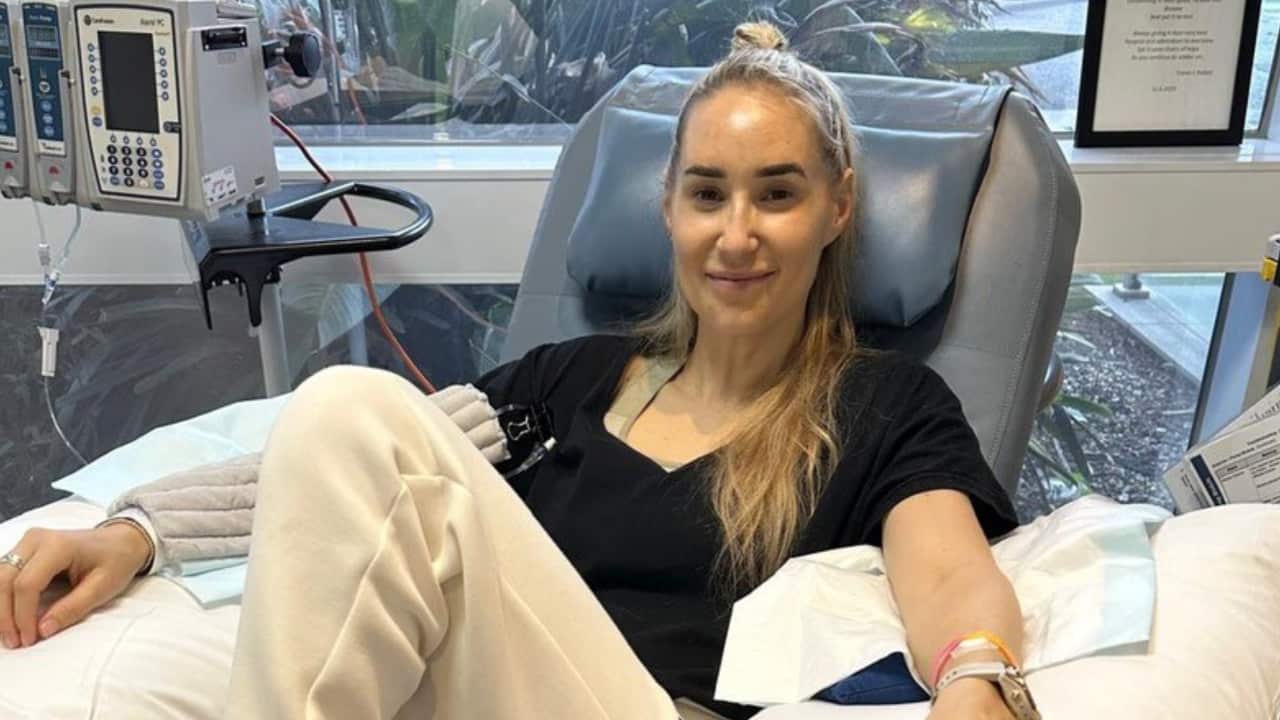
At 39, after a period of feeling very fatigued and getting subsequent testing, Danni Duncan was diagnosed with stage 2 bowel cancer last year.
"I couldn't believe it," she said.
News that makes sense
Your trusted source for staying up-to-date with the world around you. Get free daily news updates and analysis, straight to your inbox.
"I always said I was going to live to 100. How was I getting cancer?"
The Melbourne-based fitness coach then went down a rabbit hole researching contributing factors that can lead to bowel cancer and wondered if the ultra-processed foods (UPFs) she ate growing up could have contributed to the cause.
"Alongside other contributing factors — of course, it's not just the ultra-processed food — one of the common denominators was this big influx of ultra-processed food through the 90s."
While direct causality between UPFs and cancer has not been established, a study based at Massachusetts General Hospital led by Dr Andrew Chan found an association between high consumption of UPFs and an increased risk of having abnormal growths in the bowel, which can lead to cancer.
Danni says she ate a lot of UPFs growing up and that her childhood was "very highly ultra-processed".
"Breakfasts were Coco Pops, Rice Bubbles with sugar on top ... Tiny Teddies, Shapes, chips, Nutella, ham sandwiches on Wonder White bread and McDonald's."
Australians among the leading consumers of UPFs
'Ultra-processed' foods (such as confectionary and soft drinks) are products that have been industrially manufactured — containing ingredients such as preservatives and additives that would not be found in the home.
And Australians are among the leading consumers of UPFs, according to Phillip Baker, a public health researcher at The University of Sydney.
"We're eating somewhere between 40 and 50 percent of our calories from ultra-processed foods," Baker said.
Unlike 'processed' foods, UPFs have only been part of our diet for the past 70-80 years.
Processed foods are altered from their natural state — often with simple ingredients such as salt, oil or sugar — for safety, convenience and shelf life; while UPFs often have five ingredients or more and contain additives and little wholefood.
Nutrition scientists and public health researchers have pointed to the increased risk of a range of adverse health outcomes associated with UPF consumption — including type 2 diabetes, cardiovascular disease, certain types of cancers, chronic kidney disease, inflammatory bowel disease, and mental ill health.
Baker recently co-authored a global study that "evaluated all of the evidence that we have on how ultra processed foods are impacting on human health".
He said that the evidence "is pointing towards a very firm causal relationship between having more ultra processed food in the diet and a very strong association with weight gain and obesity and a number of diet-related chronic diseases ... and mental ill health ..."
The researcher said that a high level of UPFs in our diet causes "systemic low-grade inflammation in our bodies".
"It's affecting all body organ systems and that we, as humans, are poorly adapted to consuming these foods and the ingredients that they contain ... " he said.
"We are not adapted to these diets [containing UPFs]."
'The options became narrower and narrower'
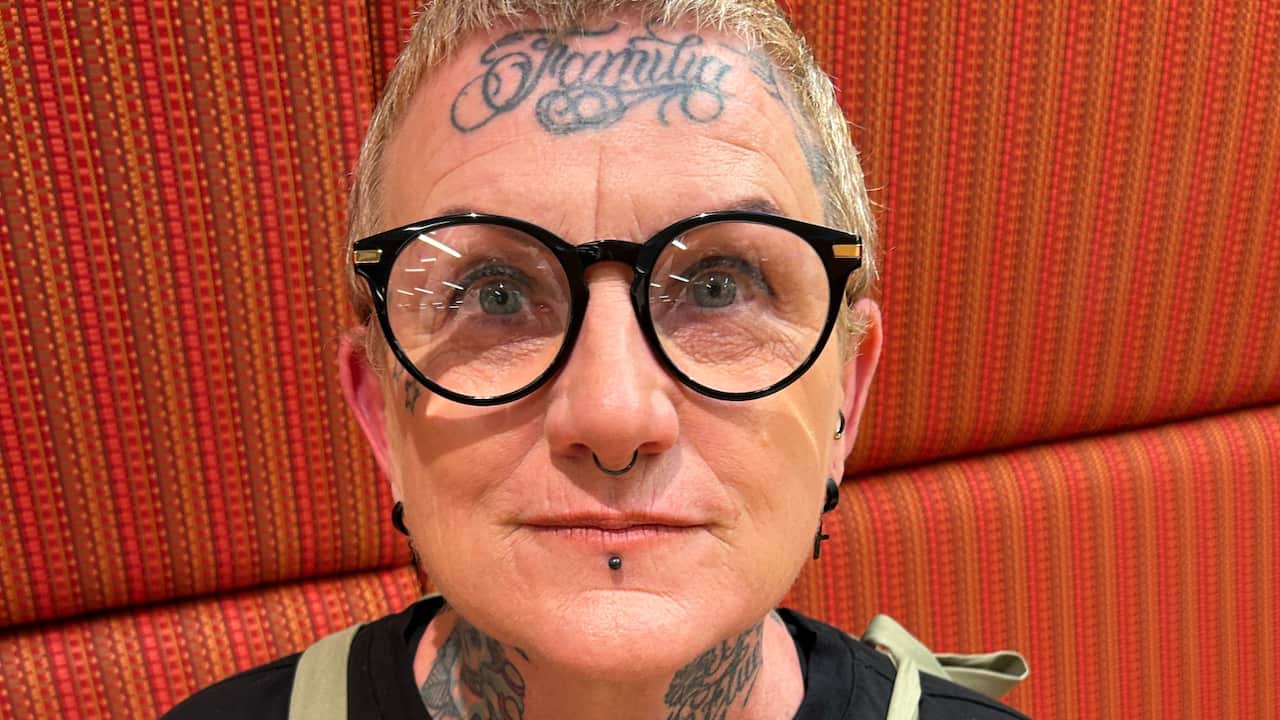
Janine Petherick lives on a disability pension and believes having choice about groceries is a privilege. She says she eats processed foods and UPFs out of financial necessity.
The 54-year-old lives in a small town just north of Brisbane in Queensland, where there are no health food shops or greengrocers — only two supermarkets.
While she is mindful of food waste and tries to eat healthy, she says her income limits her grocery shop to mostly foodbanks, which she says means she often must prioritise ultra-processed options.
"I noticed, when I went to the food barns, that a lot of the food is shelf food; it is what is donated is food that sits on a shelf for a long time," she told Insight.
"And so, the options became narrower and narrower."
Janine says that although the bank does give away fresh fruits and vegetables, they go quickly, which is difficult for her as she prefers a mostly vegetarian diet.
She and her husband have a buyer who sometimes provides them "fantastic" ready-made meals through the food barn; but most times when they do the grocery shopping , they don't have a list.
"It's what we need, not what we want. We don't have many options," she said.
"I enjoy plant-based foods. My husband loves steak — you're not getting steak there [at the food bank] ... And we do eat processed foods; we have to because that's what's available to us."
Not enough time
For chef Angie Prendergast Sceats, time is a big reason for incorporating processed and ultra-processed foods into her family's diet.
"I thought I would have this time on the weekend to cook all these snack foods that my kid will eat, but I just simply don't," she said.
She is also challenged by her six-year-old son's preference for store-bought UPFs such as cookies, pea chips and crackers.
"He sees a packet, and it's somehow better."

The former food educator says she has tried everything to encourage her son to like wholefoods more - including pretending the fish fingers she made at home were an ultra-processed supermarket version. But he wasn't fooled.
"I can make it delicious, but I can't make it with those same chemicals that are going to create that sort of brain reaction."
While Angie's son loves ultra-processed snacks, she says he's developing an understanding of what healthy eating means.
"Hopefully I can educate [my kids] how to cook well and eat well but also be fully aware that we live in this society that has these foods around - and it's okay to have them sometimes," she said.
"There's a reason we don't drop dead when we eat a pack of chips — it's okay.
"But if you're eating those chips like every single day, there's the problem."
Nova classification
While concern around UPFs is mounting, so is confusion around what the term means.
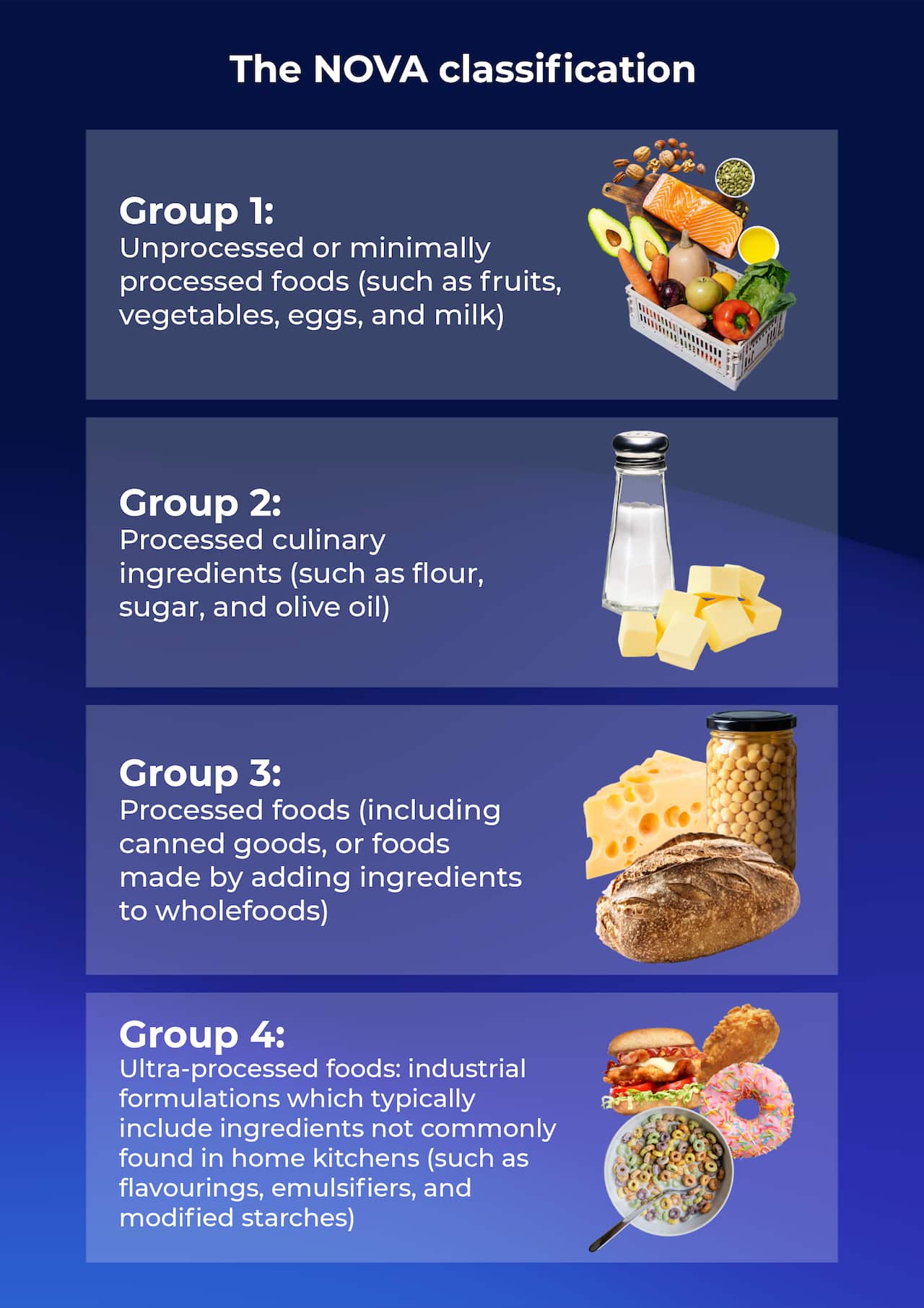
The term 'ultra-processed foods' was coined in 2009 by Brazilian researchers as part of the Nova classification system, a framework separating foods into four categories.
Group One contains unprocessed or minimally processed foods (such as fruits, vegetables, eggs, and milk); Group Two contains processed culinary ingredients (such as flour, sugar, and olive oil); Group Three is processed foods (including canned goods, or foods made by adding ingredients to wholefoods); and Group Four is UPFs, which are industrial formulations typically including ingredients not commonly found at home (such as flavourings, emulsifiers, and modified starches).
Some nutrition scientists, like Flavia Fayet-Moore, believe the categorisation of ultra-processed food is inherently flawed.
"It's a really blunt tool and it doesn't add any more value to what we already know in nutrition science," Fayet-Moore said.
While she disagrees with the definition from a scientific perspective, Fayet-Moore believes it also creates confusion for everyday consumers who already struggle to make healthy choices in the supermarket.
"It can really create unintended consequences for consumers where someone might not be getting their fibre because they're avoiding a bread, that's a really good source of fibre, because it's in (Nova) category 4," she said.
Fayet-Moore said that from a general broad perspective, there are many foods that happen to be ultra-processed we should avoid, "but the category is so broad that there's also a lot of healthful foods within that category that we shouldn't be avoiding".
"And so what happens when you have these foods like bread or yoghurt that might have some additives that makes it UPF ... They're going to then all of a sudden be avoiding it because it's UPF.
"Nutrition, unfortunately, affects every single system in our body. And it's really hard to separate this ultra processing concept from actual, really poor foods and dietary patterns."
In moderation
Today, Danni and her medical team continue to monitor her health; but in October, her scans came back clear.
"I am under some genetic testing at the moment ... my tumour did show a rare gene mutation in it ..."
She has removed nearly all UPFs from her kitchen pantry — striving to feed herself and her children an almost completely wholefood diet.
But Danni still takes an 'in moderation' approach to UPFs.
"For myself specifically, I love a piece of chocolate at night with my tea.
"On the weekend we will share a bag of crisps as a family."
Watch your favourite Insight episodes around the clock on SBS On Demand's dedicated Insight channel. For the latest from SBS News, download our app and subscribe to our newsletter.

Insight is Australia's leading forum for debate and powerful first-person stories offering a unique perspective on the way we live. Read more about Insight

Have a story or comment? Contact Us







