
The day before Kath's partner Nigel died, the couple hosted a "goodbye birthday bash" with close to 60 people in their backyard.
"He decided he wanted to go the day after his birthday, so we went: 'Well, we're gonna go out with a bang and have a party'," Kath told Insight.
The Brisbane couple were together for three years, but Nigel was diagnosed with skin cancer halfway through their relationship. It eventually became terminal after spreading to his lymph nodes, neck, chest and abdomen.
Kath says when they received the news that Nigel likely had three months to live, she went into preparation mode so not everything was rushed and they could spend quality time together.
"He was going to do it on his terms and go when he felt that he couldn't fight any more — and still had his dignity," Kath says.
News that makes sense
Your trusted source for staying up-to-date with the world around you. Get free daily news updates and analysis, straight to your inbox.
"It gave me peace of mind that everything was ready to go. All I had to do was make a phone call."
Nigel had been approved for Voluntary Assisted Dying (VAD) three months before he died at age 51 in 2023, but he chose the date of when he'd access it a week before.
So, Kath and his family organised a combined living wake and birthday party — involving KFC, cake and many phone calls — for the day before he would die.
"It was very relaxed and casual ... We didn't ever pressure anybody that they had to come and see him," Kath says.

"People just dropped around to give him a hug, talk to him, tell stories, make memories ... He was exhausted by the end, but he said he was it was all worth it."
Kath says having a living wake allowed people the chance to properly say goodbye to him. She says this is something not everyone gets to do, as many people have sudden deaths.
"A lot of friends and family have commented that they loved that they got that chance to say their final goodbye," she said.
"As much as it was very, very sad ... It was good to see him happy, joking and telling stories — they are very comforting memories for me."
What is a living funeral or living wake?
Cindy Stocken, an anthropologist at the University of Melbourne, says end-of-life practices are changing, both in Australia and overseas.
The cost of funeral services in Australia can range between $4,000 for a no-service cremation to $20,000 for a full-service burial, according to a 2021 Australian Competition and Consumer Commission report.
According to market research firm IBISWorld, the Australian funeral industry was worth $1.9 billion in 2024.
Stocken is doing a PhD thesis that specifically explores living funerals (aka 'living wakes' or 'end-of-life celebrations'), and she says that while these events can take many forms — whether it be a barefoot backyard barbecue, a gathering at the beach, or dinner — there is a common thread.
"It's the relationships and giving people the opportunity to travel — a lot of the time to come from afar — to be with a person while they're still alive instead of coming for the funeral."
Practices resembling living funerals are already popular in other parts of the world such as South Korea and in Japan — where the seizenso (the "funeral while alive" — often is a celebratory party designed to take the organisational pressure off loved ones) has been popular since the 1990s.
However, the concept of a living funeral or living wake is relatively new in Australia. Stocken says there is no strict format to this emerging ritual, which in turn allows people the freedom to personalise their goodbyes.
"There are no rules ... there are no expectations and [there is] a lot of making it up as we go along."
Reducing death anxiety
Like Stocken, University of Sydney sociology professor Alex Broom says that the Australian death care industry has evolved massively over the past decade — including how we talk about death, funeral costs and changing preferences.
"The funeral traditionally has been the remit of the family, and the structure of it has often been decided by those that have been left behind," Broom told Insight. "Whereas in the funeral scene now, we're seeing a lot more diversity."
He says there is also opportunity to spread out end-of-life rituals to multiple events — including living wakes and virtual goodbyes while someone is still alive.
"We are living in a hybrid world, so it makes sense that the funeral industry follows that as well."
Broom believes a living wake could help the person who is dying to exert more control over their death, and ease death anxiety for its attendees.
"I think the living wake allows better deaths because it feeds into celebration, acceptance, commemoration."
He believes that confronting the end of life "will inevitably ease pressure on death care in Australia — by organising people earlier and normalising thinking about death."
A living funeral hosted in good health
Unlike the majority of people who have living wakes, Regina isn't close to death nor was she when she hosted her own funeral in 2024.
Inspired by a magazine article she read about South Korean living funerals, Regina decided to host her own funeral and film it for a university project.
"I also wanted to talk with people I knew about death ... to have conversations with people really close to me about what's important to them," she told Insight.
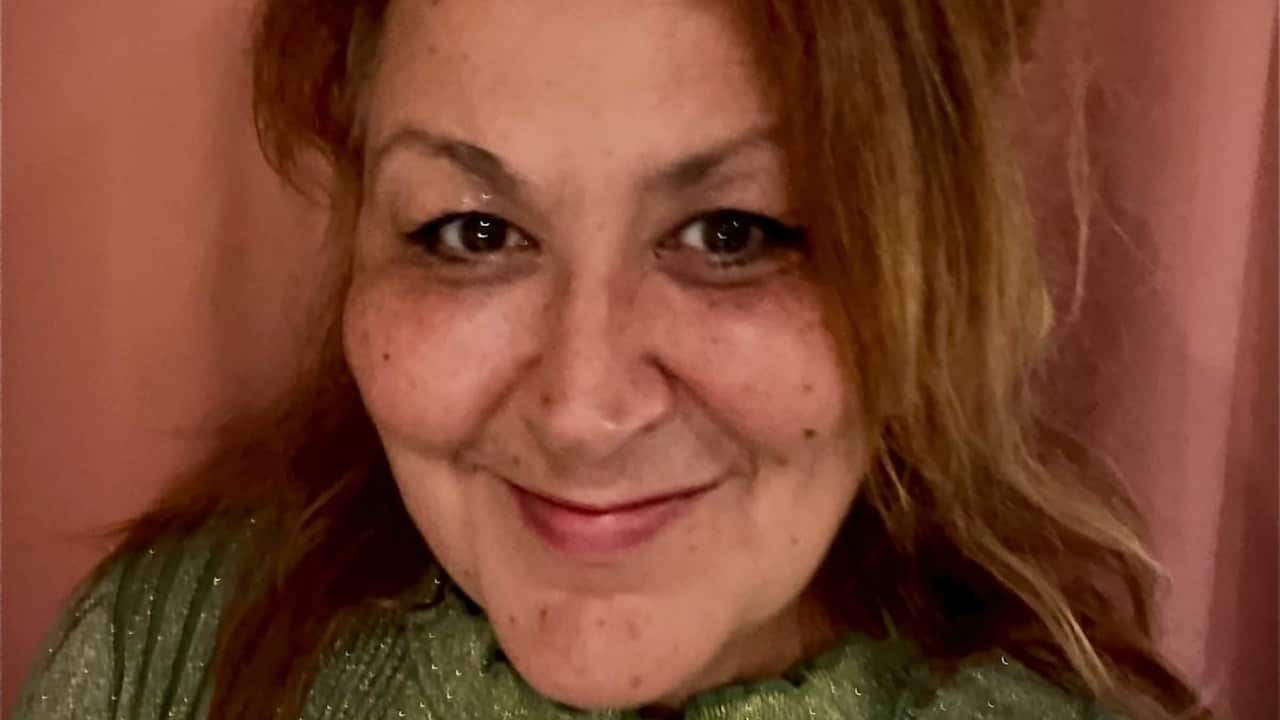
Regina invited around 40 of her closest friends and family to her home in Sydney's inner-west to prematurely farewell her.
She enlisted the help of a death doula (someone who provides holistic support in the dying process) for the occasion, and the night included Regina lying in a coffin, a eulogy from her partner, a poem from her teenage daughter, old photos on display and a procession around the block. and a recorded audio message from Regina to guests.
A marker for entering a new stage of life
Regina says it was a big undertaking but would recommend it as someone in her 50s — believing a living funeral to be a marker of maturing into another life stage.
"I think you go through a phase of: 'well, what's next?' And you are internally confronting these things, but you don't necessarily talk about those things out loud. I love that I had that vehicle that made me do it."
She says that she would maybe do it again in a decade, or at different significant phases of life.
"You're a different person in 10 years ... You've lost people by then — or other people have died."

Regina says that when people die — especially suddenly — they don't often have their songs, last wishes or letters to loved ones written down. But working with a death doula was helpful in preparing for an actual funeral — and allowed her and her partner to communicate openly.
She says that she doesn't place much significance on how her loved ones will eventually farewell her but: "[they] would know what I would want, which is really important for the [people grieving]".
A rehearsal for death
Academic and death doula Annetta Mallon says that planning a funeral when grieving is difficult, as grief is distorted when someone "must unnaturally focus on making financial decisions and second- and third-guess what their person would've wanted if [they] haven't had these conversations".
She believes that advanced planning is one of the greatest acts of love someone can give, and a living wake can be a rehearsal for the real thing.
A living funeral for someone who isn't imminently close to death can serve as a stimulus "to consider considering, what's your bucket list? What do you value in life? What do you want to prioritise"?
"Sometimes people do this and it's not actually about physical ending to life but perhaps an ending to a life stage," Mallon says.
"It might've been triggered by a divorce, or death of the parent — or another significant person in their life."
Facing death
In organising a living funeral for herself, Regina recognised that it wasn't an easy ask of people — some of her closest friends could not attend due to anticipatory grief, which is grieving before the fact.
"You can't make people do anything that they don't want to do," Regina says.
"It isn't a flippant thing. It is really serious. It is asking someone — your closest friends and family — to consider you not to be alive ... It's not like it was an easy thing to happen."
Like Regina, Kath has thought about her own death after being confronted by her late partner Nigel's.
"I'm more aware now, and don't want to put my children through having to organise something .... It's made me look at my financial situation, and it's made me look at things with a different light," Kath said.
"I think the more we talk about it, the more people will be aware and it's not something to be frightened of; we all are going to die at some stage."

The day after they hosted Nigel's living wake, he died by VAD with his head resting on Kath's shoulder in their home.
Following the Māori tradition, his body was laid in state at their home for three days before the funeral — with Nigel's chosen songs and self-written eulogy — was held on their patio.
He had always wanted a patio, so Kath organised its construction before he died — and it hosted both his funeral and goodbye birthday bash.
"We were able to say our farewell on his big dream."
Griefline provides confidential support on 1300 845 745 and via griefline.org.au.
Watch your favourite Insight episodes around the clock on SBS On Demand's dedicated Insight channel. For the latest from SBS News, download our app and subscribe to our newsletter.

Insight is Australia's leading forum for debate and powerful first-person stories offering a unique perspective on the way we live. Read more about Insight

Have a story or comment? Contact Us







