That's a wrap on tonight's federal budget coverage
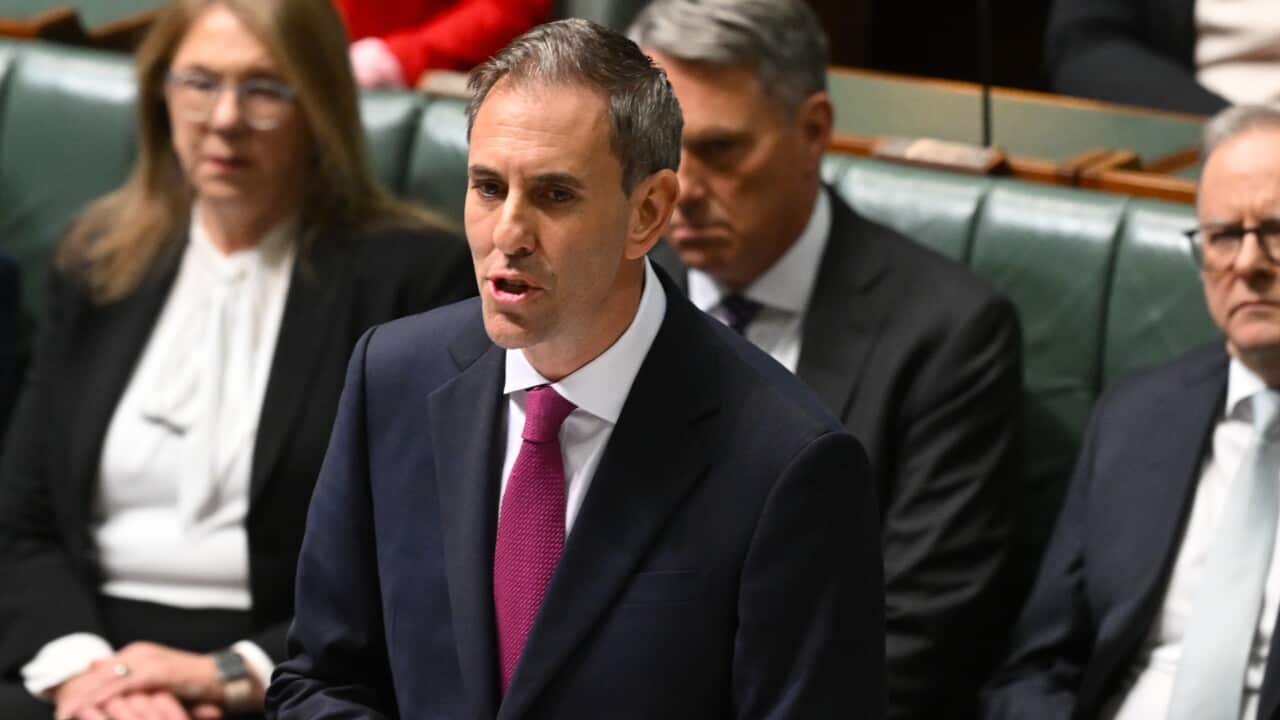
Treasurer Jim Chalmers has handed down the Albanese government's fifth budget, setting out its plans for cost of living relief, housing, healthcare, energy and the broader economy.
Throughout the night, we've brought you the key announcements, political reactions, and expert analysis as the budget details began to unfold.
There will be plenty more debate in the days ahead as economists, industry groups and the Opposition continue to sift through the fine print.
Thanks for following our live coverage. We hope we helped balance your budget of patience for at least one night.
Before we sign off, here are three key reads to help you make sense of tonight's federal budget:
- Everything you need to know about the budget — the major announcements, key measures and what they mean for Australians
- Winners and losers from budget night — where Chalmers delivered relief, and who may have missed out
- And if budget papers aren't your thing, our reporters have broken it all down simply: If the federal budget were just $100, here's how the government plans to spend it
SBS World News will broadcast a federal budget special at 10pm AEST, featuring full analysis of what the budget means for you.
You can watch on free-to-air television, the SBS News YouTube and Facebook pages, or SBS On Demand.
Thanks for following our live coverage throughout the day and night. We're signing off — and giving our calculators a well-earned rest.
— Avneet Arora
ACTU backs tax changes, says budget 'rebalance the scales' for workers
The Australian Council of Trade Unions (ACTU) has welcomed the federal government's planned changes to negative gearing and capital gains tax (CGT), saying they shift the system towards workers and younger Australians.
Under the reforms, new investment properties bought after 7.30pm AEST on budget night (12 May 2026) will no longer be eligible for negative gearing from 1 July 2027, with exemptions for new builds and some government-backed housing.
From the same date, the 50 per cent CGT discount will be replaced with cost-base indexation for assets held more than 12 months.
ACTU president Michele O'Neil said the changes correct long-standing imbalances in the tax system.
"This is a budget that finally tackles a system that's been taxing work harder than taxing wealth," she said in a statement.
She said the revenue from the reforms would be redirected to workers through tax relief and offsets aimed at easing cost of living pressures.
"Cost-of-living relief, through the payment of the ongoing tax offset and tax cuts in 2026 and 2027, also put workers first and deliver desperately needed support to those who work for a living — not just those who invest."
— Avneet Arora
More focus needed on health, but 'a few positives', RACGP says
Dr Michael Wright, the president of the Royal Australian College of General Practitioners, said the budget has been "tough" and did not focus on health.
Wright said the government has failed to expand Medicare to cover complex care and to give people more time with their GP.
"It's also been disappointing that we haven't seen more action on eliminating racism in the health system," he said.
"Once again, this is something that we cannot tolerate, and we need more action to properly fund ways to identify and eradicate racism from our health system."
On the upside for health, Wright supported additions to the Thriving Kids Initiative, further funding for My Health Record, and additional support for the rollout of RSV vaccinations.
— Cameron Carr
More can be done to support Australia's older population, advocates say
Aged care advocates have welcomed a $3.7 billion funding boost for the sector, but say more is needed for the "best quality care".
There will be an additional 5,000 aged care beds created through this budget, and new subsidies will see aged care providers build additional accommodation and extra specialist dementia care units.
There is also a focus on improving the quality of residential aged care, including the regulatory oversight, with $565 million directed towards such measures
Tamara Thomas from Uniting Care Australia said Australians are wondering tonight whether the government's "ambitious" budget will reach them.
"We're really wanting to see a further investment into supportive places going forward," she said.
Chris Rice from National Seniors Australia said the budget focused on creating certainty for younger Australians, but also created uncertainty for older Australians.
He said that housing reforms could benefit younger generations at the expense of financial security for older Australians.
While he supported additions to cart at home packages, he said older Australians are not happy with private health insurance changes.
"What is proposed is around 2.6 million older Australians who are going to be impacted by these changes, on top of what are already expensive private health insurance premiums," he said.
— Cameron Carr
Chalmers highlights in $63.8 billion in budget savings
Jim Chalmers said the federal budget includes $63.8 billion in savings, alongside new revenue expected from changes to negative gearing and capital gains tax.
A significant portion of those savings comes from previously announced changes to the National Disability Insurance Scheme, which the government says will reduce spending by $36.2 billion over the forward estimates.
He said the government had also taken a restrained approach to spending as it prepares for ongoing economic uncertainty and future financial pressures.
Towards the end of his speech, he said the budget was designed to balance reform with long-term stability.
"Faced with a choice between resilience or reform, this budget demonstrates our government and our country are capable of both."
— Avneet Arora
SMC welcomes budget boost to make super safer
The Super Members Council (SMC) welcomed a $17.8 million budget commitment to strengthen consumer safety in super following the collapses of the Shield and First Guardian schemes.
The SMC is calling on the government to move swiftly to guarantee superannuation for all young workers.
In a media release, CEO Misha Schubert said: "Further urgent reforms are needed to make super safer by strengthening consumer protections and transparency, including applying the super performance test on super platform products where millions of consumers are still flying blind on whether their super is performing for them or not."
She said it's also crucial that the government fast-track long-promised reforms to help Australians get safer guidance and advice from their own super fund.
— Avneet Arora
Opposition rejects changes to housing tax breaks
Opposition treasury spokesperson Tim Wilson says the Opposition will not support the changes the government has proposed to negative gearing, the capital gains tax discount and trusts.
He has, however, told SBS News he won’t stand in the way of the $250 tax offset measure.
At the same time, he maintains by the time it arrives in 2028 it will be eaten away by inflation.
— Anna Henderson
Key points from Treasurer Jim Chalmers' budget speech
Treasuer Jim Chalmers has delivered his fifth budget.
Here's a breakdown of his key points:
- He described this budget as "the most important and ambitious in decades".
- He said the tax changes would deliver a "a fairer tax system for workers, first home buyers and future generations".
- The government is choosing "the hard road of reform, not the path of least resistance", he says, a reference to the ambitious new tax crackdowns on negative gearing, discretionary trusts and capital gains tax discounts.
- He said this would "level the playing field for first home buyers" with 5 per cent deposits and tax reform to help more young Australians into their own home.
- He said these tax changes will help about 75,000 Australians achieve the dream of home ownership.
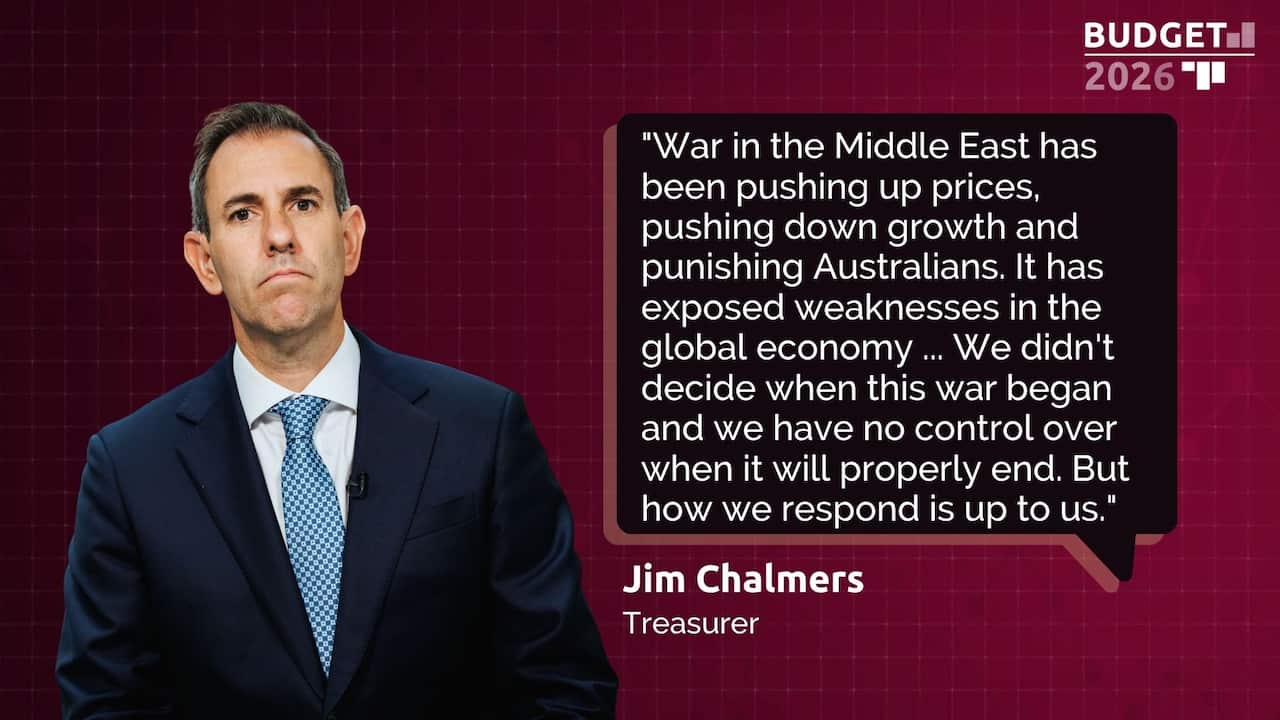
- Treasury has modelled a worst-case scenario from the war in the Middle East, where the global oil price peaks at $200 a barrel and takes three years to return to normal, meaning higher unemployment and inflation going above 7 per cent.
- Current forecasts assume oil stays around $100 per barrel until the end of next month and glides to $80 by the end of June next year.
- A new permanent tax cut of up to $250 for 13 million workers, starting from 2028, which he described as "the most meaningful, permanent increase to the effective tax-free threshold since Labor last increased it more than a decade ago".
- The budget delivers the largest savings package "on record", with $63.8 billion in savings.
— Rashida Yosufzai
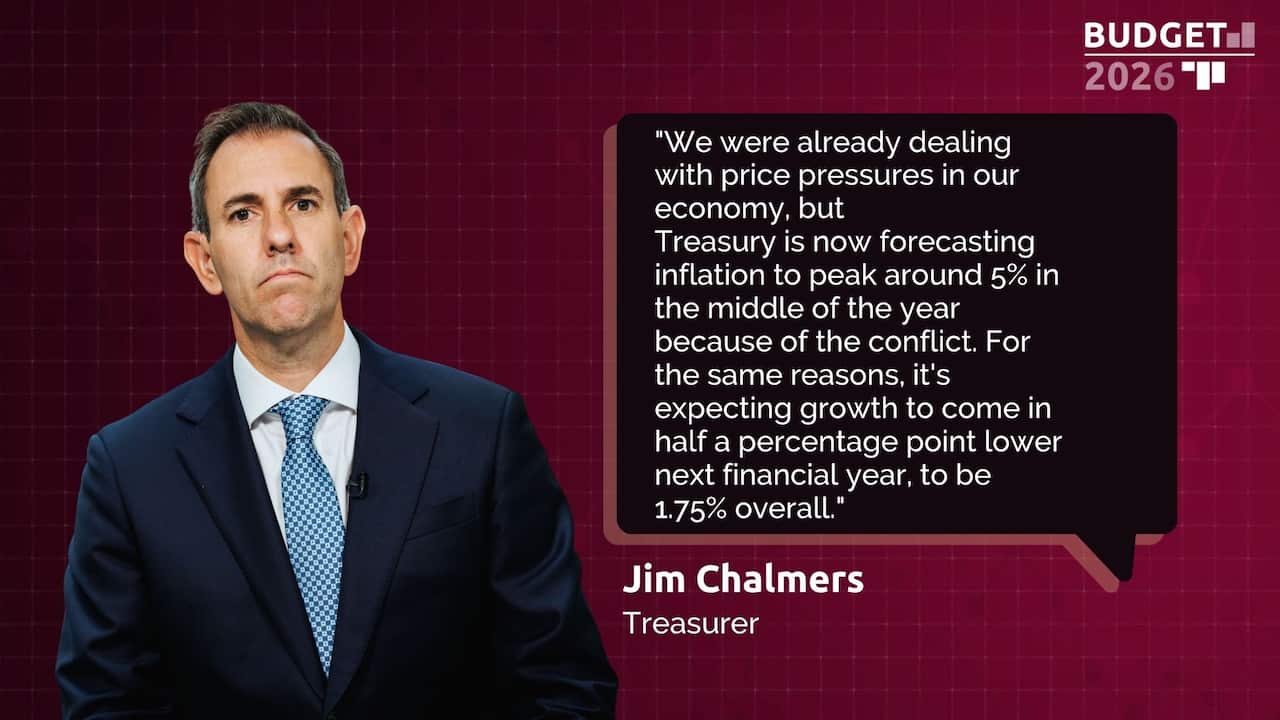
Treasury forecasts inflation to peak at 5 per cent this financial year
Federal budget migration numbers: Here's what’s changing and who's affected
The federal government is reforming its permanent migration system to select "better educated", "higher-skilled" and younger migrants to address worker shortages.
This year's budget has confirmed the permanent migration program will remain capped at 185,000 places, with over 70 per cent of places reserved for skilled migrants.
The government will prioritise applications from onshore migrants — rather than those from overseas — across both the skill and family streams.
Read the full article here on what's changing and who's affected:
— Avneet Arora
Highlights from Jim Chalmers' budget speech
Budget 2026 has been unveiled — here's where things stand
Treasurer Jim Chalmers has now handed down the 2026 federal budget, setting out the government's plans for spending, tax and the economy over the year ahead.
From housing and defence to cost of living relief and tax changes, the budget touches almost every part of the economy — with further detail now being worked through across parliament and industry.
Over the coming hours, we'll be explaining the key measures, what they mean in practice, and how different sectors are reacting as the full picture comes into focus.
For everything we know so far, my colleague Rashida Yosufzai has it covered in our main budget explainer here:
— Avneet Arora
Federal budget 2026: What it would look like if it were $100
If the federal budget were just $100, here's exactly how it would be split.
Our reporter Cameron Carr breaks down the big numbers into something much simpler in this explainer:
— Avneet Arora
Revealed: Budget 2026 winners and losers
Households, businesses and key industries are set to feel very different impacts from the 2026 federal budget, with some groups receiving targeted relief while others face tighter settings or no new support.
We're breaking down who benefits most — and who misses out — as the budget is analysed in detail.
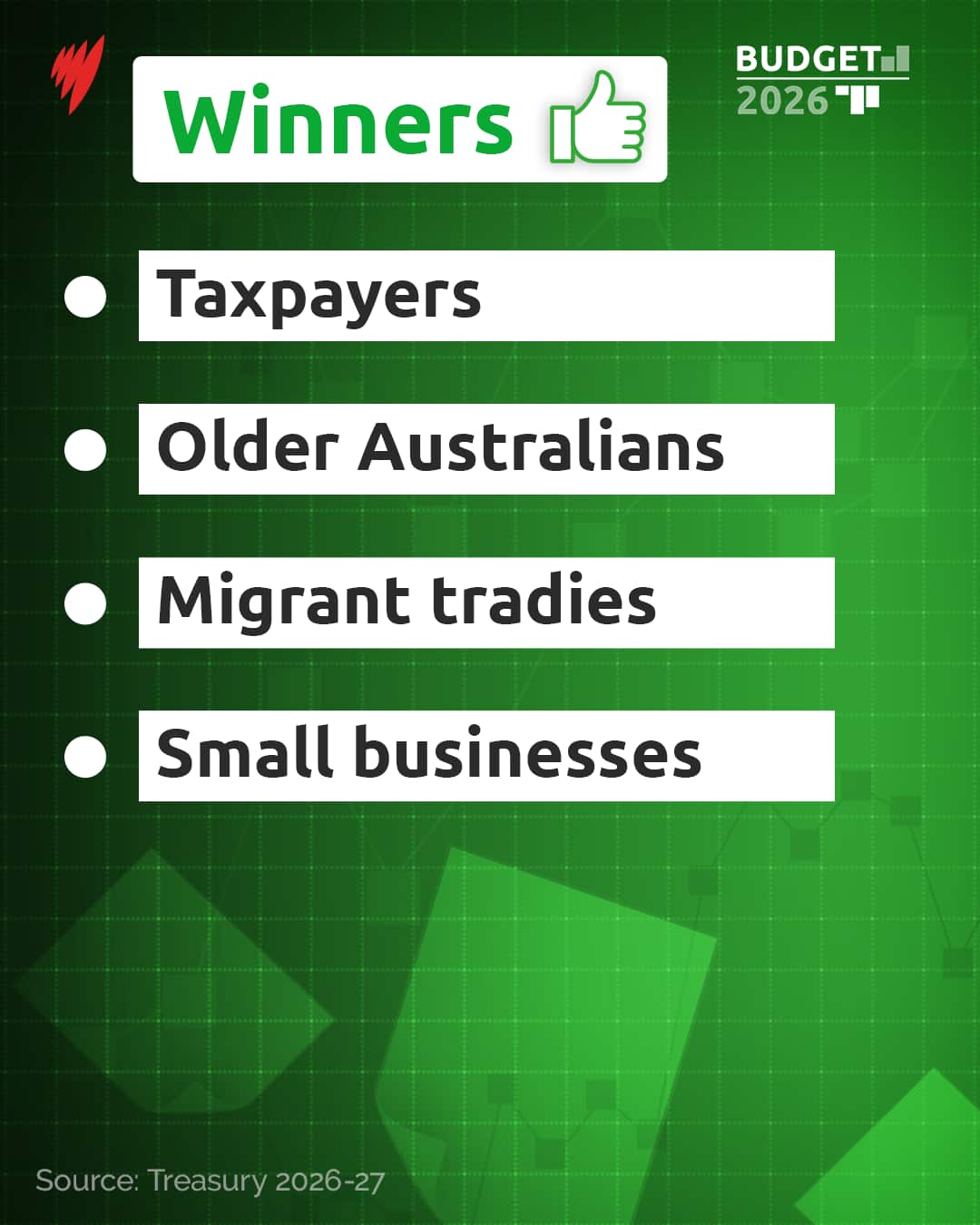
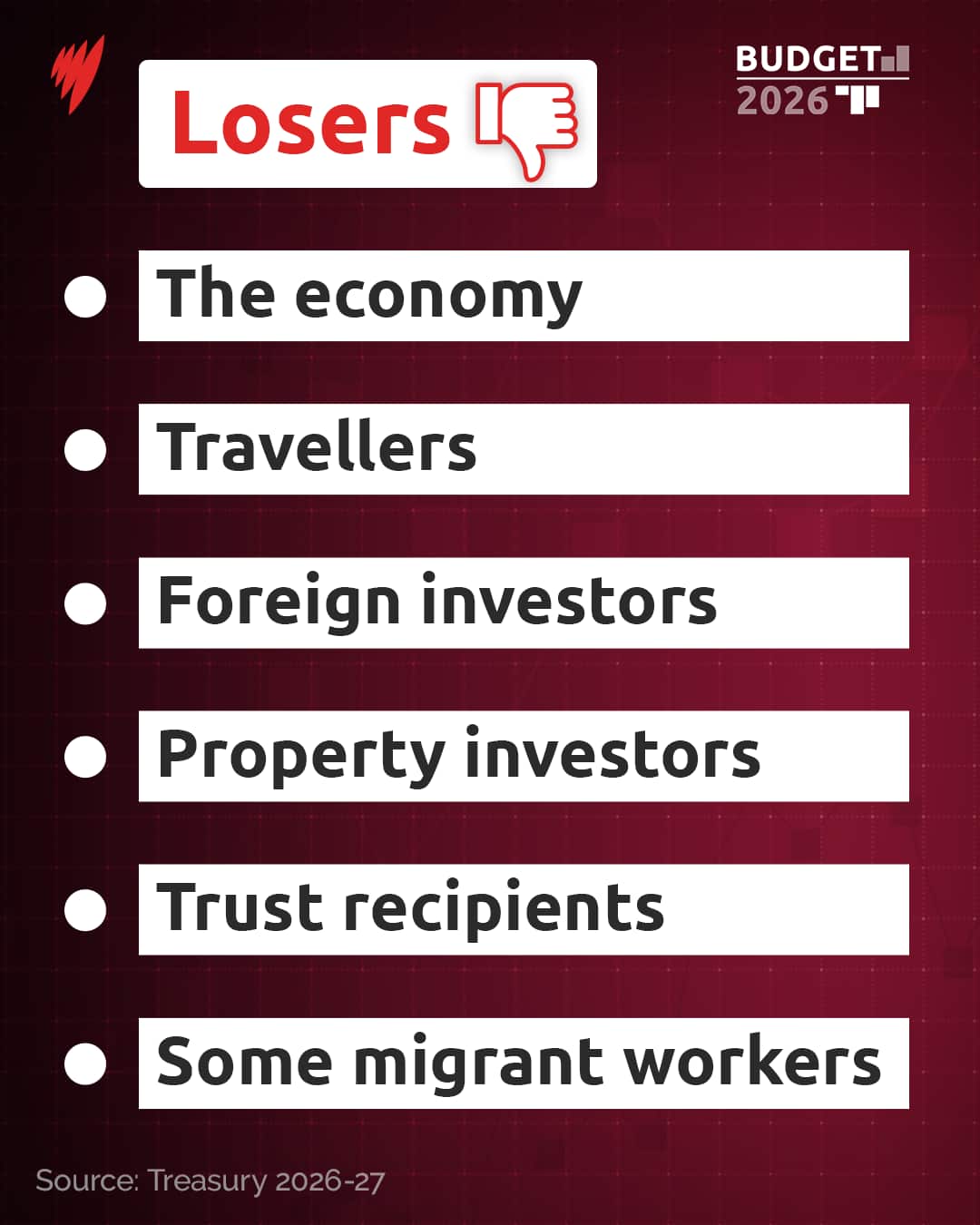
Read the full report from our political digital correspondent, Ewa Staszewska, here:
— Avneet Arora
Watch: Treasurer Jim Chalmers delivers the 2026 federal budget
Airlines warn against higher travel charges in budget
Australia's aviation industry is preparing for the possibility of higher costs in tonight's budget, amid reports the government could lift the passenger movement charge (PMC) from $70 to $80.
The PMC is a tax levied on most passengers departing Australia for another country, whether by air or sea.
If introduced, airlines are expected to pass on the added cost to travellers through higher airfares.
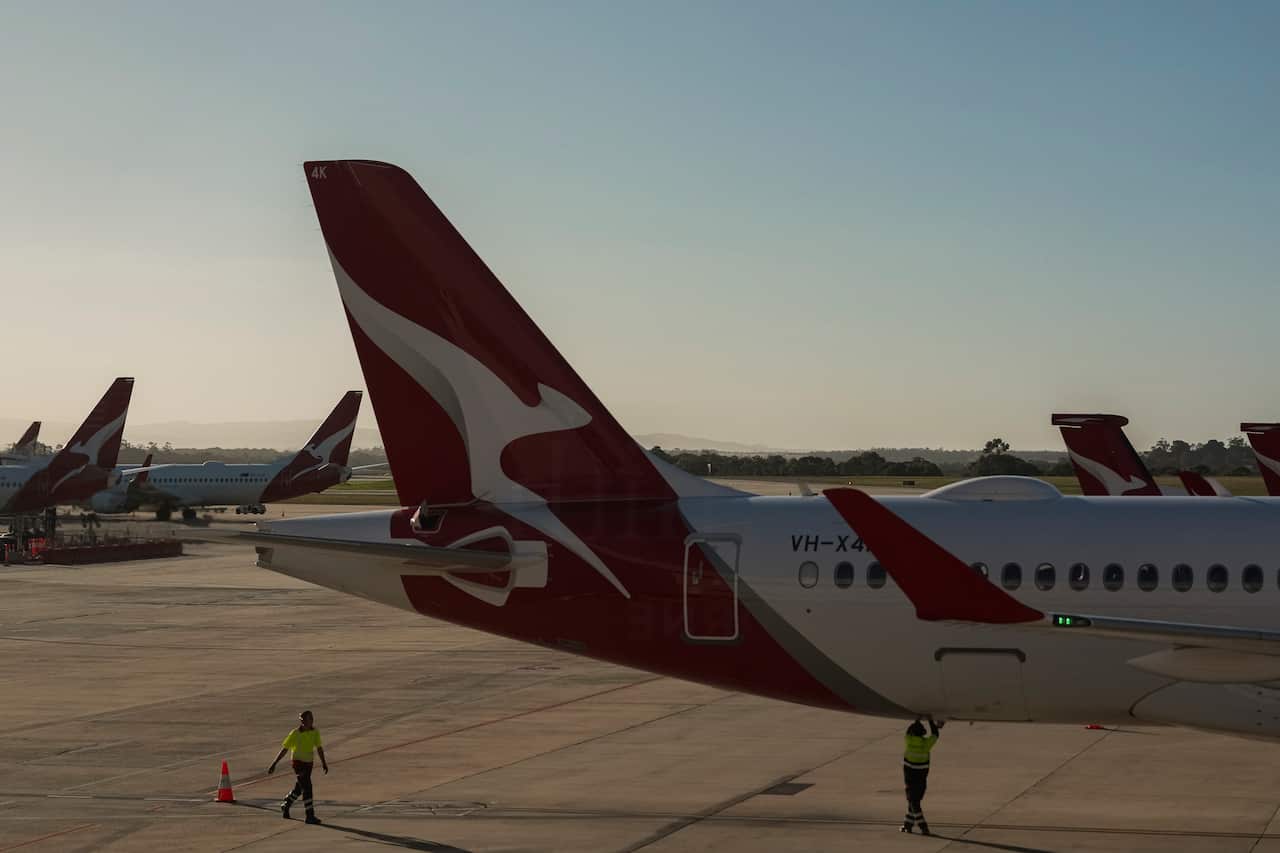
The sector is already dealing with rising operating costs, including higher fuel prices, and industry groups say additional charges would put further pressure on it.
Airlines for Australia and New Zealand CEO Stephen Beckett told the Australian Financial Review that any increase would come at a difficult time for both airlines and passengers.
"At a time when jet fuel prices are going through the roof, and there’s a range of other government fees and charges being applied to the aviation industry, now is not a good time to increase costs," Beckett said.
The budget is also expected to include support for sustainable aviation fuel as the government looks to strengthen fuel security and reduce emissions in the sector.
— Avneet Arora
What economists are saying about the 2026 budget
Federal budgets are as much political documents as they are economic ones — and this year's is no exception.
Economists and policy analysts say the government is trying to balance several competing pressures at once: easing cost of living concerns, avoiding measures that could add to inflation, and maintaining fiscal discipline ahead of the next election cycle.
Westpac senior economist Pat Bustamante says the government is operating within a relatively narrow fiscal window, where "changes in the budget bottom line will hinge on discretionary policy decisions" rather than large revenue surprises.
Higher commodity prices have provided some support to the budget position, although major spending commitments, including defence and housing, are already factored into the government's forward plans.
Anders Magnusson, chief economist at the auditing and tax organisation BDO, says the budget's focus should be on measures to support productivity and coordination between government and business, rather than pursuing broad structural reform.
"A budget that brings government and business together to lift productivity can be optimistic and responsible at the same time," he said in a statement.
The result is a budget that economists say aims to balance short-term pressures on households with longer-term economic and fiscal challenges.
— Avneet Arora
Councils to get $2 billion to unlock 65,000 homes
Local councils will receive new federal funding to help deliver roads, pipes and power infrastructure needed for housing developments, as the Albanese government seeks to lift supply amid ongoing affordability pressures.
Treasurer Jim Chalmers will detail a $2 billion fund in tonight's budget, with the government saying it will help enable around 65,000 additional homes over the next decade.
The program will support so-called "enabling infrastructure" — often a major bottleneck for new developments — and will also be accessible to state utility providers, expanding on earlier federal funding of $1 billion for similar projects.

The initiative follows pressure on the government's broader housing ambitions, including its 1.2 million homes target, and comes alongside wider tax changes aimed at addressing housing affordability.
Chalmers has said "building more homes is a big focus of this budget", as housing remains one of the central political and economic challenges in the government's fifth budget.
— Avneet Arora
Inside the migration debate ahead of the budget
Immigration is shaping up as one of the key areas to watch in this year's budget — although expectations for major changes remain fairly measured.
The government has been reviewing Australia's skilled migration system since early in its term, following a major report led by former public servant Martin Parkinson. That review found Australia's current approach was not doing enough to prioritise migrants with strong long-term economic potential.
At the centre of the discussion is the skilled migration points test — the system used to rank visa applicants. Policy experts and think tanks, including the Grattan Institute, have argued that the current model places too little emphasis on factors such as English proficiency and education.
While the details of any reforms are still unclear, the broad direction appears to be towards younger, highly educated migrants with stronger English skills.
Another area attracting attention is skills recognition. Governments and industry groups have increasingly raised concerns about qualified migrants struggling to work in their trained professions because licensing and accreditation processes can be slow and inconsistent. Faster recognition pathways, particularly in sectors facing worker shortages like healthcare and construction, could become part of the conversation.
Melbourne-based migration agent Navjot Kailey said expectations within the sector remain relatively modest for this budget.
"Apart from possible tweaks to skilled migration points, slight changes are expected in the wake of the ongoing wave that blames migration for every problem — but nothing massive."
— Avneet Arora
Budgets abroad: Quirky traditions behind the numbers
A quirky old Westminster tradition witnessed United Kingdom chancellors of the exchequer (the equivalent of the Australian treasurer) occasionally sip a small drink — usually sherry — while delivering the budget speech.
It was never an official rule, more a bit of parliamentary theatre that added some colour to a very numbers-heavy day.
These days, the practice has largely disappeared, but it remains one of those budget-day anecdotes that remind you politics used to come with slightly more liquid refreshment.
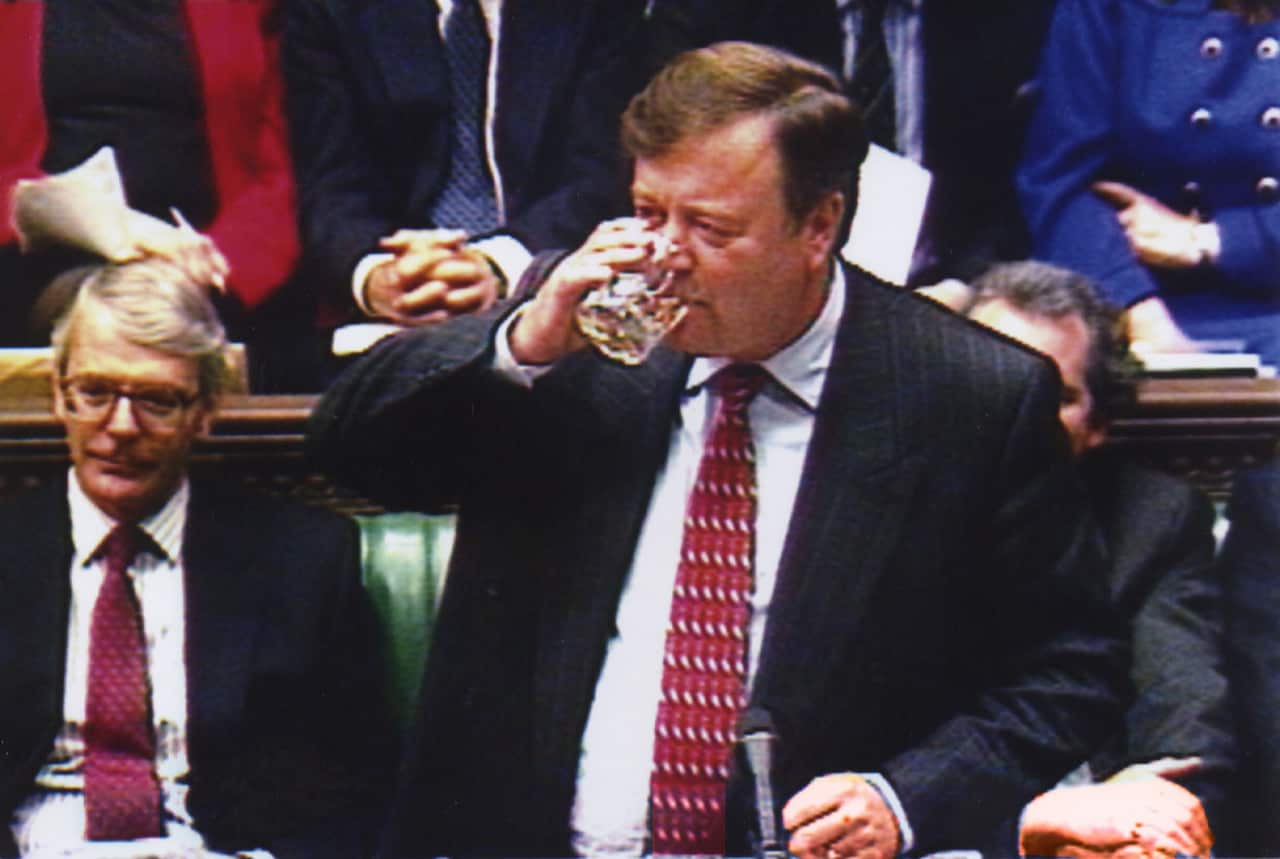
Aside from the UK's "budget tipple" lore, here are a few more quirky budget traditions from around the world.
India used to deliver its budget at 5pm — purely to suit London's timezone during colonial rule. That changed in 1999, thankfully sparing everyone a dinner-time deficit breakdown.
In the Netherlands, Budget Day — the third Tuesday in September — arrives with royal pageantry and the finance minister carrying a ceremonial wooden briefcase carrying some budget papers.
Japan's budget documents are famously enormous. They regularly total thousands of pages across multiple volumes, making them a daunting read even for seasoned economists.
Sweden takes budgeting so seriously that it pioneered "gender budgeting", checking whether spending benefits men and women equally.
And in the United States? The president proposes the budget, Congress rewrites half of it, and everyone argues about it on television for months. Tradition.
— Avneet Arora







