'Irresponsible and suspicious', Lebanon's PM says of rocket fire
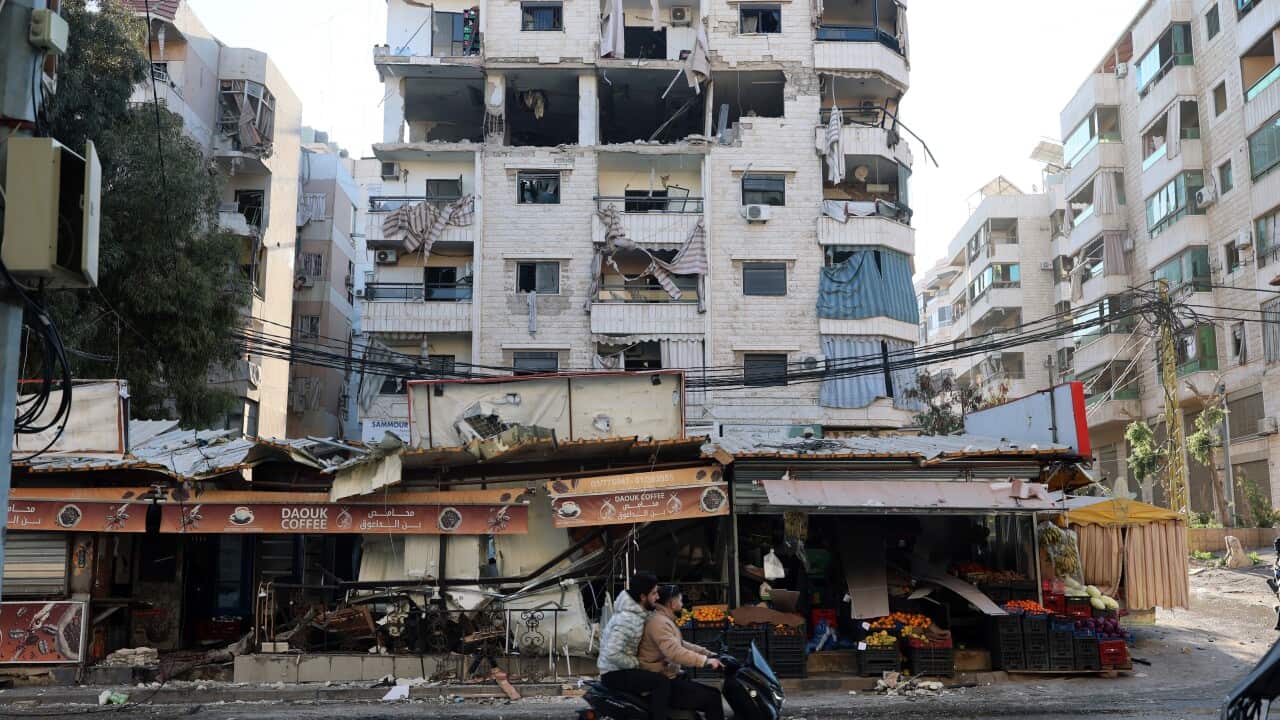
Lebanon's Prime Minister Nawaf Salam has condemned the rocket fire launched at Israel on Monday, as Israeli forces carried out retaliatory strikes across Lebanon, including its capital.
"Regardless of who is behind it, the rocket fire from southern Lebanon is an irresponsible and suspicious act that jeopardizes Lebanon's security and safety and provides Israel with pretexts to continue its aggression," Salam wrote in a post to X.
He added: "We will not allow the country to be dragged into new adventures," and vowed: "We will take all necessary measures to apprehend the perpetrators and protect the Lebanese people."
The Iran-backed paramilitant group Hezbollah earlier claimed responsibility, saying it had launched rockets and drones "in defence of Lebanon and its people and in response to the repeated Israeli aggressions".
— Gabrielle Katanasho
Israel launches strikes across Lebanon
The Israeli military said it launched a wave of strikes against Hezbollah "across Lebanon" on Monday after rocket fire claimed by the group.
Lebanese state media is reporting that the strikes are concentrated in Beirut's southern suburbs, where several loud explosions have been heard.
The IDF said the strikes were "in response to Hezbollah's projectile fire toward the State of Israel," and said forces had "begun striking targets of the Hezbollah terrorist organisation across Lebanon".
Hezbollah earlier claimed responsibility for the rocket fire, saying the operation was carried out "in defence of Lebanon and its people and in response to the repeated Israeli aggressions".
In a statement, the Iran-backed paramilitant group said "the resistance leadership has always affirmed ... the right defend ourselves and respond at the appropriate time and place," adding that "the Israeli enemy cannot continue its fifteen-month-long aggression without a warning response to halt this aggression".
— Gabrielle Katanasho
Who will be Iran's leader and what happens next?
Since the announcement that strikes had killed Iranian Supreme Leader Ayatollah Ali Khamenei, the question most repeatedly asked has been "What happens now?"
For now, Iranian state TV on Sunday announced a transition period will be led by President Masoud Pezeshkian, Judiciary chief Gholamhossein Mohseni Ejei and another official from the country's legal council.
There's also no guarantee that Khamenei's death will bring an end to the existing regime.
"It's not like a monarchy where you take out the royal family and there's not much left behind it. This is a state and a regime that's deeply, deeply embedded and deeply bound up with each other a bit," Australian National University expert George Lawson told SBS News.
"It's not as simple as getting rid of ... 30 or 40 of the top people across the Iranian state, and then it will dissolve."
Iran expert Dara Conduit from the University of Melbourne agreed.
"[The regime] has tentacles across the state," Conduit said. "I think there are still far too many people in the Iranian regime that stand to lose more with the fall of the regime than they would if there was regime change."
— David Smith, with Rashida Yosufzai and Gabrielle Katanasho
Iran's Khamenei is dead. Who leads now?
Ayatollah Ali Khamenei reigned over the Iranian regime for 36 years. Over the weekend, it all came to a sudden end.
Who exactly is in charge right now?
Mohammad Mokhber, an aide to Iran's late supreme leader Ayatollah Ali Khamenei, has told state television that Iran's president, the head of the judiciary and one of Iran's Guardian Council's jurists will take responsibility for a transitional period of government after Khamenei's death, until the next leader is chosen.
So, how will Iran choose its next Supreme Leader?
Iran has a formal constitutional process for selecting its supreme leader. A body called the Assembly of Experts — made up of Islamic jurists — is responsible for selecting the leader. Members of this assembly are elected every eight years.
Anyone who wants to run for the Assembly must first be approved by the Guardian Council, which supervises elections. Half of the Council's members are appointed by the supreme leader.
How much of that new selection process can be carried out, given the current state of warfare in Iran, is unclear.
Iran's exiled crown prince, Reza Pahlavi, who has consistently described himself as a transitional leader of a potential revolution in Iran, has also said "any attempt by the remnants of the regime to appoint a successor to Khamenei is doomed to fail from the outset".
— David Smith, with reporting from Niv Sadrolodabaee
Projectiles fired from Lebanon trigger sirens in northern Israel
Projectiles launched from Lebanon have triggered air raid sirens in northern Israel, marking the first such launch since strikes by the United States and Israel on Iran intensified regional fighting.
Israel and Lebanon agreed to a 2024 US-brokered ceasefire after over a year of cross-border clashes with the Iran-backed Shiite militant group Hezbollah.
Both sides have continued accusing each other of violating the truce.
Hezbollah has not responded to the reported launch, despite previously expressing solidarity with Iran but stopping short of confirming direct involvement.
The Israeli military has intercepted one projectile while others have landed in open areas, with no injuries or damage reported.
Hezbollah chief Naim Qassem on Sunday vowed to confront the US and Israel, saying the group would not leave "the field of honour and resistance".
— Gabrielle Katanasho
Coalition, Greens unite to force parliamentary debate on Iran strikes
In Canberra, there's been heated debate in the Senate between the Greens and Foreign Minister Penny Wong, after the crossbench party backed a Coalition move to bring on debate on the Iran strikes and the death of its supreme leader.
At the start of today's sitting, Opposition Senate leader Michaelia Cash put forward a motion to support the US and Israeli strikes on Iran, welcome the death of Supreme Leader Ayatollah Ali Khamenei, and express support for the Iranian people.
Wong, opposing the motion, condemned an "unholy alliance" between the Greens and the Coalition — drawing loud and heated interjections.
"You are a criminal party and you should be ashamed of yourself," Greens senator Penny Allman-Payne shouted across the chamber.
The Greens also reacted angrily when Wong accused them of undermining 'Closing the Gap' efforts by delaying a planned debate, noting the Greens no longer have any First Nations representation, after Labor poached Senator Dorinda Cox last year.
— Naveen Razik
Iranian foreign minister defends war position
As Iran faces widening regional tensions following US-Israeli strikes and Iranian missile and drone attacks across the Gulf, Foreign Minister Abbas Araghchi told Al Jazeera that "what happened in Oman was not our choice" while saying Iranian forces were acting under general instructions.
"This is a war imposed on us by the United States and Israel," he said on Sunday, adding, "what is going on in the region is not our fault, it is not our choice".
Araghchi said some regional partners were "not happy" or "even angry", but said they should pressure the other side rather than Iran to stop the fighting.
He said he had been in contact with regional counterparts as Iran's strikes continued to spread across Gulf states.
— Gabrielle Katanasho
Penny Wong confirms 115,000 Australians remain in Middle East
Foreign Minister Penny Wong has confirmed an estimated 115,000 Australians remain in the Middle East as airspaces remain closed.
She said the fastest way to get people home would be if commercial flights recommence.
"We are always looking at home (how) we might support Australians ... and airspace is not open.
"Whether or not it is an Australian flight or a commercial flight, the flights are not able to occur," she said.
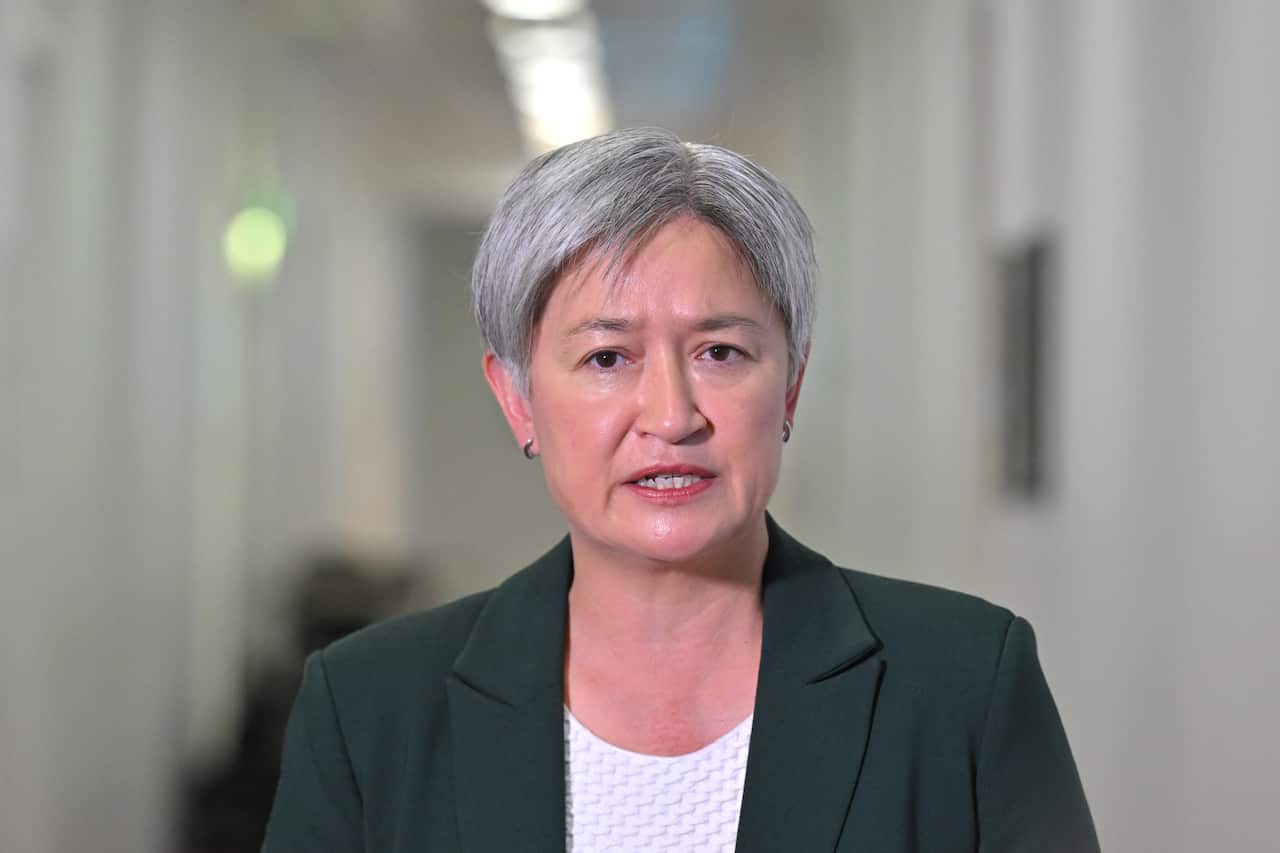
The online Foreign Affairs and Trades portal, created to provide advice to Aussies in the Middle East, has been expanded and will now provide updates for those in the United Arab Emirates and Qatar.
Flights to and from major airports across the Middle East have been cancelled since the conflict began.
Wong ducked questioning about the legality of strikes on Iran conducted by the US and Israel, insisting that the "legal basis of this is for the United States and Israel to explain".
"We are obviously not party to the intelligence that both the United States and the Israelis are referencing in their decisions. That is why it is for them to explain the legal basis of this. We do support action taken to ensure Iran does not have a nuclear weapon," she said.
Wong also noted that she is yet to speak to her US counterpart, secretary of state Marco Rubio.
"I note overnight that (US President Donald Trump) has said that the new Iranian leadership have reached out," Wong said. "We hope that that results in productive discussion."
— David Smith
Trump says war could last 'four weeks', Netanyahu vows to escalate strikes in coming days
US President Donald Trump has warned that combat operations in Iran are continuing and will carry on until all of Washington's objectives are achieved.
"Combat operations continue at this time in full force, and they will continue until all of our objectives are achieved. We have very strong objectives," Trump said, without outlining exactly what those objectives were.
In his video posted on Truth Social, Trump also alluded to the three US service members that have been killed, saying there would likely be more casualties.
"Sadly, there will likely be more before it ends," Trump said. "But America will avenge their deaths and deliver the most punishing blow to the terrorists who have waged war against, basically, civilization."
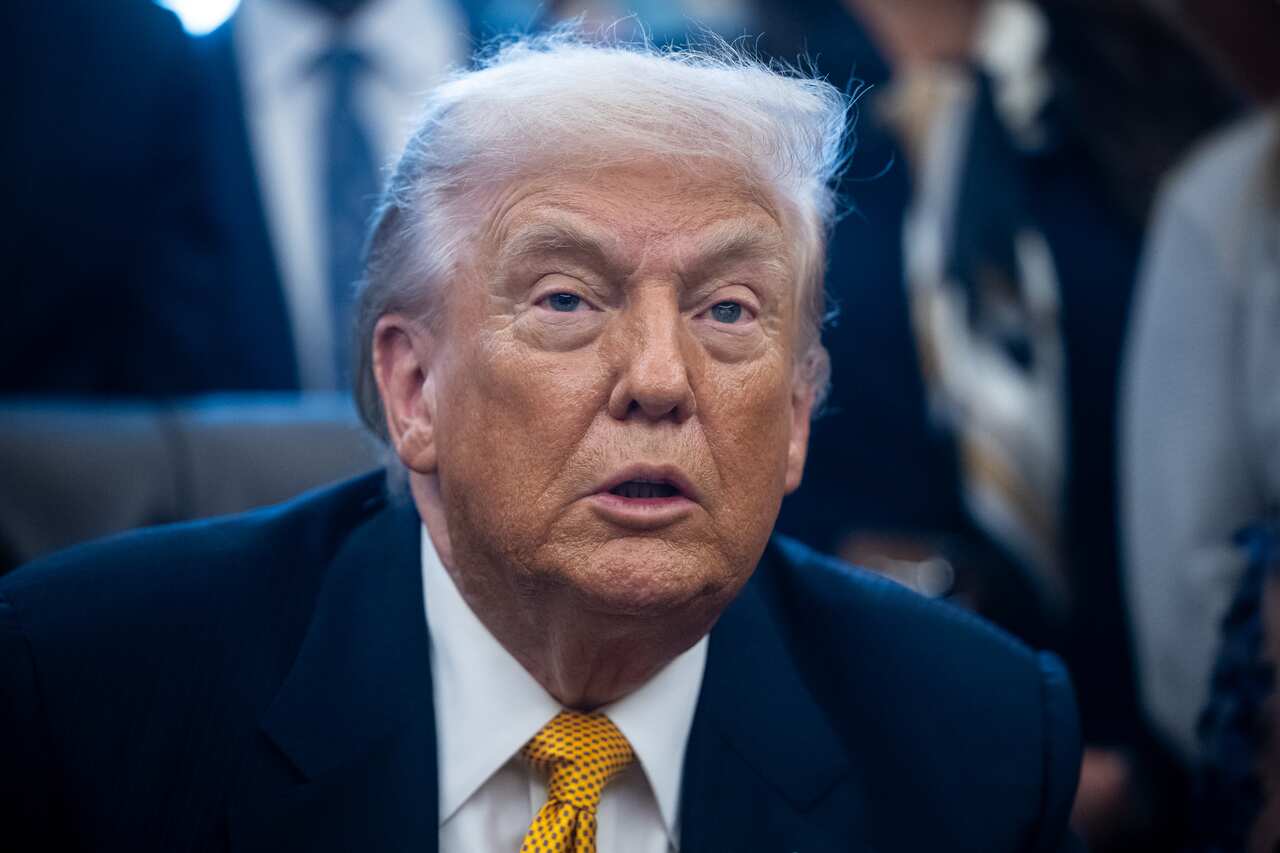
Meanwhile the Daily Mail reported Trump suggesting the war could go on for the next four weeks.
"It's always been a four-week process. We figured it will be four weeks or so. It's always been about a four-week process so — as strong as it is, it's a big country, it'll take four weeks — or less," the British newspaper quoted Trump as saying.
Netanyahu says strikes to escalate
Israeli Prime Minister Benjamin Netanyahu has vowed to intensify air strikes on Tehran in the coming days, declaring that the military has mobilised its "full strength" in the campaign against Iran.
"Our forces are now striking at the heart of Tehran with intense power, and this will only escalate in the days ahead," Netanyahu said in a video statement.
"We are engaged in a campaign in which the IDF (military) is deploying its full strength as never before, to ensure our existence and our future."
— Caroline Riches
UK says US can use its bases for missile strikes against Iran
UK Prime Minister Keir Starmer says he's agreed to let the United States use British military bases to fire "defensive" strikes at Iranian missiles and bases.
Starmer then followed that statement up with a video on his social media channels saying: "We were not involved in the initial strikes on Iran and we will not join offensive action now."
"But Iran is pursuing a scorched-earth strategy, so we are supporting the collective self-defence of our allies and our people in the region," he added.
Starmer's comments follow France, Germany and the UK issuing a joint statement earlier in the day, asserting they were ready to defend their interests and those of their allies in the Gulf if necessary by taking "defensive action" against Iran.
— David Smith, with additional reporting by Agence France-Presse.
Iranian football chief suggests country could pull out of FIFA World Cup
Football never sleeps and, amid the chaos, thoughts are being spared for how the violence will impact Iran’s upcoming 2026 FIFA World Cup performance.
Preparations will be hampered, as no matches will be played during the 40-day mourning period for Supreme Leader Ayatollah Ali Khamenei, and there are suggestions the country could drop out of the tournament completely.
Iran's football federation president Mehdi Taj gave a gloomy prospectus, telling sports portal Varzesh3 on Sunday: "What is certain is that after this attack, we cannot be expected to look forward to the World Cup with hope."
Iran have been drawn in group G in the tournament, which starts in June. They are scheduled to play New Zealand and Belgium in Los Angeles and Egypt in Seattle.
World football governing body FIFA says it's monitoring the situation.
— Jack Revell and Australian Associated Press
What we know about the first US troops killed in Middle East conflict
The US says three US troops have been killed and five seriously hurt in the latest fighting with Iran — marking America’s first casualties in the conflict.
US Central Command, which oversees the Middle East, reported the deaths on X but did not say when and where they occurred.
The Pentagon also isn’t saying when or where these deaths happened, only that the situation’s "fluid".
The statement said "several others sustained minor shrapnel injuries and concussions" and were going to return to duty.
Iran's claiming it hit the aircraft carrier USS Abraham Lincoln with missiles, but US officials have flat out denied this, saying the attacks didn’t even come close.
President Donald Trump also hasn't addressed the deaths directly, but over the weekend warned American troops could be killed or injured in the operation, saying "that often happens in war. But we're doing this not for now. We're doing this for the future".
Before the conflict erupted, Trump built up the largest US military presence in the Middle East in decades, boosting warships and aircraft carriers in the region — including the world's largest aircraft carrier, the USS Gerald R Ford.
— Caroline Riches and Australian Associated Press
Hundreds of ships drop anchor, Trump threatens to sink Iran's navy fleet
Reuters is reporting three tankers have been damaged off the Gulf coast, and one seafarer has been killed as Iran retaliates against US and Israeli strikes.
The tankers belonged to the Marshall Islands and Palau, while the nationality of the third tanker is unknown.
It's not immediately clear who launched the projectiles and drones that targeted or damaged the ships.
More than 200 vessels have dropped anchor in the Strait of Hormuz — located between Oman and the UAE on one side, and Iran on the other — over the last 24 hours as the risk to commercial shipping surges.
Iran has closed navigation through the critical waterway, prompting major shipping lines to re-route vessels around the Cape of Good Hope.
Shipping membership organisation BIMCO warns "ships with business connections to US or Israeli interests are more likely to be targeted, but other ships may also be targeted deliberately or in error".
Meanwhile US President Donald Trump has said the United States has already destroyed nine Iranian navy ships, pummelled Iran's naval headquarters and is "going after the rest" of Iran's warships.
— David Smith, with reporting from Reuters
World leaders react to Iranian supreme leader Ayatollah Ali Khamenei's death
Ayatollah Ali Khamenei was supreme leader of Iran from 1989 until his death on Saturday in US and Israeli strikes.
While some like Russian president Vladimir Putin have been strident in their condemnation of the strikes, others have expressed hope that Khamenei's death will give the Iranian people a chance to reshape their country.
Here are some pretty powerful quotes from world leaders on Khamenei's death and what may come next:
Iranian President Masoud Pezeshkian: "The martyrdom of the Supreme Leader at the hands of Israel and the criminal America was a great disaster for our country... America and Israel should know that it will bring them nothing but embarrassment."
Russian president Vladimir Putin:
"Please accept my deep condolences in connection with the murder of the Supreme Leader of the Islamic Republic of Iran, Seyed Ali Khamenei, and members of his family, committed in cynical violation of all norms of human morality and international law."
Pope Leo XIV:
"I address a heartfelt appeal to the parties involved to assume the moral responsibility to stop the spiral of violence before it becomes an irreparable abyss. Stability and peace are not built through mutual threats or through weapons ... but only through reasonable, genuine, and responsible dialogue."
European Commissioner Ursula Von Der Leyen:
"With Khamenei gone, there is renewed hope for the people of Iran. We must ensure that the future is theirs to claim and shape. At the same time, this moment carries a real risk of instability that could push the region into a spiral of violence."
French government spokeperson Maud Bregeon:
"He was responsible for the deaths of thousands of civilians in his country and in the region, so one can only welcome his disappearance. It is now up to the Iranian people to choose their own destiny."
Indonesia's Ulema Muslim Clerical Council:
"The United States, which is playing a central role in managing the Palestinian conflict through the BoP (Board of Peace), faces a major question: is this strategy truly aimed at a just peace, or is it actually strengthening an unequal security architecture and burying Palestinian independence?"
— David Smith and Australian Associated Press
Global air travel in chaos
We're witnessing the sharpest aviation shocks in recent years.
Global air travel remains heavily disrupted with the war in Iran keeping major Middle Eastern airports including Dubai, Abu Dhabi and Doha shut or with severely restricted services as much of the region's airspace remains closed.
Thousands of flights have been affected across the Middle East, with airspace over Iran, Iraq, Kuwait, Israel, Bahrain, the UAE and Qatar remaining virtually empty, maps by Flightradar24 show.
The region and its airlines have become used to travel disruption over the past few years, but such a prolonged closure of the skies — more than 24 hours — and the shutdown of all three major Gulf transit hubs is unprecedented, analysts say.
The ripple effects have been felt far beyond the Middle East, with tens of thousands of passengers stranded around the world as airlines cancel or reroute flights.
Dubai International Airport sustained damage during Iran's attacks while airports in Abu Dhabi and Kuwait have also been hit.
The Gulf is also a major intersection for air cargo, putting further pressure on trade lanes on top of disruption at sea.
— Sydney Lang and Australian Associated Press
Good morning and welcome to our live coverage of events unfolding in the Middle East
Australians are waking up to some major developments that have happened overnight in the fast-moving conflict between the US, Israeli and Iranian forces in the Middle East.
As the crisis unfolds, the death toll is rapidly rising. The US has announced the first casualties on the American side, though at this point we don't know how or where these casualties occurred. An Iranian missile attack in central Israel has left at least nine people dead, while strikes on Iran's capital Tehran have reportedly targeted a hospital. Others have died in pro-Iranian protests.
Here are the top lines:
- Three US service members have been killed and five seriously wounded in fighting against Iran — the first American casualties of the war.
- After the killing of Iran's supreme leader Ayatollah Ali Khamenei on Saturday, the US and Israel are continuing heavy bombardments, with Iran striking back at US bases in Bahrain and the United Arab Emirates.
- Iranian news agency ISNA has reported that Gandhi hospital in northern Tehran has been targeted by strikes — we're unsure of the damage at this stage.
- An Iranian missile attack on the central Israeli city of Beit Shemesh has killed at least nine people and left 11 missing, police said, in the deadliest strike in the country since the war began.
- At least 17 people have been killed across Pakistan as pro-Iranian protesters, angered by the death of Iran’s supreme leader, took to the streets.
- US President Donald Trump has made no mention of US losses but highlighted the sinking of nine Iranian naval ships. He told Fox News that 48 Iranian leaders had been killed "in one shot". In another interview with CNBC, he said "things are evolving in a very positive way right now".
- The conflict has sent global air travel into chaos that analysts are calling unprecedented.
- The Middle East conflict is expected to send oil prices soaring when markets open today, with fears a prolonged conflict could hit the global economy.
We'll be bringing you updates throughout the day.
— Caroline Riches







