

Australian summers are undergoing what scientists call a "total transformation," with a new study from World Weather Attribution revealing the country can now expect heatwaves every five years on average. The study's researchers say climate change made Australia's blistering heatwave in early January five times more likely, and there's an urgent need for the country to adapt to changed conditions. The warning comes as the country's south-eastern states prepare for what's forecast to be a prolonged, severe heatwave starting this weekend.
Listen to Australian and world news and follow trending topics with SBS News Podcasts.
TRANSCRIPT
Australian summers are undergoing what scientists call a "total transformation," as heatwaves become increasingly prevalent and extreme.
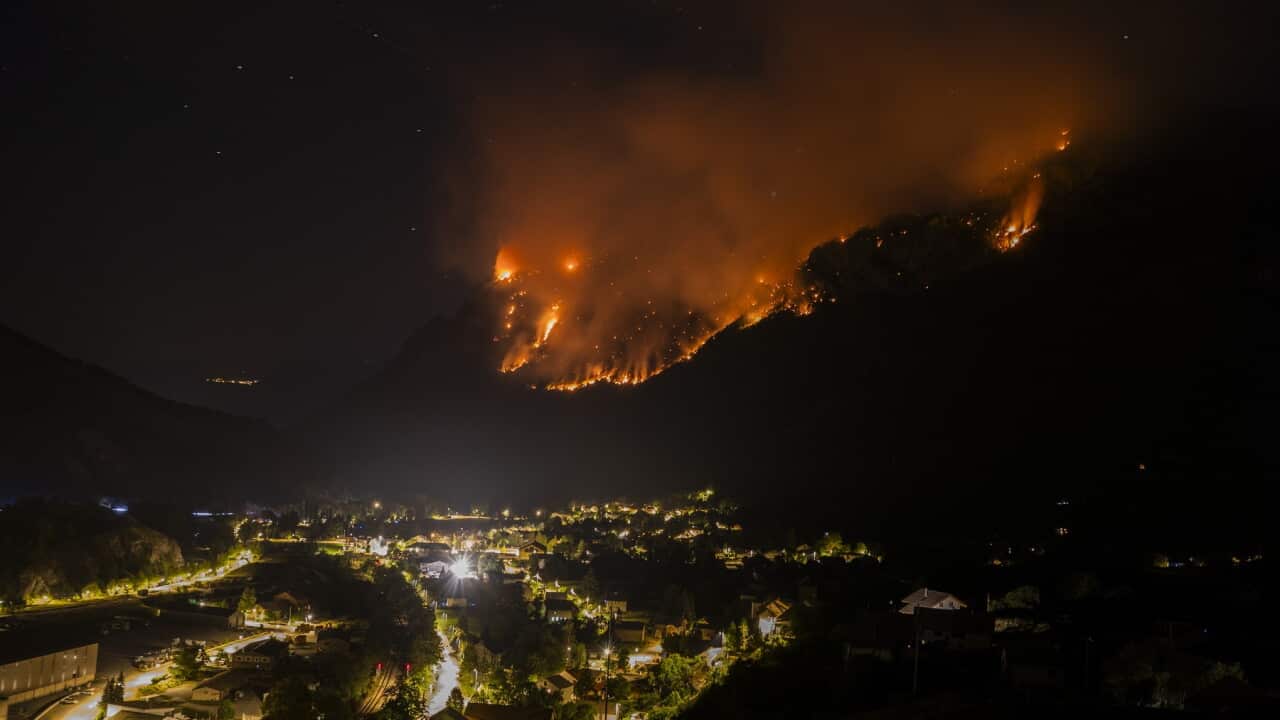
Australia's southern states sweltered during early January through the worst heatwave conditions since the summer of 2019-2020, a period scarred by devastating bushfires.
The authors of a new study from World Weather Attribution say climate change made this recent blistering heatwave five times more likely.
Climate scientist at Australian National University and one of the report's authors, Professor Sarah Perkins-Kirkpatrick, says the recent heatwave is particularly concerning given its occurrence during La Niña, which typically signals cooler temperatures.
“During La Niña summers, we do expect to see less heat waves and virtually none that are on that extreme end of heat waves. This particular heat wave was classified as an extreme heat wave in some regions of Australia, so it is exceedingly rare to have see an event like this during a La Niña summer.”
The study reveals heat waves with peak temperatures in their 40s can now be expected in Australia every five years on average, rather than the four times a century which was standard before human-induced global warming.
After a further 1.3°C of global warming – which is the level projected to be reached by the end of the century under current policies – the likelihood and intensity of such events are projected to continue to increase, becoming a further 3 times as likely.
Researchers say the findings underline the urgent need for Australia to cut emissions and adapt its policies to these increasingly extreme conditions.
Professor Perkins-Kirkpatrick says there also needs to be a shift in public perception.
“I think we need to go a long way in changing the public perception toward extreme heat if we are serious about mitigating and protecting ourselves form them. It’s not to say it's not possible, there are many ways we can do this, but we do need to shift our attitudes to take them more seriously.”
The report's warnings come as Australia's south-eastern states are preparing for what's forecast to be a prolonged, severe heatwave starting this weekend.
The Bureau of Meteorology warns maximums well into the 40s could be recorded for consecutive days next week in some inland regions, including peak temperatures as high as 48 degrees Celsius in parts of Victoria mid-next week.
Major cities are also expected to be hit with sweltering temperatures, with Adelaide, Melbourne and Canberra forecast to reach 40 degrees celsius or above on multiple days.
Spokesperson for Victoria State Control Centre David Nugent says the heatwave has the potential to fuel another round of bushfires, and worsen those currently burning.
“Three of our major fires that are still going a number of other fires that we have been able to contain over the last last few days, but as these conditions get hot and we have a. Extreme fire danger ratings in some district tomorrow and that will occur again. Next week is that we are particularly focused on on the effort. It's to make sure our fires don't spread significantly of those conditions.”
The heat is expected build over South Australia, New South Wales and particularly north-western parts of Victoria into early next week.
A top of 43 degrees celsius is forecast for Adelaide on Monday, while temperatures are expected to peak in New South Wales on Wednesday.
Mr Nugent urges people to stay informed, and prepare ahead of time for the extreme conditions.
“A really important message for our community is to understand that we will be heading into heat wave conditions, and that people will need to make sure that they look after themselves and looking after family neighbours, people staying as cool as they can, making sure that they're hydrated, and just checking in on all those people around them as well.”
The authors of the World Weather Attribution report call heat Australia's "silent killer," with heatwaves causing more deaths than floods, bushfires, cyclones and storms combined.
Director of the Heat and Health research centre at the University of Sydney, Professor Ollie Jay says heat can contribute to a number of dangerous health outcomes.
“People get hospitalised for a variety of different reasons. Heat exhaustion, but often cardiovascular complication, people with heart disease and having heat related complications due to that, and also people with kidney disorders, people with respiratory disorders so lung disease also struggle in the heat.”
Professor Jay says risk factors are also shown to be compounded by economic challenges.
“What we know is that a lot of the people who have the primary physiological biological risk factors, particularly when they combine, so elderly with different types of chronic diseases, often those conditions are more prevalent in people who are living on a lower income and often they don't have access to air-conditioning or indeed they might own an air-conditioner but are concerned about how expensive the bill is going to be at the end of the month, so they choose not to use it and those are the people that are particularly at risk.”
He says as we head into this next heatwave, for those who don't have access to air conditioning, an electric fan can be an effective cheaper option up to around 40 degrees Celsius.
But for temperatures above 40 degrees, he says the advice for cheaper cooling changes.
“Fans flip from being beneficial to detrimental, so they accelerate body heating, they amplify the level of physiological heat strain that people experience so we advise that when the air temperature is above 40°C that people shouldn't use fans. So applying water to the skin surfaces is an exceptionally effective way of limiting the physiological strain that people experience when they're exposed to the heat, and this works really well even above 40°C.”