
Australia's immigration detention regime is under United Nations scrutiny this week. The UN Working Group on Arbitrary Detention is examining how the country deprives people of their liberty — from prisons to offshore detention facilities. And for people like Muhammad, who spent six years in detention, this review is one that's long overdue.
Listen to Australian and world news, and follow trending topics with SBS News Podcasts.
TRANSCRIPT
In his first six years in Australia, Muhammad didn't live a single day in freedom.
He was detained on arrival, when his boat from Pakistan touched Australian shores more than a decade ago.
"During the six years of immigration and border force ... they transfer me mostly everywhere in Australia, like from Darwin to Perth, Western Australia, then to Christmas Island, then to Melbourne, Victoria. So, in this journey you never know ... where you will be. So, this was the most frustration things you don't know when they're going to take you to somewhere."
Muhammad's name has been changed, and his voice distorted, to protect his identity.
He says he lived out the most traumatic years of his life in immigration detention.
"The worst part was they're sending us to Christmas Island and they were treated everyone with high risk criminal ... So, this process will be very humiliate. Every single person especially they've never been to prison like myself, I never been have any issue with police or with law enforcement ... When they send us to Christmas Island I think was very, very worse in my life experience because I don't know what to do."
On Christmas Island, he says he was denied the chance to study — and recalls being forced to eat food expired by up to seven months.
"Honestly, back home sometime when I watching Australian news ... I was thinking if you guys have so much value our animal then we are human being. But came to Australia, I realise Australian dog is better than a human being, if you are not Australian. To be honest, this is the true things. I wish I was a dog in Australia so I can have at least respect."
This week, Australia's immigration detention regime is under United Nations scrutiny.
The UN Working Group on Arbitrary Detention has begun a 12-day mission to assess Australia's detention practices — in prisons, police stations, and institutions for juveniles, migrants and people with psychosocial disabilities.
It has sparked renewed calls from a national coalition of legal, academic and advocacy organisations for Australia to totally overhaul immigration detention.
This is Sarah Dale, who is the Centre Director and Principal Solicitor at the Refugee Advice & Casework Service — one of the contributors to the joint submission.
"Australia is one of the very few countries, if the only country in the world, that mandates detention on arrival for unlawful non-citizens. So, that principle of mandatory detention is one that we have long stood against. We are also deeply concerned by the securitisation of immigration detention… and they are two key things that constantly sit as a concern for RACS."
She says people detained under this model describe consistent experiences, regardless of where they are held.
"There's been a common thread no matter where a person has been detained or under what system, their detention was mandated that they have had the collective experience of being denied access to supports of feeling like they had not been treated fairly or treated respectfully in the detention centres."
The Working Group's mandate is to investigate whether people are being deprived of their liberty arbitrarily, or in ways inconsistent with international human rights standards.
Madeline Gleeson from the Andrew & Renata Kaldor Centre for International Refugee Law, another contributor , says the concerns begin at the very first step: the decision to detain.
"Crucially, these decisions are not made by courts or judges or independent authorities who are trained in making these sorts of decisions. These decisions are made by government officials. And so one of the main concerns raised in the submission is that we need a better system, a fairer system, and a more independent system, which allows us to have more confidence that people are not being detained in the first place except where it is lawful to do so."
International law allows deprivation of liberty only as a last resort — after all viable alternatives have been considered, and only when detention is reasonable, necessary and proportionate to a legitimate purpose.
Yet in Australia, detention is automatic for all unlawful non-citizens.
Gleeson says that while Australia has signed major treaties, including the International Covenant on Civil and Political Rights, its obligations are not upheld in the immigration context.
"Detention shouldn't interfere with the right of all people to be treated with humanity and dignity. It shouldn't interfere with children's rights or tear apart families. It shouldn't interfere with the universal right to seek and enjoy asylum. And again, that whole other body of rights protecting people entitled to special protection. So women, children, and people with disabilities. So these are global standards that have been developed in large part with Australia's involvement. And in other contexts, Australia does enforce them to a certain extent, but we've sort of got a blind spot when it comes to immigration detention."
The Working Group's visit comes amid the ongoing fallout from the High Court's NZYQ decision.
In 2023, the Court ruled that indefinite immigration detention is unlawful when there is no real prospect of removing a person from Australia in the reasonably foreseeable future.
That judgement led to the release of around 140 people — including NZYQ, a stateless Rohingya man, who had been detained for more than five years.
But it also prompted new legislation tightening visa conditions and enabling preventative detention orders in limited cases.
Director and Principal of the charitable law firm Human Rights for All — Alison Battisson — addressed the Working Group in Geneva last year.
She says many people remain in detention who should already have been released.
"People who have committed no crime in relation to their visa or immigration status are warehoused in what effectively are prisons for an unknown period of time. And even with the high court ruling in NZYQ, there are still people in Australia's immigration prisons who have been there for years. When someone enters those places, they have no idea about when they may leave. There's a lot of bureaucracy around when decisions for visas, ministerial interventions, et cetera, are made and those decisions can take years."
She says internal detention reviews do not reliably identify people protected by the NZYQ ruling.
"What occurs at the moment is that on a monthly basis, a case manager looks at a person's file like a desktop review, doesn't actually read any documents, and then determines with a very basic checklist whether a person's detention is lawful or not. Now that determination does not capture the nuances in the law. So, I am still monthly finding people in Australia's immigration prisons who are impacted by the NZYQ decision ... just because there is no proper system that the department is set up to identify such people."
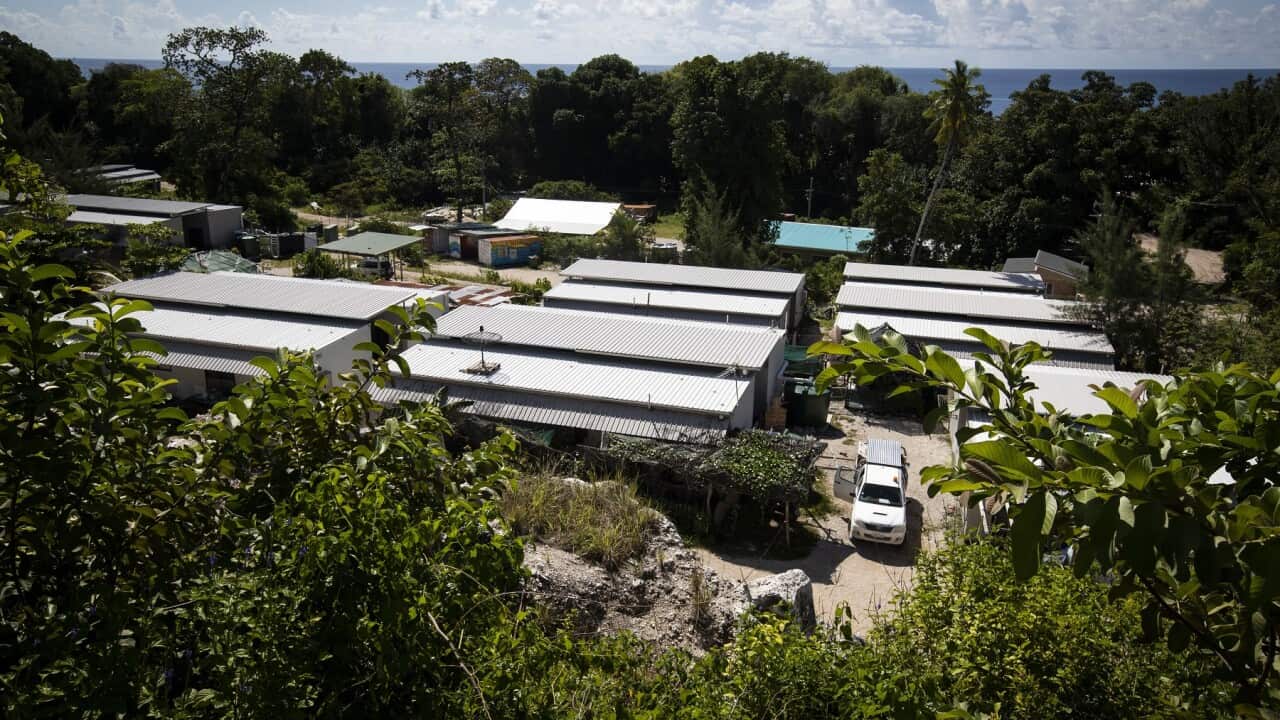
As part of Australia's offshore arrangements, almost 100 people remain on Nauru and 37 in Papua New Guinea as of mid-2025.
Recent offshore deportation arrangements have permanently exiled several refugees from Australia to Nauru.
The national coalition recommends ending mandatory detention and introducing procedural safeguards to ensure detention is lawful and subject to effective, periodic and independent review.
Madeline Gleeson says the mechanisms for reform already exist — they simply need legislative authority.
"They just need the law that gives them the ability to make those decisions. And once we've done that, we also have bodies such as the Commonwealth Ombudsman and the Australian Human Rights Commission, which have long histories of overseeing immigration detention. And if properly resourced and given the powers to do so, can play an important role in ensuring that detention is not arbitrary or unlawful. So we're not starting from the beginning here. We already have a lot of the building blocks in place."
Muhammad is now preparing to become an Australian citizen.
But despite his relief, he says Australia's human rights record will forever be stained by what he and many others have experienced.
"I seen I've, I haven't seen myself 10, 12, 13 years people stay in Australian immigration detention. And then in the other hand there is Australian people, they did armed robbery, assault people and even second degree killed and they released from 5, 7, 8 years. So, it's very like it's really break my heart and somehow I feel like we still don't have that justice."