
As Ukraine enters its fifth year of war, another round of talks aimed at ending the war in Ukraine could be held at the end of this week. Ukraine, Russia and the United States have held several rounds of talks in Abu Dhabi and Geneva; as Washington seeks an end to four years of war since Moscow's 2022 full-scale invasion. But how close is a real peace deal?
Listen to Australian and world news and follow trending topics with SBS News Podcasts.
TRANSCRIPT
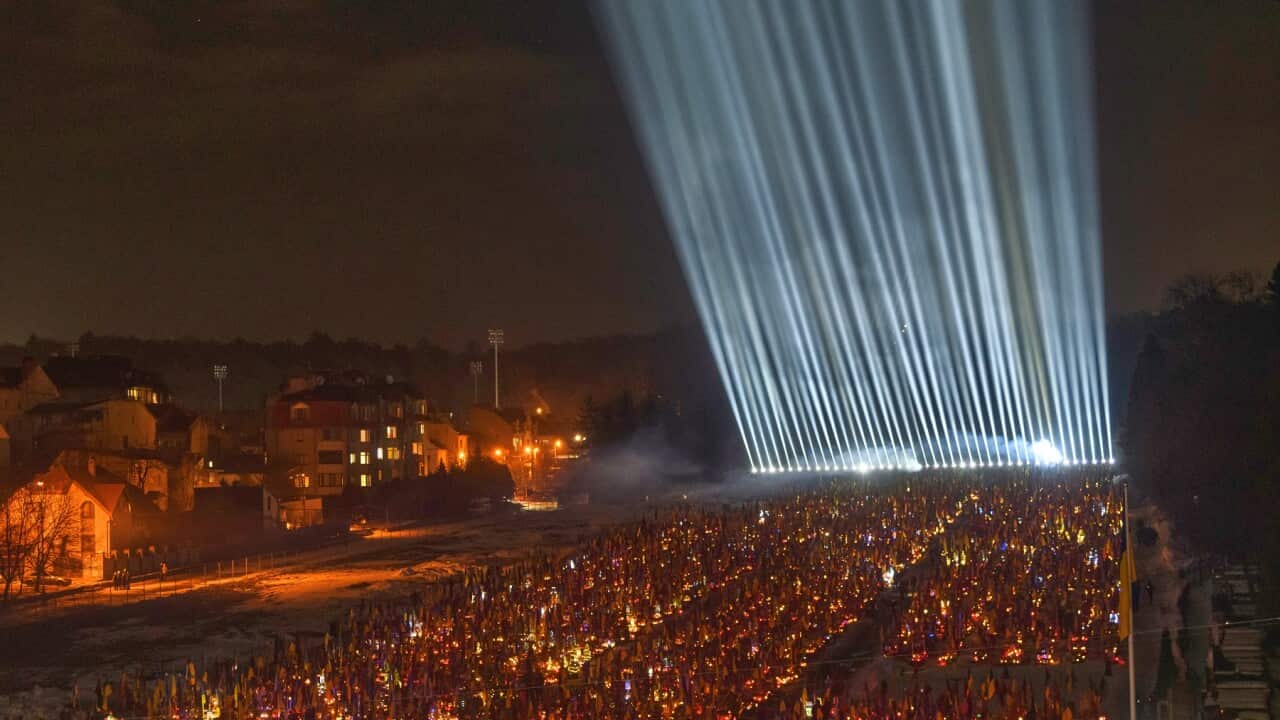
This week marks the fourth anniversary of Russia's full-scale invasion of Ukraine, which triggered Europe's deadliest conflict since World War Two.
Russian President Vladimir Putin claimed it was an operation to 'demilitarise and de-Nazify' Ukraine.
"Ratified by the Russian parliament on February 22, I decided to conduct a special military operation. It aims to protect people who have been bullied and subjected to genocide by the Kyiv regime for eight years. For that, we will strive to de-militarisation and de-Nazification of Ukraine; and will bring to justice those who committed multiple bloody crimes against civilians including Russian citizens.”
Russian forces have killed tens of thousands of Ukrainian civilians and destroyed Ukrainian cities.
Hundreds of thousands of soldiers on both sides have died or been wounded.
In the war's first year, Ukraine forced back the Russian offensive at the gates of Kyiv and reclaimed swathes of occupied land.
But since then Moscow has made slow but relentless gains in costly battles along a 1,200 kilometre front.
At the end of last year, after a round of talks, US President Donald Trump announced peace was within their grasp:
“We could be very close. There are one or two very thorny issues, very tough issues, but I think we're doing very well. We've made a lot of progress today, but really, we've made it over the last month. This is not a one-day process deal. This is very complicated stuff.”
Complicated indeed.
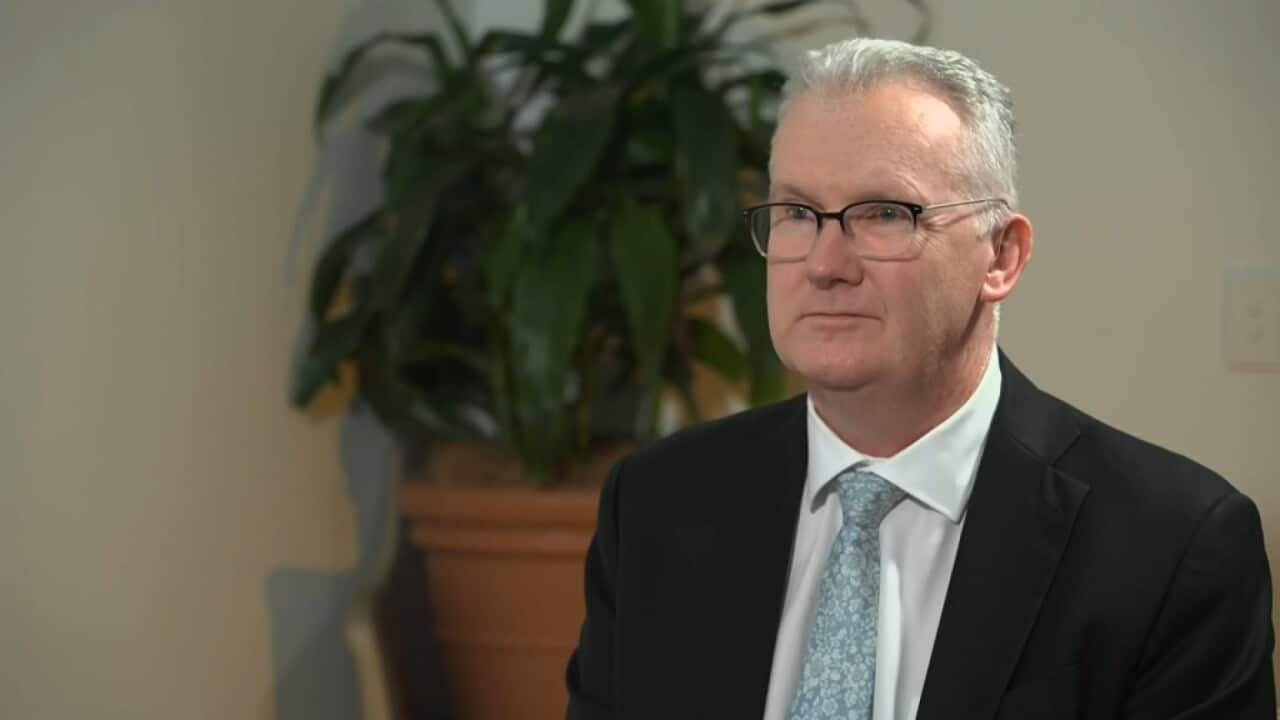
Political analyst and visiting lecturer in War Studies at King's College London, Dr Samir Puri says it's hard to see when peace might be achieved.
“So, if you were to predict when this peace process might come to... reach its goal of ending the conflict. Well, I guess the question is 'how long is a piece of string?' I think the history of negotiations that take place during hostilities - there's quite a lot of examples in recent and ancient history. It just shows that these things are quite meandering. And it could be any length of time, but if you were to predict, you would say that there are at least two and a half more years, nearly three years of Donald Trump in the White House. That means Vladimir Putin has got a sympathetic ear in the White House because Trump has always been quite open to listening to the Russian perspective for that duration of time. One would then sensibly conclude that if Putin wants an off-ramp, he can probably take it in the next couple of years at any stage. Because Trump, of course, says he has a commitment to ending the bloodshed, also wants his credentials for his Nobel Peace Prize. He’s been very vocal about that claim. And ending Russia's invasion of Ukraine would be the centrepiece of his claim for a European-granted prize, having ended this biggest war in Europe since World War Two.”
The peace proposal under discussion includes 20 points.
These include that Ukraine’s sovereignty will be reaffirmed; a full and unquestionable non-aggression agreement between Russia and Ukraine; and that the United States, NATO, and European countries will provide Ukraine with security guarantees.
However, the two sides cannot agree on the future of the Donetsk region, one of two regions which comprise Donbas.
Russian forces already control nearly all of Luhansk, the other Donbas region.
Putin wants Ukraine to withdraw from the roughly 5,000 square kilometres of Donetsk, which Russian forces have so far not managed to take on the battlefield in the face of fierce Ukrainian resistance.
President Zelenskyy has said he sees no reason to gift Mr Putin the land.
Dr Puri says these are not small issues, whatever President Trump says:
“In terms of the distance between the negotiating positions of the two sides, the Americans - if you were to believe them at face value in terms of what they're putting out as commentary - is that the gap is narrowing. It's narrowing to a few difficult to resolve issues, some of which we can well assume would relate to the territorial status of the Donbas region. But I think the reality is that if you were to ask the two sides, the answer might be very different. In particular, Volodymyr Zelenskyy, Ukraine's president, has put out a number of tweets that have indicated that there is still a lot of daylight between the two sides, between his negotiating team and the Russian negotiating team.”
President Zelenskyy says surrendering full control of Donetsk would give Russia a platform to launch assaults deeper into Ukraine.
He fears Russia would re-arm after any peace deal and at some point use Donetsk to sweep westwards.
"Ukraine is interested in achieving results. As of today, we cannot say that the result is sufficient. The military discussed certain issues seriously and substantively. Sensitive political matters, possible compromises, and the necessary meeting of leaders have not yet been sufficiently worked out.”
Dr Puri says Europe is standing up for Ukraine when the U-S has been less supportive.
“One of the biggest mistakes in assessing the European role is just to say, well, they've been sidelined because Trump is this big beast of a president who rules the roost. But actually, what's happened is the Europeans have emerged as the principal guarantors of longevity of support to Ukraine. By that, people like Keir Starmer, (Friedrich) Merz, and (Emmanuel) Macron have stood shoulder to shoulder with Zelenskyy, promising their contribution to security guarantees. But also making sure—almost advocating for their client in court, if you like, to use that analogy—in the eyes of the American administration that Ukraine's needs can't be just ignored. And I think that's a really important point. The Europeans are quite directly representing Zelenskyy and Ukraine's needs to have security guarantees and amplifying that need so that otherwise, if it was just Zelenskyy's voice, I don't think it would be heard in the White House.”
He says with so many moving parts in play, and concessions that neither side is willing to give, peace remains a way off.
“It's extremely difficult to imagine finding a formula that would allow the Ukrainians and the Russians to walk away from these talks both saying that they’ve won to their own domestic populations.”