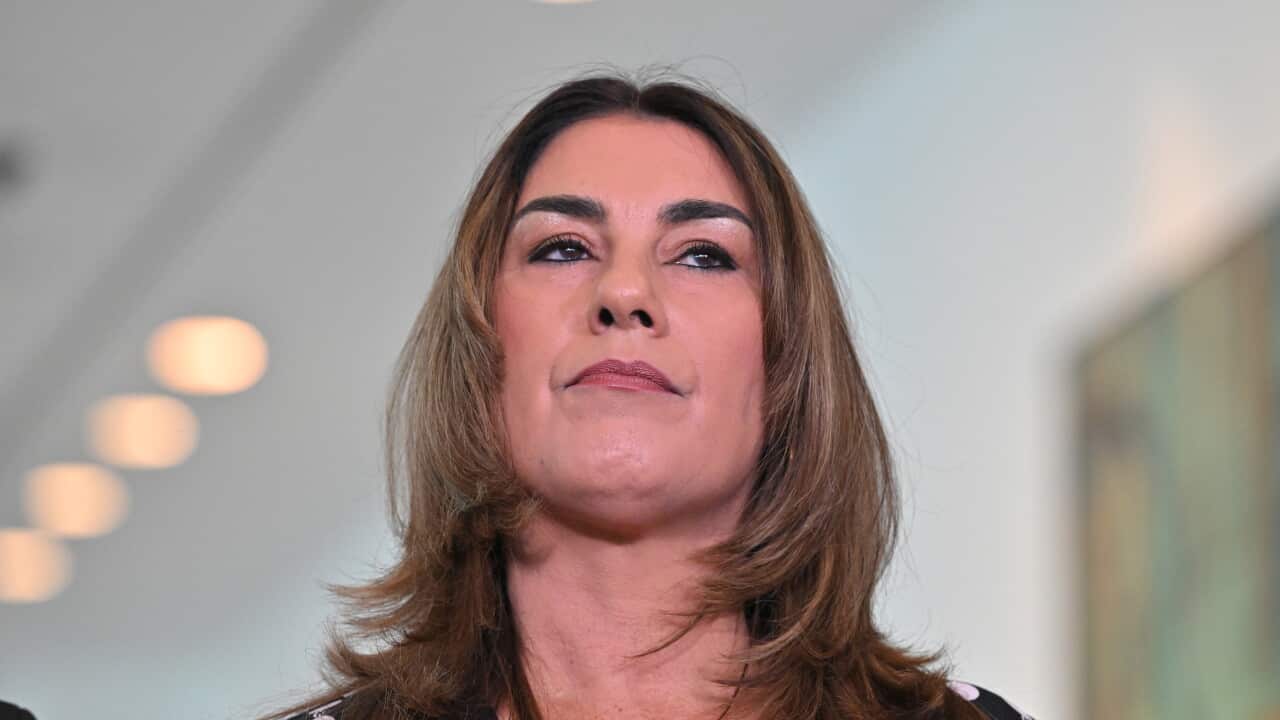
Gunnai, Gunditjmara and Djab Wurrung Senator Lidia Thorpe says there must be a "clear prohibition" on shackling incarcerated people during labour and childbirth, without exception.
Senator Thorpe introduced a bill to federal parliament aimed at banning the practice in August. It remains before the Senate.
The Crimes Amendment (Prohibiting Shackling During Childbirth) Bill 2026 would prohibit the use of physical, mechanical, chemical and environmental restraints during labour, childbirth, and immediately before and after birth.
Senator Thorpe said people in custody can currently be cuffed to a hospital bed or have their legs shackled together while in labour, and that there was no evidence the practice made anyone safer.
"There is no evidence that shackling someone during childbirth prevents escape or reduces risk," she said. "There are no reports of an unrestrained person attempting to escape during childbirth, because people giving birth are not trying to run away."
She said restraints could put both parent and baby at risk by restricting movement and delaying emergency care.
"People in labour need to be able to move and change position," she said. "Restraints can interfere with medical care and delay emergency procedures. If an emergency caesarean is required, even a short delay can have devastating consequences for a baby."
Debbie Kilroy, spokesperson for the National Network of Incarcerated and Formerly Incarcerated Women and Girls, has urged federal parliamentarians to pass the bill, saying shackling someone during childbirth is not about safety.
"It is state violence inflicted at the moment a person is most physically vulnerable and in need of care," she said.
Kilroy said the practice would continue to fall hardest on Aboriginal and Torres Strait Islander women.
"Aboriginal and Torres Strait Islander women will be disproportionately exposed to this violence because they are disproportionately targeted, criminalised and imprisoned," she said.
She linked the practice to a longer history of control over First Nations women and families.
"The practice sits within a much longer colonial history of controlling First Nations women, separating families and denying Aboriginal mothers' authority over their own bodies and children," she said.
Senator Thorpe said existing state and territory policies had failed to stamp out the practice, arguing a nationwide legal ban was needed.
"State and territory policies have not been enough to end this practice," she said. "Policies with exemptions are not enough. We need a clear prohibition in law."
The shackling bill was introduced alongside a second Thorpe bill seeking to ban the strip searching of children in custody.