
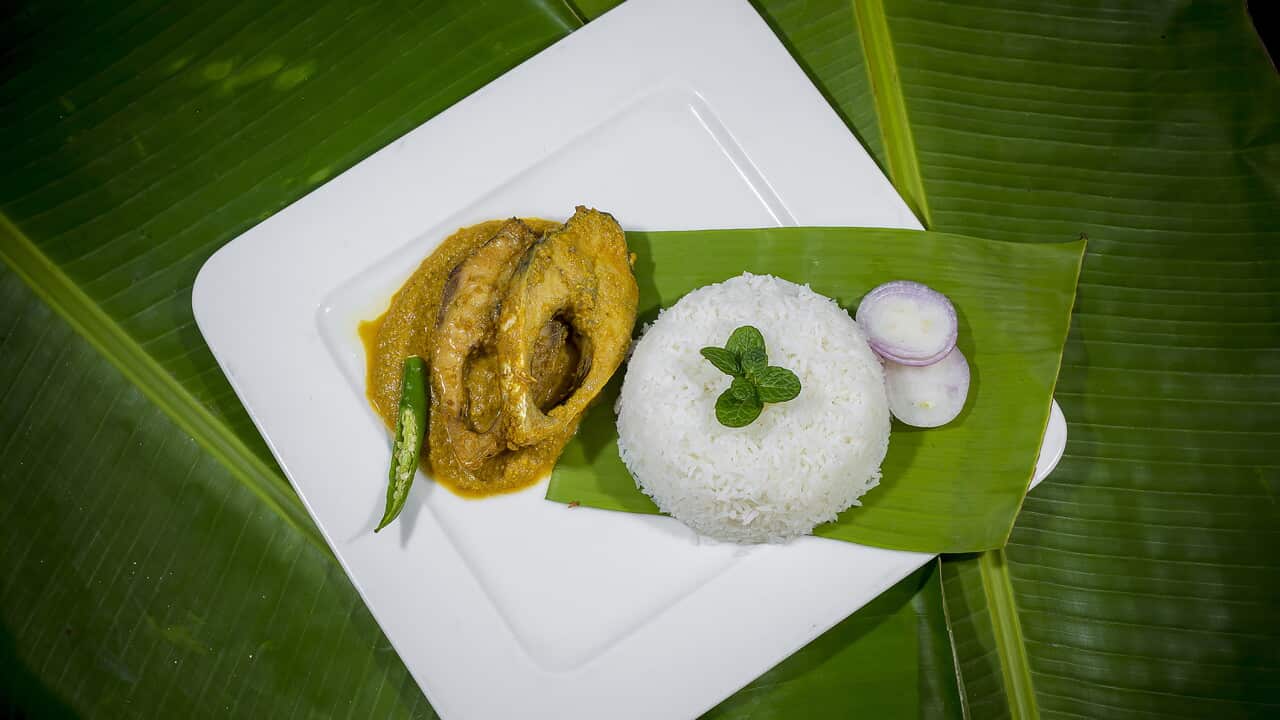

In this SBS Bangla special series on the Bangladeshi restaurant industry in Australia, we will speak with restaurant owners and workers, while also examining concerns that are often raised by customers regarding food quality, customer service, and the overall dining experience. In the first episode, we will present an overview of the Bangladeshi restaurant industry in Australia and discuss its challenges and opportunities.
Highlights
- From humble beginnings in the 1990s, Bangladeshi restaurants have grown into an important part of Australia’s multicultural food landscape, driven by a rapidly expanding Bangladeshi community.
- Restaurant owners across Sydney, Melbourne, Dubbo and Hobart say demand for authentic Bangladeshi cuisine remains strong, both among Bangladeshis seeking a taste of home and non-Bangladeshi customers discovering new flavours.
- Despite opportunities for growth, the industry faces challenges including staffing shortages, maintaining food quality, operational costs, workplace standards and the need for greater professionalism.
Bangladeshi Restaurants in Australia: Preserving a Taste of Home While Navigating New Challenges
For many Bangladeshi migrants in Australia, food is more than nourishment. It is a connection to home, culture, family memories and identity. As Australia's Bangladeshi population has grown over the past few decades, so too has the demand for authentic Bangladeshi cuisine. From Sydney and Melbourne to regional centres such as Dubbo and Hobart, Bangladeshi restaurants have emerged as important community hubs, offering familiar flavours to expatriates while introducing Australian diners to a distinct culinary tradition.
This article explores the evolution of the Bangladeshi restaurant industry in Australia, the challenges it faces, and the opportunities that lie ahead.
The Early Days of Bangladeshi Cuisine in Australia
Former Bangladesh national cricket player Siddik Chowdhury Bablu, who migrated to Sydney in 1986, witnessed the beginnings of the Bangladeshi restaurant industry in Australia firsthand.
According to Bablu, dedicated Bangladeshi restaurants were virtually nonexistent during the late 1980s and early 1990s. At the time, South Asian dining options were largely dominated by Indian and Pakistani establishments. Bablu worked at the well-known Sydney restaurant Taste of India before purchasing the business in 1991.
He recalls that one of the earliest attempts to establish a restaurant dedicated specifically to Bangladeshi cuisine came from a chef named Selim, who had previously worked with him. During the 1990s, Selim opened a small restaurant that focused on traditional Bangladeshi dishes, including biryani, kacchi biryani, fish dishes, paratha and meat curries.
While the restaurant lacked luxury or sophistication, it filled an important gap in the market by providing authentic Bangladeshi flavours that were otherwise difficult to find.
Growing Demand Alongside a Growing Community
The growth of the Bangladeshi restaurant sector closely mirrors the rapid expansion of the Bangladeshi community in Australia, particularly over the past two decades.
Aziz Ahmed Bhuiyan, the current owner of Haat Bazar Restaurant in Sydney's Rockdale, says that when he arrived in Australia in 2001, finding Bangladeshi food was extremely difficult. He recalls travelling across Sydney to dine at Pakistani or Indian restaurants simply because there were few alternatives.
Even during Ramadan, Bangladeshis often relied on Pakistani restaurants for iftar meals, where limited items such as haleem and onion fritters attracted large crowds.
The shortage of dedicated Bangladeshi dining options demonstrated the strong demand that already existed within the community. As migration increased and suburban Bangladeshi communities expanded, entrepreneurs saw opportunities to serve customers seeking familiar tastes from home.
More Than Food: A Cultural Connection
Many restaurant owners believe the demand goes beyond simple convenience.
ANM Masum of Maksuda Food in Lakemba says customers actively seek traditional snacks and meals that reflect their cultural heritage. Popular items include samosas, singaras, jhalmuri, fuchka, chotpoti, malai tea, Moghlai paratha, lachcha paratha, dal, vegetable dishes and traditional breakfast combinations.
According to Masum, customers often appreciate restaurants that focus on a smaller menu of high-quality items rather than trying to offer everything.
For many migrants, dining at a Bangladeshi restaurant provides a temporary return to familiar surroundings and memories of home.
From Home Kitchens to Restaurant Businesses
One notable feature of the Bangladeshi restaurant industry is the diverse background of its entrepreneurs.
Many entered hospitality accidentally rather than through formal business plans.
Kazi Sanjida Farhana, who runs Sheetalpati Masala Secret Restaurant in Mount Druitt, arrived in Australia in 2010. Before entering hospitality, she worked as a retail manager and later as an operations manager.
Farhana says the decision to open a restaurant was never part of her original career plan. After leaving her job to spend more time supporting her autistic child, she began experimenting with small-scale catering. Encouraged by positive customer feedback and growing demand, she gradually expanded from catering services to operating a restaurant.
Her story reflects the experiences of many Bangladeshi entrepreneurs who transformed a passion for cooking into a successful business venture.
Introducing Bangladeshi Cuisine to Wider Australia
While many restaurants initially target Bangladeshi customers, some owners see a broader mission.
Farhana chose to establish her restaurant in Mount Druitt, a relatively multicultural area with fewer Bangladeshi residents than suburbs such as Lakemba. Her goal was not only to serve the local Bangladeshi community but also to introduce Bangladeshi cuisine to people from different cultural backgrounds.
She believes many Australians and other migrants are familiar with popular Indian dishes such as butter chicken and naan but know very little about distinctive Bangladeshi foods, including chicken roast, korma, tehari and traditional vegetable curries.
According to Farhana, non-Bangladeshi customers regularly return after trying these dishes, demonstrating that Bangladeshi cuisine has the potential to attract a broader audience.
Opportunities Beyond Major Cities
Demand for Bangladeshi food is not limited to Sydney and Melbourne.
Zakaria Chowdhury, who operates a restaurant and café in Dubbo, New South Wales, says he launched his business after recognising that local Bangladeshis missed the food and culture of home.
However, business owners warn that demand alone does not guarantee success.
In Hobart, Tasmania, entrepreneur Nafiz Imtiaz says Bangladeshi restaurants face unique challenges due to the city's relatively small Bangladeshi population. While tourist seasons may provide additional business, restaurants often struggle during quieter periods when they depend heavily on local customers.
The experience of Darbar, a Bangladeshi restaurant that operated in Hobart between 2022 and 2024, highlights those challenges. One of its founders, Mahiur Rahman Mishad, says factors such as cold weather, parking difficulties, a small customer base and high rental costs made the business difficult to sustain.
Operational Challenges
As the industry grows, restaurant owners continue to face significant operational hurdles.
Mohammad Lutfor Rahman Tipu, who operates Nawab Restaurant in Sydney's Minto, identifies staffing and day-to-day operations as major challenges. In particular, he emphasises the importance of skilled chefs, arguing that a talented chef can dramatically influence a restaurant's success.
Melbourne-based restaurateur Tarikul Islam points to another challenge: maintaining freshness. Unlike some cuisines, Bangladeshi food often requires daily preparation and cannot easily be carried over to the following day.
Because Bangladeshi customers are familiar with authentic flavours and freshness standards, restaurants must consistently prepare fresh food while dealing with uncertain customer numbers. This can result in food waste and financial losses if expected demand does not materialise.
Service Standards and Workplace Culture
Alongside praise for the industry, criticisms also exist.
Restaurant quality, customer service and employee treatment are frequent topics of discussion within the Bangladeshi-Australian community. Former Grameen Restaurant director Mohammad Ashraful Islam says complaints about food quality and service standards are not uncommon.
Farhana argues that responsibility lies with everyone involved, including owners, employees and customers. She believes staff should be treated as family, while employees must also remain committed to maintaining professional standards.
Meanwhile, Hobart entrepreneur Nafiz Imtiaz recalls experiencing wage-related issues during his early working years in Sydney, claiming that some employers withheld payments or failed to pay workers appropriately. He says such practices ultimately harm businesses and undermine trust within the community.
The Need for Professionalisation
Dr Chowdhury Saiful Alam Beg, founder of the Bangladeshi Australian Facebook Group and a general practitioner, believes there is significant room for improvement across the industry.
He argues that Bangladeshi restaurants should strive to reach international standards by improving professionalism, service delivery, management practices and overall customer experience.
According to Dr Beg, many businesses have opportunities to refine their operations and strengthen their reputation, particularly as the industry continues to expand.
A Promising Future
The story of Bangladeshi restaurants in Australia is ultimately one of growth, adaptation and cultural preservation.
From a handful of pioneering establishments in the 1990s to a growing nationwide presence today, Bangladeshi restaurants have become an important part of Australia's multicultural food landscape. Entrepreneurs have entered the sector through different paths, ranging from professional hospitality careers to home-based catering ventures.
Despite challenges involving staffing, operational costs, food waste and professional standards, there is broad agreement among owners, workers and customers that demand for authentic Bangladeshi cuisine continues to grow.
As more Australians discover the rich flavours of Bangladesh, the industry appears poised for further expansion, helping preserve cultural identity for migrant communities while sharing an important part of Bangladesh's heritage with the wider Australian public.
Read more about SBS’s use of AI
Listen to the podcast in Bangla by clicking on the audio player inside the picture at the top of the page.
SBS Bangla is a part South Asian, the destination channel for all South Asians living in Australia. To hear more podcasts from SBS Bangla, subscribe to our podcast collection.
Hear SBS Bangla live at 3pm on Mondays and Thursdays on SBS South Asian on digital radio, on channel 305 on your television, via the SBS Audio app or stream from our website.
On SBS South Asian YouTube channel, follow SBS Bangla podcasts and videos. You can also enjoy programs in 10 South Asian languages, plus SBS Spice content in English. And, SBS Bangla content is also available on SBS On Demand.
Follow us on Facebook.