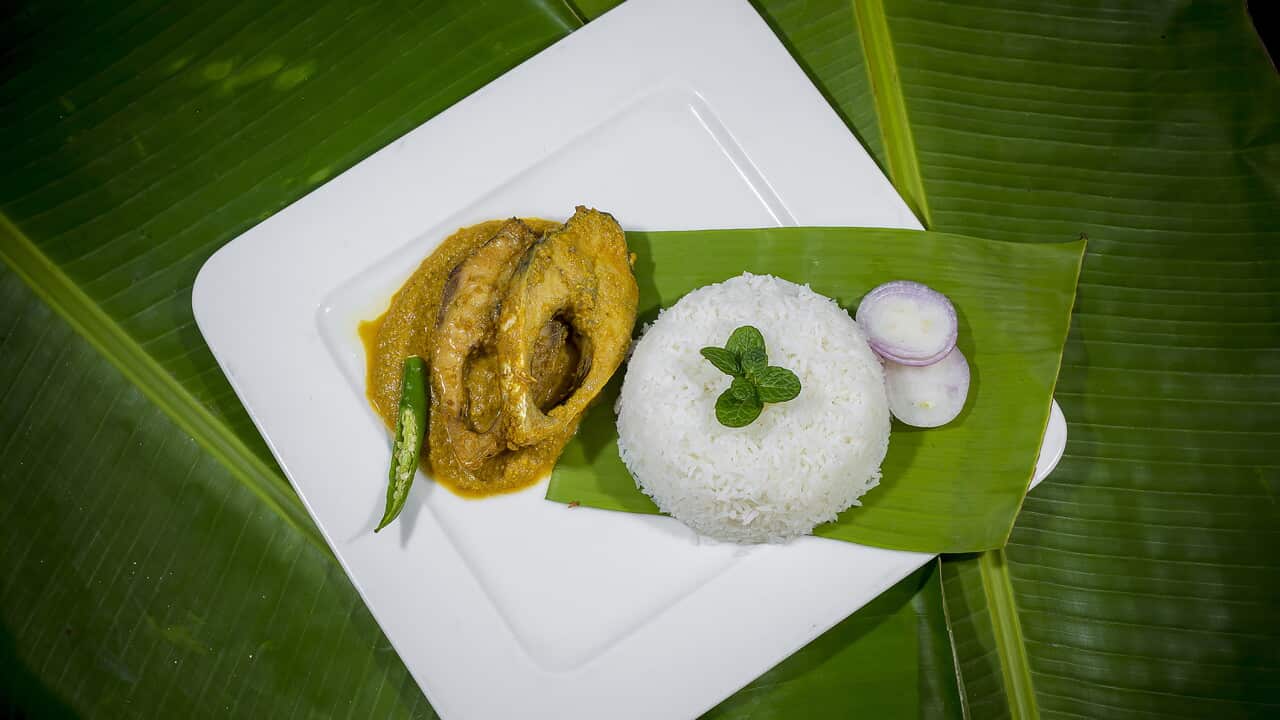
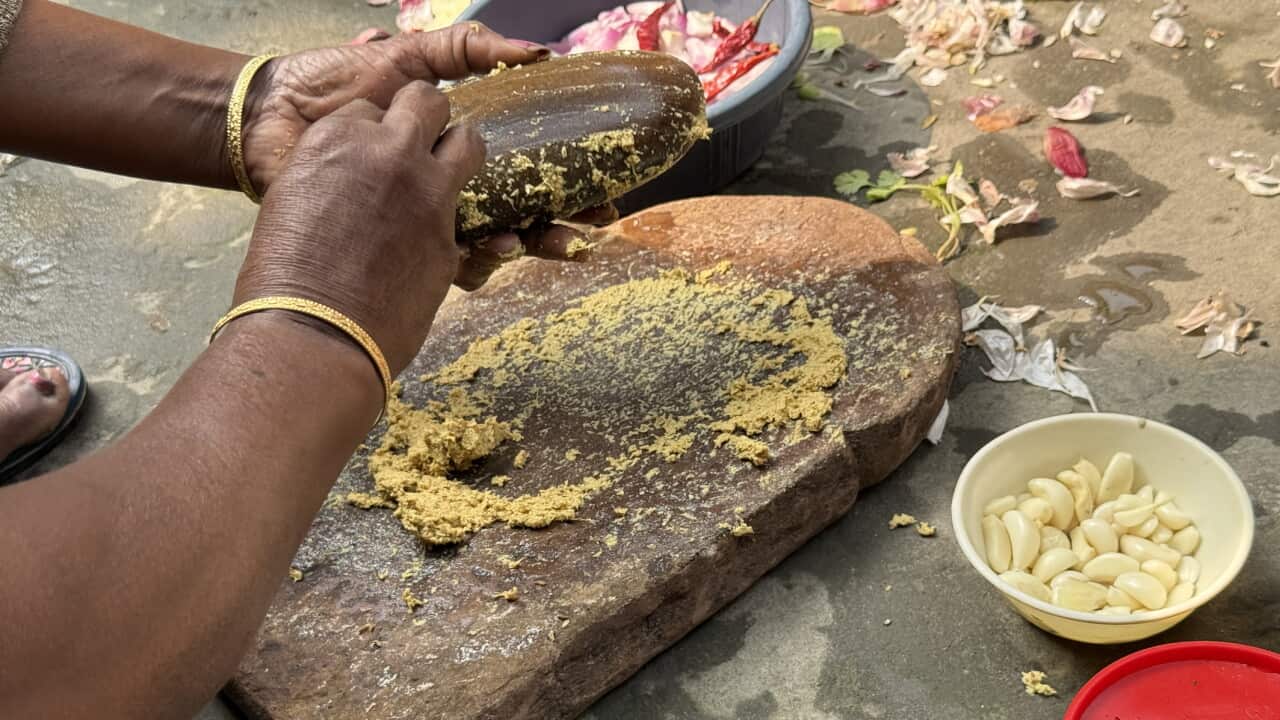

For many Bangladeshi Australians, food is more than a matter of taste. It is closely tied to memory, culture and identity. This episode of SBS Bangla explores why migrants seek out Bangladeshi food, which dishes are most popular, and how Bangladeshi restaurants are attracting an increasingly diverse customer base across Australia. The episode also examines whether the authentic taste of Bangladesh can truly be recreated overseas, highlighting the emotional connection, business realities and growing appeal of Bangladeshi cuisine in multicultural Australia.
Highlights
- For many Bangladeshi Australians, restaurants offer more than food, serving as spaces where memories, culture and a sense of home can be rediscovered.
- Demand for Bangladeshi cuisine is expanding beyond the Bangladeshi community, with Australian, Indian and Pakistani customers increasingly embracing dishes such as biryani, tehari and traditional street foods.
- Restaurant owners and chefs say recreating the exact taste of Bangladesh can be challenging due to differences in ingredients and supply chains, but authentic flavours can still be achieved through quality ingredients, skilled preparation and careful cooking.
In Search of Home: How Bangladeshi Restaurants in Australia Are Serving More Than Just Food
For many Bangladeshi migrants in Australia, food is far more than a daily necessity. It is a powerful reminder of home, family, and identity. Whether it is a plate of biryani, a cup of malai tea, or a serving of bhorta, familiar flavours often carry memories that connect people to their roots.
As Bangladeshi restaurants continue to grow across Australia, they have become important cultural spaces where migrants can reconnect with the tastes of home while introducing Bangladeshi cuisine to a wider audience. But can restaurants thousands of kilometres away truly recreate the flavours of Bangladesh? And how is the market evolving beyond the Bangladeshi community?
These questions form the centre of the second episode of SBS Bangla's special series on Bangladeshi restaurants in Australia.
Food, Nostalgia and a Sense of Belonging
Stories shared by Bangladeshi Australians on social media often highlight the emotional connection between food and identity.
One Bangladeshi Australian described driving almost 50 kilometres out of his way to Sydney's Lakemba simply to enjoy a meal that reminded him of home. For many migrants, food represents much more than taste. It evokes memories of family gatherings, childhood experiences and everyday life in Bangladesh.
As a result, Bangladeshi restaurants in Sydney, Melbourne and regional Australia have become more than businesses. For many customers, they serve as a small piece of Bangladesh in a foreign land.
What Are Customers Looking For?
While biryani remains one of the most popular dishes, restaurant owners say customer demand extends far beyond traditional rice meals.
ANM Masum, who operates Maksuda Food in Lakemba, says customers regularly seek a wide variety of traditional snacks and beverages, including samosas, singaras, jhalmuri, fuchka, chotpoti, malai tea, milk tea and Moghlai paratha.
Many patrons visit restaurants specifically for foods that may not be prepared regularly at home or foods associated with childhood memories and cultural traditions. The appeal often lies as much in nostalgia as it does in the food itself.
Beyond the Bangladeshi Community
Restaurant owners say the customer base for Bangladeshi food is gradually expanding.
Zakaria Chowdhury, who operates a café and restaurant in Dubbo, New South Wales, says Australian, Indian and Pakistani customers are increasingly trying Bangladeshi dishes and returning for more.
He believes Bangladeshi biryani in particular stands out because of its distinct flavour, aromatic rice and unique cooking style. What began as a business aimed at serving the local Bangladeshi community has gradually attracted customers from a range of cultural backgrounds.
According to Chowdhury, the growing number of repeat customers suggests that awareness of Bangladeshi cuisine is spreading beyond the migrant community, creating new opportunities for restaurant owners.
The Debate Over Menu Size
As the industry grows, operators continue to debate one important question: should restaurants focus on a few signature dishes or offer an extensive menu?
Chowdhury favours a smaller menu, arguing that a limited selection allows restaurants to concentrate on food quality, consistency and hygiene. He believes that overly large menus can confuse customers and make it more difficult for kitchens to maintain standards.
Asif Ahmed, a restaurant owner in Wagga Wagga, shares a similar view. He argues that a smaller menu makes it easier to ensure items remain consistently available and prepared to a high standard.
Masum also supports a limited menu, saying it helps simplify food preparation, storage and service while reducing customer confusion.
However, others believe a broader menu is necessary in Australia's relatively small Bangladeshi market.
Former Grameen Restaurant director Mohammad Ashraful Islam argues that customer preferences vary widely. Groups often arrive wanting different items, ranging from street foods and snacks to full meals and biryani. If a restaurant cannot satisfy those preferences, customers may choose another venue instead.
While he acknowledges that specialised restaurants generally achieve better quality control, he says commercial realities often push owners towards larger menus.
Can Australian Restaurants Recreate the Taste of Bangladesh?
One of the most common claims made by Bangladeshi restaurants is that they offer the authentic taste of home. Yet restaurant owners and chefs acknowledge that perfectly recreating Bangladeshi flavours is not always straightforward.
Ashraful Islam believes ingredient quality is one of the biggest challenges.
In Bangladesh, meat and fish are often sourced and cooked shortly after processing. In Australia, however, much of the meat and seafood available to restaurants is frozen or has already spent days within the supply chain. Imported spices may also have been stored for extended periods before arriving in Australia.
According to Islam, these factors inevitably affect flavour.
"If it is fresh, you will get the best taste," he says. "If it is not fresh, you will not get exactly the same taste that people remember from Bangladesh."
The Role of Preparation and Preservation
Sydney restaurateur Siddik Chowdhury Bablu points out that practical realities also influence taste and texture.
Many dishes commonly served in Bangladeshi restaurants, particularly curries prepared with large cuts of beef or lamb, require lengthy cooking times. Unlike fast-cooked meals, these dishes cannot be prepared from scratch immediately after a customer place an order.
As a result, restaurants often rely on pre-cooking and proper storage methods. Bablu argues that success depends not only on cooking skills but also on how effectively restaurants manage food preservation and quality control.
"We Can Achieve 95 Per Cent"
Not everyone believes the gap is significant.
Kazi Sanjida Farhana, owner of Sheetalpati Masala Secret Restaurant in Mount Druitt, says restaurants may not be able to reproduce every aspect of a traditional Bangladeshi meal, but they can come remarkably close.
She points to differences in ingredients, such as the traditional rooster used in Bangladeshi wedding-style roast dishes, which can be difficult to source in Australia. Nevertheless, she believes skilled cooks can achieve around 95 per cent of the original flavour profile.
"One hundred per cent may not always be possible, but 95 per cent certainly is," she says.
The Chef's Perspective
Chef Fardin Ahmed, who arrived in Australia as an international student in 2023 and later worked in hospitality before becoming a chef, believes authenticity depends heavily on who prepares the food and how carefully recipes are followed.
He notes that many Bangladeshi restaurants employ chefs from different culinary backgrounds, which can sometimes affect the authenticity of flavours.
According to Ahmed, recreating Bangladeshi taste is unquestionably challenging. However, he believes that maintaining quality ingredients, proper techniques and attention to detail can bring restaurants very close to the real experience.
More Than a Meal
The expectations placed on Bangladeshi restaurants are often higher than those facing ordinary food businesses.
Customers are not simply buying a meal. Many are searching for memories of family celebrations, wedding feasts, village cooking or favourite childhood snacks. Some travel substantial distances for a cup of malai tea and a freshly made singara. Others seek the familiar taste of roast chicken served at Bangladeshi weddings or the comforting flavours of homemade bhorta.
Meeting those expectations requires a careful balance of authenticity, quality, affordability, customer service and business sustainability.
That may be why Bangladeshi restaurants occupy a special place within Australia's multicultural landscape. They are not merely places to eat. For many migrants, they are custodians of culture, memory and identity.
While the taste of Bangladesh may never be replicated perfectly, restaurant owners, chefs and customers agree on one thing: the journey to find a taste of home remains as important as the food itself.
Listen to the podcast in Bangla by clicking on the audio player at the top of the page.
SBS Bangla is a part South Asian, the destination channel for all South Asians living in Australia. To hear more podcasts from SBS Bangla, subscribe to our podcast collection.
Hear SBS Bangla live at 3pm on Mondays and Thursdays on SBS South Asian on digital radio, on channel 305 on your television, via the SBS Audio app or stream from our website.
On SBS South Asian YouTube channel, follow SBS Bangla podcasts and videos. You can also enjoy programs in 10 South Asian languages, plus SBS Spice content in English. And, SBS Bangla content is also available on SBS On Demand.
Follow us on Facebook.