In brief
- Donald Trump says the UK didn't want to assist with the US' war in the Middle East, and Australia "was not great".
- Australia says it has never received a request to help in the Middle East from the US.
The prime minister has dismissed the Opposition's calls for a cut to the fuel excise, a tax consumers pay on fuel, but said the government is looking into cost-of-living measures to support Australians as the cost of fuel surges.
The Strait of Hormuz — the narrow, strategic waterway carrying about a fifth of the world's oil and gas — has been effectively shut down since conflict in the Middle East broke out on 28 February.
This has pushed the cost of diesel above $3 a litre in many parts of Australia, while the cost of regular unleaded petrol in Australia has soared to around $2.38 per litre on average, according to NRMA Insurance.
Tax components, comprised of the fuel excise and GST, amount to 52 cents per litre in Australia, with the remaining cost determined by petrol retailers.
Asked if the government was considering lowering the fuel excise, the prime minister said the Opposition's proposals are "up to them".
News that makes sense
Your trusted source for staying up-to-date with the world around you. Get free daily news updates and analysis, straight to your inbox.
"They've called also for cuts to things that are making a difference to cost of living, such as batteries that are making a positive difference," he added.
Albanese acknowledged the impact of the war on Australians and announced six tankers of jet fuel will arrive in Australia between tomorrow and 8 April from China and other suppliers.
"Our government is undertaking every practical measure required to shield our nation from the worst of the global uncertainty, which is out there," he said.
"This war is real. This war is having an impact on Australians like it's having an impact right around the world."
The prime minister reiterated that a National Cabinet meeting would be convened with state leaders next week to discuss a united approach to fuel shortages.
"While Australia's fuel supply outlook remains secure over the near term due to the actions that the government's taken to date, the government has been clear that the longer this war goes on, the greater the impact will be. But we continue to act to prepare and shield Australians from the worst of it."
The Australian government insists it still has not received any direct requests from the United States for military aid in its war with Iran, after a public attack from US President Donald Trump.
Overnight, Trump criticised allied countries for not providing assistance in the conflict, as the closure of the Strait of Hormuz continues to put pressure on global oil prices.
"[UK Prime Minister Keir Starmer] didn't want to help us," he said "Australia, too. Australia was not great. I was a little surprised by Australia."
Australia is providing military assistance in the Persian Gulf region following a request from the United Arab Emirates.
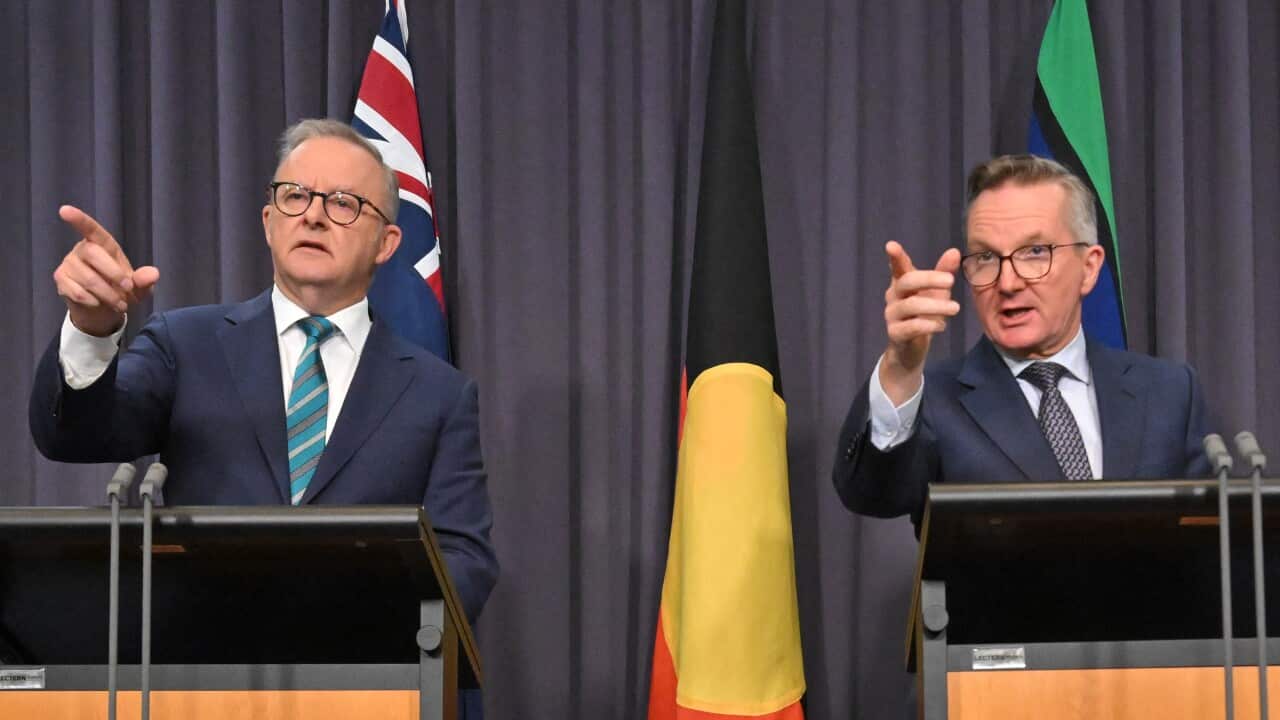
"President Trump, it's up to him to explain his comments, but, of course, I make the point as well that Australia wasn't consulted before this action was undertaken," Prime Minister Anthony Albanese told reporters in Canberra, referencing the joint US-Israeli strikes on Iran that ignited the conflict.
Speaking alongside the prime minister, Energy Minister Chris Bowen said port sales figures show diesel sales are strong.
"Those figures show me that the demand is very high still, and the supply is also increasing and has increased," he said.
"Obviously, as I've said, the government has always acknowledged there are real and unacceptable shortages in regional Australia, as the demand has spiked so much, and it's taken time for that strong domestic supply we have to flow through to regional areas to cater for that increased demand."
Earlier on Friday, Defence Minister Richard Marles would not be drawn on the president's criticism, but said no requests from the White House have been received.
"The last thing I'm going to do is give a running commentary on what the president has said, all we can do is respond to this situation, respond to the requests that are made of us," he told ABC TV.
"We're looking at all the requests that we get from countries around the world, including the United States, and obviously we answer them in the context of our national interest.
"Defending the states of the Gulf is really important given our relationship with them."
An E-7A Wedgetail military surveillance plane, along with 85 defence personnel, was sent to the UAE to monitor Iranian drone strikes.
The request for help from the UAE has been the only one received by Australia since the US-Israel war with Iran began, Marles said.
"The E-7 is in the region, and it is playing a really important part," he said.
"It is playing an important role in respect of the defence of the Gulf states. We will work this through with our with our friends and our partners, to look at what role we can play.
The US president has extended a self-imposed deadline to Iran to reopen the Strait of Hormuz to 6 April before potential strikes on energy infrastructure.
Coalition frontbencher Sarah Henderson said the government needed to outline why military help had not been provided to the US.
"It's quite embarrassing that in the international stage we have been called out as not providing appropriate assistance to the US," she told Sky News.
"The US is our strongest defence ally. This is pretty grim news overnight from the United States."
— With additional reporting by Australian Associated Press.
For the latest from SBS News, download our app and subscribe to our newsletter.







