
Every five years, the Australian Bureau of Statistics (ABS) counts every person and every household in the country as part of the Census of Population and Housing.
That includes Australians, young and old, from metropolitan and rural Australia. Even holidaymakers, international students and temporary visa holders are counted. It's often referred to as the most comprehensive snapshot of Australia, akin to a family photograph of the country.
This year, the Census will take place on Tuesday 11 August.
In the lead-up to Census night, here are all your questions answered.
- How do you complete the Census?
- What is Census data used for?
- Why is everyone counted in the Census?
- Do temporary visitor holders need to complete the Census?
- How can international visitors and students complete the Census?
- What help is available to complete the Census?
- What if you're travelling on Census night?
- Can you be fined for not completing the Census?
- What happens if you provide false information?
- How to identify Census-related scams
- Can Census staff access secure apartments?
- Why does the ABS need building access for the Census?
- How to complete the Census if you're experiencing housing insecurity
- What are the new Census questions?
- What wasn't included in the new questions?
- Is Norfolk Island counted in the Census?
- Common myths about the Census debunked
- How does Census data inform multicultural services?
- Is Census data private? What the ABS can and cannot share
News that makes sense
Your trusted source for staying up-to-date with the world around you. Get free daily news updates and analysis, straight to your inbox.
How do you complete the Census?
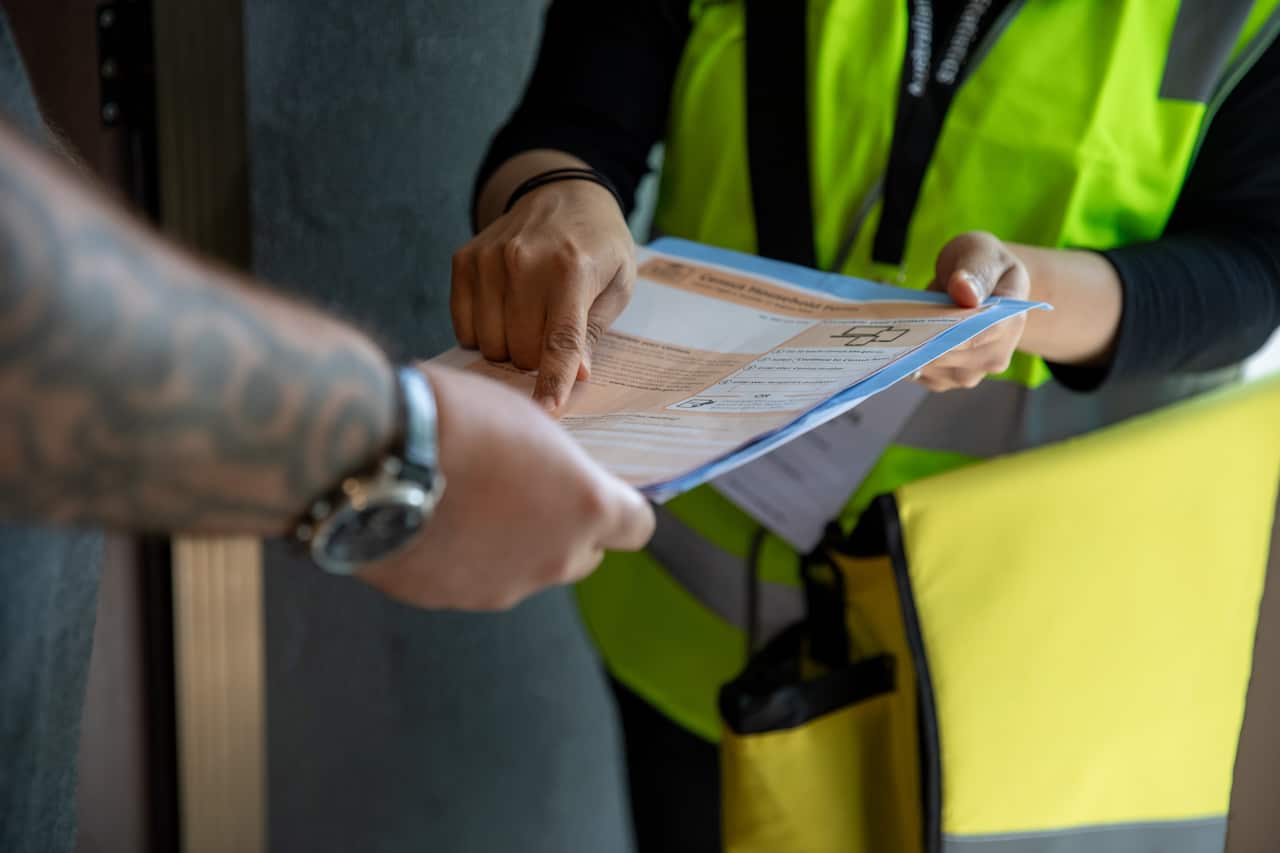
Ahead of Census night on Tuesday, households will receive instructions on how to complete the Census. Australians can complete the form as soon as they receive instructions, provided they know where they will be on Census night.
Most people will receive a letter with instructions to complete the Census online. However, Australians can also request a paper form if they prefer.
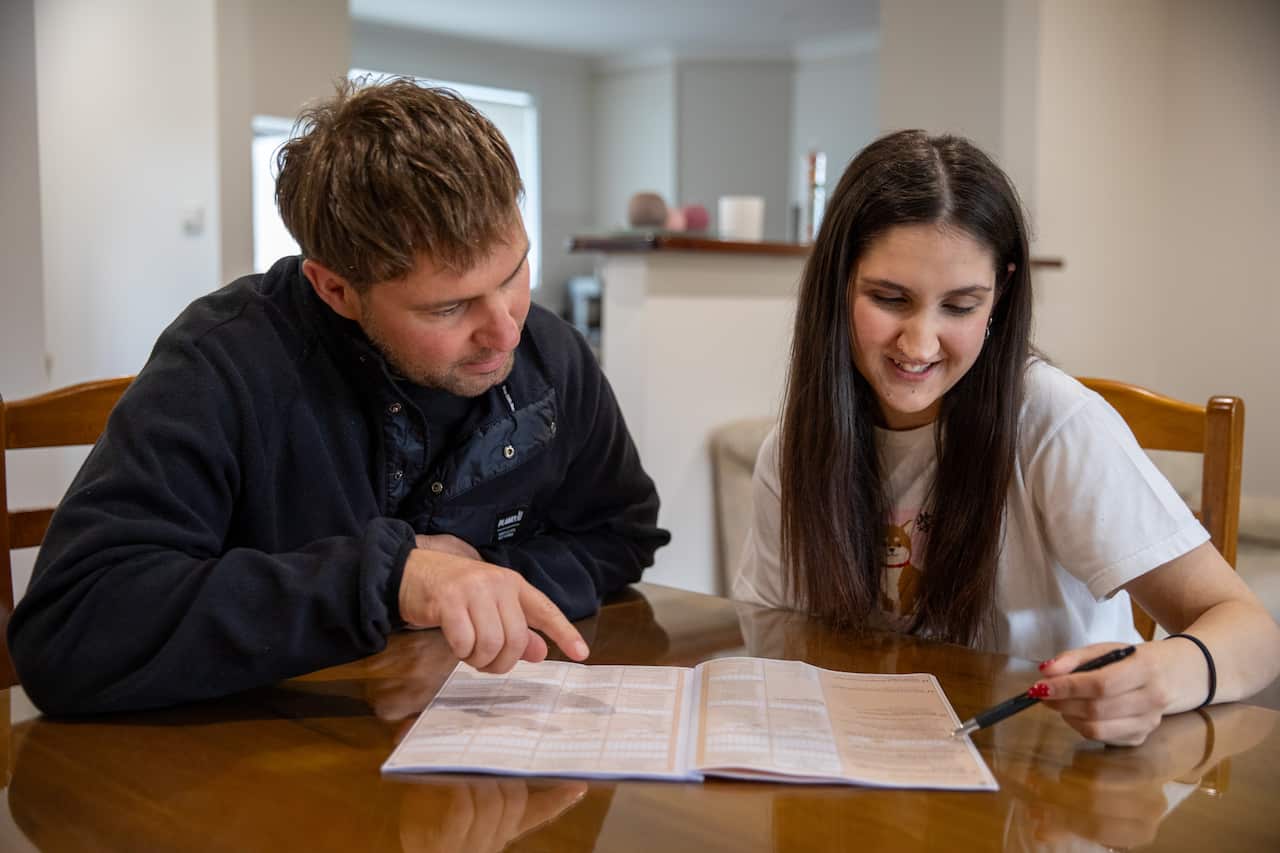
Generally, one person per household will complete the Census, but separate forms can be requested for privacy reasons.
What is Census data used for?
Census data is used to inform decisions about language services, settlement support, transport, schools, health care, infrastructure and business. It also helps plan local services for individuals, families and communities.
SBS broadcasts and publishes across more than 60 languages, using data from the Census to ensure its audio, digital, and television offerings reflect the country's evolving demographics.
The data is often used by researchers to study a range of topics, including population demographics, economic trends and social issues.
Do temporary visitor holders need to complete the Census?
International visitors, migrants, refugees and people on temporary visas (including international students and tourists) must also complete the Census.
People staying in hotels, motels, or bed and breakfasts can access paper Census forms from accommodation staff. Those staying in short-term rental accommodation (like an Airbnb or Stayz) can complete the Census online with internet access.
The Census is strictly confidential. Personal information such as names and addresses cannot be accessed by police, immigration agents or any government departments.
How can international visitors and students complete Census?
For international visitors and students staying in hotels, motels or student accommodation, instructions on how to complete the Census will be provided by accommodation staff.
Paper forms should be available at locations including bed and breakfasts, cruise ships, commercial vessels and snowfield accommodation.
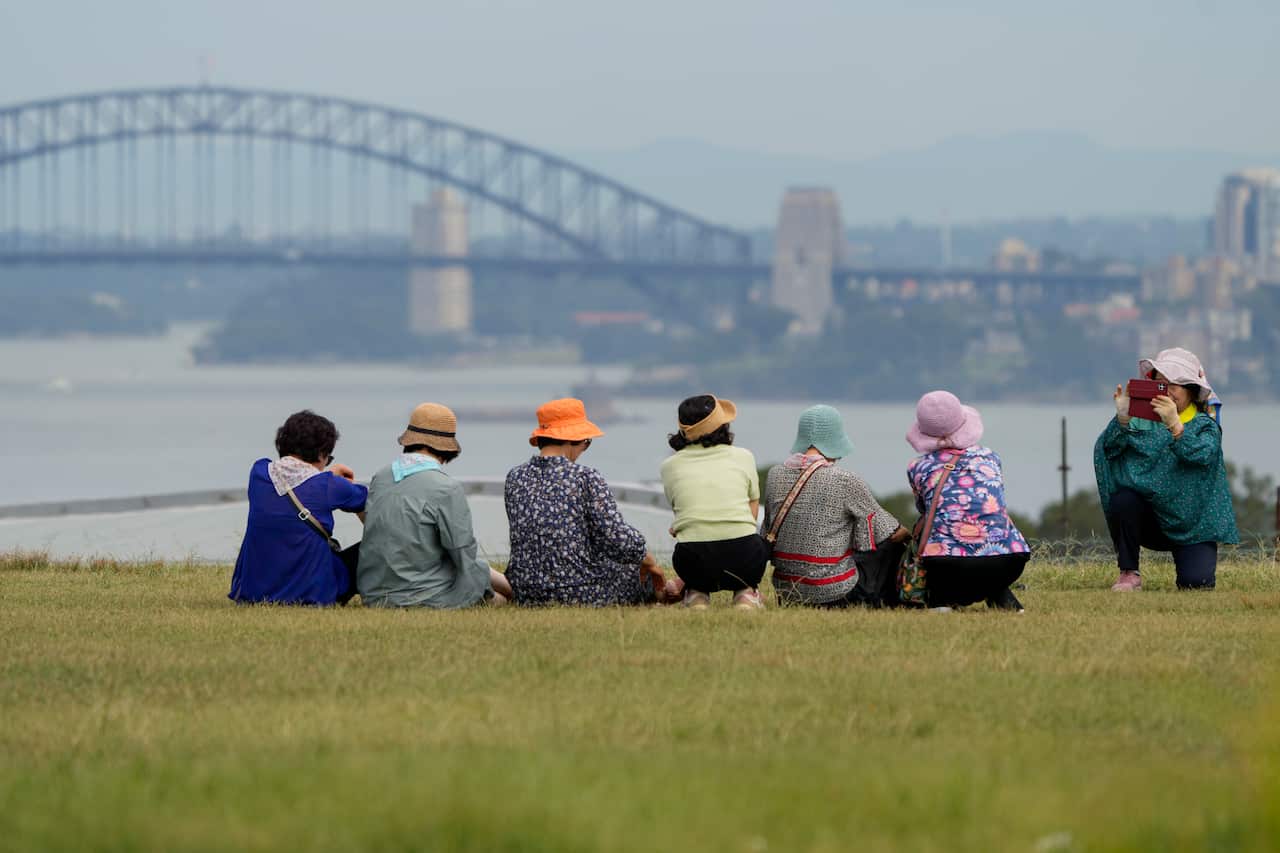
International visitors staying in holiday rental properties (such as Airbnb or Stayz) can complete the Census online with free internet access.
People staying in remote locations or free camping sites can visit Accredited Visitor Information Centres to access Census forms. The completed survey can be mailed via the provided Reply Paid envelope.
All details, including personal information collected during the Census, are strictly confidential and protected by law. The Census must be completed in English.
What help is available to complete the Census?
Online information about the Census is also available in 26 different languages via the ABS website. However, the questionnaire must be completed in English.
People who speak a language other than English can contact the Translating and Interpreting Service (TIS National) which provides access to interpreters who speak more than 150 languages.
People staying in remote and regional Australia, including fly-in fly-out workers, are expected to complete the Census.
Around 30,000 ABS field staff have been employed to ensure all Australians, including people experiencing homelessness or in hospital, can access the form. In 2021, field staff travelled more than 10 million kilometres across Australia.
Field staff will also gather Census information from people in police custody on 11 August.
The ABS confirmed to SBS News that they receive administrative data for people in detention centres and correctional facilities within Australia, which provides necessary Census details.
What if you're travelling on Census night?
If a person is travelling within Australia on 11 August, they are still expected to complete the Census.
This includes anyone travelling overnight on a long-distance train, bus, or aircraft (including red-eye flights between Perth and the east coast), and on long-haul transport vehicles that are parked or in motion.
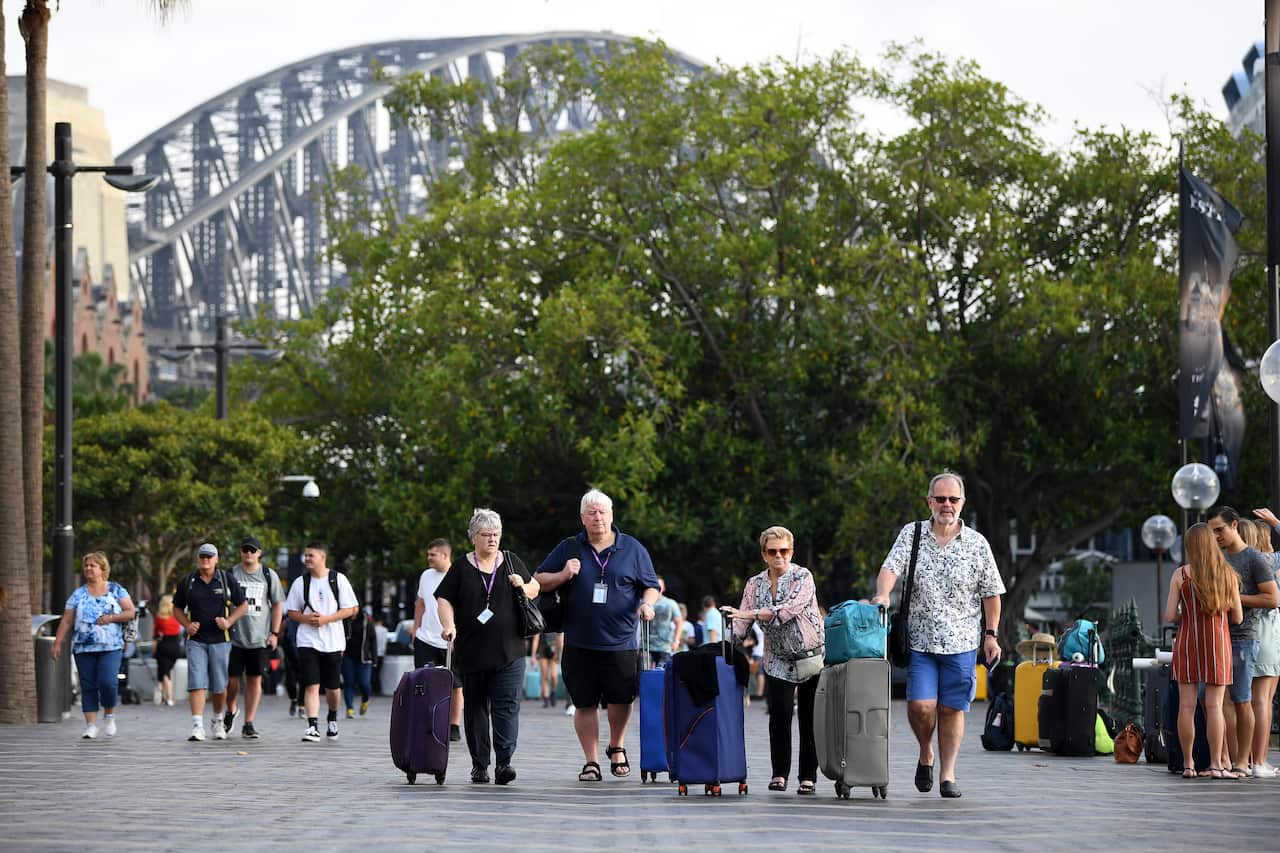
People must include information about where they are staying or whether they are in transit.
If an Australian is overseas on 11 August, they do not need to complete the Census.
If someone is completing the Census form at their usual address, the person travelling needs to be marked as 'away' but usually living at the dwelling.
Can you be fined for not completing the Census?
The Census is compulsory under the 1905 Census and Statistics Act.
If a person does not complete the Census when directed, they will receive a formal written direction to do so. If they refuse, they can be prosecuted and fined up to $364 a day.
What happens if you provide false information?
The Census asks up to 66 questions, including an individual's gender identity, ancestry and religious affiliation.
When asked about religion during the first-ever Census in 1911, 32 people identified as "Wowser" and 21 as "Angelic". In the 2011 Census, more than 64,000 people in Australia marked their religion as "Jedi".
Why is everyone counted in the Census?
The ABS maintains "every response matters" during the Census and helps determine the distribution of public funds. Providing false or misleading statements or information is considered an offence and can result in a fine of up to $3,640.
Liz Allen, a demographer at the Australian National University's Centre for Social Policy Research, said the Census is deliberately designed to provide a broad snapshot of the nation.
"It gives us an important reference point of who's in the country at that particular time," she told SBS News.
The Census is compulsory for all Australians, international visitors, temporary residents, migrants and refugees in the country. However, Australians who are overseas on 11 August do not complete the Census.
Generally, one person completes the form on behalf of their household.
Allen said that allows the ABS to collect information on "who might be staying over at a friend's house or gran's house" on Census night.
"So it's not just a Census of people. It's a Census of Population and Housing. It gives us essential information on ... how and where we live and then housing stock in the country."
The Census is usually completed online; however, individual and paper forms can be requested if preferred.
How to identify Census-related scams
As Census night fast approaches, Australians are being warned to look out for potential scams and report any inaccurate or suspicious information.
The Australian Competition and Consumer Commission's Scamwatch told SBS News it had recently received reports of Census-related scams involving unknown parties "impersonating" the Australian Bureau of Statistics (ABS).
"Scammers often take advantage of major events and trusted government services to make their contact seem legitimate," a Scamwatch spokesperson said.
"Australians should take a moment to stop and check before acting."
While the ABS said it's currently unaware of any scams related to the upcoming Census, the national statistics agency has said cold calls, fake text messages, and phishing emails are among the tactics scammers have used in the past.
The ABS is also reminding Australians that it will never ask for information such as:
- Bank details or credit card information
- Money or donations
- Passwords
- Identity documents or a tax file number.
It's also stressed that people will never be offered prizes or incentives for completing the Census, which is compulsory for everyone in Australia on Tuesday 11 August.
It will also never contact people via social media or ask for personal information without their consent. However, some Australians may also receive online communications if they register for updates through myGov.
Can Census staff access secure apartments?
Strata and building managers are being contacted by the ABS ahead of the 2026 Census to help facilitate access to secure apartment buildings.
As president of the Strata Community Association of Australasia, Joshua Baldwin has been informing building managers about the Census process.
He said while Census data collected by the ABS provides important insights into the nation's population and housing, coordinating access to secure-building apartments can become a "logistical nightmare".
"We get a lot of questions as to why ... they need access onto our property and who is going to be [there]," Baldwin told SBS News.
SBS News has also seen correspondence between ABS staff and a Melbourne-based strata management firm.
The email outlines access arrangements for secure apartment buildings during Census activities, including requests for entry to prescribed premises between 8am and 8pm on weekdays and from 9am to 8pm on weekends. The ABS expects Census-related visits will conclude by the end of September.
In circumstances where Census staff cannot meet with onsite management to access buildings, the ABS may request temporary access arrangements, including apartment keys, fob cards or passcodes for secure areas.
Baldwin said he had heard of instances where "some Census officers have ... just straight up demanded access" to keys.
"Unfortunately, you know, we can't provide that access without the permission of the strata corporation," he said.
He acknowledged these interactions were rare and said, in most cases, facilitating building access was "quite fluid and quite easy".
Why does the ABS need building access for the Census?
In a statement to SBS News, an ABS spokesperson said most residents in secure apartment buildings can expect to receive Census instructions by mail. The spokesperson said: "Census staff may need building access to deliver materials prior to the Census in some areas of Australia.
"After the Census, staff will need to follow up with households that have not completed their Census ... access arrangements help Census staff undertake these activities efficiently and with minimal disruption to residents."
Under the Census and Statistics Act 1905, authorised officers have the power to enter prescribed premises for the purpose of collecting statistical information for the Census. The Census and Statistics Regulation 2016 also outlines the types of premises that Census staff may enter.
All access keys are managed under strict protocols and returned at the end of Census activities, according to the ABS.
How to complete the Census if you're experiencing housing insecurity
Sharon Callister, CEO of Mission Australia, has been working alongside Census field officers to help people experiencing housing insecurity complete the Census.
"There are rough sleepers in Sydney, and many of them are in known rough sleeping spots. Our support services staff go out there. There are also field offices coming from the Census office," she told SBS News.
She said people in temporary dwellings like boarding houses or hostels can access paper Census forms from accommodation staff. People sleeping in a car or tent, or couch surfing with friends, family or acquaintances without a secure lease must also complete the Census.
If someone is experiencing homelessness, the ABS advises people to write "NONE" in response to the question about where they usually live. Online, this question can be answered by selecting the "Elsewhere in Australia" option, then manually entering "NONE" in the suburb and locality boxes.
If a housing or homelessness service has organised and paid for a person to stay in temporary accommodation, they should write "NONE-CRISIS" for this question.
NSW housing and homelessness minister Rose Jackson told SBS News there can be logistical challenges collecting information about homeless populations.
"The Census was built around [dropping] a form into people's letterbox — and for people that don't have letterboxes, where do you start?"
But she believes, "knowing how many people are living homeless, where they are, what their demographic is, their age, their gender — that's critical information for the government."
What are the new Census questions?
The 2026 Census will now include two new questions about gender and sexual orientation.
Respondents will still be asked about their sex recorded at birth, but people over the age of 16 can also specify their gender as male, female, non-binary or another term.
An optional question regarding sexual orientation has been added, with answers including straight, gay or lesbian, bisexual or an open-ended response for another term.
Nicky Bath, CEO of LGBTIQ+ Health Australia told SBS News:
"I remember in the run-up to the 2021 Census being contacted by older people who thought that they wouldn't be alive for the 2026 Census, and it was very sad for them that they wouldn't be able to participate ... in this way."

Bath said Census data — which will be released in three phases starting from June 2027 — will inform the availability, funding and location of LGBTQI+ community and health services.
Telford, from the Census and Population division at the ABS, said answers have also been expanded to reflect the "rich cultural makeup across the country".
Previously, an ancestry question, which gathered data on people's lineage or descent, only allowed up to two response options. Now, respondents can provide up to four answers.
The ABS has announced it aims to better reflect Aboriginal and Torres Strait Islander cultural identity.
"We've expanded things like the languages that people can report on the Census form to include more Aboriginal and Torres Strait Islander languages than we've had in the past," Telford said.
On 11 August, the ABS will also ask people how they travelled to work. The Census has updated its response category to include a new bicycle option (including e-bike) to reflect what it described as "more contemporary modes of travel".
What wasn't included in the new questions?
Advocates like Equality Australia say the number of people living in houseboats has been recorded in the Census for decades, but LGBTQI+ populations have not been traced.
Anna Brown, CEO of Equality Australia, said Census data collected about LGBTQI+ people would be "transformative". But she also called for Australians with innate variations of sex characteristics or intersex people to be counted by the Australian Bureau of Statistics (ABS).
"We will continue to advocate for its inclusion and work with the ABS ... towards recommending that this population be included," Brown said.
Census questions are informed by the 2020 ABS standards for sex, gender, variations in sex characteristics, and sexual orientation variables. These standards specify that: "The inclusion of born with a variation of sex characteristics or intersex as a response option in a sex question ... is not capable of generating reliable or consistent results in measuring this population, and perpetuates the misconception that intersex people are neither male nor female."
Is Norfolk Island counted in the Census?
In the middle of the South Pacific Ocean, a tiny island spanning just 35 square kilometres will be included in this year's Census.
Home to about 2,100 residents, Norfolk Island has earned a reputation as "one of the most beautiful places on Earth", according to acting general manager of the Norfolk Island Regional Council (NIRC), Nicholas Mostardo.
He moved to the subtropical island early this year and says its natural beauty and close-knit community make it unlike anywhere else.
"It's got a rich environment, it's got very warm and kind people. It's probably one of the most unique places in the world that I've had personally the pleasure of being involved with," Mostardo told SBS News.
NIRC is currently under administration until 31 December 2026, as Norfolk Island transitions to what the Australian government has described as a "new bespoke governance model".
In the interim, Mostardo has been liaising with the Australian Bureau of Statistics (ABS) to help ensure Norfolk Island's population is recorded during the Census of Population and Housing on 11 August.
"We've had several visits from the ABS zone manager and the assistant director of Census Mainstream and Enumeration. They've been coming out to ensure the community is well engaged and consulted on completing the form."
Common myths about the Census debunked
Emily Walter, a Census national spokesperson at the ABS, said there are misconceptions that the Census is a test or graded assessment tool.
"This is a self-reported questionnaire ... so, the right answer is always what represents you the best and who you are," she told SBS Examines.
The more honestly people answered, the more accurately the data reflected Australia's population, she added.
Information collected during the Census cannot be shared with police, immigration agents or any other government departments. By law, personal information, including names and addresses, must be separated from other Census data.
Generally, one person will complete the Census for everyone in the household on 11 August.
If a person wants to complete the Census separately from their household, they can call the Census Contact Centre, which will provide login details to complete the form online or via paper.
If more than one Census form is submitted for the same person, the ABS keeps the questionnaire with the most complete information about the person.
Walter said this process allows people to "return their information separately and privately, and they don't need to let the household know that they've done that".
"So when we think about that sort of concern about being targeted and not being comfortable, particularly for the religion question and also the gender and sexual orientation questions, there is a 'prefer not to answer' category so people can choose that."
How does Census data inform multicultural services?
Census data is used to inform decisions about language services, settlement support, transport, school catchment areas, health care, infrastructure, and business. It also maps and tracks the locations of various populations and key demographics.
This year, the Census will include two new optional questions (for respondents aged 16 or older) about a person's gender identity and sexual orientation. That will be used to determine services for LGBTQI+ populations in Australia.

Researchers rely on Census data too. It's used to study a range of topics including population demographics, economic trends and social issues.
Doukas from the Federation of Ethnic Communities' Council of Australia said it's important to ensure "that we can collect accurate demographic data about what makes up Australia".
"That will include things like the kind of languages that are spoken at home and the contraction of some of the more legacy communities."
Question 17 of the Census asks where a person was born.
Countries listed on the Census form include Australia, England, India, New Zealand, the Philippines, Vietnam and South Africa. If a person is born in another country, they can specify this in the 'Other' field.
An ABS spokesperson told SBS Chinese that "the countries listed are the most commonly reported countries of birth in the 2021 Census".
According to 2025 ABS data, an estimated 732,000 people in Australia were born in China. That's an increase of 32,000 compared to 2024 statistics.
However, the spokesperson said China will not be listed as a separate response category.
"This is to encourage people to write in China, Hong Kong, Macau or Taiwan in the 'Other (specify)' box."
Is Census data private? What the ABS can and cannot share
On Census night, Australians will be asked to provide personal information — including their name and address — to the ABS.
Jenny Telford, general manager of the Census and Population division at the ABS, said keeping people's data safe and private was "absolutely critical".
"When you complete that Census form, your name and address are kind of separated away from all of the other answers on the form really early in our process, and we also make commitments that we adhere to to destroy names and addresses once we've processed the Census and produced the statistics that ... Australia needs," she told SBS News.
Names included in this year's Census forms will be retained for up to 18 months after the Census, until the end of February 2028. Addresses are retained for a maximum of 36 months until the end of August 2029.
All ABS staff, including temporary employees, are legally bound to never release information collected during the Census. This includes staff past or present.
Penalties for sharing information collected during the Census (whether directly or indirectly) include fines of up to $26,400 and up to two years' imprisonment.
People can also choose to have their information preserved for 99 years as part of the Census Time Capsule. This information is securely transferred to the National Archives of Australia, the agency responsible for collecting and preserving government documents.
Personal information cannot be accessed for any reason until 2125. If a person elects to transfer their information to the archives, this decision cannot be reversed, according to the ABS.
For the latest from SBS News, download our app and subscribe to our newsletter.







