
This audio is voiced by AI and may occasionally mispronounce words.
Share your feedback and help us improve this feature. Read more about how we use AI at SBS here.
In her backyard, Tamara Scenna takes a deep breath beneath the towering canopy of the Daintree Rainforest in Far North Queensland.
Streams of light filter through layers of ferns and fan palms as she pauses beside a running stream.
Birds sing in an off-beat chorus, providing a tranquil soundtrack to one of the oldest rainforests.
It's the perfect setting for forest bathing — a Japanese practice of immersing oneself in nature.
"I think it's about seeing the forest differently and being able to almost be given permission to slow down and stop and just be," Scenna tells SBS News.
News that makes sense
Your trusted source for staying up-to-date with the world around you. Get free daily news updates and analysis, straight to your inbox.
"It took a while to slow down and really have a city adrenaline stop, but after a couple of months we sort of went, 'actually we don't want to go to the city anymore'.
"We'd rather spend the time out in nature."
But behind the tranquillity lies a challenge shared by many of the Daintree's roughly 700 residents. Living beyond the electricity grid means finding ways to balance life in this remote rainforest with the realities of modern living.
Living beyond the grid
In 2021, Scenna and her family swapped life in Sydney for the quiet of the UNESCO World Heritage-listed Daintree Rainforest.
Hoping to escape the pace of city life, her family spent a year travelling around Australia before deciding they were ready for a change.
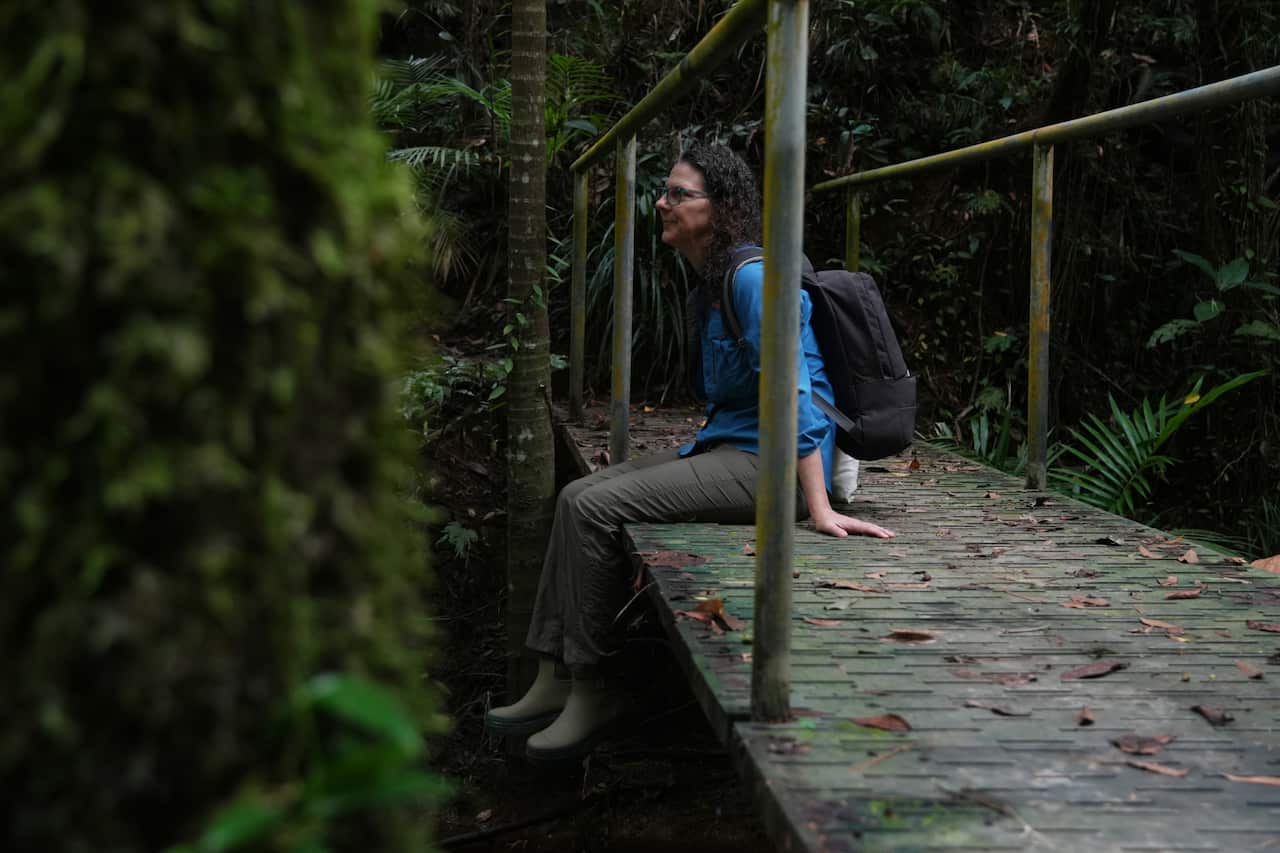
The journey led the couple to settle in the rainforest, with Scenna leaving her public sector job to run a caravan park and restaurant with her husband, Bruno.
But the dream of living among the ancient trees comes with practical challenges. Like many residents in the region, the couple must find their own solutions for powering their home and business.
While the Scennas have a hybrid energy system that includes solar, relying on diesel generators remains a necessity.
They paid about $300,000 for the solar that powers around a third of their business.
Bruno says installing enough solar panels to power their entire operation would be expensive and require clearing more rainforest for additional infrastructure.
We are basically burning diesel rather than having a renewable microgrid; it makes no sense whatsoever.
"From an environmental perspective, why would you do that when you can have renewable energy? I fundamentally don't understand," he tells SBS News.
The cost of living off-grid
Growing uncertainty around fuel costs, including volatility linked to global events, has renewed calls from residents for a renewable energy solution in the Daintree.
In 2022, a solar-based microgrid project received a funding commitment of $18.75 million from the then Coalition federal government, with funding to start in 2025.
The proposed project included an 8-megawatt solar farm, a 20-megawatt-hour battery storage system, and a 1-megawatt hydrogen plant. However, the current Labor government withdrew the funding in 2024, leaving the project without the grant needed to proceed.
In the lush landscape of Cape Tribulation, nestled among rolling mountains and dense forest, Lawrence Mason runs a café and fruit orchard in Douglas Shire.
To keep his business running, he burns about 700 litres of diesel every week — a cost that has grown as fuel prices surpassed $3 a litre earlier this year.
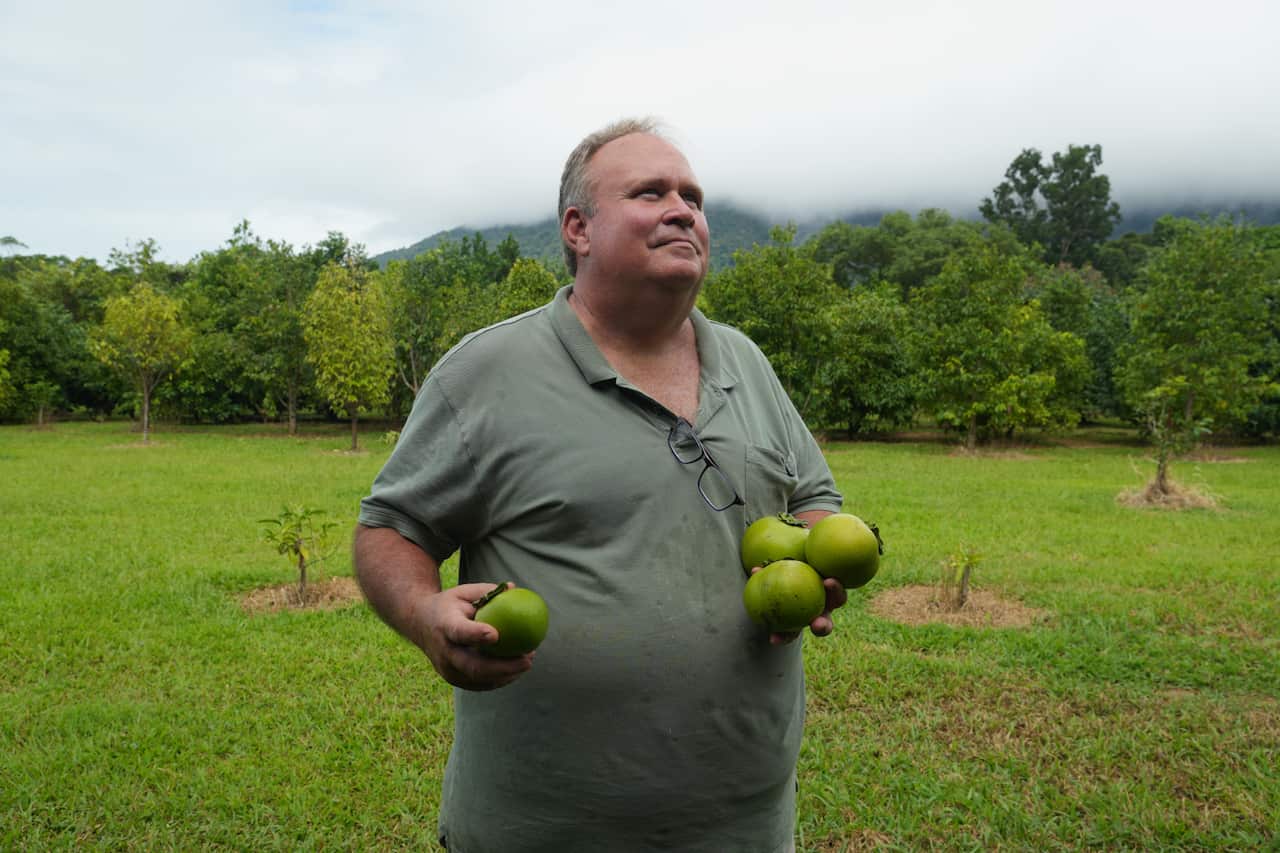
For Mason, the rising cost of generating electricity has affected the future of his business in the rainforest.
I don't want to leave this place, it's my home.
"But there does come a time in everyone's life and I think it doesn't matter where you live, where you have to make practical decisions for your future," he tells SBS News.
His grandparents moved to the region almost a century ago and lived off the land, working as timber cutters and later cattle farmers.
Mason has spent his whole life connected to the tourism industry in the region.
"They're [tourists] coming to what is [one of] the oldest rainforest[s] in the world, a very beautiful place, and most of them are horrified to learn that we have a government with so little imagination, we're still [using] diesel generators for power."
Ageing off-grid
Confronted with the decision to potentially leave the rainforest, many ageing in the Daintree face a difficult reality.
Resident Chris Reinke, who has lived alone for the last decade, shares similar concerns about whether she can remain in the rainforest long-term.
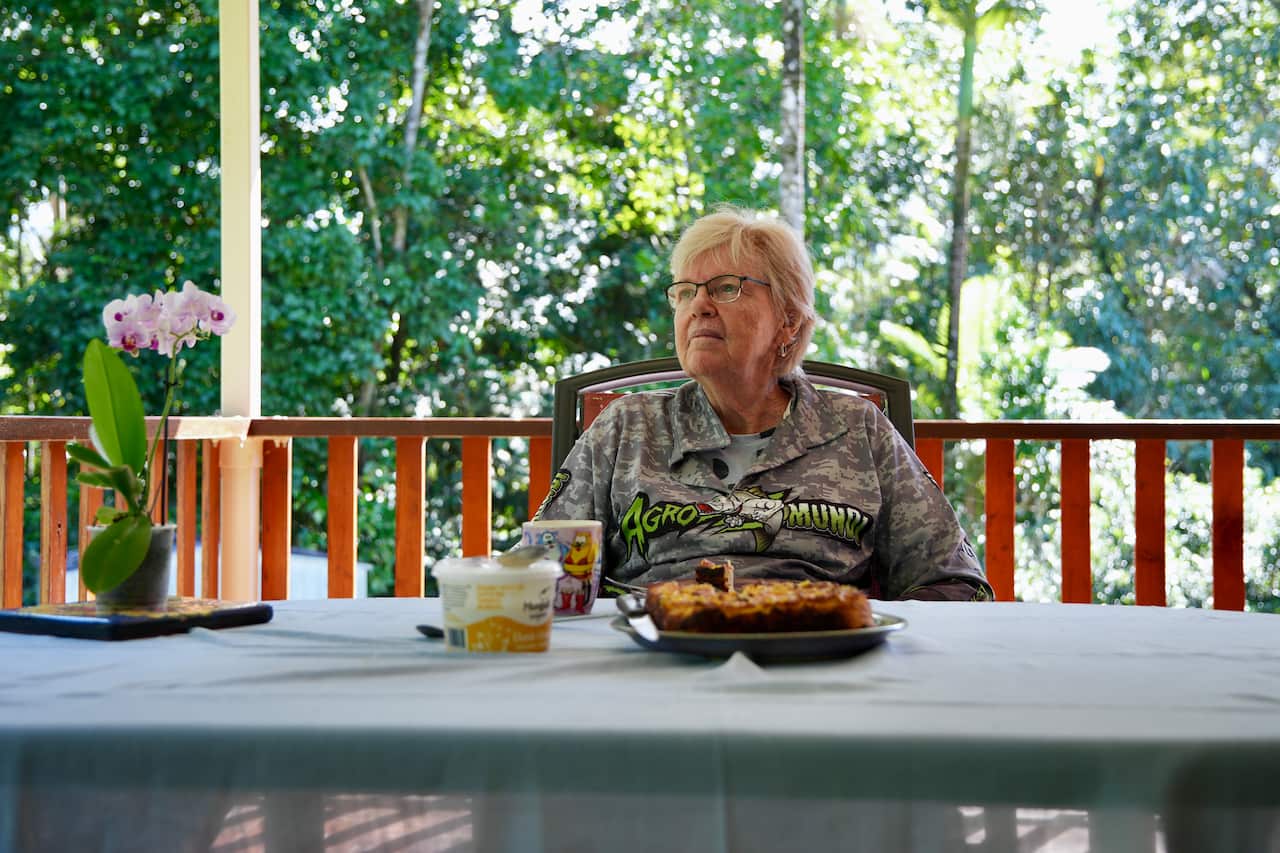
The 71-year-old moved to the region with her late husband in 1983, but says spending her later years there is becoming increasingly difficult without access to mains power.
At the end of the day, I'm going to have to move out as I get older because I'm trying to lift jerry cans for generators.
"If I had mains power or a microgrid, you'd have to carry me out in a box because I wouldn't be leaving until then, because I wouldn't have to worry about generators," Reinke tells SBS News.
Sitting on her veranda tucked between towering canopy trees, Reinke is reminded of the natural beauty that drew her to the Daintree decades ago.
"As soon as I crossed that ferry, it was like I fell in love," she says.
"I just knew this is where I should be, it was just beautiful."
For Betty Hinton, the Daintree has been home for almost five decades — a place where she built a life, an art practice and a small business.
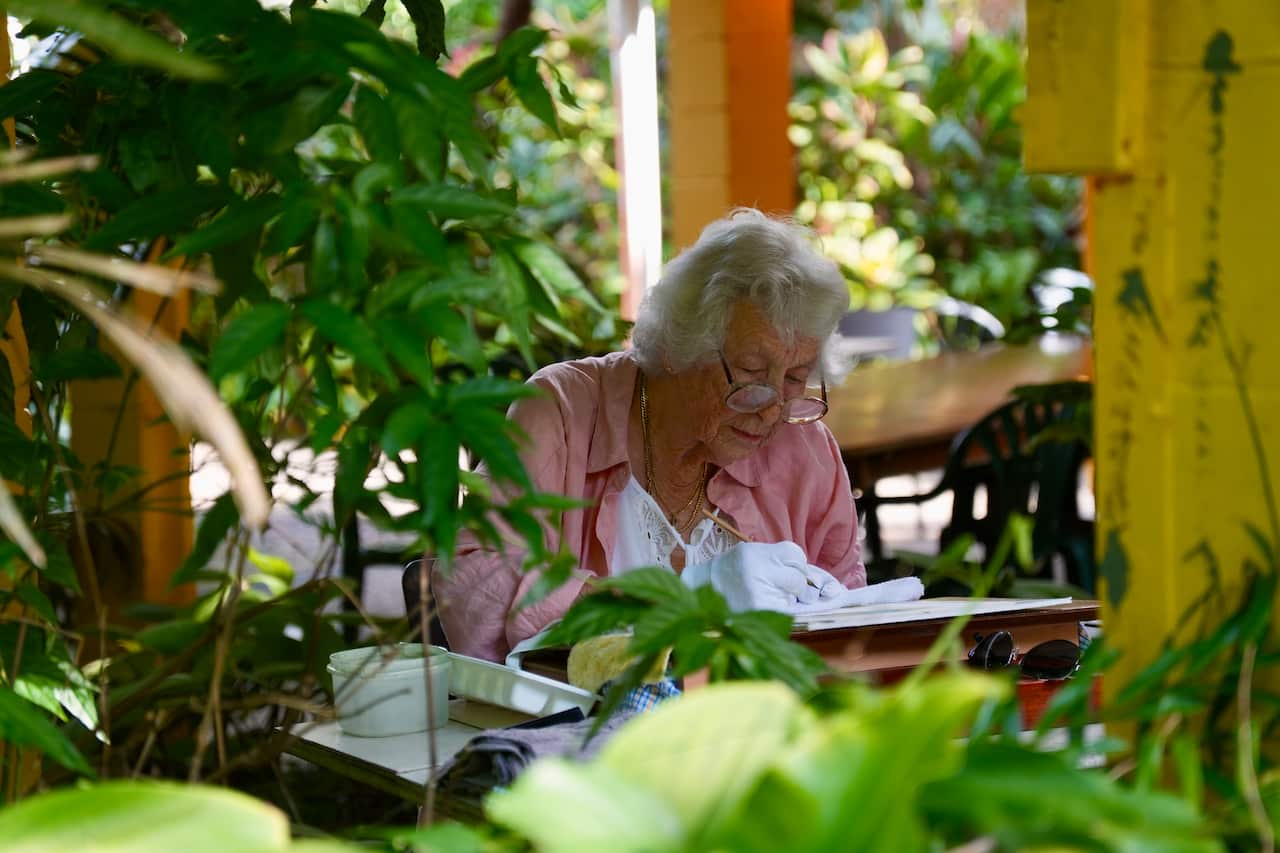
The 91-year-old artist moved to the rainforest with her late husband, drawn to its diverse plant life and picturesque landscapes.
"For some people, it would have been difficult, impossible," Hinton tells SBS News.
"But for us, because we just love the area, we were excited about the chance to live here.
"It was a lot of hard work; there was nothing here, we had to build everything."
Today, Hinton runs an ice cream business that relies on costly generators, selling a variety of flavours, including a signature green ice cream inspired by the rainforest.
She still services her own generators, a physically demanding task involving changing filters and carrying heavy oil.
The cost of getting help to maintain the equipment can also be prohibitive in such a remote location.
"When I got the bill, I nearly died, they [tradespeople] charged me $600 to change the oil," she says.
"What do you say? What options do I have?"
It's a lot of work that I don't enjoy, it's a lot of expense that it's very difficult for a small business to maintain.
The debate over a Daintree microgrid
Former federal member for Leichhardt Warren Entsch, who was in parliament for 26 years, spent years of his career campaigning for a microgrid project in the Daintree.
"So many businesses have started and failed because of the cost of generation of power," he tells SBS News.
It is just so grossly unfair.
"You've got an older population here that cannot deal with this."
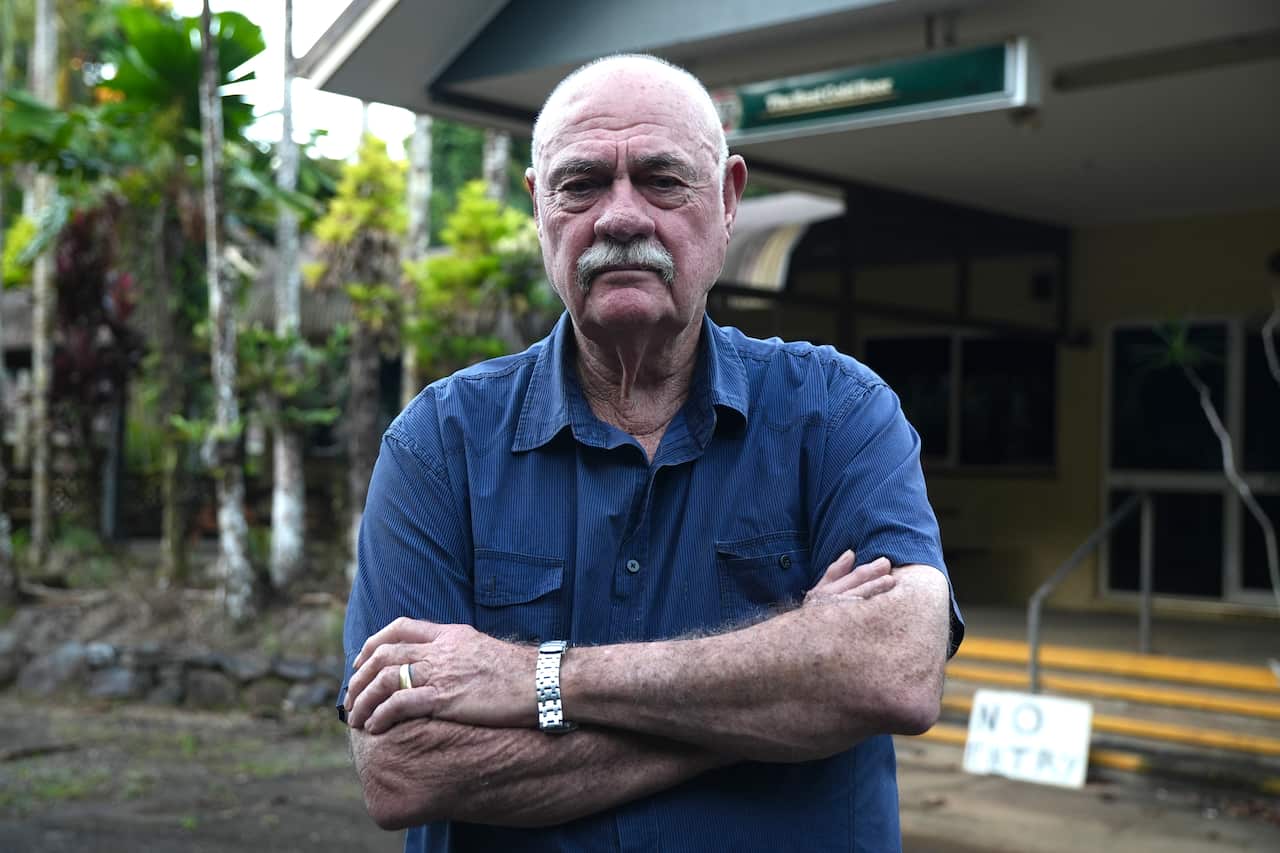
While some residents and community leaders see a microgrid as a way to provide more reliable renewable energy, others argue that development in the world-heritage-listed rainforest must be carefully managed.
Former Douglas Shire mayor Mike Berwick says: "Biologically, this is an incredibly valuable place and the priority should be helping people to live with minimal impact."
"And that means don't build a bridge, don't widen the road, don't urbanise the place, don't put grid power in there, but help people to live independently with a life footprint."
When asked if the federal government would reconsider funding for the project, Energy Minister Chris Bowen said the Albanese government was investing in microgrid projects in regional and First Nations communities.
"The Daintree Microgrid Project was given every opportunity to meet requirements they were contractually obligated to meet, but they failed to do so, and the grant funding ceased," he said in an earlier statement.
The company developing the grid, Volt Advisory Group, disputes the government's account, saying Cyclone Jasper in December 2023 caused unprecedented damage to the Douglas Shire road network and prevented heavy construction machinery from reaching the site for many months.
"Despite the disaster's force majeure status being acknowledged and approvals being in place, the project was unable to get the government to extend the grant to allow the project to be built once roads were restored," it said in a statement to SBS News.
First Nations calls for renewable energy
For Eastern Kuku Yalanji people, the conversation about power in the Daintree is connected to culture, Country and the ability to live on ancestral land.
In the remote Aboriginal community of Wujal Wujal, north of the Daintree Rainforest, Kathleen and Francis Walker sing out to their ancestors at a waterfall.
The Eastern Kuku Yalanji Elders are calling on the federal government to reconsider funding a microgrid in the Daintree, saying reliable power could help First Nations people return to Country.
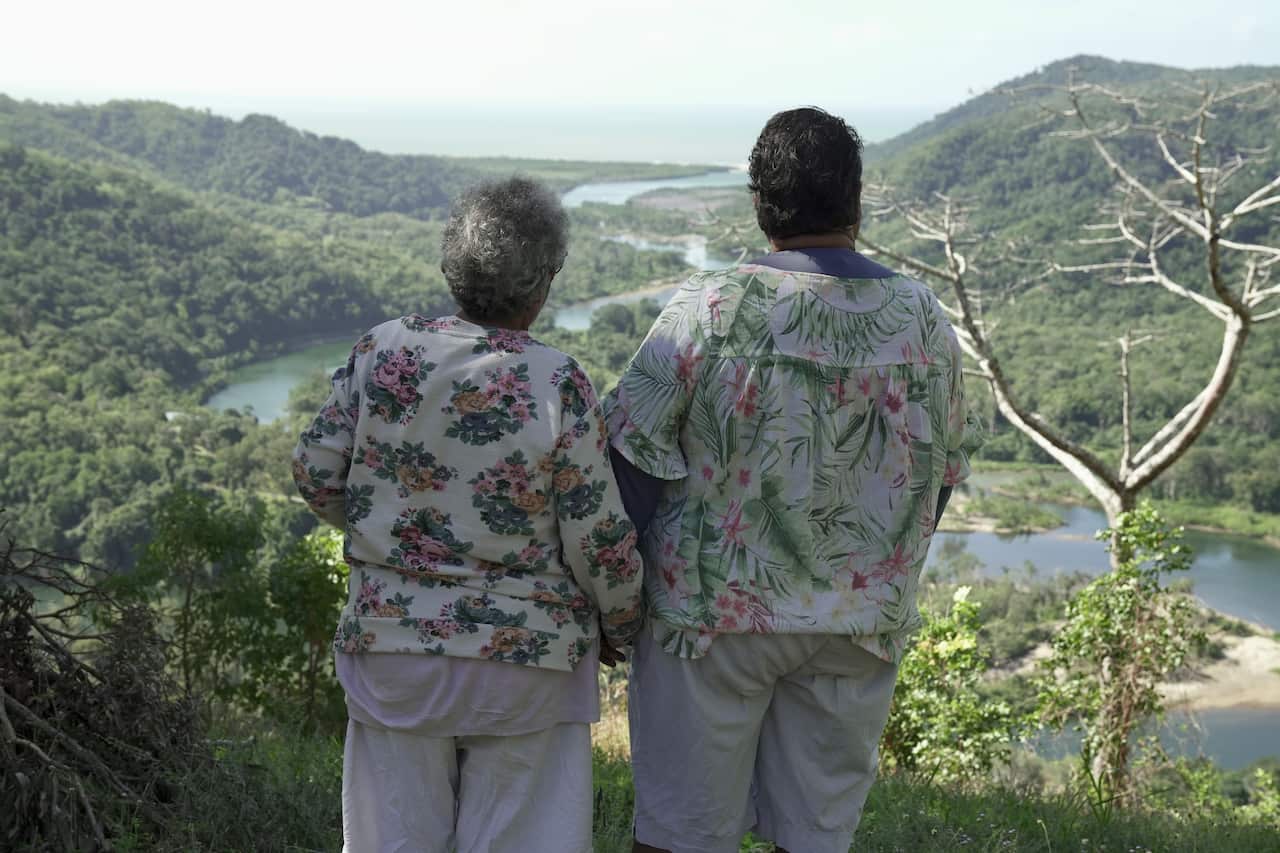
Known as the rainforest people, the Eastern Kuku Yalanji have deep cultural ties to the area, including through cultural sites, Dreamtime stories and totemic animals.
Francis Walker, who is a dialysis patient, believes having reliable power in the Daintree would help her live back on Country.
"If that microgrid did go ahead for me, I'd be happy to be living on my land instead of living in another place where I'm not happy," she tells SBS News.
My wawu [spirit] is here at home.
In 2021, the Daintree National Park was formally handed back to Traditional Owners in a historic agreement that established joint management of the area with the Queensland government.
Jabalbina Aboriginal Corporation, which represents Eastern Kuku Yalanji Traditional Owners, is also advocating for investment in renewable energy infrastructure for the region.
Culture and language manager Trinity Clarke says reliable infrastructure could help more First Nations people live on Country and maintain their connection to culture.
"It's still ongoing today, like families still reconnecting back with who they were, their bubu, where they're from and their family lines, it's still devastating," she tells SBS News.
"If we don't live on Country and speak to Country, we lose that part of ourselves and our mob don't want any more loss."
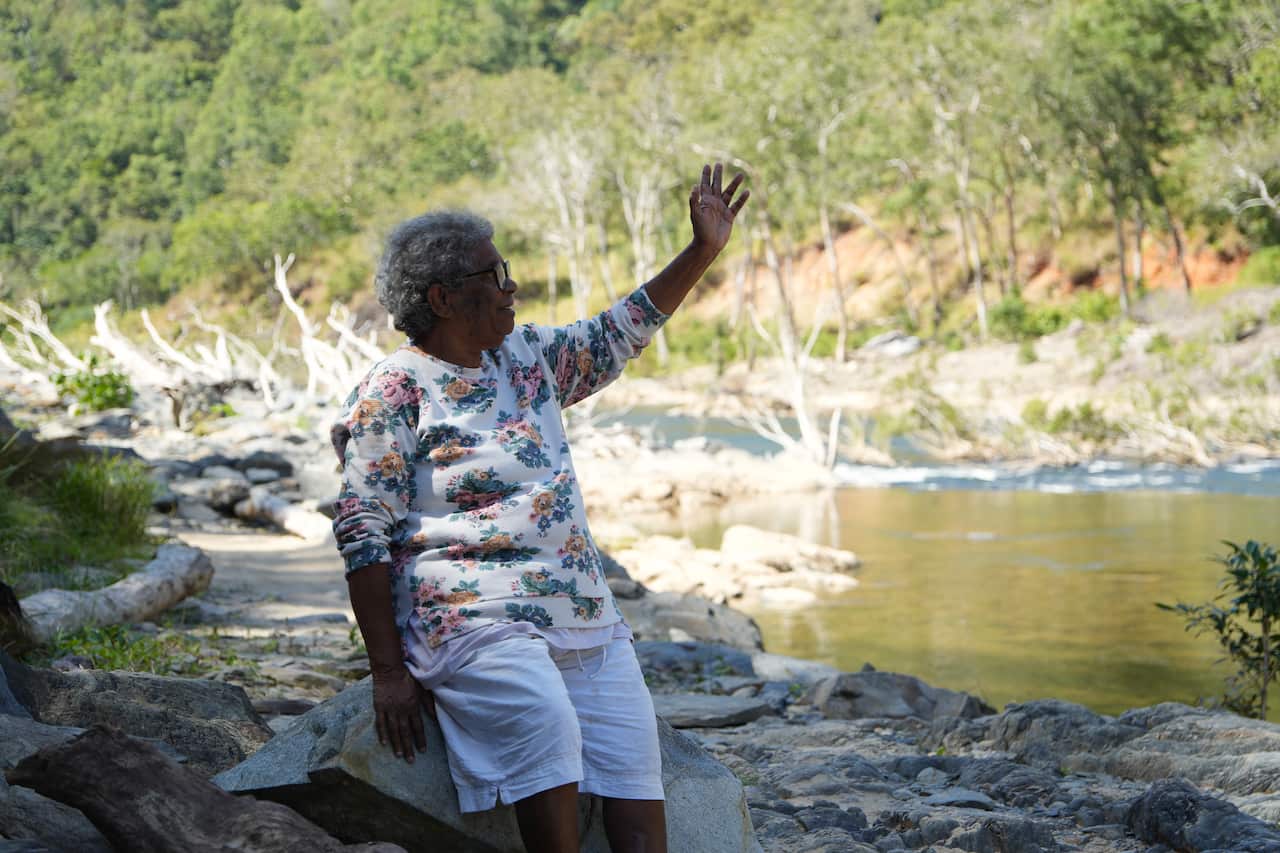
It's a connection that resonates with Kathleen Walker, who wants the opportunity to live on the land of her ancestors and continue traditional practices.
"Like the trees, you know, when they get old, they die in the rainforest," she tells SBS News.
"Well, bama [people] wants to be like that.
Bama wants to die and have a rest in peace in their homeland.
For the latest from SBS News, download our app and subscribe to our newsletter.







