We're going to wrap up for today
We're going to wrap the blog up for the day.
To recap this very big Monday, here are just a few of the key developments:
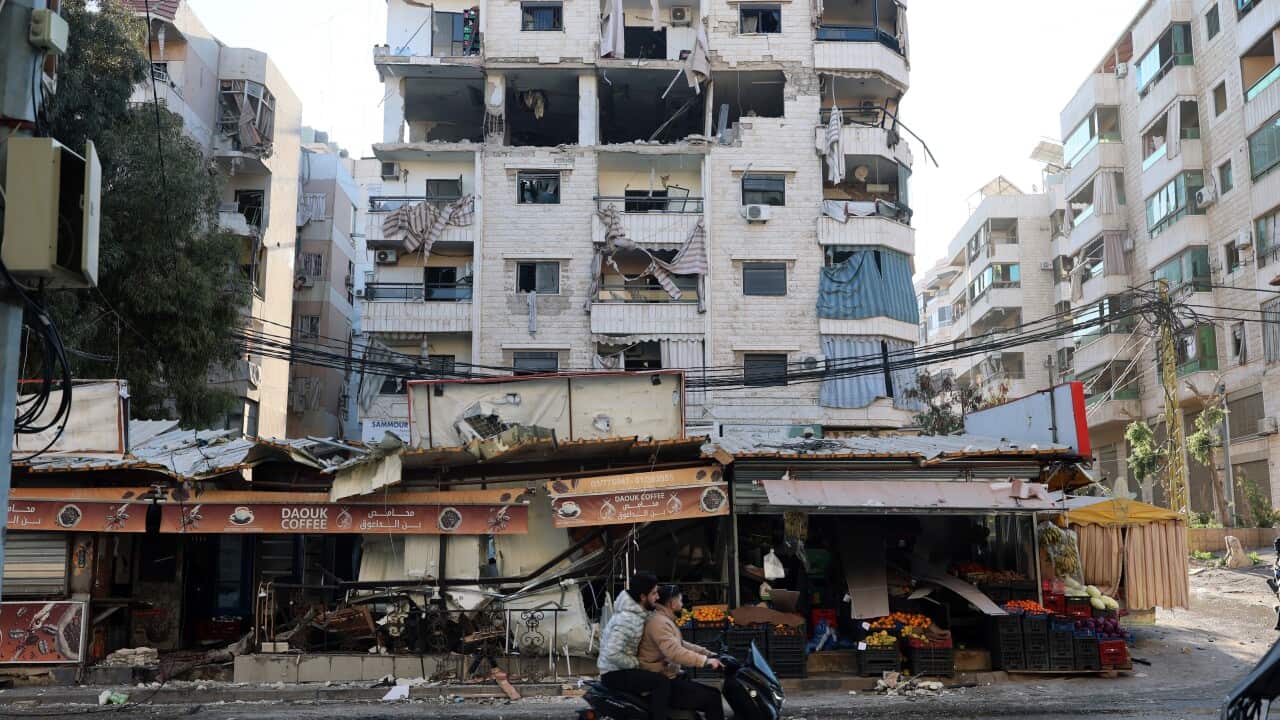
- The Israeli military said it launched a wave of strikes against Hezbollah "across Lebanon" on Monday after rocket fire claimed by the group in response to the killing of Iran's supreme leader, Ayatollah Ali Khamenei. Lebanon's health ministry later said Israeli strikes on Hezbollah-controlled southern Beirut suburbs and southern Lebanon killed 31 people and wounded 149
- Israel continued attacks on Iran, saying it launched large strikes on the capital Tehran and vowing to intensify the attacks. Iran's Revolutionary Guards said they had launched missile strikes on an Israeli government complex in Tel Aviv as well as security and military centres in Haifa and an attack on east Jerusalem
- The Iranian Red Crescent said that 555 people had been killed in the US and Israeli strikes since they started two days ago
- The United States and several Gulf allies issued a statement jointly condemning Iran's "indiscriminate and reckless missile and drone attacks against sovereign territories across the region". This came as Iran continued to attack Gulf states with US bases, with drones reported in Kuwait, and loud blasts heard in the United Arab Emirates, Qatar, and Bahrain
- US President Donald Trump said the fighting could continue for another four weeks, and vowed the deaths of three US soldiers would be avenged — but that more were likely to come. Israel said fighting against Hezbollah could take "many" days
Thanks for reading our coverage.
— Alex Gallagher
Red Crescent says more than 550 people killed in Iran since attacks started
The Iranian Red Crescent, the humanitarian organisation that's part of the wider Red Cross and Red Crescent aid and relief movement, said in a statement that 555 people had been killed in Iran by the US and Israeli strikes since they started two days ago.
"Following the Zionist-American terrorist attacks carried out in various regions of our country, 131 cities have been affected to date and, regrettably, 555 of our compatriots have been killed," the humanitarian group said in a post on Telegram.
Iran's Revolutionary Guards say Netanyahu's office targeted
Iran's Revolutionary Guards say their missile attacks have targeted the office of Israeli Prime Minister Benjamin Netanyahu, along with the headquarters of the Israeli air force commander.
In a statement carried by Iran's Fars news agency, the Revolutionary Guards said Kheibar missiles had been used in the attack. The statement did not name Tomer Bar, the current commander of the Israeli air force.
— Alex Gallagher and AFP
Iranian state media reports deaths of army personnel, IRGC members
Iranian media is reporting that separate US and Israeli strikes on Iran have killed five members of the Iranian army and three members of Iran's Islamic Revolutionary Guard Corps (IRGC).
Tasnim news agency, quoting an army statement, said "five members of the Iranian army were killed" in an attack on the western city of Khorramabad.
The ISNA news agency, quoting a statement from the IRGC, said three of its members were killed in an attack on a detachment in the western Lorestan province.
— AFP
Israel says it struck senior Hezbollah operative, killed Iranian intelligence figures
The Israel Defense Forces (IDF) says it has "struck" a senior operative from Hezbollah in Beirut. It did not elaborate but said further details would follow.
The IDF also said it had killed two members of Iran's ministry of intelligence — Sayed Yahya Hamidi, deputy minister of intelligence for Israel affairs, and Jalal Pour Hossein, head of the espionage division.
In a post on X, the IDF said they had been targeted and eliminated during the the first joint Israel-US strikes on Iran, and the Israeli air force had struck the ministry's headquarters in Tehran.
— Alex Gallagher
Anthony Albanese says legal basis for attack on Iran 'a matter for the United States'
Prime Minister Anthony Albanese has appeared on ABC's 7.30 program.
Host Sarah Ferguson asked Albanese if he was concerned that there appeared to be "no legal checks to power" under United States President Donald Trump.
The joint US-Israeli strikes on Iran over the weekend have been called a breach of international law by some legal and human rights experts.
Albanese did not immediately answer the question, instead saying Iran had "shown ... why they remain a threat to peace and stability" in recent days by retaliating against the US and Israeli strikes with strikes of their own on Israel and Gulf states with US bases.
When pressed by Ferguson if he could explain the legal basis for the attacks, Albanese said it was "a matter for the United States" and that he didn't have the intelligence the US and Israel had before they attacked.
— Alex Gallagher
Israel calls Hezbollah chief a 'marked target'
Israel has said Naim Qassem, the secretary-general of Hezbollah, is a "marked target for elimination" following the group's attacks on Israel.
In a post on X, Israel's defence minister Israel Katz said Hezbollah would "pay for a heavy price" and Qassem has "decided on the shooting under pressure from Iran".
Qassem said he and Israeli Prime Mininster Benjamin Netanyahu had instructed the Israel Defense Forces to "act with force against Hezbollah" while continuing to attack Iran.
Israel launched strikes on southern Beirut, a Hezbollah stronghold, and Lebanon's southern suburbs following Hezbollah's strikes. Lebanon's health ministry said 31 people were killed in Israel's strikes, with 149 people wounded.
— Alex Gallagher
Strikes reported in multiple Gulf states
There have been multiple reports of Iranian strikes in Gulf states that host United States bases.
Kuwait said its air defences had intercepted hostile drones, while Agence France-Presse journalists and witnesses reported loud blasts in Abu Dhabi and Dubai in the United Arab Emirates, the Qatari capital Doha, Manama in Bahrain and Kuwait City. Bahrain's interior ministry said Iranian strikes killed one person.
Meanwhile, in Cyprus — an island country in the eastern Mediterranean Sea — an Iranian drone hit the runway of a United Kingdom military base, causing "minor material damage", according to Cyprus President Nikos Christodoulides.
The UK had agreed on Sunday to allow the US to use British military bases to fire "defensive" strikes aimed at destroying Iranian missiles and their launchers.
— Alex Gallagher and AFP
What should you do if you've been affected by travel chaos?
The conflict has disrupted global aviation and exposed gaps in travel insurance cover.
Airspace closures across the region, triggered by the US-Israel war on Iran, have caused widespread flight cancellations, stranded thousands of passengers and placed intense pressure on airlines, travel agents and insurers.
While airlines are rearranging schedules, insurers are warning many travellers may be exposed once war exclusions apply.
"When there is a declaration of war, that often will invoke an exclusion into travel insurance policies," said Insurance Council of Australia CEO Andrew Hall.
You can read more about that — and what to do if you're one of the thousands of Australian travellers estimated to be stranded overseas at the moment — in the article below:
— Gabrielle Katanasho
Lebanon's health ministry says 31 killed in Israeli strikes
Israeli strikes on Hezbollah-controlled southern Beirut suburbs and southern Lebanon killed 31 people, according to Lebanon's health ministry. It added that 149 people had been wounded.
Israel attacked Lebanon after the group Hezbollah — one of Iran's main allies — said it had fired rockets and drones at Israel in retaliation for the killing of Iran's Supreme Leader Ayatollah Ali Khamenei and "in defence of Lebanon and its people".
Eyal Zamir, the head of the Israel Defense Forces, said Hezbollah was "fully responsible for any escalation" following its strikes on Israel, and suggested there could be "many" more days of fighting.
— Alex Gallagher and Reuters
Israel's military chief says fighting against Hezbollah could take 'many' days
Israel's military chief Eyal Zamir said fighting against Lebanese militant group Hezbollah, which began early on Monday, could take "many" more days.
"We have launched an offensive campaign against Hezbollah," Zamir said in a video shared by the military on Monday, hours after rocket fire claimed by Hezbollah prompted a wave of Israeli strikes on Lebanon. "We must be prepared for several days of fighting, many."
— AFP
Where has Australia advised not to travel?
The Department of Foreign Affairs and Trade's (DFAT) Smartraveller platform has issued several travel warnings for parts of the Middle East.
DFAT is advising people not to travel to Iran, Israel, Lebanon, Syria, Iraq, Kuwait, Qatar, Bahrain, the United Arab Emirates (UAE), Yemen, Gaza or the West Bank.
It's advising people to reconsider their need to travel to Saudi Arabia, Jordan or Oman.
Smartraveller says Australian citizens, permanent residents and their immediate family in Israel, Iran, Qatar and the UAE can register with DFAT to receive important updates directly. Find more information from Smartraveller here.
The airspace in many Middle East countries has been closed, and many flights cancelled.

— Alex Gallagher
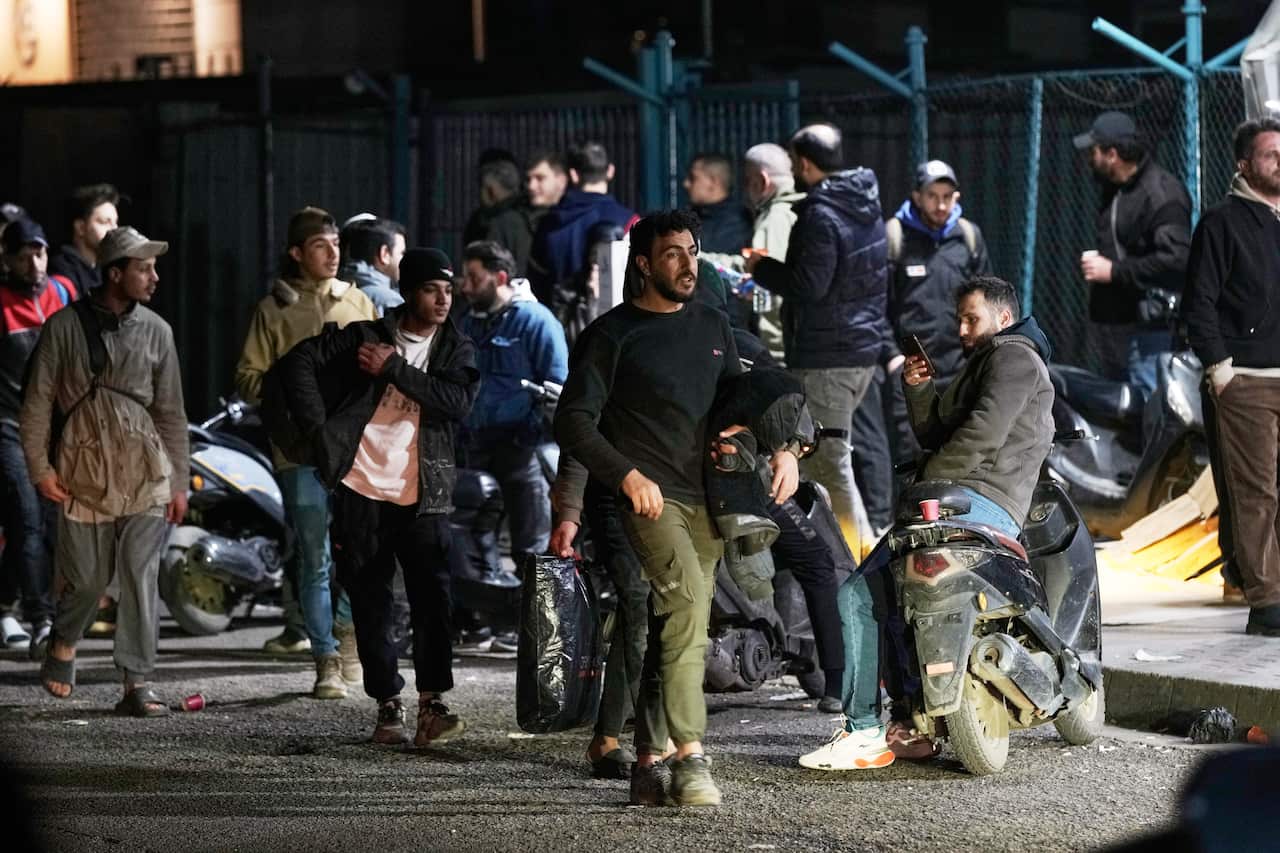
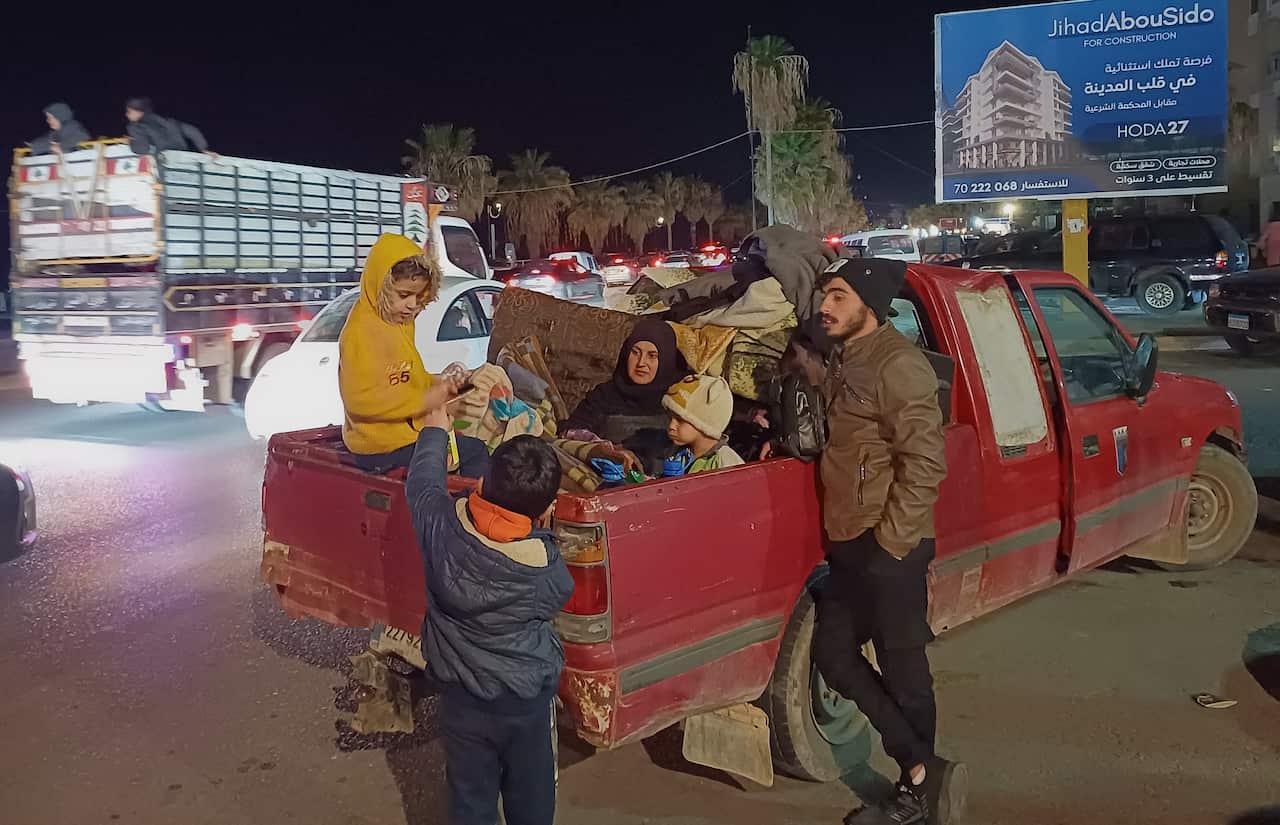
Heavy traffic as people in Lebanon flee southern suburbs
Images have started coming through showing people fleeing by car and on foot in southern Lebanon, after Israel launched airstrikes on Beirut and told residents of around 50 towns to evacuate.
Lebanon's National News Agency reported "major displacement" from Beirut's southern suburbs and the country's south near the Israeli border, and photos captured roads filled with traffic.

Iran won't negotiate with US, security chief says
Ali Larijani, secretary of Iran's national security council, said in a statement on X that Iran will not negotiate with the United States.
The post was in response to reporting by the Wall Street Journal in the US that Iran was making a fresh push to revive talks about its nuclear program with the US, citing Arab and US officials.
A third round of indirect talks between Iran and the US in Geneva last week — shortly before the US and Israel launched airstrikes on Iran — was unsuccessful in securing an agreement between the two sides.
— Alex Gallagher
The biggest developments in the Middle East so far today
We've seen the US-Israel war on Iran dramatically expand this morning — into new territories (notably Lebanon), leaving more people dead, stranding hundreds of thousands more as airports close, and plunging oil futures and global shipping routes into chaos.
Here's where we're at:
- Israel and Hezbollah are trading cross-border fire — Israel has been striking Hezbollah targets across Lebanon, while Lebanon has launched projectiles into northern Israel, triggering air raid sirens. Meanwhile, Iran has fired missiles into Israel, injuring people near Jerusalem
- The US and Israel have launched large-scale strikes on Tehran, with the US reporting it has destroyed Revolutionary Guard headquarters. Iranian news agency ISNA reported that strikes had targeted Gandhi hospital in northern Tehran
- US President Donald Trump has vowed to avenge the deaths of three US soldiers killed during the fighting, and says the war against Iran could last about four weeks. Gulf states say they will defend themselves against Iranian attacks, including by "responding to the aggression if need be"
- Iran's foreign minister Abbas Araghchi has defended his country's strikes across the Gulf on Al Jazeera, insisting the war was "imposed" by the US and Israel, and that what is happening in the region "is not our choice"
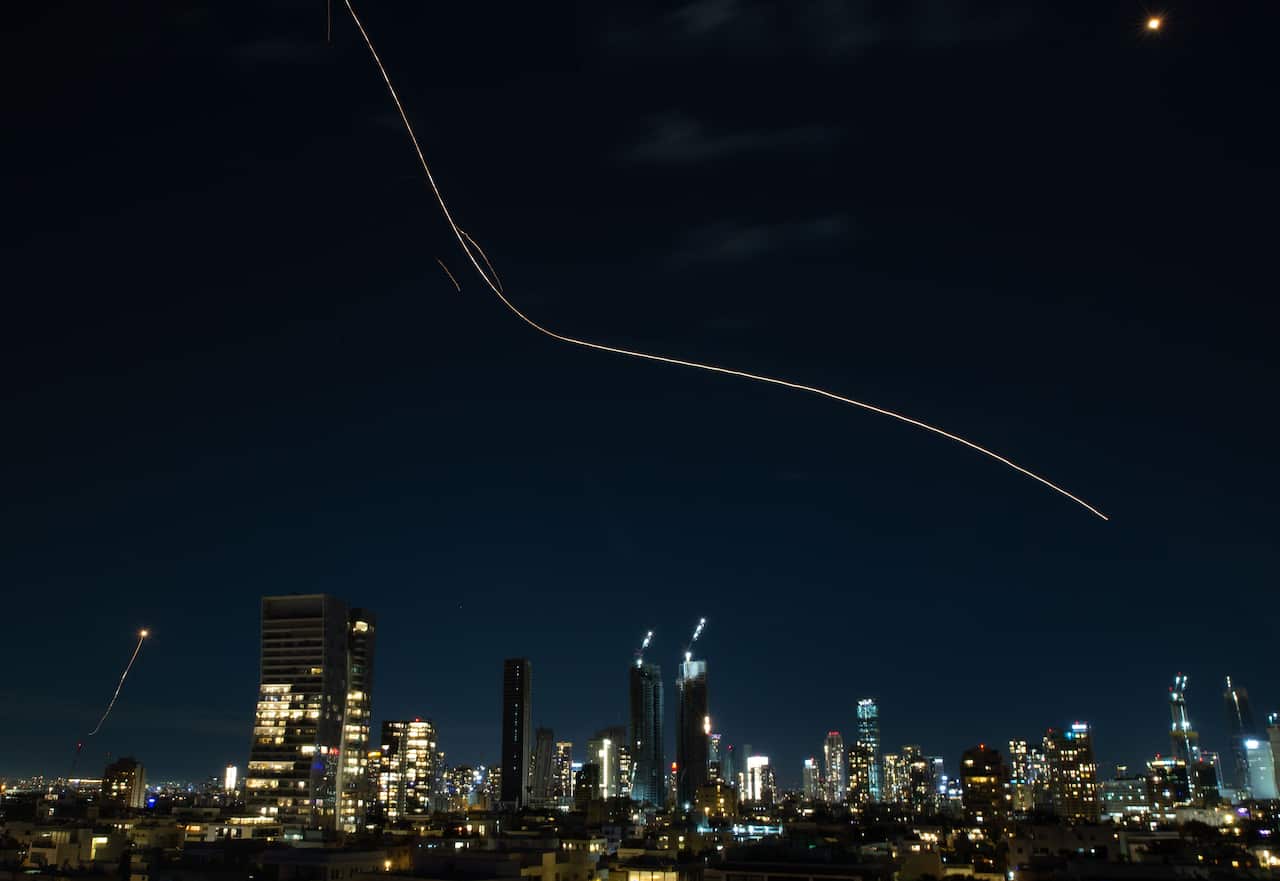
Flare trails left by interceptor missiles launched from Israeli air defence systems in Tel Aviv, Israel. Source: AAP / Chen Junqing/Xinhua/Sipa USA - Dean Long, CEO of the Australian Travel Industry Association, says about 11,000 Australian travellers have been impacted by the disruptions to air travel. Foreign Minister Penny Wong said that there were around 115,000 Australians in the region and that commercial flights — if they're running — will be the fastest way for people to get home
- Major shipping firms have halted passage through the Suez Canal and Strait of Hormuz for safety reasons, throwing global shipping routes into chaos. The EU warns a prolonged conflict could destabilise the Middle East and threaten global security and trade
- Iranian Australians are expressing mixed emotions over the US-Israeli strikes in Iran and the killing of its Supreme Leader Ayatollah Ali Khamenei. While many hope his death will lead to a free Iran, others say they don't believe that foreign military intervention is the way to do it
- Oil prices have surged and shares have slid, sending investors flocking to the relative safety of the dollar, gold and bonds. Australia's share market, the first major bourse to open after the US and Israel bombed Iran over the weekend, is trading lower
We'll continue to bring you updates throughout the afternoon and into the evening.
— Caroline Riches and Agence France-Presse
How many Australians have been affected by travel chaos?
Dean Long, CEO of the Australian Travel Industry Association, says about 11,000 Australian travellers have been impacted by the disruptions to air travel caused by the conflict.
Foreign Minister Penny Wong earlier said that there were around 115,000 Australians in the region, with about 11,000 travelling regularly in and out of Australia through Etihad, Emirates and Qatar Airways.
Long told ABC News around 8,000 travellers move from Europe through the Middle East to Australia every 12 hours, so he expects the number of Australians impacted to increase.
Countries across the region — including Israel, Iran, Qatar, the United Arab Emirates and others — closed their airspace following the strikes, and many global airlines have cancelled flights across the Middle East.
Long advised stranded Australian travellers not to cancel their tickets and allow their airlines to work through the disruptions.
— Alex Gallagher
Mixed emotions among Iranian Australians
Iranian Australians are expressing mixed emotions over the US-Israeli strikes in Iran and the killing of its Supreme Leader Ayatollah Ali Khamenei.
While many hope his death will lead to a free Iran, others say they don't believe that foreign military intervention is the way to do it — and doubt US President Donald Trump and Israeli Prime Minister Benjamin Netanyahu have good intentions.
Iranian Australian Fariba Willison told SBS News she fears for the safety of her people but compared the situation to a "surgical procedure" that would improve the lives of those in Iran once complete.
Listen to this story from SBS News' Sydney Lang below:
— Alex Gallagher
Israel tells residents of Lebanese towns to evacuate
The Reuters news agency is reporting that the Israeli military has ordered residents of at least 50 Lebanese towns to evacuate 1km away from those towns, citing a military spokesperson.
It comes after Israel launched heavy airstrikes on the southern suburbs of Beirut, after Hezbollah launched missiles and drones towards Israel in retaliation for the killing of Iran's Supreme Leader Ayatollah Ali Khamenei.
— Alex Gallagher and Reuters
Oil prices jump to highest in months amid US-Iran conflict
Oil prices have surged more than 8 per cent to their highest in months as Iran and Israel stepped up attacks in the Middle East, damaging tankers and disrupting shipments from the key producing region.
Brent crude futures struck a high of US$82.37 ($115.93) a barrel and was at US$79.34 ($111.67), up US$6.47 ($9.11), or 8.88 per cent earlier Monday.
US West Texas Intermediate crude jumped US$5.36 ($7.54), or 8 per cent, to US$72.38 ($101.87) a barrel after touching a high of US$75.33 ($106.02) earlier.
It follows news overnight that at least three tankers were damaged off the Gulf coast and one seafarer was killed as Iranian retaliation for US and Israeli strikes on Iran exposed ships to collateral damage.
Iran has closed navigation on the Strait of Hormuz forcing over 200 vessels to drop anchor or be re-routed around the Cape of Good Hope.
Roughly 15 million barrels of crude oil per day — around one fifth the world's oil — are shipped through the Strait of Hormuz, making it the world's most critical oil chokepoint, according to Rystad Energy.
— David Smith and the Australian Associated Press
US and Gulf allies issue joint rebuke of Iran
The United States, Bahrain, Jordan, Kuwait, Qatar, Saudi Arabia and the United Arab Emirates have jointly condemned Iran's "indiscriminate and reckless missile and drone attacks against sovereign territories across the region," saying the strikes "targeted sovereign territory, endangered civilian populations, and damaged civilian infrastructure".
In a statement issued on Monday, the nations said Iran's actions represent "a dangerous escalation that violates the sovereignty of multiple states and threatens regional stability," warning that targeting civilians and non-combatant countries is "reckless and destabilizing behavior".
"We stand united in defense of our citizens, sovereignty, and territory," and "reaffirm our right to self-defense" in response to the attacks, it added.
The allies also praised regional air and missile defence cooperation, saying it had helped prevent "far greater loss of life and destruction".
— Gabrielle Katanasho







