
State and territory health ministers have unanimously rejected the Commonwealth's latest hospital funding offer, stating it fails to meet the commitment for increased federal contributions needed to handle Australia's growing and ageing patient population. This funding standoff has caused a critical bottleneck, leaving over 3,000 federally-funded aged care patients stranded in public hospitals and increasing pressure on state health services.
Listen to Australian and world news, and follow trending topics with SBS News Podcasts.
TRANSCRIPT
"The rejection by states and territories of the latest offer from the Commonwealth with regards to the National Health Reform agreement, should come as no surprise. It has been rejected because it does not meet the promise of the commitment that was given almost two years ago.”
That was Victoria's Minister for Health, Mary-Anne Thomas, speaking after state and territory health ministers rejected the Prime Minister's $20 billion health deal.
This comes after reports 3,050 aged Care patients have been stranded in public hospitals, according to new figures unveiled by states and territories.
This presents a sharp, 25% increase in just three months.
This bottleneck is collateral damage from a long funding standoff between the Commonwealth and the States.
"We know that we are dealing with a aging and growing population. We are dealing with greater acuity and complexity with our patients. It's why we need the promise of the original NHRA delivered that is an increase in the Commonwealth contribution rate, an increase in the growth cap. We need to see these delivered in order for the states and territories to consider a health reform funding agreement."
The self-imposed deadline for a new five-year hospital agreement now stands only weeks away.
States and territories say, the federally-funded aged care sector is failing to provide suitable exit points from hospitals, placing an immense and costly burden on state-run health services.
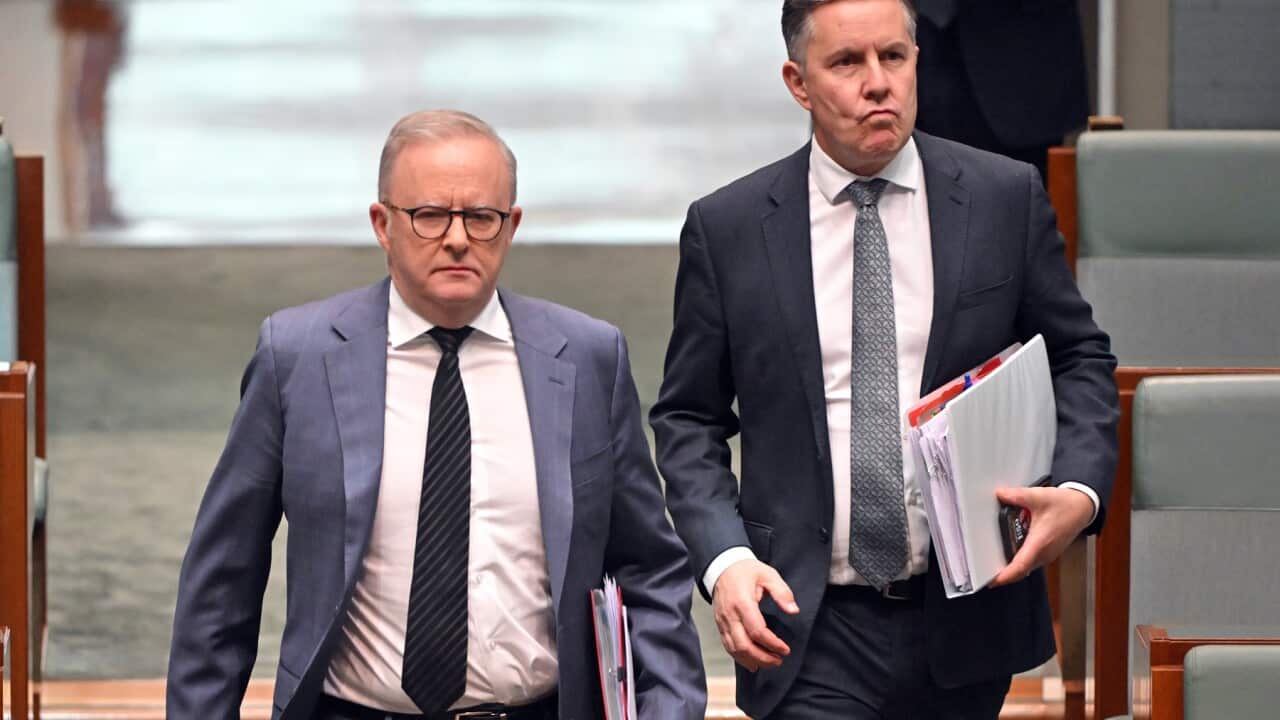
Federal Health Minister Mark Butler told ABC Radio National Breakfast that the Federal government wouldn't be giving the states or territories any more money.
"Well, I think health ministers know I'm not bringing more money today. I don't have the authority to do that. We caught up last night, including Tim Nicholls here in Brisbane, for an informal dinner where we canvassed a whole range of these issues. They know that our job as health ministers is to narrow the points of difference as far as we possibly can and then recognise that this deal, which is not just about hospitals, it's also covering some very important disability issues around the future of the NDIS. The deal ultimately is going to be landed by First Ministers, by the Prime Minister and the premiers and the chief ministers, particularly that big question of dollars going into hospitals."
Tasmanian Health Minister Bridget Archer says it's an enormous burden on health systems that are already under intense demand.
"That is the responsibility of the Federal government -and whilst they might say, Oh, look, we've got a budget under pressure - States also have budgets that are under pressure, and we are stepping in to continue to provide that support."
New South Wales Minister for health, Ryan Park shares a similar sentiment.
"I'm deeply, deeply furious with what is happening because it's not fair on those patients."
The Commonwealth has been embroiled in a funding clash with the states and territories for months as it tries to secure a new five year public hospital agreement.
Prime Minister Anthony Albanese sought to ease those tensions, adding an extra $1 billion to an existing offer of $20 billion over five years, and $2 billion over four years to deal with aged care patients stuck in public hospital beds.
The dispute stems back to a national cabinet agreement in 2023 when the federal government promised it would increase its share of public hospital funding to 45% by 2035.
But two years later, a deal is yet to be made.
Queensland Minister for Health Tim Nicholls says the chance of a deal this year is unlikely without a largely improved offer.
"That is not the Christmas present that Australians are looking for from their Federal government. When it comes to health care reform, we wake up hopeful, but I'm not sure that we'll get there on Friday. That really requires the Prime Minister to come to the table."
Mr Butler says the major cost driver results from state-level decisions, such as wage deals, which the federal government does not control.
"The big driver of that cap has been price. The first year after that 2023 deal, price, the unit price of hospital activity went up by more than 12% really reflecting wage deals that the state governments had been doing that we ultimately read about in the media. So yes, there is some demand increase, but the big driver of price has been the unit price that state governments deal with - and can I say about activity? If you look at the Emergency Department data released by the Institute of Health and Welfare this week for the first time that has been flat... largely because the less serious cases that present at ED... That's actually declined quite significantly because of our urgent care clinic program."









