

Lake St Clair is surrounded by Tasmania's Wilderness World Heritage area and was carved out by glaciers over millions of years. It's around twice as deep as Bass Strait, but Australia's deepest lake has never been fully mapped. Until now: CSIRO scientists have produced the first 3D map of the underwater landscape, confirming the vast depth of the natural wonder.
Listen to Australian and world news and follow trending topics with SBS News Podcasts.
TRANSCRIPT:
In Tasmania's wilderness sits Australia's deepest lake: Lake St Clair.
Thousands visit every year but until now, the underwater landscape has remained somewhat of a mystery.
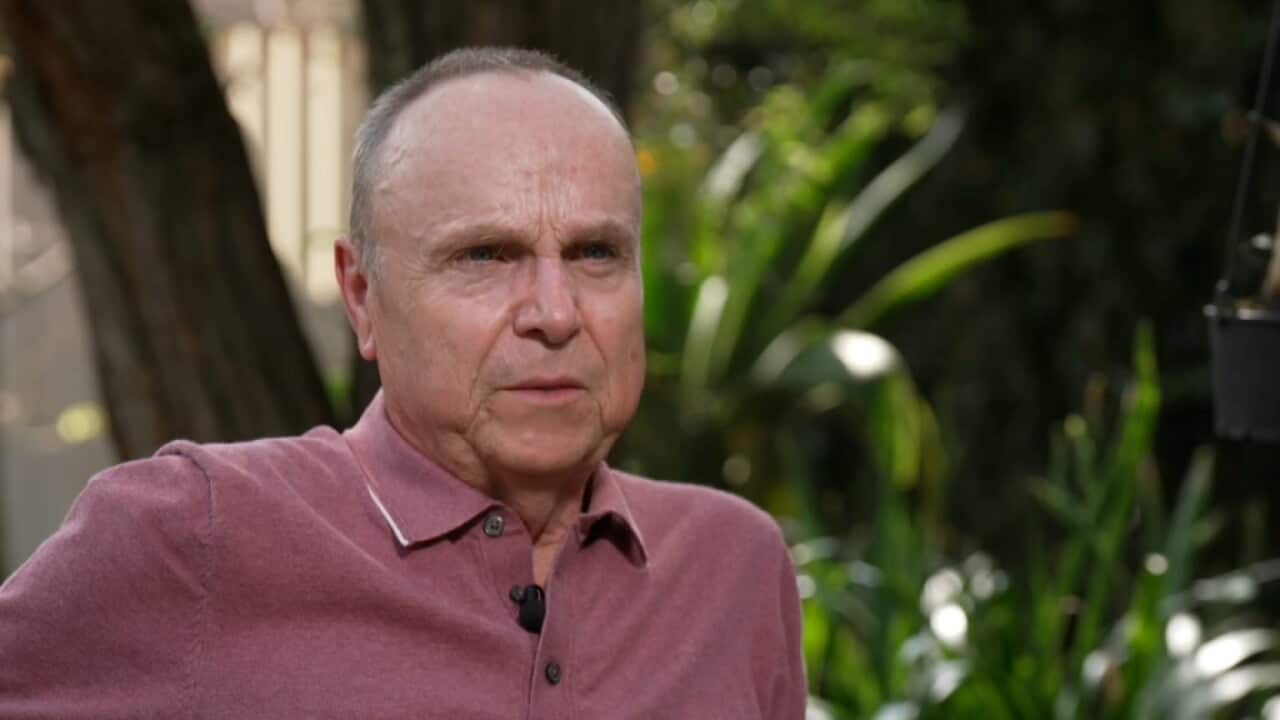
Hydrographic surveyor Augustin Déplante, from the CSIRO, recently led a team that mapped the lake bed for the first time.
"When I saw that the deepest lake in Australia had never been surveyed with the multi beam, I was very surprised. But I guess if it was easy to do it would have already been done."
The team used a multibeam sonar to map the lake bed over nine days.
"Basically, it's just as if we emptied the lake of its water, and we're walking around and we're mapping it out. So I think it's going to be quite fascinating."
Their work has revealed an underwater landscape that's never been seen before.
"We can see the input of fresh water basically coming into the lake from the mountains and it's carving through the lake floor so we have these waterfalls basically coming down into the lake and then reaching the cliffs, it's pretty incredible to look at and you can see the trees as well sometimes overhanging these areas, it's quite spectacular."
Michael Croghan has been running a Lodge at the southern end of the lake for almost 20 years.
"Personally, I would describe the lake as my church. It is the most peaceful place on this planet. I may be biased, but so many other people are saying the same thing. Visually stunning, never the same two days in a row. The most phenomenal place to swim, because it's, as I said, it's the cleanest air and it's the cleanest water in the world.”
He keeps a special bottle of gin behind the bar that was lowered to the bottom of the lake a few years ago by a different team of researchers.
“Just for giggles one night, I said to them, would you take a bottle of gin, put it on the bottom of the lake and take a photograph? And they're like, Yeah, sure. So I'm like, okay, great. So they did.”
It didn't go down to the deepest point - but it still surpassed 100 metres.
“They did the best they could, but they brought the bottle back, and it just sits behind the bar. It's now been depth tested. I think that was about 120 metres."
Augustin Déplante says the mapping shows the deepest point of Lake St Clair plunges to about 163 metres.
"It's about towards the south on the western side, just in the corner, basically, we can almost see the glacier would have really, like, you know, grinded through that corner."
Closer to shore, a remotely-operated vessel known as the OTTER completed the mapping.
It was piloted by autonomous systems research engineer Dr Hui Sheng Lim.
"It can go really shallow into regions, like less than less than two metre, even less than a metre, as well. As long as there's no, like, hidden rocks or anything underneath the surface. So those are the areas where the big vessel won't be able to get to."
The Otter revealed areas close to shore with sharp drop-offs.
“What we are trying to do, it's like mapping the shallow region so you can actually see how the contour changes on the shoreline. And you'll see how quick that actually dropped from the shoreline, like all the way down to 50 metres, like you can see a metre here, and then next moment you are in a 10 metre zone, and next moment you're already in, like, 30 metre, 50 metres deep.”
Otter can also operate autonomously, following a precise, pre-planned path.
"One of the most useful features is we will be able to autonomously find gaps and find the best way to cover those missing gaps in our data sets."
The detailed data collected will be made public, providing an important resource it's hoped will fuel further study of Lake St Clair.
It will include what might be found in the depths.
"No weird monsters or anything, yet. We'll have to send a camera down to make sure, to the deepest point, to make sure nothing's lurking there."