"This is exactly how you are going to make a ton of money off of this war happening in the Middle East" one TikTok finance creator declares.
Other creators on TikTok use meme formats to discuss the stocks they've invested in specifically for wartime, and gloat about how much profit they've made.
And on Reddit, users seek advice on financial forums about the best stocks to invest in when global conflicts break out, looking for options such as the "best investments for a long war".
More than 3,600 people have been killed in US-Israeli attacks on Iran since the start of the war on 28 February, according to human rights group HRANA. More than 2,500 people have been killed by Israeli strikes in Lebanon since the most recent war between Hezbollah and Israel began 2 March, according to Lebanon's health ministry. The latest Middle East conflict has sent economic shockwaves around the world and blocked a crucial artery for the world's oil.
In Australia, modelling from Griffith University has found a drawn-out conflict in the Middle East could push up inflation by 5 per cent and Australians could face a combination of slowing economic growth, high unemployment and rising prices, known as 'stagflation'.
News that makes sense
Your trusted source for staying up-to-date with the world around you. Get free daily news updates and analysis, straight to your inbox.
However, while many people suffer the pain of rising cost of living, some investors view wartime as a moment of opportunity.
Conversations about how to "capitalise or profit from times of crisis" have become commonplace among some investors, Rand Low, an associate professor of quantitative finance at Bond University, told The Feed.
Professor Jagannadha Pawan Tamvada from Kingston Business School at Kingston University, London, told The Feed there are "well-established patterns where capital flows into sectors expected to benefit from instability".
"We are also seeing the emergence of financial products, including defence-focused ETFs, that explicitly track geopolitical risk and treat escalation as a market signal."
Ethical questions
There are a range of perspectives on using wartime as a financial opportunity.
"I don't believe that people should be sadistic or have that sadist investing nature. You know, it's a real shame where you do see people profiting off other people's misfortunes," Marc Jocum, a senior product and investment strategist from Global X ETFs said.
However, Tamvada said he feels "cautious" about saying individual investors are acting unethically.
"The concern is that the system itself allows, and in some cases rewards, such behaviour and socially sub-optimal outcomes."
Tamvada says the reverberations of this type of investment raise a "paradox of incentives" where private interests align with the persistence of problems rather than their solutions.
"When capital systematically flows toward sectors that benefit from instability, these sectors gain greater political and institutional influence. Markets also begin to anticipate and price in instability, which can amplify volatility itself."
Where do people invest during wars?
Defence and energy stocks, as well as commodities such as gold and silver, are the places where investors typically look to place their money during times of global conflict and crisis, according to Jocum.
"No one wants to see the loss of human life. No one wants to see prolonged conflict — but there are people who ... try and monetise what's going on in terms of warfare," he said.
"It’s not that they're trying to profit off warfare, it's that they're tactically hedging their portfolios to certain things."
Defence stocks tend to rise during wartime for a number of reasons, including the amount of defence resources required for warfare as well as countries looking to build defence capacity, according to Jocum.
The Australian goverment recently announced a record spending on defence outside of wartime, with an extra $53 billion to be set aside in the next 10 years.
Defence stocks such as Lockheed Martin, Northrup Grunman and L3Harris have all risen substantially since the start of the year and aerospace, arms and information security company BAE Systems surged around 6 per cent on the first day of the US-Israeli attacks on Iran.
Many countries are seeking to militarise or become more militarily self-sufficient, including a lot of European nations, according to Jocum.
"I believe we are in a defence super cycle at the moment," he said
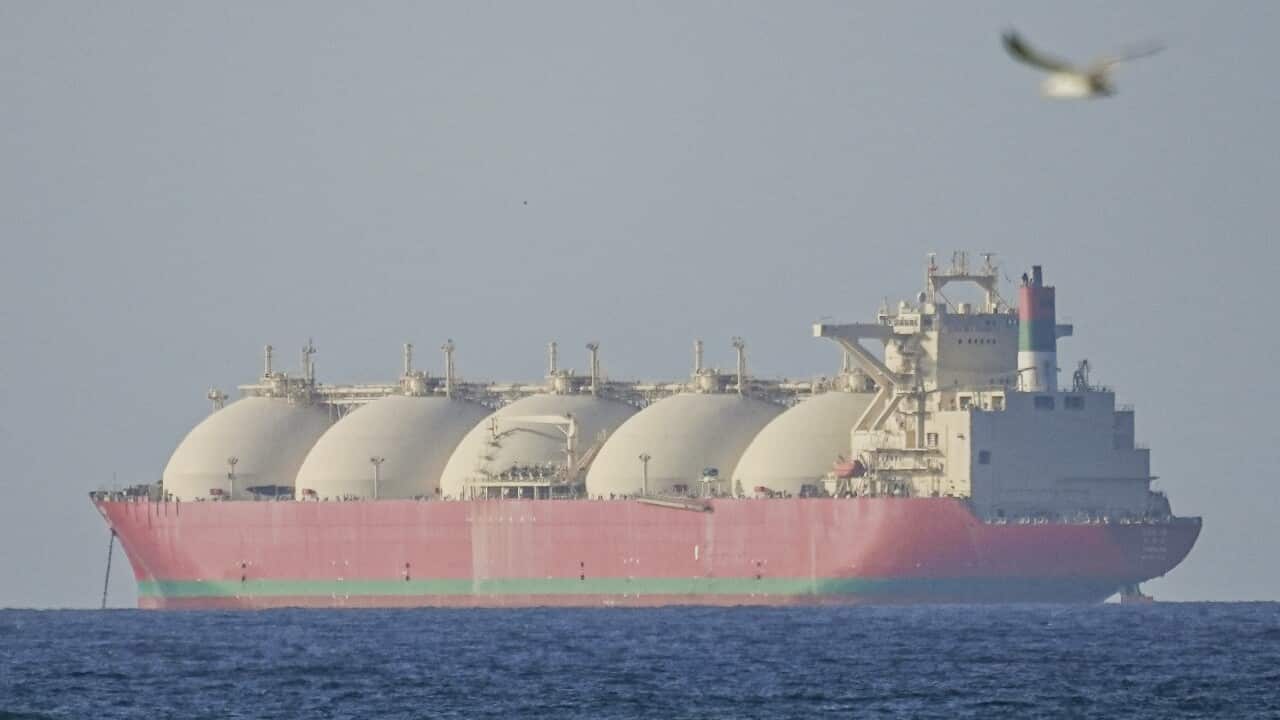
Energy stocks can also spike during times of global conflict due to disrupted supply chains and fear of scarcity. One analysis from investigative organisation Global Witness for The Guardian found the world's top 100 oil and gas companies banked more than $41 million every hour in unearned profit in the first month after the first US-Israeli strikes.
War, like investments, can be unpredictable
Jocum says investors also typically look for 'safe havens' during times of conflict and crisis, including government bonds and commodities like gold and silver.
However, these investments haven't performed particularly well since the start of the Middle East conflict.
"The reason for that is because of the supply disruption — a lot of people are thinking that inflation is going to come back and come back pretty harsh — and that creates a negative environment for bonds," Jocum said.
And while the price of gold hit a historical high in January this year, the price has dropped around 20 per cent since the start of the conflict.
Low from Bond University says this is due to the disruption of oil supply distracting from the gold market.
"You can’t eat gold — you need oil to drive your cars," he said.
Jocum says that while there is an assumed "recipe" of investment for geopolitical conflict, every conflict is different and he believes it is unreasonable to try to predict the narrative of individual conflicts.
"Market reactions vary significantly depending on the nature, depending on the scale and also the economic context of each conflict," he said.
"An Iranian war conflict that would disrupt pretty much the whole oil supply and see fuel prices skyrocket ... no one would have had that on their bingo card this year, which is why these 'black swan' events or 'left tail' events are very hard to predict."

Through award winning storytelling, The Feed continues to break new ground with its compelling mix of current affairs, comedy, profiles and investigations. See Different. Know Better. Laugh Harder. Read more about The Feed

Have a story or comment? Contact Us







