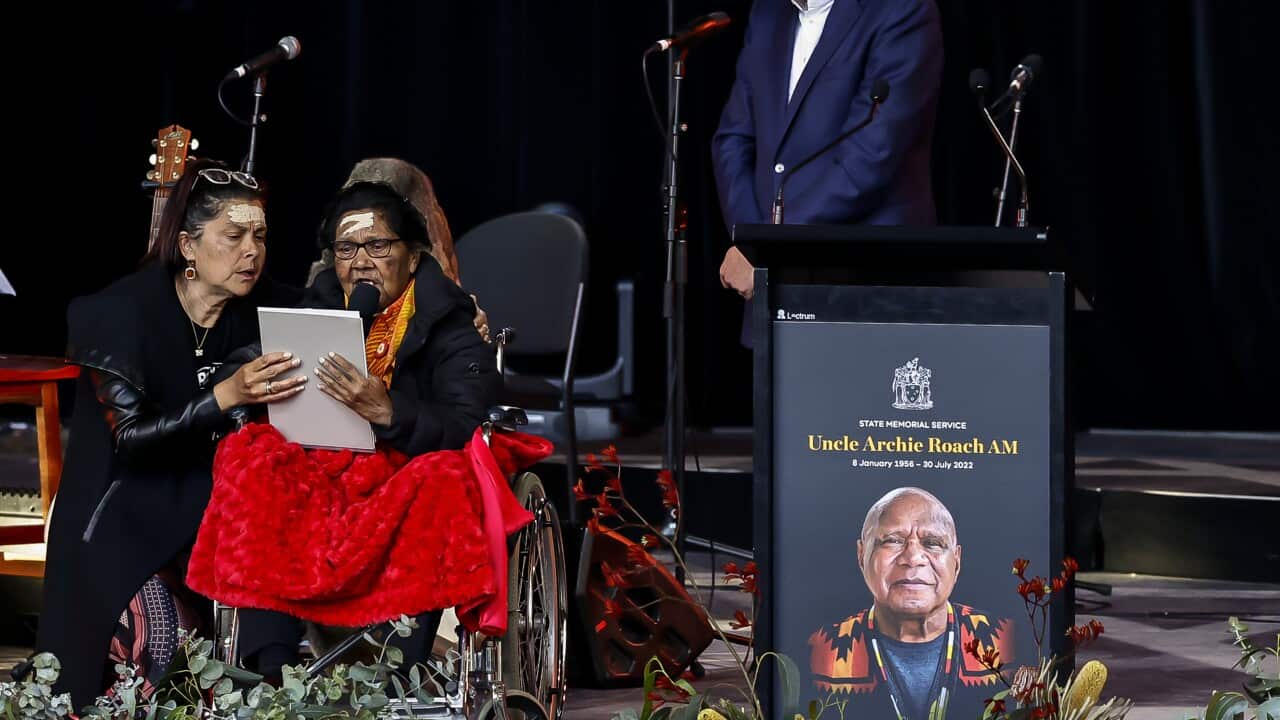
The life, loves and art of Uncle Archie Roach AM were celebrated on Thursday evening in a moving ceremony marking his passing.
The Gunditjmara Bundjalung man was a towering icon of culture and politics: a beloved hero to so many not just for his era-defining music, which gave voice to the pain and joy of the Blak experience in Australia, but also for his tireless activism.
That legacy was honoured at a state memorial in Melbourne's Sidney Myer Music Bowl, with hundreds of guests spilling from the venue's seats into the open grass beyond.
Tears, laughs and song
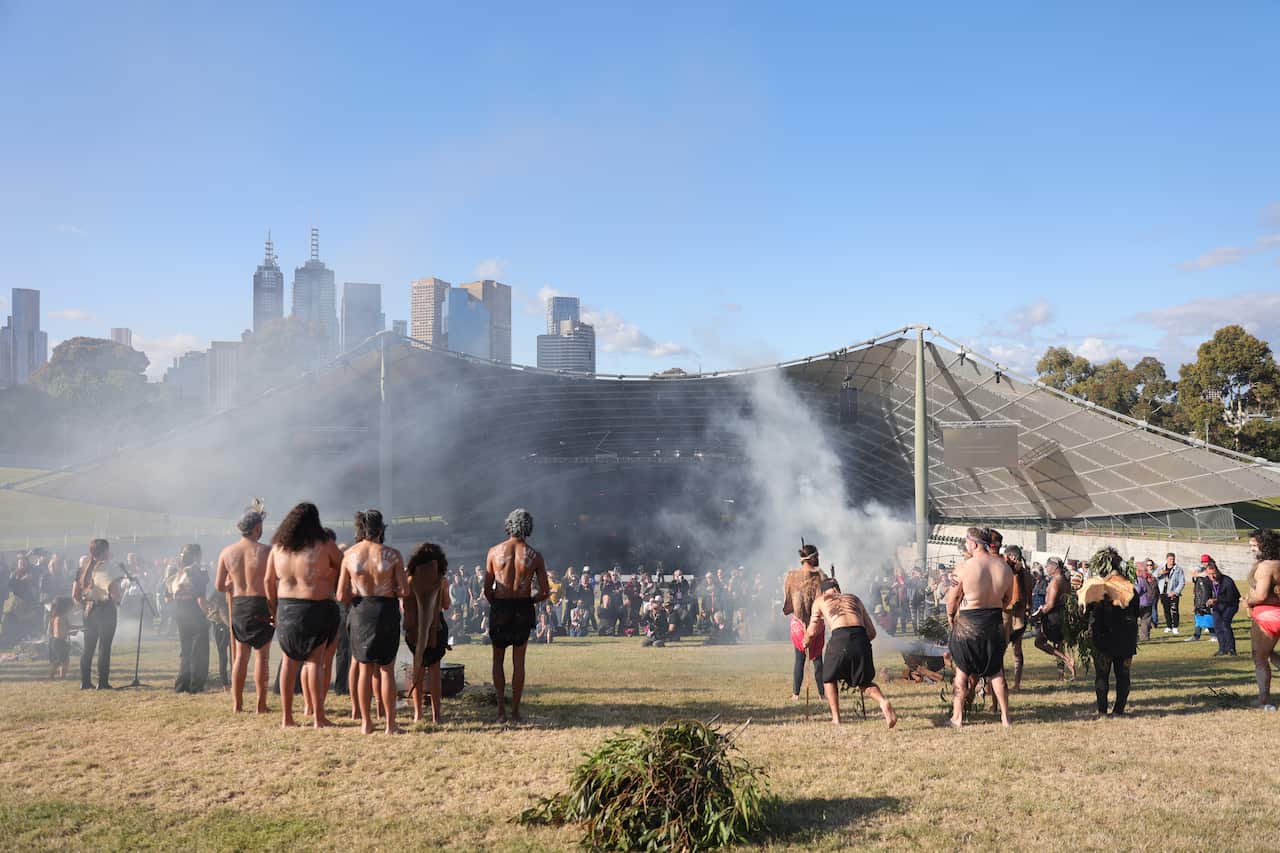
Family, friends, artists and politicians were present for a thoroughly cultural affair, both ancient and modern.
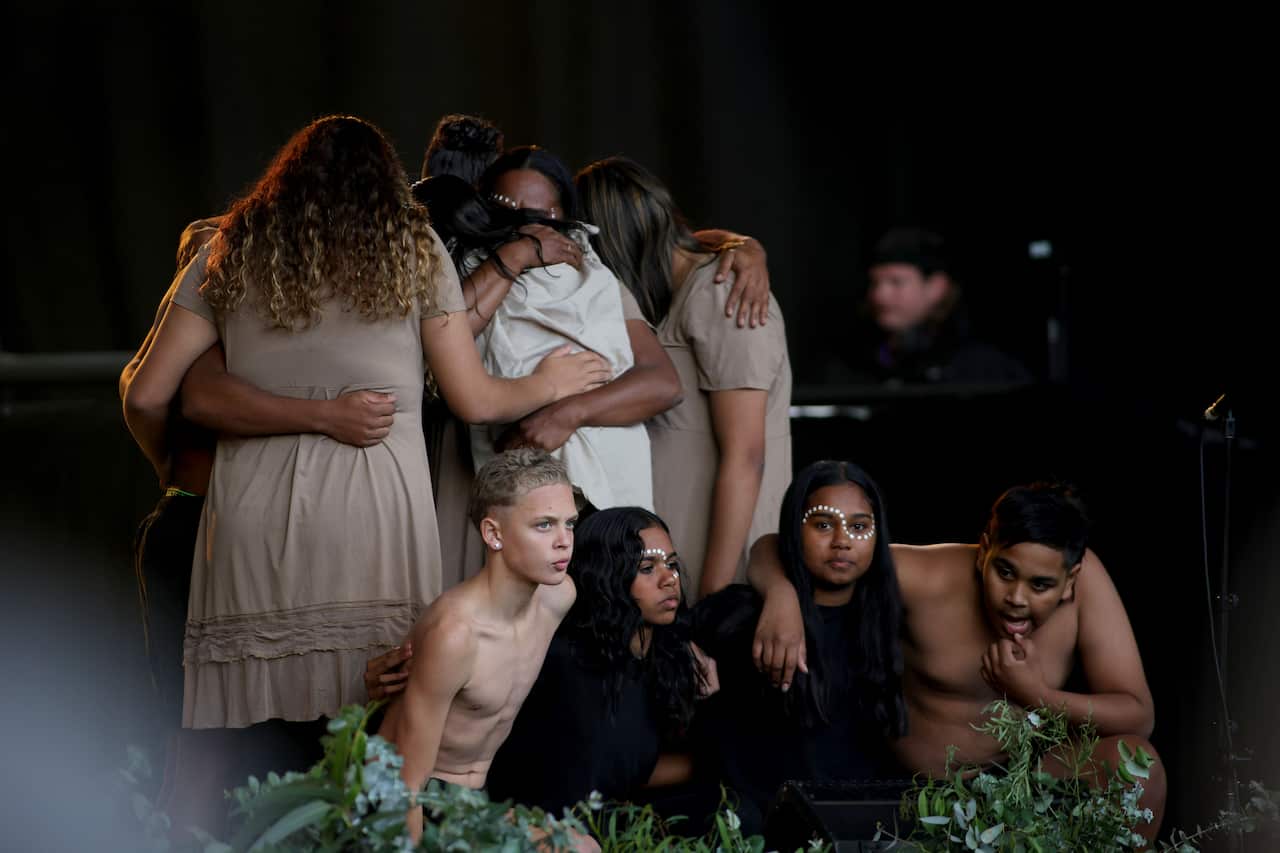
A smoking ceremony and the application of ochre paint welcomed dozens of Uncle Archie's family; contemporary musicians performed their works, acknowledging the path Roach had laid for Blak artists.
In a charged ceremony, words of the highest honour were used in abundance to describe a man whose loss seemed a palpable presence.
Tears were shed freely speaking of the pain that many there shared with the late artist, to which he gave such healing voice.
"He was everything to everyone," said Wurundjeri Elder Aunty Joy Wandin.
Uncle Archie's sister, Aunty Myrtle Roach, was one of the first, and most powerful speakers.
She spoke on behalf of her brother and their siblings, members of the Stolen Generations, separated as infants.
"We didn't do anything wrong... we spent years looking for answers," she said through tears.
"You are free now."
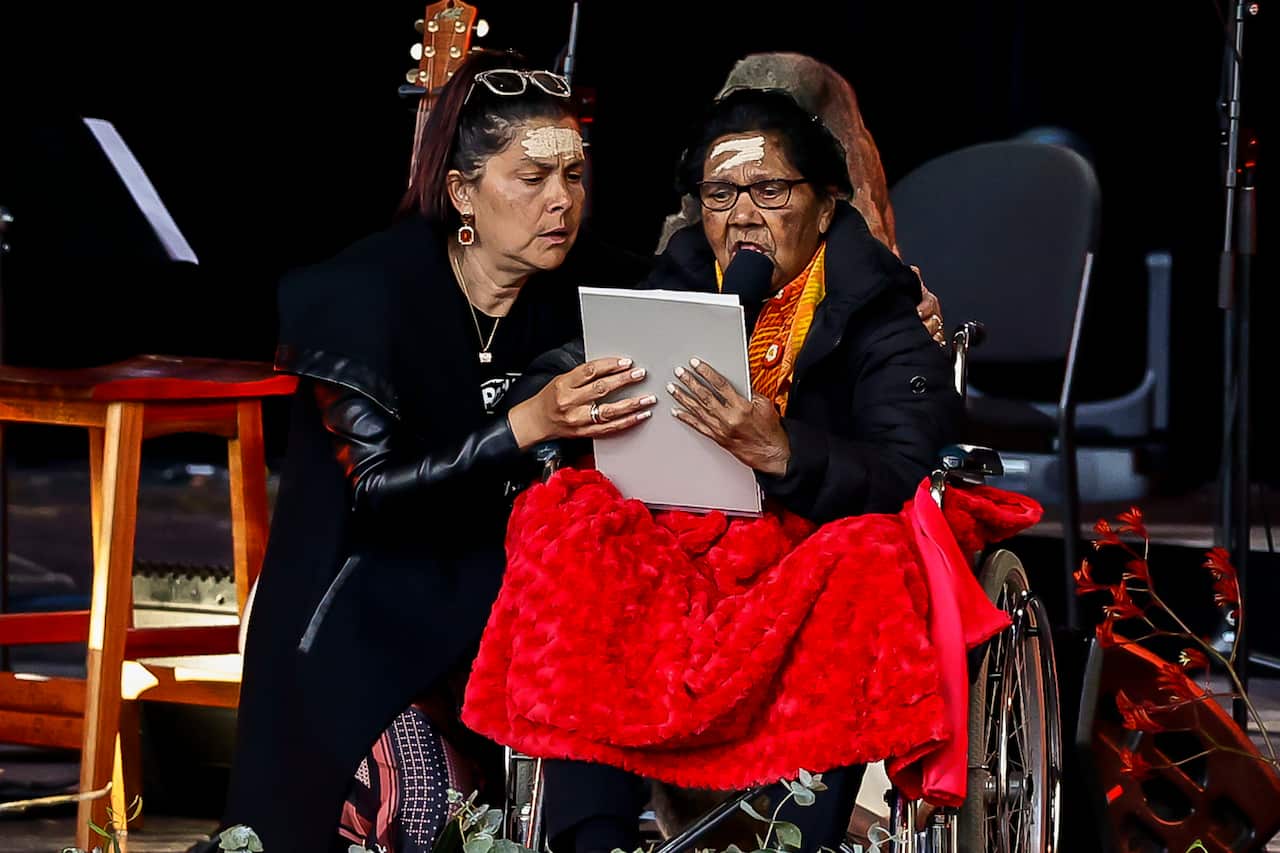
Uncle Archie spent years on the streets battling alcoholism as he dealt with the trauma of that experience.
It was acknowledged in an apology given on behalf of the state government by Victorian premier Daniel Andrews.
"We apologise for the extreme, inhumane acts committed against you, the torture, the unspeakable hurt and the intergenerational trauma that you and your family continue to carry and experience due to your removal.
"I am sorry. We are sorry."
As could be expected, music played a central role in the ceremony.
Amos Roach, Archie's son, sang 'Took the Children Away', his father's anthem for fellow Stolen Generation members; Yorta Yorta man Briggs performed his track 'The Children Came Back'; and Paul Kelly, before singing a rendition of Roach's classic 'Charcoal Lane' with Fred Leone, recalled the first time he heard 'Took the Children Away'.
"Three verses creating a whole word of pain, joy and resilience," said Kelly.
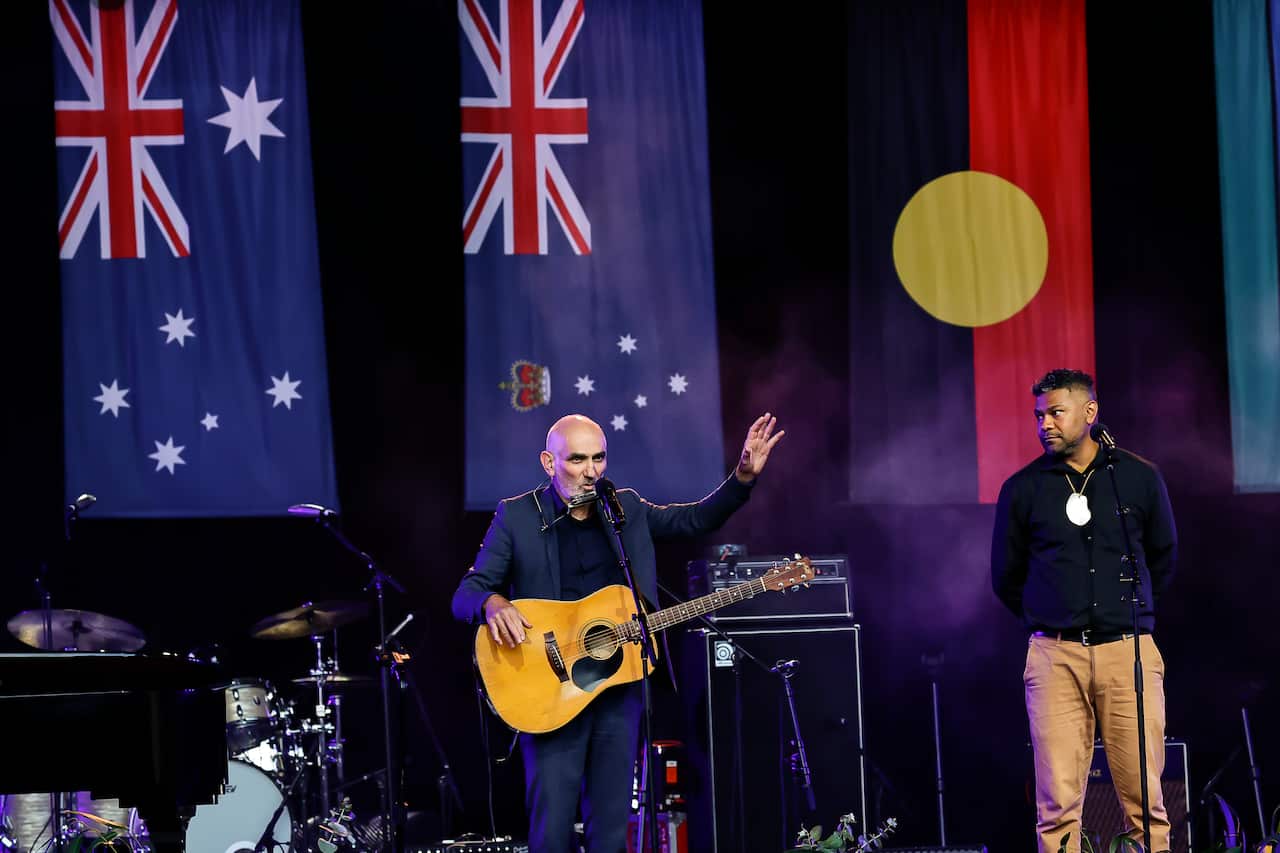
They were themes speakers returned to again and again: the immense hardships that Roach had faced in life, and the joy he nonetheless found.
That was nowhere more obvious than in the references to the great love of Uncle Archie's life, Aunty Ruby Hunter.
"They were each other's backbone and heartbeat," said Uncle Graham Thorpe.
After meeting as teenagers, the pair, both Stolen Generations members, were together for almost four decades as partners in life and music.
Something else they shared was a passion for advocacy, tirelessly working to help their community, especially those with whom they had shared trauma.
The Archie Roach Foundation supports First Nations artists and also supports youth who have come into contact with the justice system.
Before his passing in September, Uncle Jack Charles was a notable board member who also had lived experience in the area.