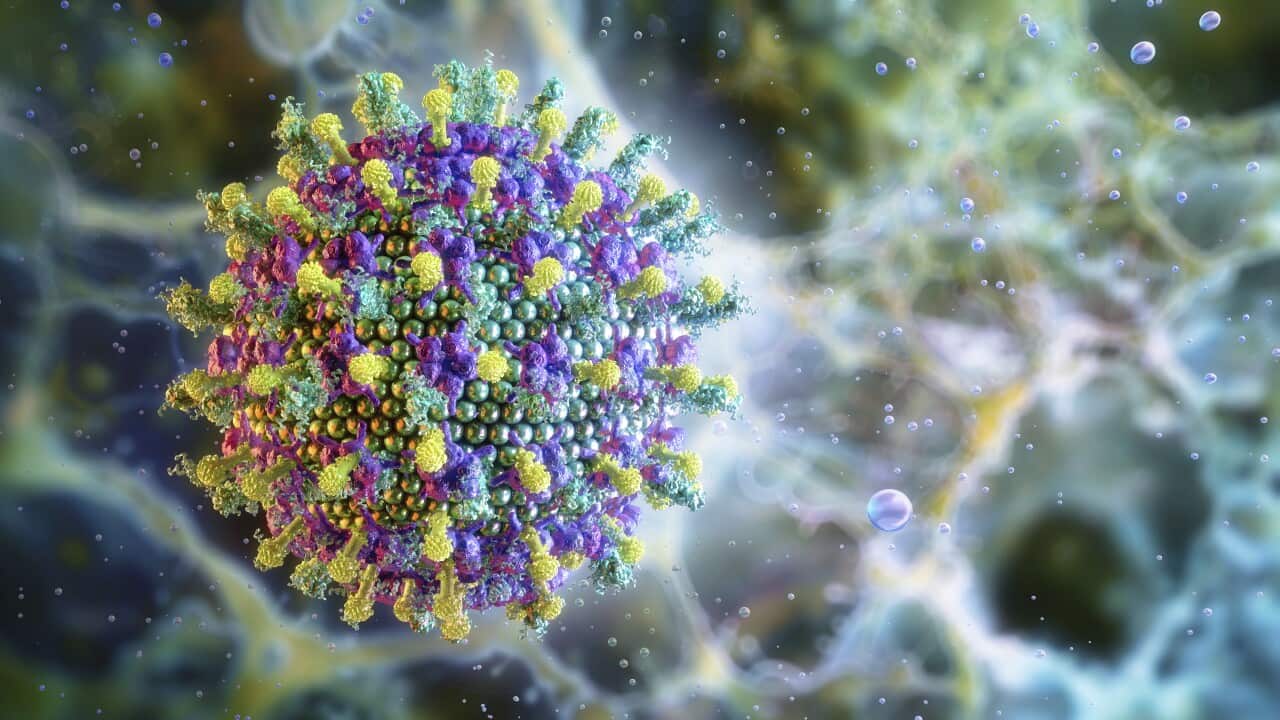

Two cases of the deadly Nipah virus have been confirmed in India's West Bengal state and at least 190 people have been quarantined. It's prompted multiple countries in Asia to step up airport screenings to prevent the spread of the infection, which at this stage has no vaccine or proven treatment.
Dr. Dicky Budiman, an epidemiologist and Environmental Health expert holding a PhD in Global Health Security, Leadership, and Risk Communication, notes that Nipah virus remains a significant threat due to its high fatality rate despite the fact that it does not transmit easily between humans.
In an interview with SBS Indonesian, epidemiologist and environmental health expert Dr. Dicky Budiman noted that while the virus is highly dangerous with a significant fatality rate, its primary source remains fruit bats.
The virus primarily spreads from fruit bats to people, meaning that the detection of human cases relies heavily on a nation's surveillance capabilities. Southeast Asia is considered a high-risk region because of the dense bat populations residing in its forests.
Dr. Budiman warned that whenever a case is detected, neighbouring countries face a potential threat due to high global mobility and the virus's lengthy incubation period, which can last up to a month. If an infected individual travels and tests positive in a new location, it is officially classified as an import case.