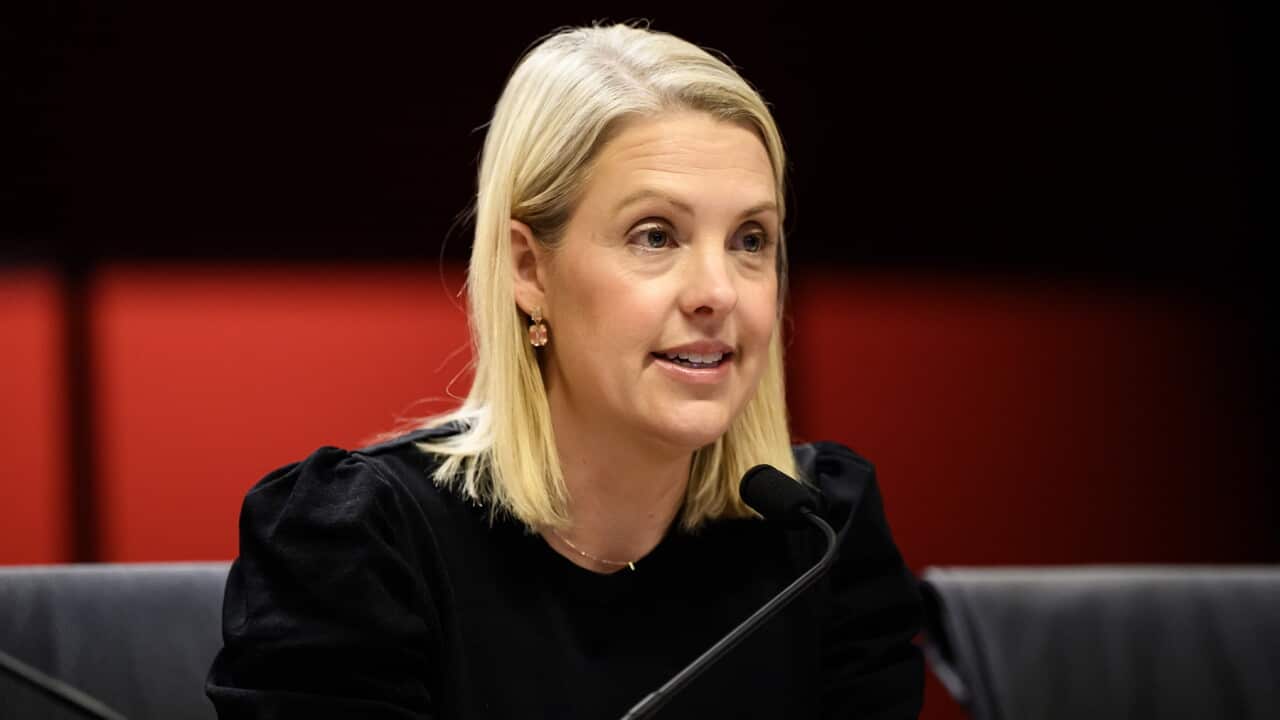
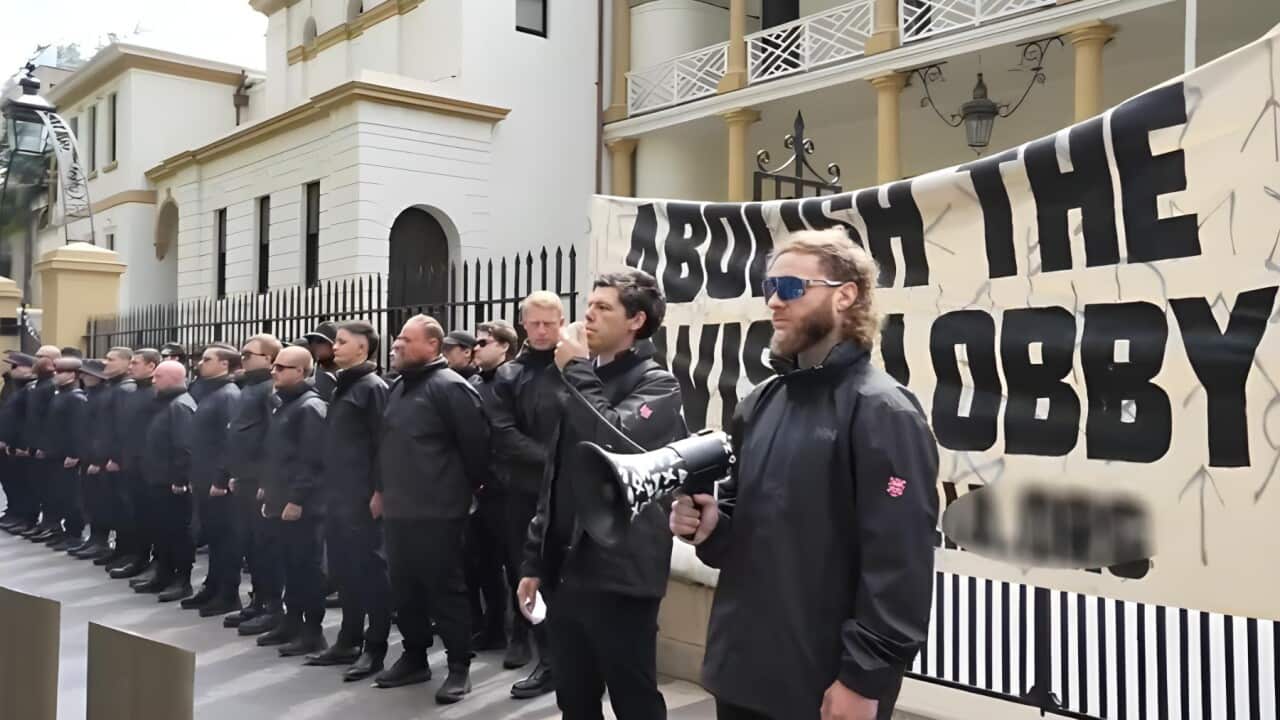

Religious leaders and academic experts have faced a New South Wales parliamentary inquiry into a proposed law to combat right wing extremism. This, as the state government introduced the crime amendment bill following a neo-nazi protest outside state Parliament in November last year. The Law and Safety committee have been investigating the risks posed by certain groups, and are looking into the best ways to counter it.
Listen to Australian and world news and follow trending topics with SBS News Podcasts.
TRANSCRIPT
ASIO and the have warned radicalisation is on the rise.
Last November, there was an approved neo-nazi rally organised in Sydney outside state Parliament, by the now disbanded National Socialist Network.
This was the catalyst for Wednesday's parliamentary hearing.
Peter Wertheim from the Executive Council of Australian Jewry says there was a blindspot somewhere.
“Clearly there was a blindspot somewhere by whoever approved this in terms of understanding that having a phalanx of neo-nazis standing outside New South Wales parliament and allowing antisemitic rhetoric constituted a public safety issue regardless of whether that rhetoric fell off out of the law.”
Michele Goldman is from the New South Wales Jewish Board of Deputies.
She says laws are only effective when the authorities are adequately trained.
“These extremist ideologies never limit themselves to one community, they threaten the fabric of our multicultural society, we strongly support New South Wales' nation-leading laws, which make it an offence to support nazi ideology. But laws are only effective when police are properly trained to recognise extremist symbols, chants and behaviours so they can enforce them consistently.”
She says antisemitism is being normalised in ways not seen in generations.
The Law and Safety committee is also examining whether new state laws introduced in the wake of the Bondi terror attack, are constitutional.
Australia's Special Envoy to combat antisemitism, Jillian Segal says there is a disturbing trend:
“We are also seeing a deeply concerning convergence of extremism, neo-nazi movements, religiously motivated extremism, and ideologically motivated actors across both the far-right and far-left increasingly draw on the same antisemitic language, imagery and conspiracy frameworks.”
During the hearing, experts spoke about the rise in online radicalisation, targeting impressionable and vulnerable people who they say are often young and often male.
Professor Michele Grossman is from Deakin University.
“Extremist movements, not all extremist movements to some extent work to exploit grievances, but what they're specifically tapping into is a desire a diagnosis on the one hand to say current society is corrupt, it's lost its way, its values are askew and only we can restore order.”
The Law and Safety Committee heard from religious leaders including from, Islam, Buddhist, Hindu, Christian and Anglican faiths.
Director of the Shia Muslim Council of Australia, Dr Ali Alsamail says migration is a topic that fuels the extremism.
“One of the main drivers behind right-wing extremism which is the focus of migration to the fore and that creates tension within the community.”
Meanwhile Erica Hendrawan from the Buddhist Council in New South Wales says social media has a role to play in amplifying the hate.
“Because the algorithm is obviously feeding your beliefs, instead of challenging that belief. So then if you kind of read or view a reel that is a little bit more racist, then they basically will feed that view thinking it's the right view and give you a little bit more - sort of affirmation in sort of way that everybody thinks the same.”
The message is clear from those who spoke, that tackling extremism requires more than policing.
Some of the suggestions that were put forward include education, early intervention and cross-community engagement.
Professor Julian Droogan, the co-convenor of the AVERT research group at Macquarie University spoke about the COMPACT program funded by multicultural New South Wales which runs a series of community-led initiatives.
The aim of the project is to link marginalised groups and communities together.
“Projects that respond to, um, young people in sporting codes, um, through mentoring programs, um, projects that respond to young people through political engagement programs, um, people from religious communities coming together across religious boundaries.”
The committee is expected to hear from more religious leaders and youth groups before reporting back in April.